

From "prohibition" to management through economic tools.
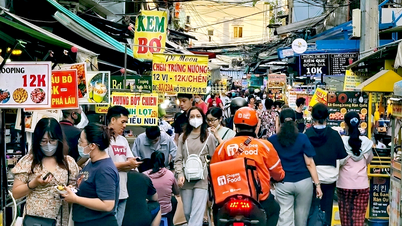
In the urban structure of a city with a history spanning thousands of years like Hanoi , sidewalks have never been simply a space reserved for pedestrians. Through countless ups and downs, this space has enriched itself and formed a distinctive cultural feature, a bustling "front-facing economy." From roadside tea stalls under the banyan trees, noodle vendors at the street corners, to thriving businesses, all create an ecosystem that provides employment for countless disadvantaged people and offers convenience and affordable prices for a large number of low-income earners, workers, students, and others.
However, the lack of a flexible legal framework has turned this area into a battleground for decades. We have witnessed countless campaigns to "reclaim sidewalks," costing the police and ward security forces considerable effort and resources.
However, the result often falls into a vicious cycle of "catching and releasing." When law enforcement is absent, tarpaulins and plastic tables and chairs reappear everywhere. The failure of harsh administrative measures has left a costly lesson: A simple command cannot be used to suppress a real and urgent need for livelihood.
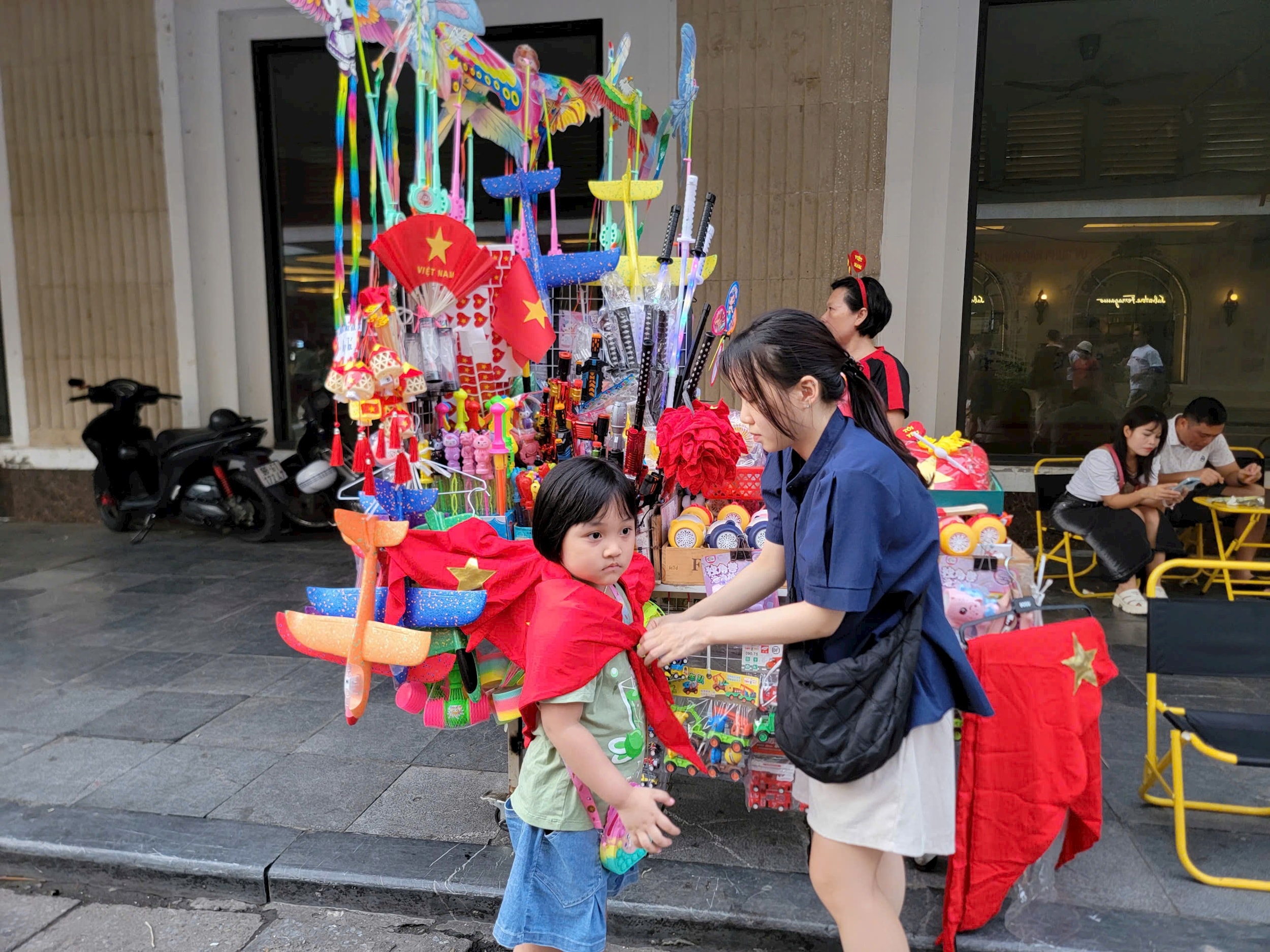
The city's proposal to temporarily charge fees for the use of roads and sidewalks (renting out sidewalk space) marks a groundbreaking shift in leadership thinking. This aligns with the governance methods of many advanced cities worldwide , moving from a "if prohibition fails, then fine" approach to a "licensing, fee collection, and strict supervision" system.
The essence of this proposal is to acknowledge and bring informal economic activities within the legal framework. Accordingly, not every street will be open to business. The authorities will conduct thorough surveys and classifications; only areas with sufficiently wide sidewalks that do not obstruct emergency exits and traffic visibility will be included in the list for consideration.
When individuals and organizations pay to rent public spaces, they are required to sign a clear commitment regarding operating hours, maintaining environmental hygiene, and ensuring security and order. In return, revenue from this activity will be deposited into the budget and reinvested in the maintenance and upgrading of road infrastructure, which is deteriorating in many districts and counties.
A transparent mechanism is needed, prioritizing the interests of pedestrians.
According to the draft, the highest fee for temporary use of sidewalks is expected to be 45,000 VND/m²/month. The streets selected for the pilot program must meet several criteria, such as not being located in areas protected for historical and cultural relics, and not having traffic congestion points or traffic accident "black spots".
Many residents believe that, if implemented properly, this proposal would not only help regulate business operations but also contribute to creating a more civilized and modern urban landscape.
Ms. Nguyen Phuong Hang, who runs a sanitary ware business on Nguyen Xien Street, said: "What people most hope for is a balance between urban management and the need to earn a living. We always comply with the city's policies, but we also hope that policies are carefully considered so that people can maintain stable lives and sustain their businesses."
Similarly, Ms. Nguyen Thi Thanh, the owner of a long-standing breakfast stall on Lo Duc Street, shared: "People like us who rely on the sidewalks for our livelihood only hope that the government will have clear regulations and specifically mark out the designated areas. We are completely willing to pay the monthly fee to be able to conduct our business properly. We will also voluntarily clean up our street corner."
Regarding this issue, representatives from the Hanoi Department of Construction also proposed a pilot implementation in three phases. The first phase would be implemented on several streets in Hoan Kiem and Cua Nam wards. The next phase would expand to the Ring Road 1 area before implementation on several streets within the Ring Road 3 area.
The purpose of charging fees for temporary sidewalk use is not to maximize profits, but rather to re-establish order. When people are granted permits, they will be more conscious of protecting the space they have paid for, preventing unauthorized encroachment by passersby. At the same time, this policy will eradicate the problem of "protection rackets," ensuring that money flows transparently into the state budget instead of into personal pockets.
Despite its many advantages, the implementation of this project requires caution. The biggest risk, warned by many experts, is excessive "commercialization," which would push pedestrians completely onto the road.
Therefore, Hanoi needs to develop a truly transparent and digitized set of criteria for auctioning and leasing land, avoiding situations where vested interests and "backroom deals" seize prime locations and then sublease them at exorbitant prices. Furthermore, post-rental inspection must be prioritized. Lease contracts should clearly stipulate penalties: If any business litters, causes excessive noise, or encroaches beyond the designated lines, the management agency will immediately revoke their license permanently. The paramount interests of pedestrians must always be placed at the center of all planning decisions.
The consideration of leasing sidewalks is a major test of the city government's capacity for innovation. With decisiveness, transparency, and a reasonable approach, we have reason to believe that the conflict between maintaining order and pursuing livelihoods will be resolved, restoring to the capital a neat and disciplined appearance while preserving the vibrant spirit of a land with a thousand years of cultural heritage.
Source: https://hanoimoi.vn/ha-noi-de-xuat-cho-thue-via-he-giai-quyet-hai-hoa-loi-ich-khong-gian-cong-cong-va-sinh-ke-nguoi-dan-972276.html


![[Photo] The heat at the fireworks display site on the opening night of the Da Nang International Fireworks Festival 2026](https://vphoto.vietnam.vn/thumb/1200x675/vietnam/resource/IMAGE/2026/05/27/1779889741485_ndo_br_z7872039145157-fecaba5112f39e8352544099d7ef4738-5140-jpg.webp)
![[Photo] The courage of new recruits of Brigade 144 on the training ground.](https://vphoto.vietnam.vn/thumb/1200x675/vietnam/resource/IMAGE/2026/05/27/1779881651341_anh-man-hinh-2026-05-27-luc-18-32-52.png)























































![[Photo] The courage of new recruits of Brigade 144 on the training ground.](https://vphoto.vietnam.vn/thumb/402x226/vietnam/resource/IMAGE/2026/05/27/1779881651341_anh-man-hinh-2026-05-27-luc-18-32-52.png)


























Comment (0)