


A bustling street food corner in Ho Chi Minh City - Photo: NHAT XUAN
In major cities, from morning to afternoon or even late into the night, sidewalks are always bustling with people. Some are enjoying steaming bowls of pho on low plastic stools. Others are sipping coffee or iced tea under the shade of trees. Still others are clinking glasses of beer, laughing and chatting amidst the sounds of motorbikes and street vendors.
I love Vietnam because of the feeling that life is always present on the streets.
Renowned food writer Anthony Bourdain once said that what he loved about Vietnam was the feeling that life was always present on the streets, where people could sit on a low plastic chair, eat a hot bowl of vermicelli soup, and watch the city come alive around them.
Many of my Western friends, when they come to Vietnam, also say that the streets here "have a soul." Some say what they like most is that there's always something happening on the streets.
Just sitting on a street corner is enough to see life moving before your eyes.
Meanwhile, in many New Zealand and Western cities, the streets are much cleaner, tidier, and more orderly.
But sometimes that very order can create a feeling of excessive quietness. Wide streets and spacious sidewalks, but with few people around, make the urban space feel "colder."
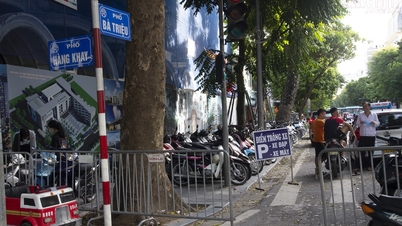
As someone who enjoys urban life and sidewalk cafes, I always miss the street atmosphere of Vietnam when I'm far away, even though it sometimes means weaving through motorbikes parked all over the road, dodging street vendors spilling onto the street, or walking very carefully to avoid tripping over tables and chairs of restaurants where customers are sitting right at the edge of the road.
I understand that behind those stalls lies the struggle for survival, the lives of many people in this expensive city.
I remember once walking into a bar with my daughter in a tourist city in New Zealand. Seeing an empty table and chairs on the sidewalk, we sat down. But just a few minutes later, the waiter came out and gently said:
"Excuse me, sir/madam, this area is not yet licensed for the restaurant, please sit inside."
I was a little surprised. The tables and chairs were only a few meters from the shop's entrance, yet there seemed to be a very clear boundary between them: where the public space was, and where the space permitted for business was.
Only then did I understand that in order to place a few tables and chairs on the sidewalk, the shop had to obtain permission from the local authorities, pay fees, and comply with many regulations regarding safety, hygiene, and pedestrian access.
A friend of mine who owns a pho restaurant in the city where I live also told me that for each set of tables and chairs on the sidewalk, he has to pay a fee to the local authorities, not to mention regulations related to hygiene and serving alcohol.
What if one day all sidewalks were spotlessly clean but cold and identical?
These days, in some areas, many shops and restaurants have had to downsize or switch to takeout as the city tightens urban regulations. Some places have lost a significant portion of their revenue because there is no longer any outdoor seating.
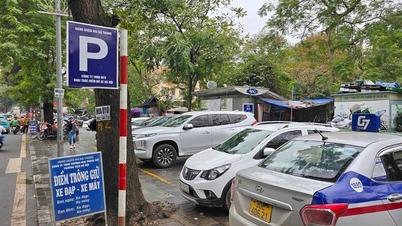
But this free-for-all situation cannot be allowed to continue indefinitely. When pedestrians are forced to walk on the road, when the elderly, the disabled, or women pushing strollers have to squeeze between motorbikes and tables and chairs, the sidewalk is no longer truly a public space.
And when things operate on a system of "flexibility," ultimately, those who comply suffer, while those who encroach more reap the benefits.
Street vending is certainly a very special part of urban life. It's not just about trading or making a living, but also a street culture deeply ingrained in the rhythm of life in many cities.
For many low-income workers, a few square meters of sidewalk space can sometimes be a chance to survive in an increasingly expensive urban environment.
But that doesn't mean sidewalks should be left to the mercy of anyone who wants to occupy them. Many countries don't completely eliminate the street economy, but rather legalize and regulate it with clear regulations.
In Australia, businesses can still use a portion of the sidewalk for outdoor seating, but they must obtain permission, pay fees, and adhere to strict standards. Singapore once had sidewalks overflowing with street vendors, similar to many other Asian cities, but the authorities gradually relocated these businesses to well-planned and managed hawker centers.
In many European cities, businesses are allowed to rent a portion of the sidewalk for legal business operations, in exchange for ensuring clear access and strictly adhering to urban standards.
The common thread among these models is that they don't view small businesses or street vendors as something to be eliminated, but rather as an integral part of urban life that needs to be managed transparently and stably.
Of course, each country has its own urban history, population density, and street culture. Vietnam cannot simply copy a model from elsewhere.
But perhaps we can still start with very specific changes. For example, in central areas like the former District 1 (Ho Chi Minh City) or Hoan Kiem (Hanoi), sidewalks wide enough could be legally permitted to have outdoor seating, with fees charged and clear regulations for pedestrian access. Conversely, alleys that are too narrow should be restored to their original function.
Cities could also consider establishing more organized street food zones, where vendors can maintain the familiar sidewalk atmosphere but have parking, better hygiene, and avoid the chaotic situation of everyone occupying space without permission.
It would be sad if one day all sidewalks were spotless but cold and identical. Perhaps, like me, many Vietnamese people fear not the loss of a few plastic chairs on the sidewalk, but the loss of the feeling that the city still belongs to its people.
But a city that truly belongs to its people must also be a place where people can walk without having to step onto the street.
Source: https://tuoitre.vn/trat-tu-via-he-va-linh-hon-cua-duong-pho-20260514111116247.htm
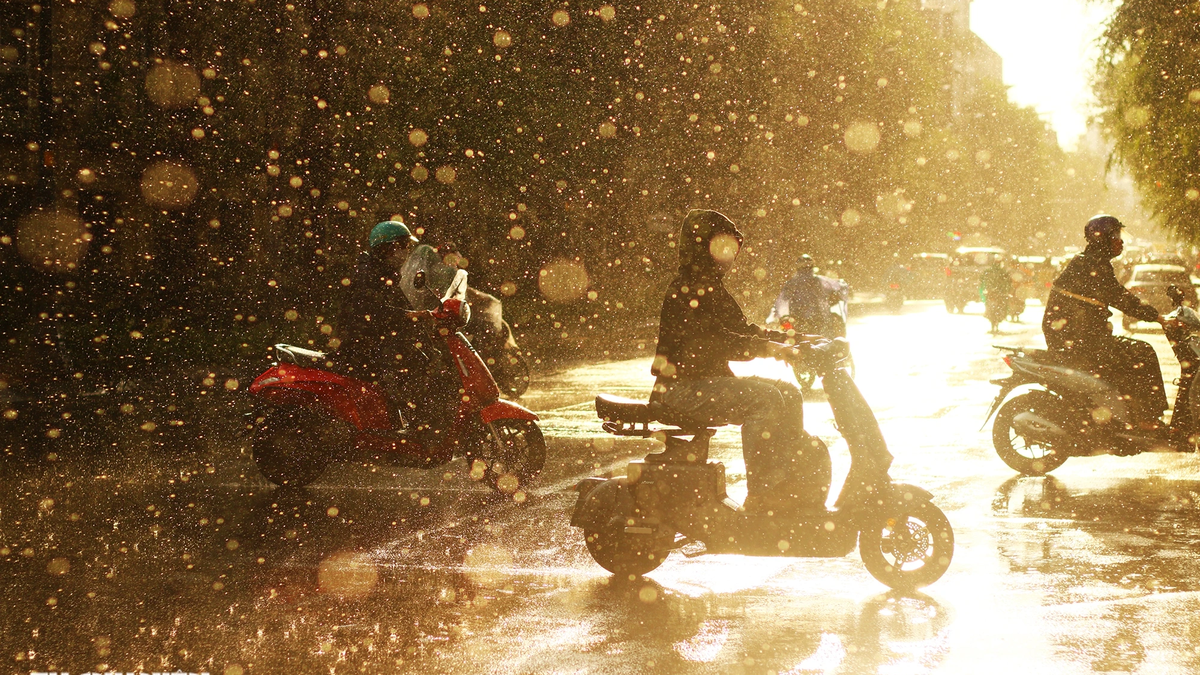
![[Image] Hanoi's urban life under the challenge of a "scorching hot" environment](https://vphoto.vietnam.vn/thumb/1200x675/vietnam/resource/IMAGE/2026/05/25/1779706979265_nang-nong-t5-2026-minh-duy-7-4636-jpg.webp)





































































Comment (0)