

 |
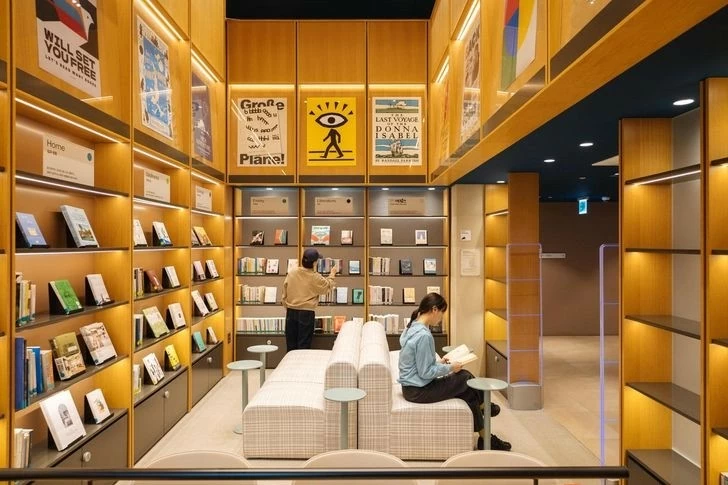
| The community library at Mangrove Sinchon is designed based on the co-living model in Seoul. (Source: MGRV) |
Enock Kim, 29, a remote office worker in product management, had experienced the profound loneliness of being single in a big city. Living alone in her small apartment, there were days when she barely spoke to anyone. Since moving to Mangrove Sinchon, a co-living space in Seoul, Kim has had her own private space while still having the opportunity to meet people in the common areas or participate in community activities.
The housing revolution
According to The Korea Times , due to the rising cost of living, especially in large cities like Seoul, the concept of "home" is undergoing significant changes. For single young people, home is not just a place to rest after work or school, but also must be safe, convenient, and capable of fostering social connections.
This shift is revolutionizing housing and fueling the development of the co-living model. Under this model, tenants, in addition to their own independent living space, can utilize amenities such as communal kitchens, libraries, study rooms, movie theaters, gyms, and common areas.
The appeal of the co-living model lies in the fact that tenants can maintain their privacy while simultaneously strengthening their social connections. For example, at Mangrove Sinchon, activities such as dining , movie screenings, jogging, and workshops are regularly held, creating opportunities for interaction among residents, and importantly, these are entirely voluntary. This is a key difference from the traditional rental model, where tenants live separately in a self-contained space, agreeing on a rental contract and enjoying basic amenities.
The Korea Times notes that the popularity of co-living in Seoul is linked to fluctuations in the South Korean housing market. For many years, "jeonse" was a popular rental model where tenants deposited a large sum of money with landlords to receive a reduction or waiver of monthly rent, while landlords gained interest-free capital. However, this model is now under pressure as financial risks and deposit fraud cases erode tenant confidence.
For young people, especially students or those just starting their careers, preparing a large down payment is not easy. Even if they have enough money for the down payment, they still have to consider the risk of losing their financial security in a volatile job market.
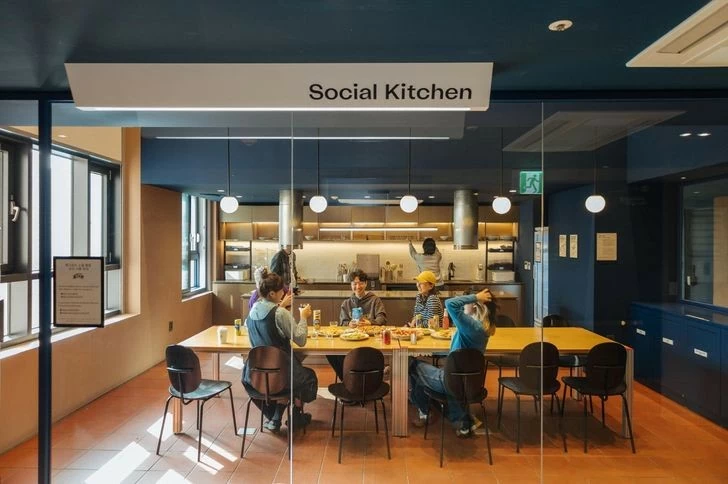 |
| A shared kitchen at a co-living space in Seoul. (Source: MGRV) |
In this context, monthly rentals have become a more popular option. According to data from the Korean Supreme Court, of the approximately 250,000 rental contracts signed in Seoul in the first quarter of 2026, monthly rentals accounted for 70.5%, a record high. This indicates a clear shift in the rental decisions of urban residents, especially young people.
Alongside this, the number of single-person households in South Korea continues to grow rapidly, reaching 8.05 million in 2024, accounting for 36.1%. As the number of single people increases, housing needs extend beyond simply having a place to live; tenants are also concerned about security, service management, convenient transportation, and community connectivity.
Co-living properties are therefore often located near universities, commercial areas, or transportation hubs, targeting students, recent graduates, and singles. This group has a high demand for flexible accommodation but does not want to deal with the issues that arise from renting a private home, from maintenance and security to contracts and utility management.
Monthly rents at co-living spaces aren't low, typically ranging from 1 million to 1.5 million Won (approximately $665-$996 USD). However, for some tenants, this price is acceptable because it includes management services, shared amenities, flexible contracts, convenient locations, and community activities. In other words, they're not just paying for the space itself, but for a more complete package of services and a better living environment.
Safety is also a noteworthy factor. The Korea Times reports that women currently make up 68% of the residents at Mangrove Sinchon. Regularly updated password systems, app alerts, and centralized management services help tenants, especially women living alone, reduce their anxieties.
Urban trends
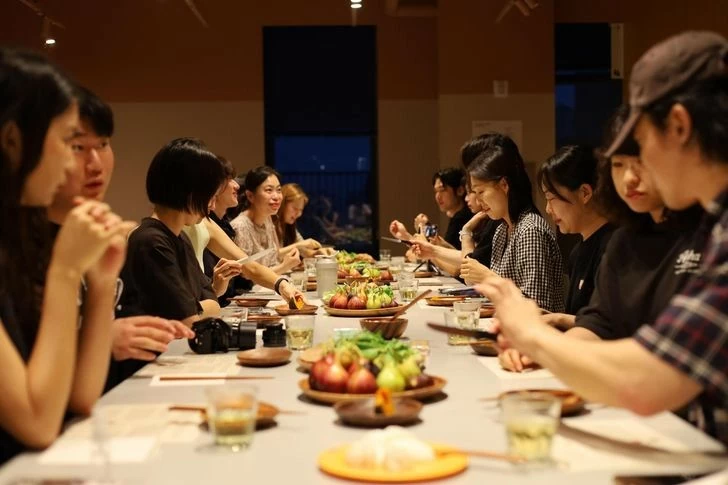 |
| Residents of Mangrove Sinchon participate in a community food event. (Source: MGRV) |
Co-living in Seoul is not only popular with Koreans but also attracts international students, digital nomads, and short-term residents for study, work, or personal pursuits. At Mangrove Sinchon, foreign residents account for 37% of the total tenants.
For foreigners, the biggest barriers when renting in South Korea are language, procedures, and security deposits. Traditional contracts are often in Korean and require large deposits, potentially exceeding 10 million Won (approximately $7,000 USD). Meanwhile, university dormitories often have limited space, and Gosiwon, the small, inexpensive rooms often used by exam candidates, are too cramped for long-term stays.
In this context, co-living becomes a reasonable alternative. This model offers clear contracts, flexible terms, English-language support, allows online booking before arrival, and enables viewing rooms via virtual reality technology. For international students, co-living also facilitates cultural integration through shared community activities.
From a market perspective, co-living in South Korea is still in its developmental stage, but its scale of expansion is rapidly increasing. As of November 2025, Seoul had 47 co-living facilities with a total of 8,491 units, operated by private operators such as Mangrove by MGRV, Episode by SK D&D, and Homes Company.
The development of this model has also attracted international investors, including the Canada Pension Plan Investment Board (Canada) and GIC of Singapore. This shows that co-living is not only a lifestyle trend for young people but is also seen as a real estate segment with long-term potential.
From Seoul's story, we can see that housing in large cities is gradually being redefined. Young people need not just a room, but also a safe, flexible living environment with services and connectivity.
Co-living, therefore, is not simply a new rental model, but rather a market solution to changes in family structure, urban lifestyles, and social needs.
Source: https://baoquocte.vn/han-quoc-ro-trao-luu-song-chung-kieu-moi-396257.html



































































































Comment (0)