

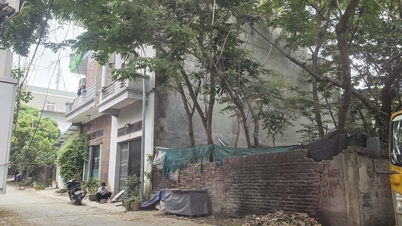
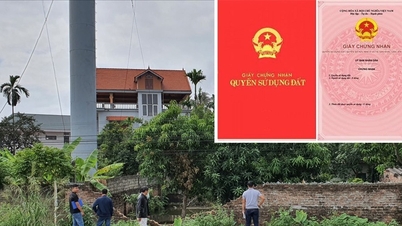
The new boundary marker was planted one April morning, right next to the hibiscus hedge between Mr. Bay's and Mr. Muoi's houses.
The land surveyor pulled the measuring tape, bent down to look at the survey map, and said curtly:
"This section is off by almost a meter, sir."
Mr. Muoi stood on one side of the fence, leaning on a smooth, polished bamboo stick. Mr. Bay stood on the other side. Both looked down at their feet, where a red-painted stake had just been driven into the hard, compacted earth.
Over forty years ago, their father planted those hibiscus bushes just to mark the boundary. Back then, land was vast and the population sparse, so house boundaries were usually established verbally. The two houses shared a path to the fields and a well at the end of the garden. They exchanged labor during the harvest. When the roof leaked during the rainy season, the person on one side would climb over to help the person on the other side repair it.
Mr. Muoi's son had been working far away for several years and was home for a short break. As soon as he saw the new map, he frowned and pointed to the strip of land running along the fence:
"Our house has lost an entire road like this, and you're just going to let it go like this, Dad?"
Mr. Mười did not answer.
"This land belongs to us, so we must reclaim it. If we don't do it now, our children and grandchildren will face even more trouble in the future."
It's not wrong. But right on the other side of the fence is the old kitchen corner of Mr. Bay's house. If the boundaries are re-marked according to the new records, part of the kitchen counter with its roof will touch the land that needs to be returned.
That afternoon, passersby could still hear Mr. Bay shouting from the yard:
"What land issue are you only bringing up now? This fence was left behind by our ancestors. We lived peacefully here for decades without a problem, and now you're finally starting to calculate every inch?"
Mrs. Tư, who was starting a fire, had to stop midway and go stand leaning against the door. Her face was dark and weathered. To an outsider, all they could see was an old kitchen corner. But for her, it was the heart of her home.
From that single red marker post, the atmosphere between the two houses changed completely. The gates slammed shut more forcefully. The greetings faded away. Outside in the market, people began to gossip.
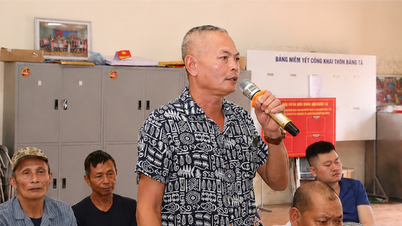
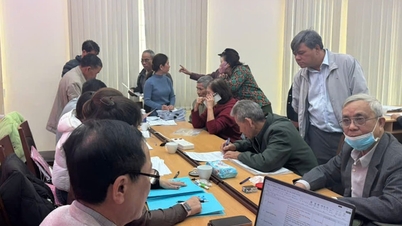
A few days later, the commune invited both parties to a mediation session.
Mr. Lam, a judicial officer , was the one listening. Mr. Muoi spoke first:
"The paperwork is as it is. I'm not asking for more. I'm only asking for the exact portion of land belonging to my family."
Mr. Bay said in a harsh voice:
"The paperwork was only just done. And that fence, my father built it before the land was even divided into plots. Where did all those decades of affection go?"
Mr. Muoi's son chimed in:
"Emotions cannot replace the law."
As soon as she finished speaking, Mrs. Tu could no longer hold back:
"It's easy for you guys to say. But what about my kitchen? If I tear it down, what will I use to rebuild it?"
The whole room fell silent.
Mr. Lam simply said, "The law is the basis. But first, I'd like to go down and see the current situation before we discuss further."
That afternoon, he stood for a long time in front of the hibiscus hedge. On one side was the path behind Mr. Muoi's garden. On the other was Mrs. Tu's smoky kitchen corner. He bent down, picked up a bruised hibiscus flower, twirled it in his hand, and said:
"The difficulty in this case is that both sides have valid points."
The subsequent mediation sessions dragged on. Sometimes, just when things seemed to be settling, a single harsh word would send them back to square one. Mr. Mười's son grew impatient and suggested filing a lawsuit. Mr. Bảy's face turned purple with anger. Mrs. Tư tossed and turned all night. And Mr. Mười became increasingly taciturn.
In the evenings, he would often sit on the porch, looking through the dark hibiscus hedge next to Mr. Bay's house. One night, he recalled his childhood, when he and Bay's son used to compete to water the newly planted saplings with a coconut shell. His father stood behind them, laughing, and said, "We planted them like that to know whose land it was, not to divide it up later."
The next morning, Mrs. Tư went to the commune alone. She placed a few yellowed black-and-white photographs on Mr. Lâm's desk.
"Uncle, take a look."
One wedding photo of the couple shows a low hibiscus bush in the background. Another captures the one-month celebration of their first child, with a newly built kitchen in the corner. And an even blurrier one shows Mr. Mười's father sitting next to Mr. Bảy's father under a gourd trellis, with a newly sprouted hedge in between.
Mrs. Tư sat silently for a long time before speaking:
"I don't know about the paperwork. I only remember that when Mr. Muoi's mother passed away, he was the first person to come over and help my family light the fire and cook rice. When my husband was sick, they also brought money over first. Now, talking about who's right and who's wrong, I'm so tired of hearing it, sir."
That afternoon, Mr. Lam went to see Mr. Muoi alone. He only placed a few photos on the table.
Mr. Mười, wearing glasses, examined each photograph for a long time. When he came to the one showing his father sitting next to Mr. Bảy's father, his hands suddenly trembled.
"My father and Bay's father used to be as close as brothers."
Mr. Lam nodded:
"So I think there's still a way to resolve this to make it less painful."
The final solution was presented at the fourth mediation session.
According to the survey results, the overlapping land area has been clearly defined. However, considering that Mr. Bay's kitchen has existed for a long time and is essential for daily life, both parties can agree to maintain the current state of that area. In return, Mr. Bay will confirm the new boundary markers on the remaining land; both households will adjust the drainage ditch, leave a passageway, and draw up a clear record to end the dispute in the future.
Mr. Muoi's son was the first to react:
"So, we're still at a disadvantage."
Mr. Mười remained silent. Then he spoke, slowly but surely:
"Losing a little land... but preserving the old meaning might be better."
He raised his hand to stop his son, who was about to speak further:
"Over forty years ago, my father didn't plant that fence so that his descendants would sue each other later."
On the other side, Mr. Bay suddenly looked up. After a moment, he was finally able to speak:
"I didn't want to argue to the bitter end either. It's just that when I heard about the kitchen... my wife felt bad."
The signing of the minutes took place the following morning. Mr. Muoi signed first, followed by Mr. Bay. Both their handwriting was shaky, but neither hesitated.
After signing the documents, as they were about to stand up and leave, Mr. Mười unexpectedly turned to Mrs. Tư and asked:
"Is she still coughing a lot?"
Mrs. Tu paused for a moment, then replied:
"I'm feeling better."
A few days later, Mr. Bay's family hired someone to dig up the ditch next to the fence. Mr. Muoi's family cleared the weeds and rearranged the path in the backyard. The hibiscus bushes were trimmed neatly.
One morning, Mrs. Tư brought a basket of yellow lemons to Mr. Mười's house, saying the tree was bearing too much fruit to eat. That afternoon, they sent back a bunch of ripe bananas.
On the anniversary of Mr. Bay's father's death, Mr. Muoi was seen walking with his cane. After lighting incense, the two men sat on the porch. In front of them were cups of hot tea and hibiscus bushes whose flowers were falling onto the tiled floor.
Mr. Bay forced a smile:
"I thought he wasn't coming."
Mr. Mười took a sip of tea and looked out at the fence:
"If my father were still alive, he would have hit me first."
Mr. Bay burst out laughing:
"My father probably felt the same way."
The two men sat for a long time. They reminisced about the flood season when they built the embankment together. They talked about the old well at the end of the garden. They recalled their childhood, sneaking away from the adults to steal guavas from the neighbor's yard and getting caught red-handed.
As they were leaving, Mr. Muoi stood up first, leaning on his cane. After taking a few steps, he turned back to look at the neatly trimmed hedge and said:
"Don't cut it down."
Mr. Bay was slightly taken aback:
"How can we give it up?"
Mr. Mười nodded:
"Yes. He still remembers."
That afternoon, the sun cast long shadows across the narrow lane. The red boundary marker remained, untouched. The land boundary was finally clearer. But right beneath it, the old hibiscus bush still clung to the earth, silently nurturing new clusters of red flowers.
Source: https://baophapluat.vn/hang-rao-dam-but.html



![[Photo] General Secretary and President To Lam presides over a working session with the Central Policy and Strategy Committee on the development of the materials industry.](https://vphoto.vietnam.vn/thumb/1200x675/vietnam/resource/IMAGE/2026/05/21/1779359935432_a3-bnd-3129-1412-jpg.webp)








































































Comment (0)