

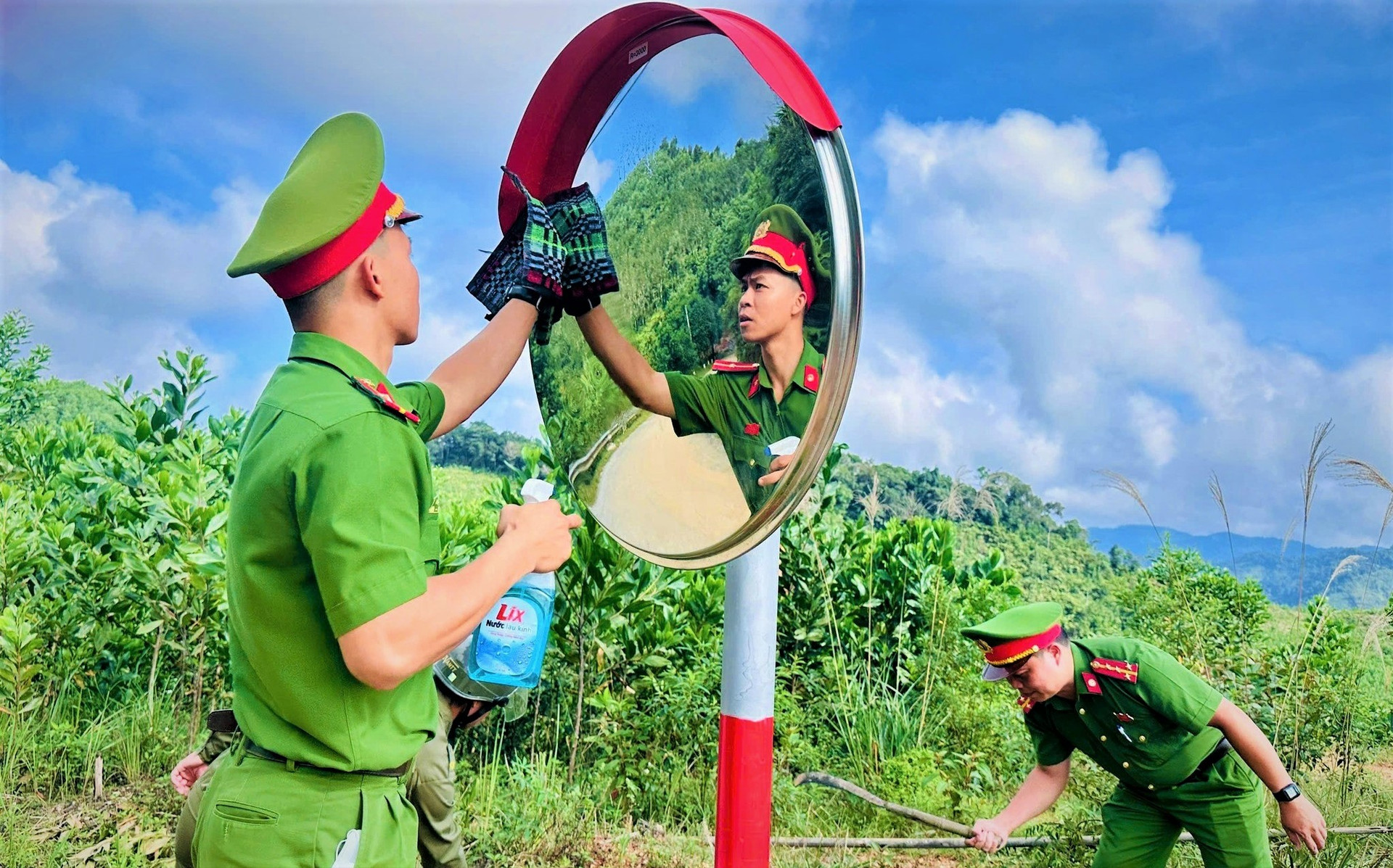
Mr. Briu Quan stated that after the merger, the locality prioritized "returning to the grassroots," focusing on supporting the resolution of long-standing issues, especially land disputes and the elimination of temporary and dilapidated houses. Most recently, this included addressing the aftermath of floods and helping people stabilize their lives and settle down before the New Year.
"We are reviewing all the unfinished tasks to resolve them completely. The highest goal right now, in addition to satisfactorily addressing the on-site issues, is to reach out to the people, so that they can feel secure whenever they need our services," Mr. Briu Quan shared.
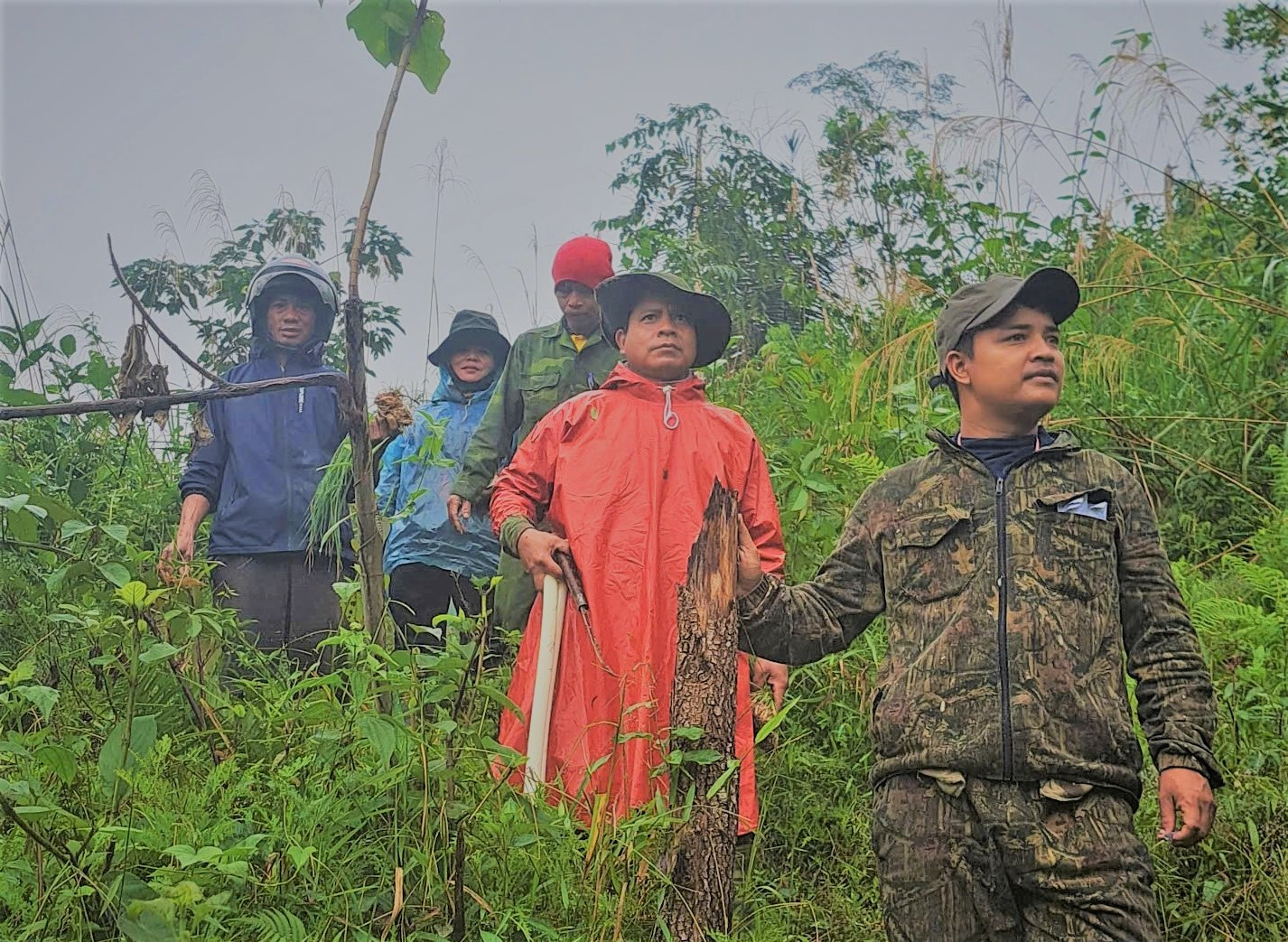
Going all the way to the fields to divide the land…
On a gently sloping hillside, two plots of land belonging to the families of Bnướch Cr. and Arâl B. (Xà'Ơi village, Avương commune) lie side-by-side, their boundary defined only by a few old tree stumps and oral traditions passed down through generations. The disputed area is not large, but it is land tied to their livelihoods, so neither side will easily yield.
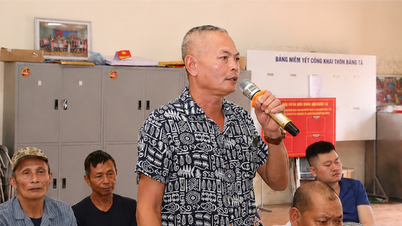
Mr. Briu Quan recounted that in the locality, land disputes rarely occur in a noisy manner. The Co Tu people are inherently united and deeply committed to their community, yet there are still simmering conflicts that last through many farming seasons, stemming from unspoken words and unfriendly glances between households.
To establish a basis for demarcation, commune officials and village elders from Xà'Ơi village went directly along the fields, listening to the stories of those involved. Mr. Bnướch Cr. pointed to the old tree stump, saying it was the boundary marker left by his father. Meanwhile, Mr. Arâl B. remembered differently, claiming the boundary was further back towards the edge of the field.
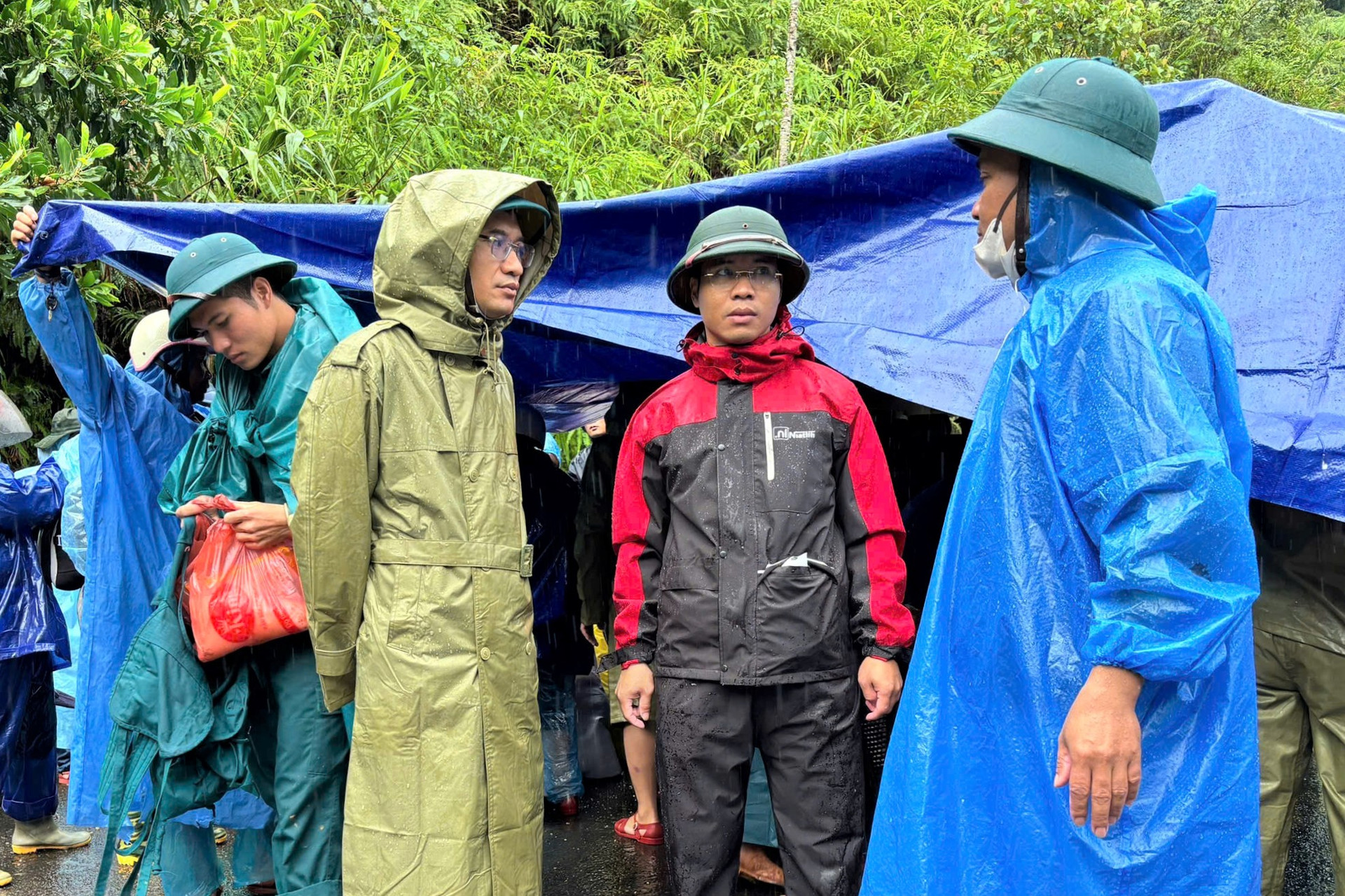
Overlapping memories are retraced using remnants of farming practices from years past. Measuring tapes are pulled out, wooden stakes are driven into the ground, and every meter of land is carefully measured. The boundaries gradually become clear right on the cultivated fields. "We have to go to the fields to resolve this," Mr. Briu Quan emphasized.
And it's true. On paper, land is just a number. On the farm, it represents the sweat and hard work of an entire season, the years of dedication of the people. The division lasted almost until noon. When the last boundary marker was planted, the atmosphere calmed down. The two households were silent for a moment, then nodded in agreement. No lengthy written agreement was needed; the handshake on the farm served as a commitment. The dispute was closed.
Mr. Alang Dua, the head of Xa'Oi village, stood between the two households, a relieved smile on his face. For many years, the case had been brought up at village meetings, and the Co Tu customary law had been applied for mediation, but it had dragged on. "Previously, we were negligent in not going to the villagers' fields to measure and clearly demarcate the boundaries," Mr. Alang Dua confessed.
Besides the incident in Xà'Ơi, most recently, the Avương commune authorities had to directly intervene to resolve a conflict between households related to unauthorized sand mining. At the scene, commune officials clearly explained that the sand quarry was unlicensed and under state management. The reasoning was presented on the spot, in the presence of the village elders, the Fatherland Front, and the commune police. Once they understood the issue, the parties voluntarily signed a commitment not to repeat the offense.
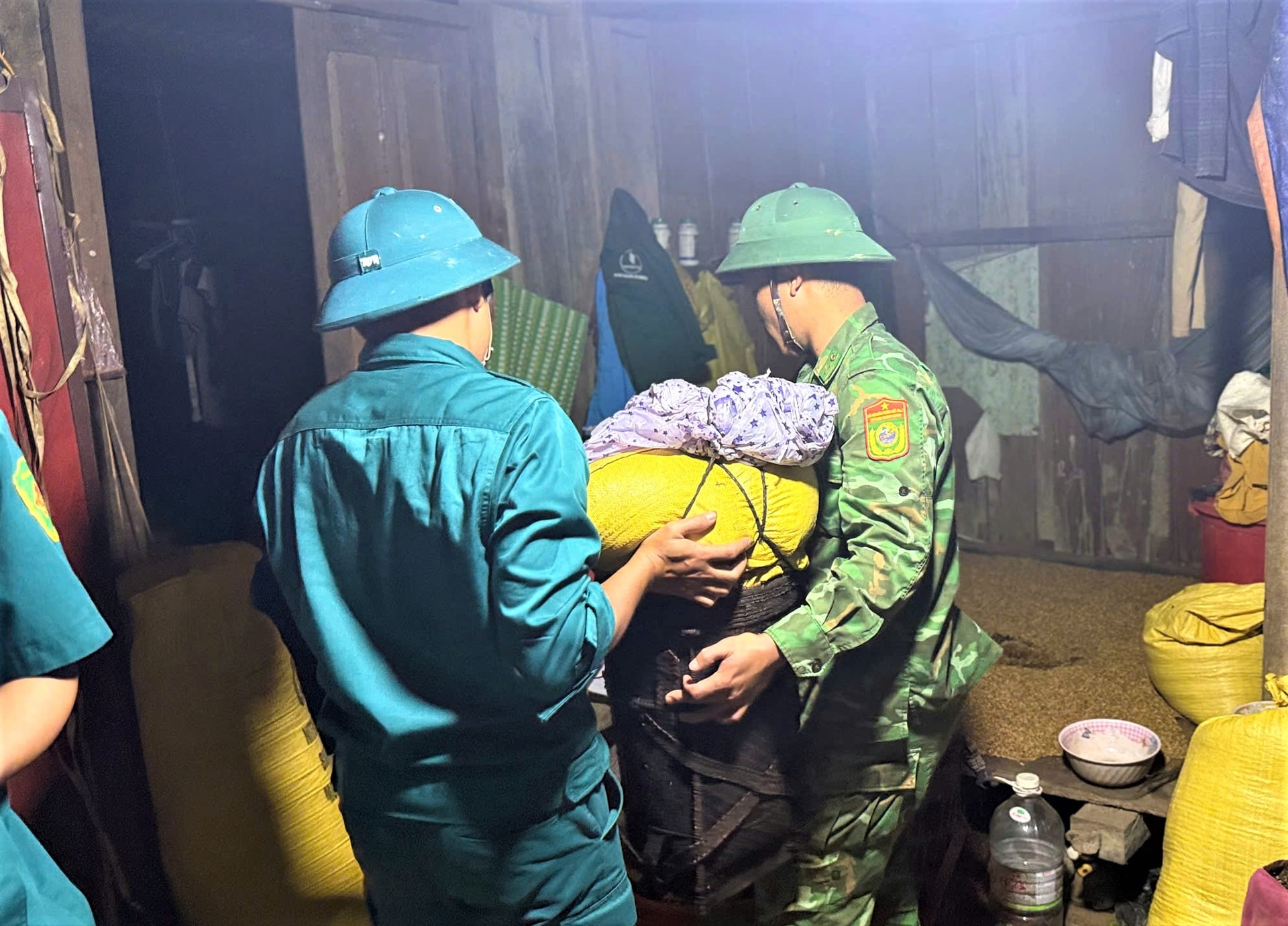
Fulfilling our duty to the people.
When natural disasters strike the mountainous regions, the image of local officials becomes most evident. In the highland communes, the boundary between work hours and personal life almost disappears. When the people need them, officials are there, day or night.
Sitting down with the Chairman of the People's Committee of La Dêê commune, Bùi Thế Anh, he slowly recounted what the locality had just experienced. Never before had the natural disaster been as severe as this year, with a series of long cracks appearing, accompanied by many dangerous landslides, directly threatening the residential areas of the Cơ Tu and Tà Riềng ethnic minorities.
During the first wave of heavy rains and flooding, local authorities discovered a crack over 100 meters long and more than 1 meter deep, forcing them to take immediate action. Dozens of households were evacuated and relocated from the dangerous area in a short time. Under the rain, flashlight beams flickered across the mountainside. Household items were moved out, and the elderly and children were taken to safety.
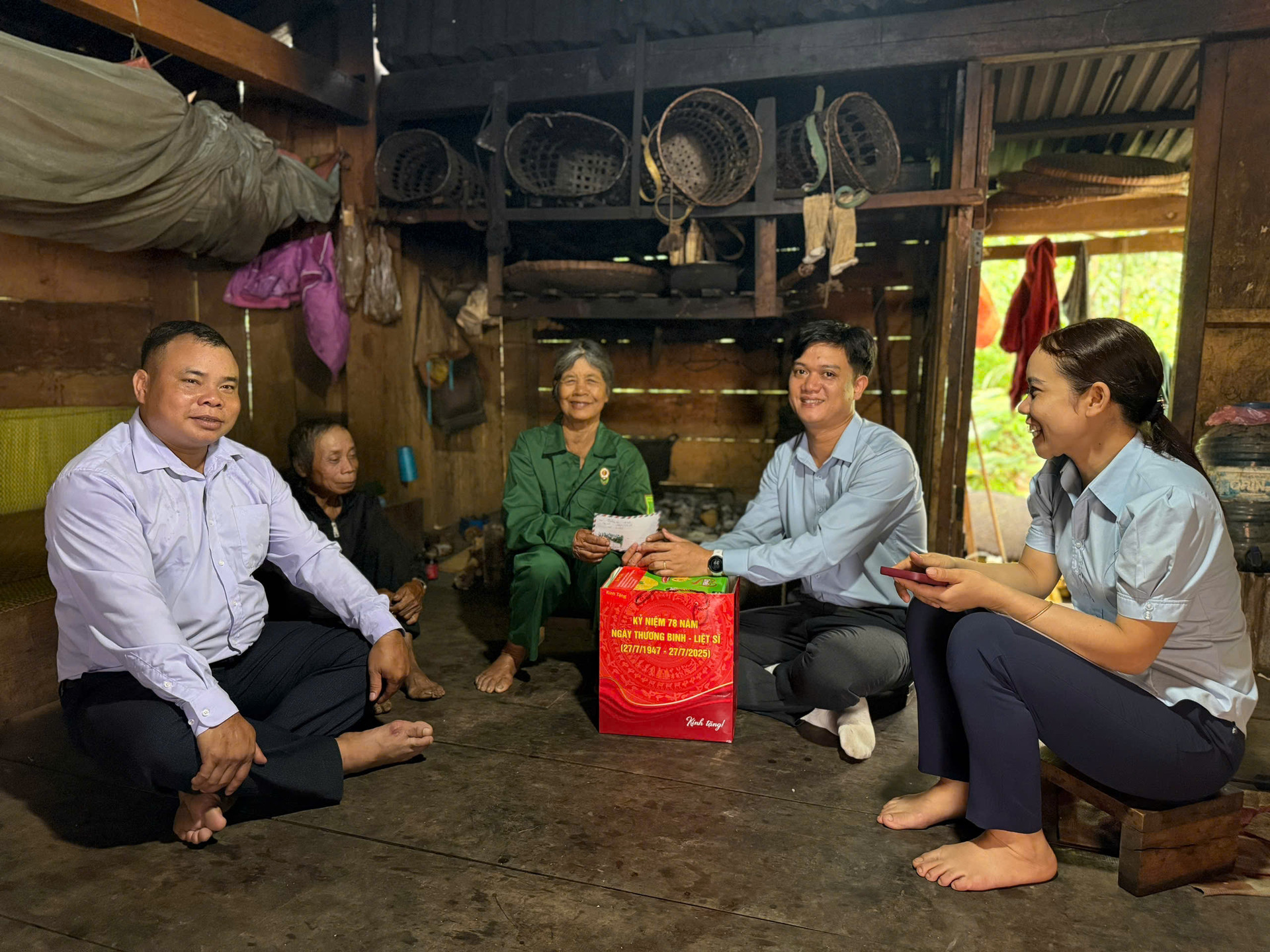
The story in La Dêê reminds me of the days of severe flooding in the former Nam Trà My district, where thousands of Ca Dong, Xê Đăng, and Mơ Nông people in the communes of Trà Vân, Trà Leng, Trà Tập, etc., were evacuated from areas at risk of landslides. From one location to another, the forces were almost constantly present with the people, carrying out their duties in the stormy weather for many days and nights.
Chairman of the People's Committee of Tra Leng Commune, Chau Minh Nghia, recounted the story of Ho Van Linh, Commander of the Commune 's Military Command. During the peak of the flood season, Linh was involved in disaster response almost day and night. At that time, he received news that his family's newly built house had been buried by a landslide. After learning that his wife and children were safe, he continued with his assigned duties.
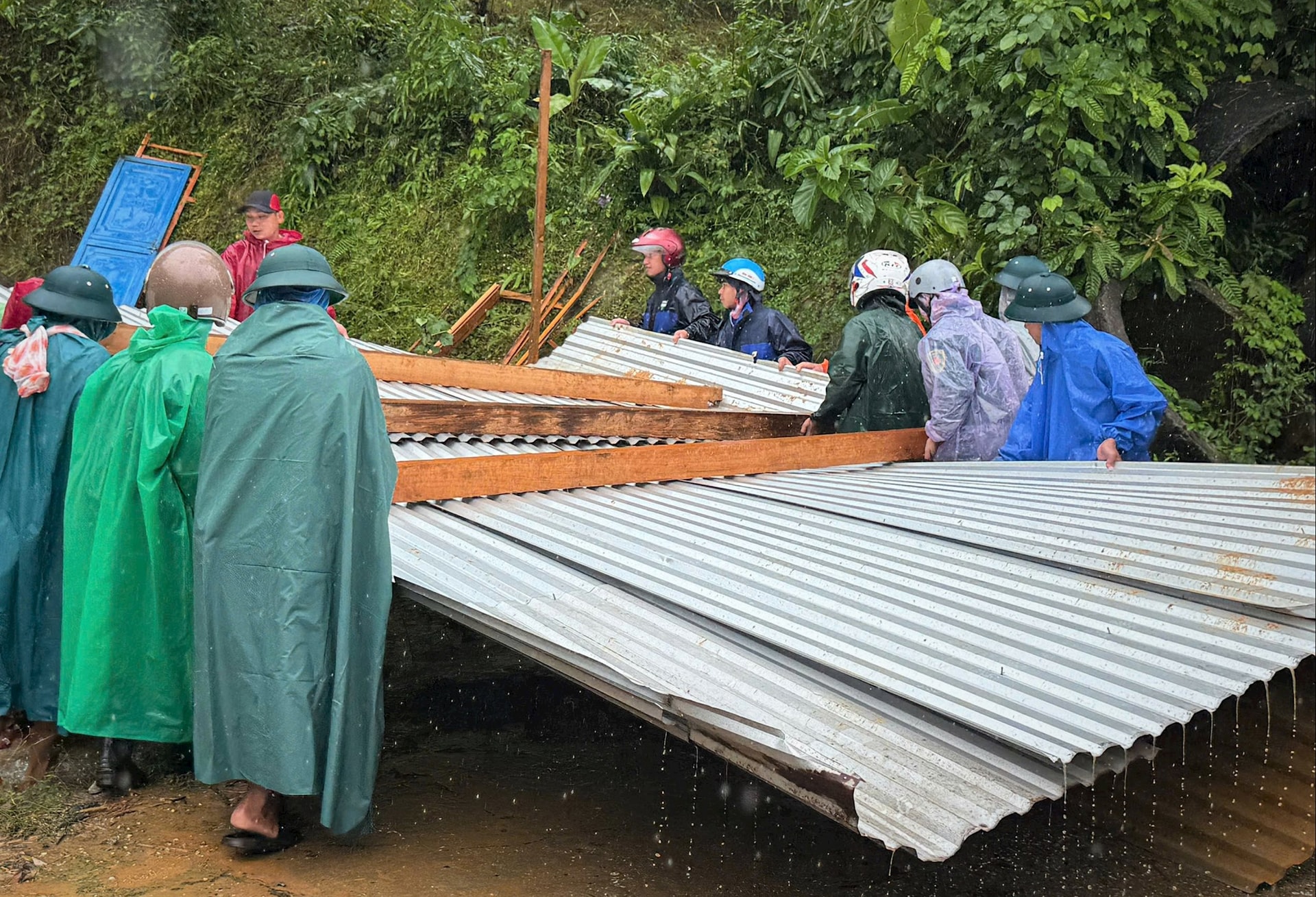
Locals say that as soon as the policy of eliminating temporary housing was completed, the "Quang Trung Campaign" was launched as a continuation. The work increased, the demands were higher, and the accountability of local officials became heavier after the merger. But thankfully, across the hillsides of Quang Nam province, new houses gradually sprang up, bearing the mark of the joint efforts of the army and local authorities.
In the highland villages, this Tet (Lunar New Year) brings joy not only from new houses or abundant meals, but also from the feeling of being together and sharing during the most difficult times. For officials in mountainous areas, fulfilling their duty to the people is sometimes simply about staying when the people need them, and helping them overcome hardships. On a day at the end of the year, a gentle breeze blows from the forest, carrying a refreshing and fragrant scent…
Source: https://baodanang.vn/gio-thom-tu-mien-rung-3324930.html




![[Photo] General Secretary and President To Lam receives Amazon's Senior Vice President David Zapolsky](https://vphoto.vietnam.vn/thumb/1200x675/vietnam/resource/IMAGE/2026/05/22/1779466547770_a1-bnd-3513-6601-jpg.webp)




































































Comment (0)