


Since the beginning of the previous term, the Bac Kan-Cao Bang expressway project has been vigorously researched, proposed, and submitted to the central government for consideration for investment by the former Bac Kan province and Cao Bang province.
Previously, for several decades, the only route from Hanoi , through Bac Kan to Cao Bang was National Highway 3. After many years of central government investment, the section from Hanoi to Bac Kan now has the Hanoi-Thai Nguyen expressway and the Thai Nguyen-Bac Kan expressway.
However, the section from Bac Kan to Cao Bang has not been upgraded or improved, becoming a major bottleneck hindering development for Cao Bang and Bac Kan (now 37 communes of Thai Nguyen ).
Meanwhile, this is a vital transportation artery for socio-economic development and national defense and security in Thai Nguyen, Cao Bang, and the Northeast region. It is also an important economic corridor connecting Sichuan, Chongqing, and Guangxi provinces (China) through Cao Bang to Hanoi.
Currently, the section of road from Bac Kan ward to Cao Bang has low technical standards, is small, narrow, and winding. Along this section, there are four long, steep mountain passes, which, although famous for their majestic scenery, are very dangerous for traffic: Giang Pass, Gio Pass, Cao Bac Pass, and Tai Ho Sin Pass.
Every year, numerous traffic accidents frequently occur on this stretch of road. At the same time, the people living along this route, mainly in the particularly disadvantaged communes of Thai Nguyen and Cao Bang provinces, also face difficulties in economic development.
Following the merger, Cao Bang province, which was assigned by the central government to manage the project, has continued to actively and decisively coordinate with Thai Nguyen to quickly realize this project, fulfilling the long-held aspirations of the people.
According to Le Hai Hoa, Chairman of the People's Committee of Cao Bang province, the project is a transportation infrastructure project of special importance to the development of Cao Bang in particular and the northern midland and mountainous region in general. The early implementation of this project will remove the "bottleneck" in transportation infrastructure, expand development space, promote border trade and commerce, and attract investment.
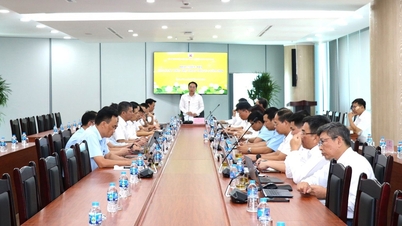
In the spirit of "common voice, common responsibility, common action," the two provinces agreed to closely coordinate and resolutely implement the project, ensuring progress and quality according to the set objectives.
Numerous shuttle working sessions have taken place between specialized agencies of the two provinces recently to expedite the project's progress. To date, the survey, exploration, and route alignment work has been completed.
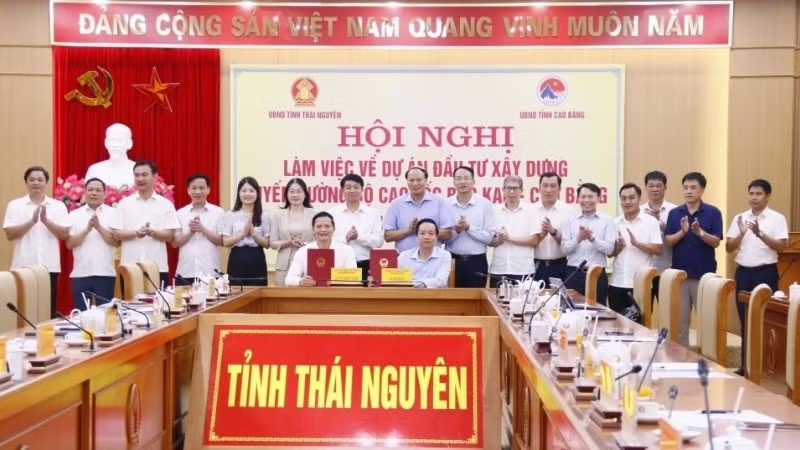
According to the People's Committee of Thai Nguyen province, this expressway project will be over 82km long, with 4 lanes and a design speed of 80km/hour. The project's starting point connects with the Cho Moi-Bac Kan expressway (Bac Kan ward, Thai Nguyen province), and its end point is at Km82+500 (Tan Giang ward, Cao Bang province).
The entire route is expected to have 3 road tunnels and 10 interchanges connecting to the center of Cao Bang province, Provincial Road 209, and the Ho Chi Minh Highway. The total investment for the project is approximately over 29,000 billion VND.
The two provinces aim to complete the approval of the feasibility study report in June 2026; complete the construction drawings and cost estimates in November 2026; and commence construction and disbursement in December 2026.
With a massive workload and only six months remaining, the two provinces have reached a high level of consensus on implementing flexible and innovative solutions. These include coordinating efforts to review resettlement needs, waste disposal sites, and the construction of resettlement areas. They will also consider applying a "temporary forest use" mechanism for areas containing excess soil and rock to shorten construction time and reduce costs.
According to the Chairman of the People's Committee of Thai Nguyen province, Vuong Quoc Tuan, the province has assigned specialized units to proactively review and handle related issues, especially land clearance, resettlement arrangements, construction materials, and waste disposal sites. They are also tasked with promptly identifying and resolving any arising difficulties to ensure the project is implemented on schedule.
Both sides simultaneously agreed to establish a direct communication channel through the inter-provincial working group to regularly exchange information and promptly address any issues related to administrative procedures, land clearance, construction materials, waste disposal sites, and forest land use conversion during the implementation process.
The Cho Moi-Bac Kan expressway project is expected to be completed by the end of 2026. The continued commencement of construction on the section from Bac Kan to Cao Bang at the end of 2026 will create a major impetus, opening up development opportunities for many disadvantaged communes in Cao Bang and Thai Nguyen provinces through which the project passes.
However, public opinion also expects that the two provinces and specialized agencies will proactively conduct thorough research to develop decisive solutions from the outset for crucial issues that determine progress, such as land clearance, waste disposal site arrangements, resettlement, and construction material supply.
These are the problems that have arisen, significantly hindering the progress of the Cho Moi-Bac Kan expressway project in the past. Meanwhile, with an even more complex terrain than the Cho Moi-Bac Kan expressway project, the Bac Kan-Cao Bang expressway project will generate even larger volumes of excavation and embankment work, as well as more challenging construction conditions.
Source: https://nhandan.vn/hien-thuc-hoa-mong-moi-cao-toc-bac-kan-cao-bang-post966307.html


![[Photo] General Secretary and President To Lam presides over a meeting on preparations for the review of one year of operation of the three-tiered government system.](https://vphoto.vietnam.vn/thumb/1200x675/vietnam/resource/IMAGE/2026/06/02/1780391821195_a1-bnd-4595-9717-jpg.webp)


























































Comment (0)