

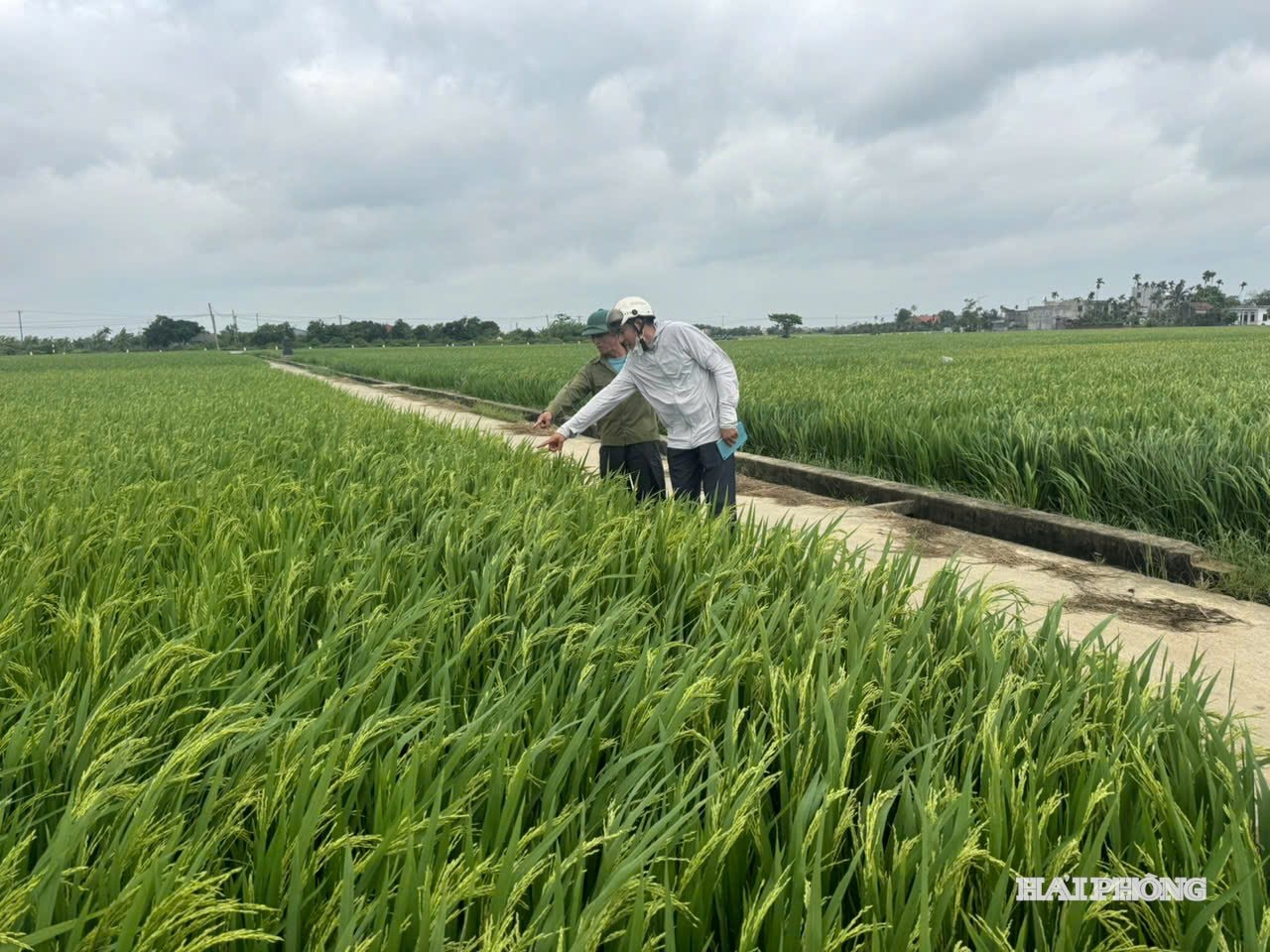
Unlocking resources from land
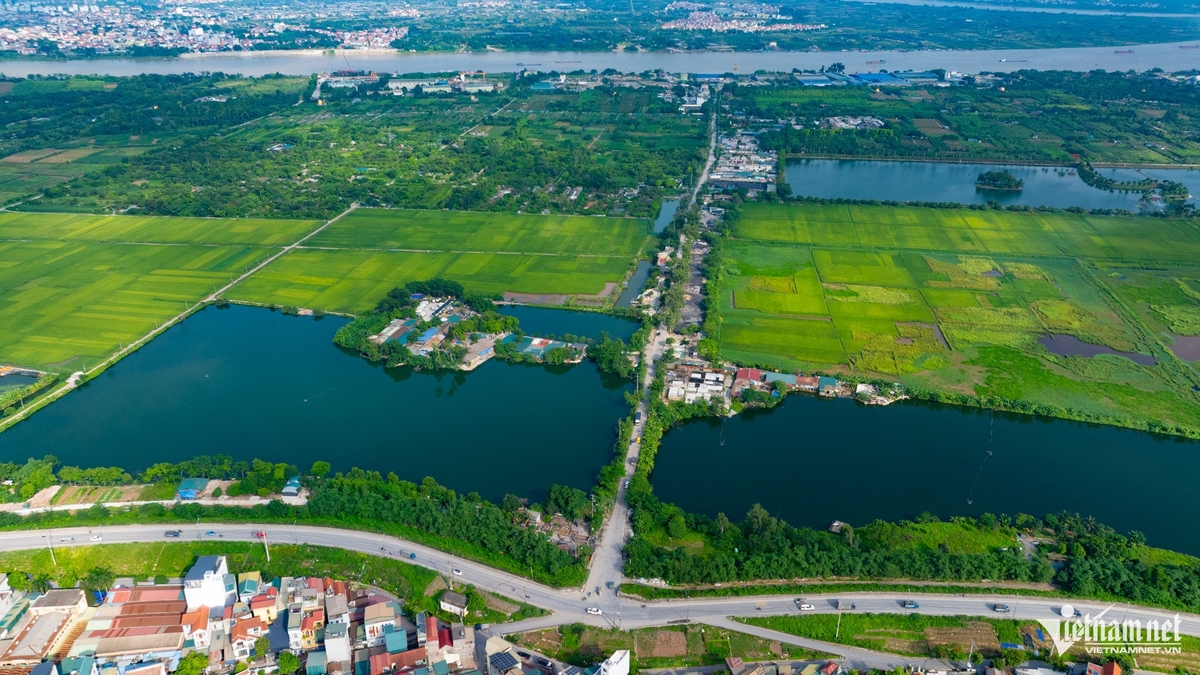
Nghi Duong commune has significant potential for agricultural economic development after the merger of the entire natural area and population of the three former communes of Du Le, Ngu Phuc, and Kien Quoc.
Currently, the commune has a total natural area of 19.48 km² and a population of 25,660 people, distributed across 19 villages. However, after the merger, the locality faces challenges from small-scale production, fragmented and scattered farmland, which limits the application of science and technology, reduces productivity, and directly affects farmers' income.
Faced with this situation, the Party Committee and People's Committee of Nghi Duong commune identified land consolidation as a breakthrough solution, the "key" to resolving difficulties and transforming from a purely agricultural production mindset to an agricultural economic mindset.
Party committees and authorities from the commune to the village level have focused intensely on propaganda and mobilization efforts, creating profound changes in people's awareness.
The commune encourages households that do not need to produce land or lack labor to lease or borrow the right to use the land on a long-term, stable basis to individuals or farm owners.
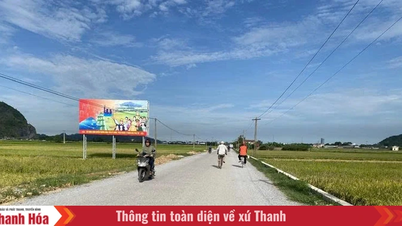
The consensus between the government and the people has transformed fragmented fields into vast rice paddies, unlocking previously wasted land resources.
The correct policies have brought about significant changes. To date, Nghi Duong commune has established 28 land consolidation models with a total area of up to 274.45 hectares. The flexible consolidation method through land leasing and borrowing has created conditions for large landowners to boldly invest in infrastructure, plan a comprehensive irrigation system, and apply advanced farming practices.
Thanks to the concentrated land area resulting from land consolidation, Nghi Duong commune maintains and optimizes the area of rice cultivation throughout the year, reaching 1,595 hectares. Of this, the cropping pattern is strictly ensured, with the spring crop covering 805 hectares and the autumn crop covering 790 hectares.
According to the old administrative boundaries, the Ngũ Phúc region maintained the largest cultivated area with 725 hectares, followed by the Kiến Quốc region with 590 hectares and the Du Lễ region with 280 hectares. Consolidating these small, scattered plots of land helps to ensure uninterrupted rice production and minimize the abandonment of farmland.
Besides rice cultivation, the land, after consolidation, has been flexibly restructured to cultivate crops with higher commercial value, covering a total area of 297.9 hectares.
Specifically, the area for various types of vegetables accounts for 138 hectares, other annual crops reach 90.1 hectares, and perennial crops reach 68.7 hectares. The Ngu Phuc area also maintains a stable area of traditional crops including 0.8 hectares of corn and 0.3 hectares of tobacco. Reorganizing production on a large scale creates a foundation for the formation of stable agricultural supply chains for the city market.
Applying synchronized mechanization
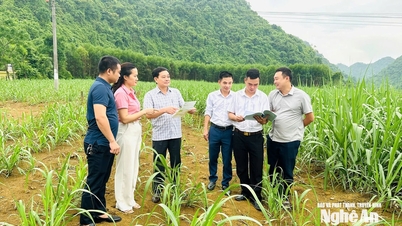
The land consolidation movement in Nghi Duong commune fundamentally changed the production methods of farmers, giving rise to many exemplary agricultural economic models.
A prime example is the 30-hectare integrated rice-mudworm farming model of Mr. Luong Van Cuong in the Tan Boi floodplain (formerly the Ngu Phuc area). Implemented since 2015 under a long-term land lease, Mr. Cuong has transformed the swampy, acidic land into a high-value specialty production area.
Mr. Luong Van Cuong shared: "Previously, rice cultivation in this area yielded low productivity, leading to many abandoned fields. Thanks to the commune's support in facilitating the procedures for leasing land in a centralized manner, I invested in embankments and improved the soil to cultivate organic rice combined with harvesting mudworms. With a large, square area, we can proactively control the ecological environment for mudworm development. Mudworm rice and fresh mudworms produced are all bought up immediately, increasing the economic value many times compared to before."
Besides Mr. Cuong, many other farmers have also risen to become large landowners thanks to land consolidation, such as Mr. Nguyen Danh Tuan, who leases 24.4 hectares, and Mr. Nguyen Van Thang in Dong Chieng, who borrowed 25 hectares to grow high-quality rice.
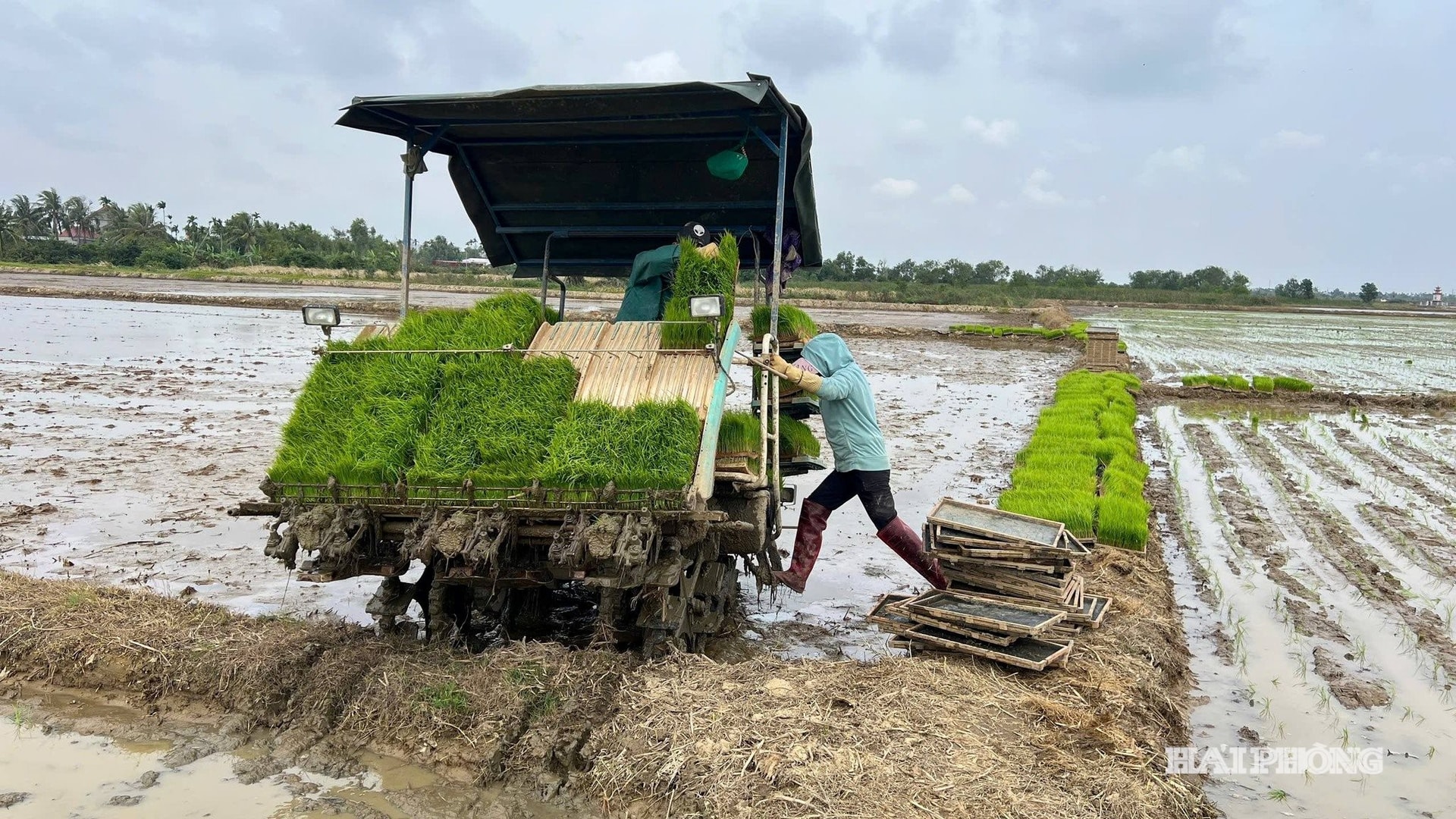
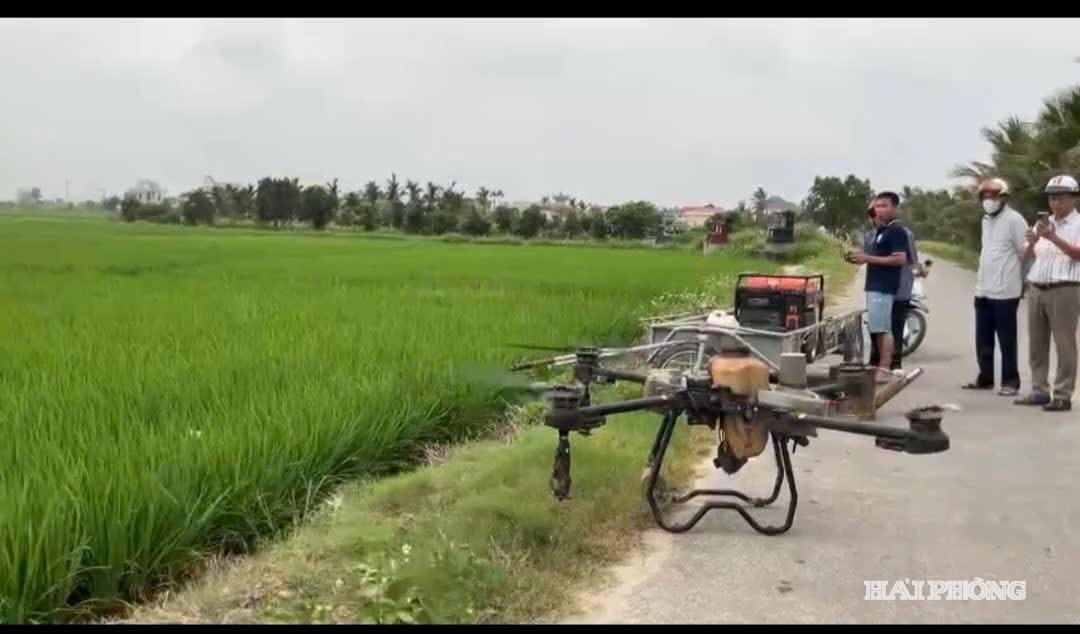
Contiguous farmland is a prerequisite for the commune to promote agricultural mechanization. The entire commune currently owns 66 large mechanized machines, including 25 tillage machines, 18 combine harvesters, 12 rice transplanters, 6 automatic seeders, 2 agricultural product dryers, and 3 unmanned aerial vehicles (drones) for spraying pesticides, operating effectively in the Du Le and Ngu Phuc areas, contributing to a 30% reduction in production costs and ensuring timely planting.
Linking farm economies and enhancing the value of OCOP products.
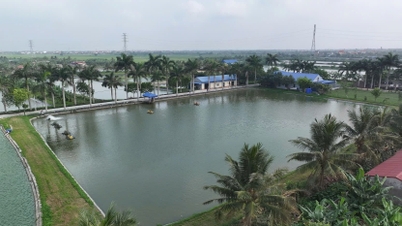
Land consolidation also creates space for the development of livestock and aquaculture industries towards industrial-scale, bio-secure practices.
The entire commune currently has a planned aquaculture area of 323.6 hectares, yielding a total production of 2,722.7 tons per season, mainly concentrated in the Kien Quoc area with 194.1 hectares. The total livestock population reaches 109,327 animals, of which poultry accounts for the largest number with 107,300 birds, pigs number 1,862, and buffalo and cattle are maintained at 165 animals.
The entire commune has 28 large farms and family farms, of which 22 are operating stably and efficiently. Environmental issues are of particular concern to farm owners, as most large establishments, such as Mr. Nguyen Danh Chi's farm with 12,000 chickens or Mr. Dao Van Khac's farm with 14,000 chickens, have invested in a comprehensive system of biological bedding and biogas digesters.
The stability of concentrated raw material areas following land consolidation has been the foundation for Nghi Duong to successfully develop two OCOP 3-star certified products: Hoang Trung Tuan pork sausage (Du Le Hamlet 5) and Thai Tin braised sardines (Nghi Duong Hamlet 4). This is considered a local strength in bringing certified agricultural products to market, generating income for producers, and spreading awareness of unique local products.
Assessing the future development direction, Deputy Chairman of Nghi Duong Commune People's Committee Dao Van Tuan said that land consolidation is the core solution to promote the development of local agriculture in a modern and sustainable direction.
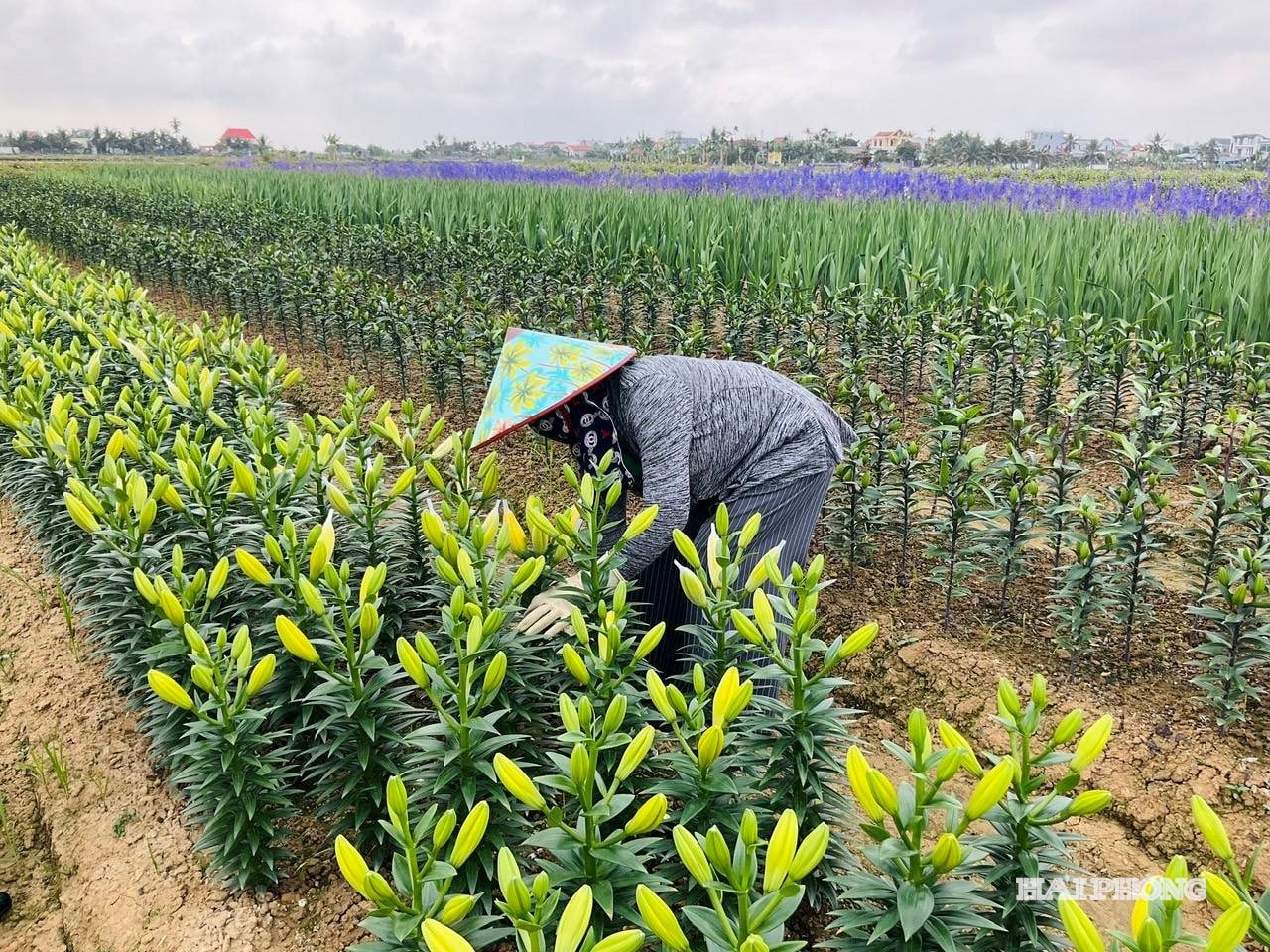
In the coming time, the People's Committee of Nghi Duong commune will continue to encourage the replication of land consolidation models applying high technology and flexible crop structure transformation, such as the 3.2-hectare flower cultivation model of Mr. Tran Phu Tien, the 2.3-hectare lotus cultivation model of Mr. Nguyen Van Kien, or the greenhouse melon cultivation model of Mr. Nguyen Sy Hung, in order to enhance the value of cultivation and bring about stable and sustainable local economic development.
THU HANGSource: https://baohaiphong.vn/hieu-qua-tich-tu-ruong-dat-o-nghi-duong-543111.html





































































Comment (0)