

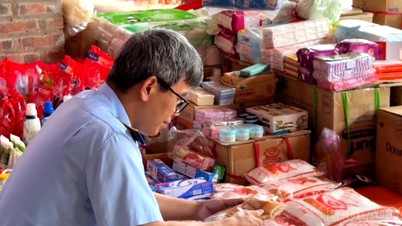
Some argue that the authorities acted correctly because goods circulating in the market must have a clear origin and documentation to control quality, combat counterfeit and substandard goods, and prevent commercial fraud.
But many people also asked another question: how could a local person collecting dead cicadas in the forest get a receipt?
And from here, the story is no longer about those cicada sacks.
It evokes a feeling that many people have in their lives today: the gap between how the administrative system operates and how people actually earn a living.
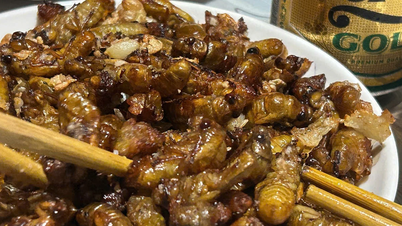
Because if you carefully read recent articles about the "cicada craze" in the Central Highlands and the northern mountainous regions, you will see that behind those sacks of dead cicadas are not the images of professional businesses or big dealers as many people imagine.
These are people from remote areas who, armed with flashlights, venture into the forest at midnight to collect cicada carcasses clinging to tree trunks and bushes. Among them are women, the elderly, and even children accompanying their parents into the forest. Some have been bitten by venomous snakes. Others spend the whole night collecting only a few hundred grams of dried cicada carcasses.
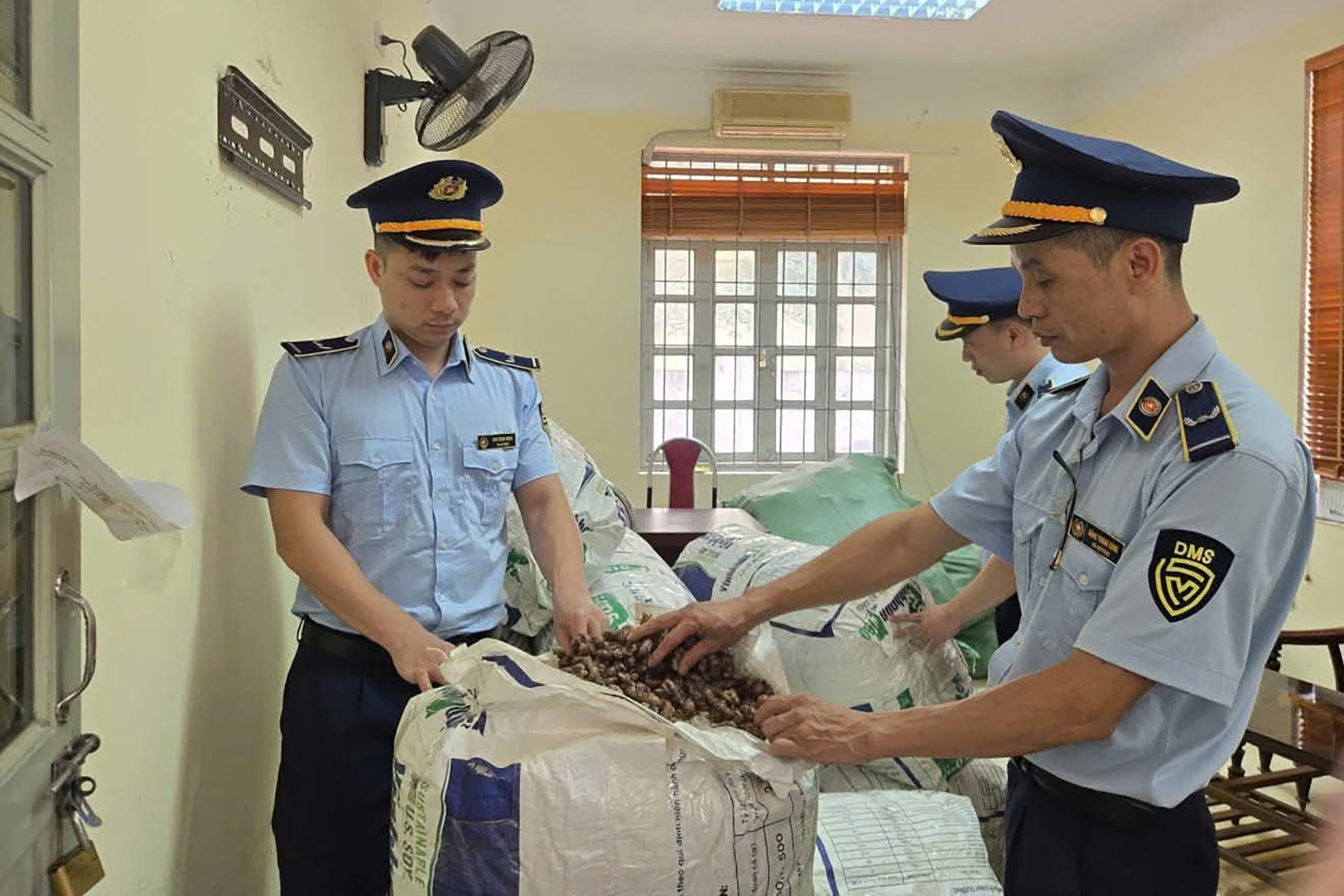
A child in the Central Highlands might need two days to collect about 1kg of cicada carcasses to sell. A woman in Gia Lai recounted that she goes out from dusk until almost dawn, and on lucky days she earns a few hundred thousand dong, enough to buy rice for the whole family for a few days. After the cicada season ends, they return to their fields and precarious hired labor jobs as before.
For many ethnic minority families, this is not a "business" in the conventional sense, much less a path to wealth. It is simply a seasonal source of income to make life a little less difficult.
And it is precisely from these very real-life stories that the case of 80kg of cicada carcasses in Lang Son has caused such strong controversy.
From a state management perspective, it is understandable that authorities require goods in circulation to have a verifiable origin, especially in the context of growing societal concerns about contaminated food, medicinal herbs of unknown origin, and commercial fraud.
In recent years, regulations regarding invoices, traceability, and declarations have become increasingly stringent. This is not wrong. However, in reality, society is still full of very small, manual transactions in rural areas or remote regions.
A person from an ethnic minority group collecting cicada carcasses in the forest would almost certainly not be able to obtain a VAT invoice. For them, invoices are sometimes as unfamiliar as another language. A trader collecting goods from hundreds of households in the mountainous region would also find it very difficult to obtain the same paperwork as a large company.
Perhaps that's why, after the public outcry, market management authorities had to explain that "invoices and documents" here can be interpreted more flexibly, ranging from purchase lists and handwritten sales agreements to local confirmations.
That detail is actually worth thinking about.
Initially, the requirement was "receipts and invoices," but eventually, even the authorities had to verify the signatures of the people, the purchase lists, and local confirmations. This shows that even the management system understands that if they rigidly apply business logic to this type of supply chain, almost no one can meet the requirements.
Ultimately, real life is always more complicated than what's written on paper.
Vietnam is tightening traceability, digitizing management, and increasing market transparency. This is a necessary trend. But at the same time, it remains a society where tens of millions of people live on household economies , cash transactions, small-scale collection chains, and very rural, very mountainous livelihoods.
A person who collects dead cicadas in the forest could hardly imagine that one day they would find themselves in a debate about invoices, receipts, and traceability.
Therefore, what many people are worried about in the "cicada" incident isn't so much the fact that a few bags of goods were inspected, but rather the feeling that ordinary people are finding it increasingly difficult to live without being burdened with some kind of paperwork.
It's noteworthy that even the local authorities don't view the people as lawbreakers. A forest ranger even stated that there are currently no regulations prohibiting people from entering the forest to collect cicada carcasses.
Perhaps this is where the most important question arises: it's impossible to manage everything in the same way.
A large business is clearly different from a mountain household selling a few bags of medicinal herbs seasonally. Small-scale livelihood activities probably require more practical observation, simpler procedures, and a more suitable roadmap to help people gradually establish more systematic businesses.
Because if even a mountain dweller collecting cicada carcasses has to worry about paperwork, then the social debate at that time was probably no longer just about cicadas.
Source: https://vietnamnet.vn/hoa-don-nao-cho-ve-sau-2515255.html

![[Photo] General Secretary and President To Lam presides over a working session with the Central Policy and Strategy Committee on the development of the materials industry.](https://vphoto.vietnam.vn/thumb/1200x675/vietnam/resource/IMAGE/2026/05/21/1779359935432_a3-bnd-3129-1412-jpg.webp)
![[Photo] National Assembly Chairman Tran Thanh Man working with the Standing Committee of the Law and Justice Committee](https://vphoto.vietnam.vn/thumb/1200x675/vietnam/resource/IMAGE/2026/05/21/1779378929214_ndo_br_1-4610-jpg.webp)














































































Comment (0)