

Overcoming difficulties to build the highway.
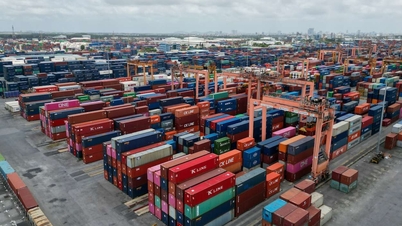
While only 89km of expressways were put into operation nationwide during the period 2001-2010, and 1,163km during the period 2011-2020, in just 5 years of overcoming difficulties with the involvement of the entire political system, the support of the people, and the efforts of contractors working "3 shifts, 4 teams" without holidays or weekends, the total length of expressways invested in during the 2021-2025 term equals the total length of the previous 10 years combined.
These achievements not only provide a solid foundation for the development of modern infrastructure, but also usher in a new era of development – an era that affirms Vietnam's stature and position with the goal of high and sustainable growth. However, to achieve these results, the implementing units also faced numerous difficulties.
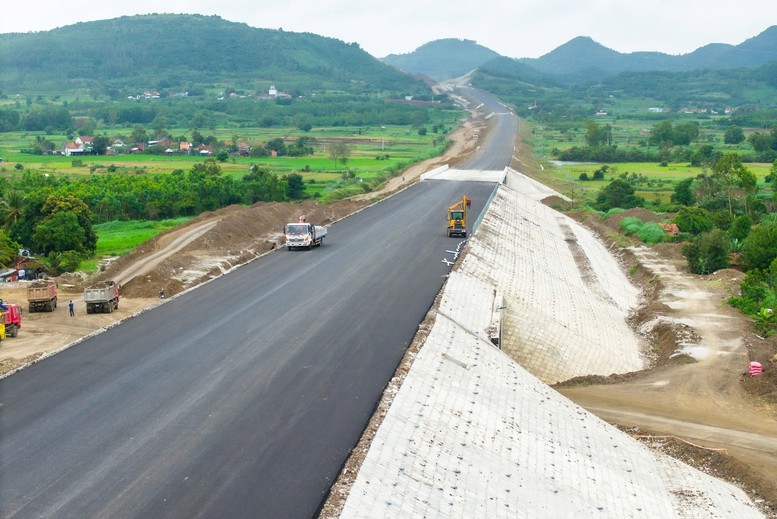
Mr. Nguyen Ba Doan, Head of Political Affairs of the 12th Army Corps, acknowledged that investment in expressways in Vietnam has seen certain breakthroughs, but the 12th Army Corps – Truong Son Construction Corporation and many other contractors still face many challenges.
Firstly, there's the issue of resources. Having managed and directly constructed over 400km of roads to date, the 12th Army Corps understands that any project that solves the material supply problem is a success. If the material issue is resolved early, the contractor not only avoids the rush to meet deadlines but can also proudly complete the project half a year, or even more, ahead of schedule.
Secondly, there's the human factor. Anything can be done—motorcycles, equipment, and technology are readily available—but human resources are a major headache for businesses. Truong Son Construction Corporation currently has 3,000 engineers and employees on its payroll, and approximately 10,000 seasonal workers.
"We recognize that retaining human resources is a valuable asset. Without superior mechanisms and incentives, it's impossible to attract talent," Mr. Nguyen Ba Doan shared. He also suggested that the competent authorities should pay more attention to training human resources for the transportation sector with more attractive mechanisms and policies to attract students.
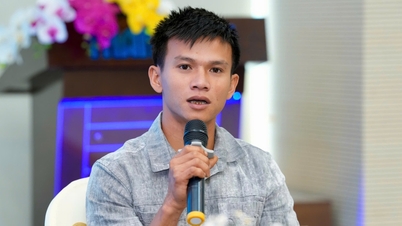
Pham Huu Son, chairman of the consulting firm TEDI, said that the biggest concern currently is the lack of government support for businesses. In China, when building their railway system, they sent businesses to study in Europe and other countries using state funds. We, however, have not received any such support.
"We also paid out of our own pockets to learn the technology," Mr. Son expressed. He added: "Any support (if any) is usually only available during the operational phase. Technology transfer is mainly carried out through the Project Management Board, but it's not very effective. We also lack the funds to test new methods and technologies. The scarcity of materials is also a problem that needs addressing. Weak financial capacity and low wages for workers are reasons why transportation businesses are increasingly struggling to recruit high-quality human resources. The number of students studying construction engineering is also dwindling."
Besides the issue of human resources, according to Mr. Nguyen Quang Huy, General Director of Deo Ca Group, in Vietnam, introducing new technologies takes a lot of time in completing legal procedures for acceptance and liquidation. With 40 years of experience in implementing transportation infrastructure projects, Deo Ca Group has adapted to this context, focusing on researching and improving existing technologies before introducing new ones, in order to shorten the time for widespread application.
The NATM tunnel construction method used by Deo Ca is an example of an improvement over the old tunnel construction method. Another story is about road surface concrete construction technology. Deo Ca has studied and referenced models in Europe and Malaysia, and many asphalt companies have expressed interest in collaborating. “However, we have also frankly shared with them that to penetrate the Vietnamese market with a new product, suppliers need a certain amount of time and perseverance to pursue it,” Mr. Nguyen Quang Huy revealed.
Striving to complete the target of 5,000km of expressways by 2030.
According to the plan, the whole country will strive to complete the target of 5,000km of expressways by 2030. Speaking about this goal, Associate Professor Dr. Tran Chung, Chairman of the Vietnam Association of Road Transport Infrastructure Investors, said that as someone closely involved in the development of the transport sector, the completion of 3,000km of expressways by 2025 demonstrates remarkable maturity, not only in terms of policies and mechanisms but also from the construction contractors.
Previously, we were concerned about the saying: Where there is pressure to meet deadlines and prices, the quality of the completed construction will be compromised. However, recently, despite pushing for faster progress, thanks to science and technology, our projects have still maintained their quality.
Therefore, to achieve the next goal, special attention must be paid to three main areas: mechanisms and policies; the synchronized involvement of the entire political system; and the State's support for businesses in developing and applying science and technology. Mechanisms and policies need to be linked to reality to promptly address shortcomings, obstacles, and bottlenecks in policies. Mechanisms and policies must pave the way, and new resources must be unlocked to complete the goal of building another 2,000km in the 2025-2030 period.
On the other hand, the involvement of the political system from the central to local levels is also crucial. Recent projects have shown that when localities are decisively involved, bottlenecks in land clearance are quickly resolved. From July 1, 2025, localities have implemented mergers, and the decentralization of power needs to be implemented in a way that facilitates the joint efforts of the central and local governments to achieve the above objectives.
Finally, Associate Professor Tran Chung argued that the maturity of businesses and their efforts in applying science and technology, and introducing new technologies into construction and project implementation, also require the support of the State. The State needs to pay attention to the growth of businesses: consultants, contractors, and have mechanisms to compensate for the efforts and resources they invest for the common goal of developing the country's infrastructure.
From the perspective of the management agency, Mr. Le Quyet Tien, Director of the Department of Economic and Investment Management of Construction ( Ministry of Construction ), expressed that a key factor contributing to the success of these projects is the decisive efforts of the entire political system to minimize the time for land clearance and the granting of material quarry permits under special mechanisms authorized by competent authorities.
Throughout the implementation process, the State Steering Committee for National Key Projects and Projects in the Transport Sector, directly under the Ministry of Construction, closely monitored the construction sites, shared information with contractors, promptly identified obstacles, and addressed problems as needed to provide timely guidance and facilitate financial support for contractors.
Furthermore, the Department promptly advised competent authorities to review norms and issue Circulars 08 and 09, including norms for expressway construction, ensuring accuracy and completeness for projects; and spearheaded the drafting of the amended Construction Law, which was passed by the National Assembly. The law has undergone fundamental changes, ensuring streamlined decentralization and delegation of authority, shortening administrative procedures, and facilitating investment…
The Director of the Department of Construction Investment Management also emphasized: “In the coming time, we will continue to develop review programs, coordinate with agencies, units, contractors… to update the system of norms annually; advise the Ministry of Construction to organize conferences to evaluate, summarize, and draw lessons from the application of science and technology and innovation to continue to create new breakthroughs.”
Source: https://cand.com.vn/Giao-thong/hoan-thanh-3-000km-duong-cao-toc-quyet-sach-dung-lam-nen-tien-do-than-toc-i791420/


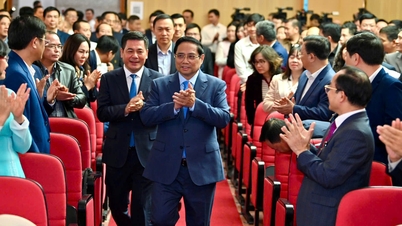
![[Photo] Prime Minister Pham Minh Chinh attends the Conference on the Implementation of Tasks for 2026 of the Industry and Trade Sector](/_next/image?url=https%3A%2F%2Fvphoto.vietnam.vn%2Fthumb%2F1200x675%2Fvietnam%2Fresource%2FIMAGE%2F2025%2F12%2F19%2F1766159500458_ndo_br_shared31-jpg.webp&w=3840&q=75)








































































Comment (0)