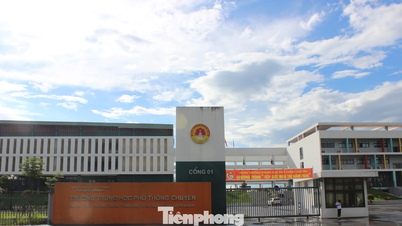
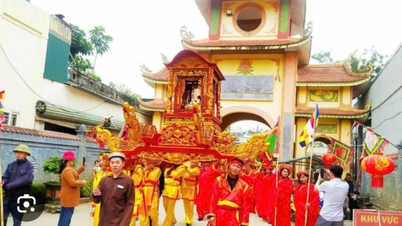
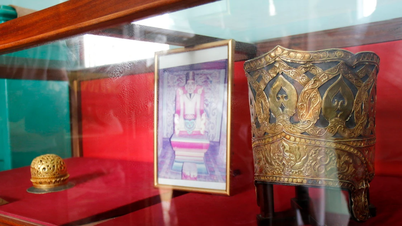
My Duc communal temple. Photo: MINH QUAN
Village year-end party
In the cool air of the twelfth lunar month, I revisited My Duc communal house in My Duc commune. The ancient communal house, nestled quietly beside National Highway 91, became vibrant with the atmosphere of preparation for the upcoming ancestral worship ceremonies.
Mr. Pham Tran Phu Vinh, a member of the My Duc communal temple's management board, said: "Regarding folk beliefs, My Duc communal temple has two major annual ceremonies: Ky Yen and Chap Mieu. While Ky Yen is held on the 9th, 10th, and 11th of the 5th lunar month each year, Chap Mieu is held in the middle of the 12th lunar month. This is an important ceremony, signifying the arrangement of village affairs for the entire year, as well as reporting to the deities who have blessed the people's lives with peace and prosperity."
According to Mr. Vinh, because it is the village's year-end ceremony, many people from within and outside My Duc commune came to attend. Stemming from village tradition, the ancestral worship ceremony at the temple includes all the rituals of inviting the deities, offering prayers, holding a large altar, and performing the main sacrificial rites... On the evening of the 15th day of the 12th lunar month, the festive atmosphere at My Duc communal house became lively. People from all directions flocked to the ancient communal house, lighting incense and praying to the gods for peace and happiness for their families and a prosperous community life in the new year.
Attending the ceremony, Mr. Tran Van Vuong, residing in My Pho hamlet, shared: "Every year I come to the temple to offer prayers to express my gratitude to the gods and to pray for good things in the new year!"
Not only the elderly, but also young people come to commemorate the merits of their ancestors and express their wishes for the new year. In the chilly night of the full moon of the twelfth lunar month, incense sticks are lit with reverence, filling the main hall of the century-old communal house with fragrant smoke. This image reflects the beautiful community culture that has been preserved and passed down through many generations of people in My Duc commune.
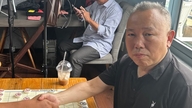
Ms. Nguyen Ngoc Xuan, residing in My Chanh hamlet, My Duc commune, made the effort to travel from Can Tho city back to her hometown to participate in the temple worship ceremony. She said she wanted to pay respects to the gods and then visit relatives at the end of the year. “Every year I visit the temple first, then go on pilgrimages to other places before returning to Can Tho. I always try to come back to my homeland at least once, especially during the time when the year is ending and Tet (Lunar New Year) is approaching,” Ms. Xuan shared.
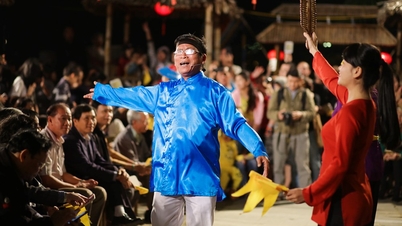
In that sacred atmosphere, I respectfully lit an incense stick and prayed for good fortune in the new year. It was also a time to reflect on the past year, to see where I had come and what I had accomplished. Outside the temple, the lively sounds of people laughing and talking mingled with the music of the traditional Vietnamese orchestra playing the Nam Xuan melody, filling people's hearts with joy as they welcomed the new year.
Humanistic significance
Besides the sacred rituals, the Chạp Miếu ceremony also contains humanistic meaning, educating people to be grateful to their ancestors who contributed to the reclamation and development of the land. At Thới Sơn communal house in Thới Sơn ward, the atmosphere during the Chạp Miếu ceremony is warm and welcoming.
Mr. Bui Van Bang, Head of the Management Board of Thoi Son Revolutionary Historical Relic Site, said: "Every year, we organize the Ky Yen Ha Dien and Ky Yen Thuong Dien ceremonies in May and November of the lunar calendar, which are the largest in scale, with a large number of participants. The Cham Mieu ceremony is on a smaller scale."
According to Mr. Bang, at Thoi Son communal temple, the ancestral worship ceremony takes place on the 25th day of the 12th lunar month, with a simple but respectful offering of rice. At that time, the management board of the historical site, the temple's worship committee, and local people gather together to pray for peace and prosperity in the new year. What is commendable is that the people of Thoi Son have a tradition of loving their homeland, so even those living far from home still make time to return to their ancestral village to worship their ancestors and pray for good fortune in their careers. “The ancestral worship ceremony can be understood as a milestone to let go of the village's misfortunes and move towards a better future. According to custom, after the 25th day of the 12th lunar month, all the bells in the temple are covered with cloth, signifying a temporary cessation of activity. On the 7th day of Tet (Lunar New Year), after the ceremony of taking down the ceremonial pole, the cloths are removed so that the bells can ring again,” Mr. Bang said.
In Mr. Bang's story, the Thoi Son communal house is like the common home of the village community. The ancestral worship ceremony is quite similar to the custom of welcoming ancestors back for Tet (Lunar New Year) in Vietnamese families. "On the 30th day of the 12th lunar month, we prepare a feast to offer to the village guardian deity, the ancestors, and later generations. At the end of the year, quite a lot of Thoi Son people come to the communal house to immerse themselves in the sacred atmosphere and pray for their ancestors' blessings for their descendants," Mr. Bang shared.
On New Year's Eve or during the inauguration and lowering of the New Year's pole ceremony, the people of Thoi Son often go to the communal house to light incense and offer prayers. They may go to Buddhist temples or enjoy the spring festivities, but they never forget to visit the communal house to light incense for the deities. This is a beautiful humane tradition, educating the younger generation about gratitude to their ancestors who pioneered and developed the land, making Thoi Son prosperous as it is today.
For those who grew up near the village communal house, the ancestral worship ceremony remains something sacred. It provides an opportunity for people to return home, reflect on their past journey, and look forward to the future with many hopes for the new year.
MINH QUAN
Source: https://baoangiang.com.vn/hoi-lang-cuoi-nam-a475969.html