

(NLĐO) - The "AI for a Better World" conference is an opportunity to discuss the application of AI in science and to address pressing global challenges.
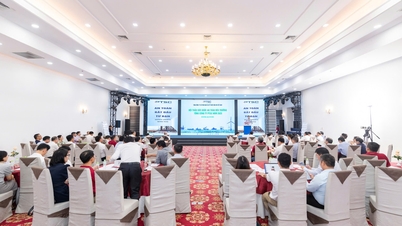
On January 11th, Saigon International University (SIU) organized the "AI for a Better World" conference, focusing on current global issues such as: developing safe and sustainable AI; augmented intelligence systems combining natural intelligence and AI; and governments using AI to best serve citizens.
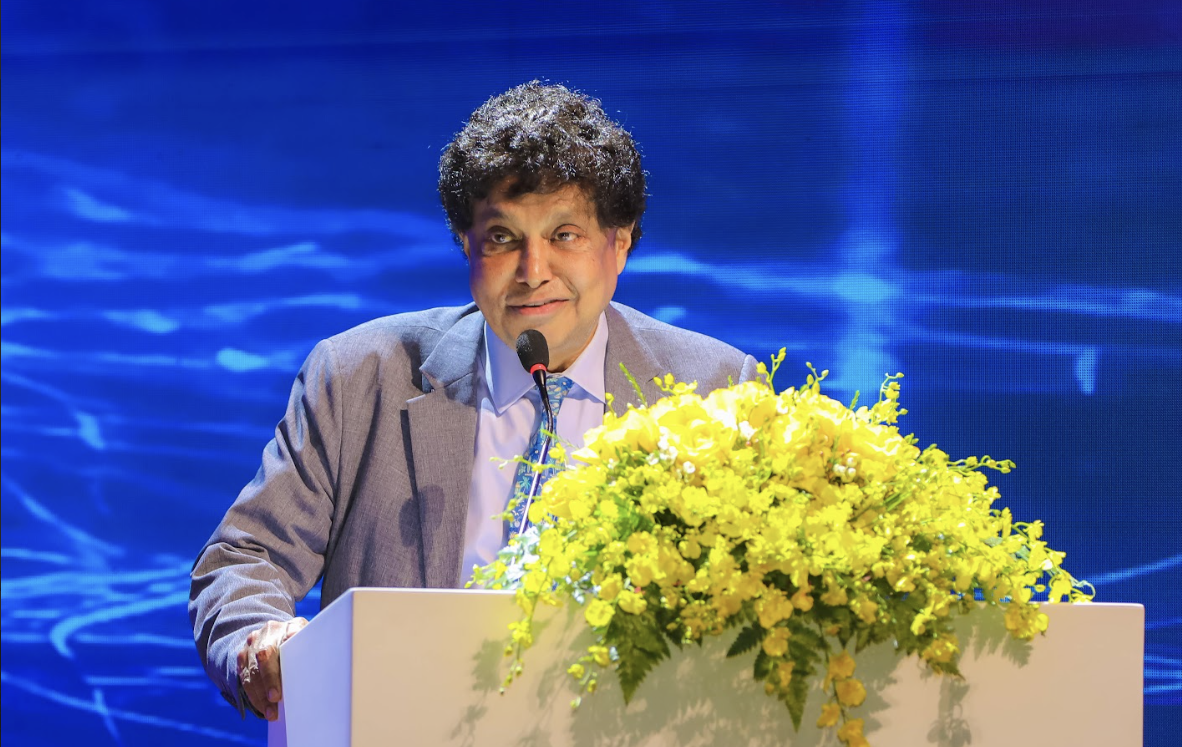
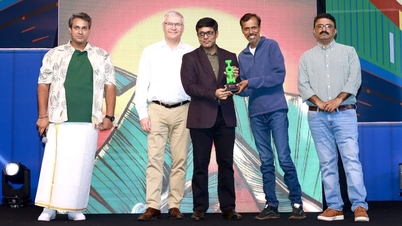
Foreign experts share insights on artificial intelligence (AI) at the conference.
Saigon International University announced that the conference brought together nearly 500 international and domestic delegates. This event provided an opportunity for scientists and experts to discuss the application of AI not only in science but also in addressing pressing global challenges in fields such as healthcare, education , and governance.
Notably, the conference attracted nearly 30 in-depth research papers from world-class scientists, focusing on groundbreaking applications of AI technology in various fields such as healthcare, education, environment, and social technology. Many presentations addressed concerns of AI users worldwide, such as job losses and fraud.
Drawing an example from the establishment of a federal system that has effectively changed governance, Sharad Sharma – Senior AI Advisor to the UN Secretary-General, member of the National Entrepreneurship Advisory Council (India), and co-founder of the iSPIRT Foundation – relates this to the story of AI applications becoming a digital infrastructure for regional and national governance.
He shared that India has built public infrastructure in the digital space and created a strong digital transformation. In particular, protocols can be applied to many different fields such as commerce, healthcare, etc. Public technologies that are effectively applied in India can be shared with other countries, provided that their application in that country is culturally and socially compatible to create the most suitable system.
Concluding the workshop, Mr. Ramu Damodaran, Permanent Observer of the University for Peace (UPEACE) at the United Nations, expressed his hope that all stakeholders – from governments to educational institutions, technology companies, and civil society organizations – would work together to accomplish common tasks, including: Collaborative research, development, and the establishment of a policy framework to ensure the ethical use of AI, prioritizing public interest; investing in scalable infrastructure and human capital, along with interdisciplinary academic fields to continuously advance AI improvements; and advocating for a transparent, accountable, open, and human-dignified AI technology that ensures everyone has access and promotes global cooperation.
Source: https://nld.com.vn/hoi-thao-quy-mo-lon-ve-tri-tue-nhan-tao-tai-tp-hcm-196250111175742314.htm


![[Photo] Closing Ceremony of the 15th Conference of the Central Committee of the 13th Party Congress](/_next/image?url=https%3A%2F%2Fvphoto.vietnam.vn%2Fthumb%2F1200x675%2Fvietnam%2Fresource%2FIMAGE%2F2025%2F12%2F23%2F1766462841764_a1-bnd-3731-1647-jpg.webp&w=3840&q=75)









































































Comment (0)