



Standing on the embankment of the Red River, gazing out at the endless fields of flowers stretching into the distance, few would imagine that just a few months ago, this place was still submerged in mud and devastated after the severe flooding in October. Hundreds of hectares of Tet flowers were submerged by floodwaters, many households faced the risk of losing everything, all their hard work and capital invested throughout the year suddenly vanished.
Quickly tying up the vibrant chrysanthemum bushes, Mrs. Tran Thi Dung, from Nam Phong residential area, shared: “This year, the joy of a bountiful harvest came to My Tan later than usual. But it was precisely in this difficult time that we, the people, united and helped each other revive each flower bed. Now that the flowers are ready for harvest, we are very happy.”

According to Ms. Dung, immediately after the floodwaters receded, the local people quickly set about restoring production. The land was rehabilitated, new seeds were planted, and each flower bed was meticulously cared for more than ever before. By this time, many flower fields that had been devastated by the flood have donned a new look. The flowers are blooming evenly, the plants are healthy, and the buds are firm, promising a prosperous Tet season, partially compensating for the previous losses.
Amidst the flower fields of Hong Ha 1 residential area, Mr. Vu Duy Hoc, one of the leading households in the restructuring of crop cultivation, is busy tending to the chrysanthemum beds, preparing for their peak bloom. Utilizing 5 sao (approximately 0.5 hectares) of riverside land along the Red River, Mr. Hoc boldly researched and switched from traditional vegetable farming to growing various types of flowers for holidays and Tet (Lunar New Year).
In the early days of his business, he faced numerous difficulties due to a lack of capital, limited experience, and inconsistent farming techniques. However, through hard work and perseverance, Mr. Hoc quickly mastered the techniques. Besides growing flowers, he also supplies seedlings to many nurseries inside and outside the province, earning several hundred million dong each year.

Despite the floods having almost completely destroyed his flower fields, Mr. Hoc quickly restored production, focusing on growing key flower varieties such as marigolds and Korean chrysanthemums. To date, the flower fields are growing and developing well, and are expected to bloom in time for Tet (Vietnamese Lunar New Year).
Mr. Hoc shared: “Looking at the lush green flower fields with evenly developing buds, I feel that my efforts have not been in vain. I only hope for favorable weather so that the flowers bloom at the right time, sell at a good price, and give more motivation for the people to continue farming and pursuing this profession. For us, each flower that blooms during Tet is not only an income, but also a joy in bringing spring to every home.”
Not far away, the flower garden of Ms. Nguyen Thi Truc, in Hong Ha 1 residential area, is also in full bloom. The recent floods caused her family to lose about 3 sao (approximately 3,000 square meters) of flowers, estimated at nearly 50 million VND. On a total cultivated area of more than 1 hectare, Ms. Truc promptly restored production as soon as the water receded.
"Growing flowers is hard work, but if you know how to care for them and plant them at the right time, the income can be quite good," Ms. Truc shared. According to her, on average, one sao (approximately 1000 square meters) can grow about 20,000 chrysanthemum plants, and if conditions are favorable, it can yield an income of up to 40-50 million VND per sao per season. To date, her chrysanthemum garden has bloomed uniformly, with large, healthy plants, promising to bring vibrant colors and fragrance during the upcoming Lunar New Year.

According to Mr. Do Van Du, Secretary of the Party Branch of Hong Ha 1 residential area, flower cultivation is not just a profession but has become a livelihood closely linked to the lives of the people here. Hong Ha 1 residential area alone currently has about 30 hectares of land dedicated to flower cultivation, with over 90% of households participating. Thanks to flower cultivation, the economic lives of the people have gradually improved, with many families earning stable incomes of several hundred million dong per year, contributing to changing the face of the riverside rural area.
"After the natural disaster, the most valuable thing is that the people didn't abandon their profession. Everyone tried to restore and start over to preserve the flower village and maintain their family's livelihood," Mr. Du emphasized.

My Tan flower village (formerly part of My Tan commune, now Thien Truong ward) has long been considered the "flower capital" of the province, with a tradition of flower cultivation spanning decades. Currently, the flower-growing area here exceeds 100 hectares, concentrated mainly in Hong Ha 1 and Hong Ha 2 residential areas, featuring many varieties such as chrysanthemums, lilies, hyacinths, gladioli, petunias, miniature roses, and trumpet lilies. Flowers from My Tan typically have large blooms with many petals and beautiful colors, attracting traders who come directly to the gardens to purchase them for sale in other provinces and cities.
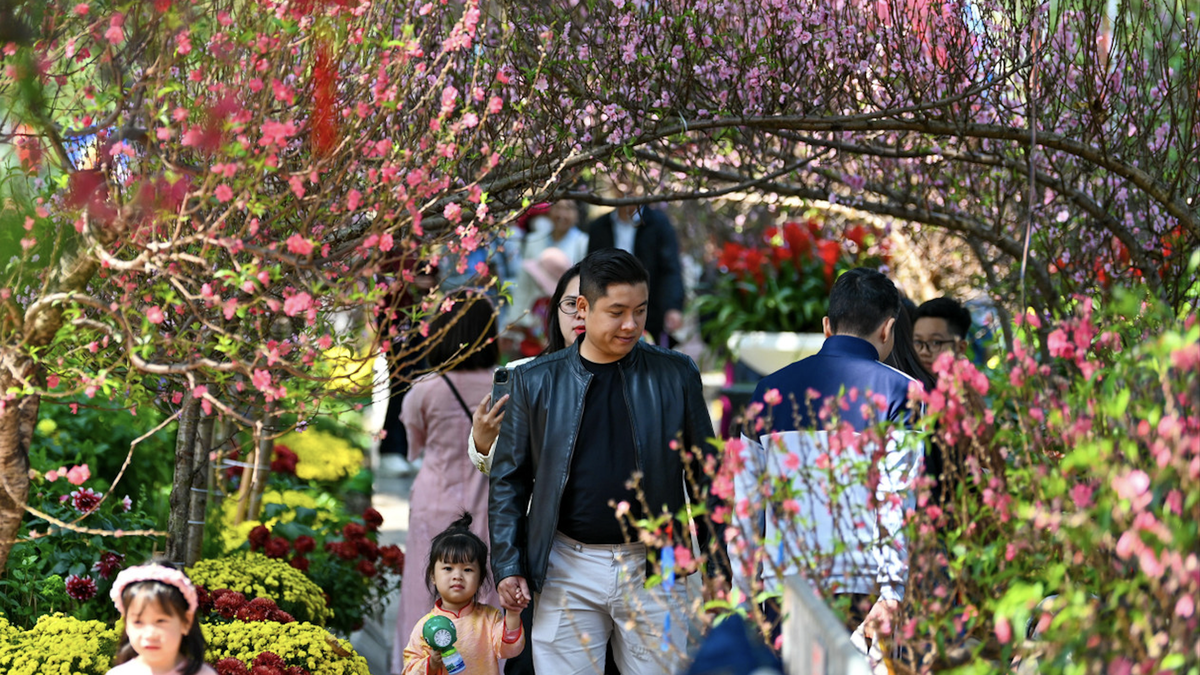
Visit My Tan today to feel the spirit of Tet approaching, where each plump flower bud seems to be encapsulating the hopes of a year filled with challenges. After the storms and floods, what remains in My Tan are the revived farmlands, the spirit of community, and the calloused hands that still steadfastly cling to the land and their craft.
From fields once submerged in floodwaters, the warm spring arrives, a gentle message to the farmers, reminding them that after hardship, the land will once again blossom…
Source: https://baoninhbinh.org.vn/huong-sac-my-tan-260124130616634.html

















































Comment (0)