

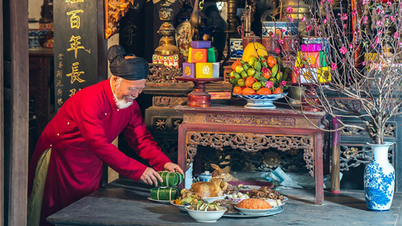
As Tet approaches, no matter how far they may have traveled, Vietnamese people still return to their ancestral homes, where the smoke from the kitchen fires rises on the thirtieth day of the lunar month, and a feast is respectfully placed on the ancestral altar. In folk beliefs, the Tet feast is not only for the living to gather together, but also a respectful plea to their ancestors – those who have passed away but are still present in every aspect of family life.
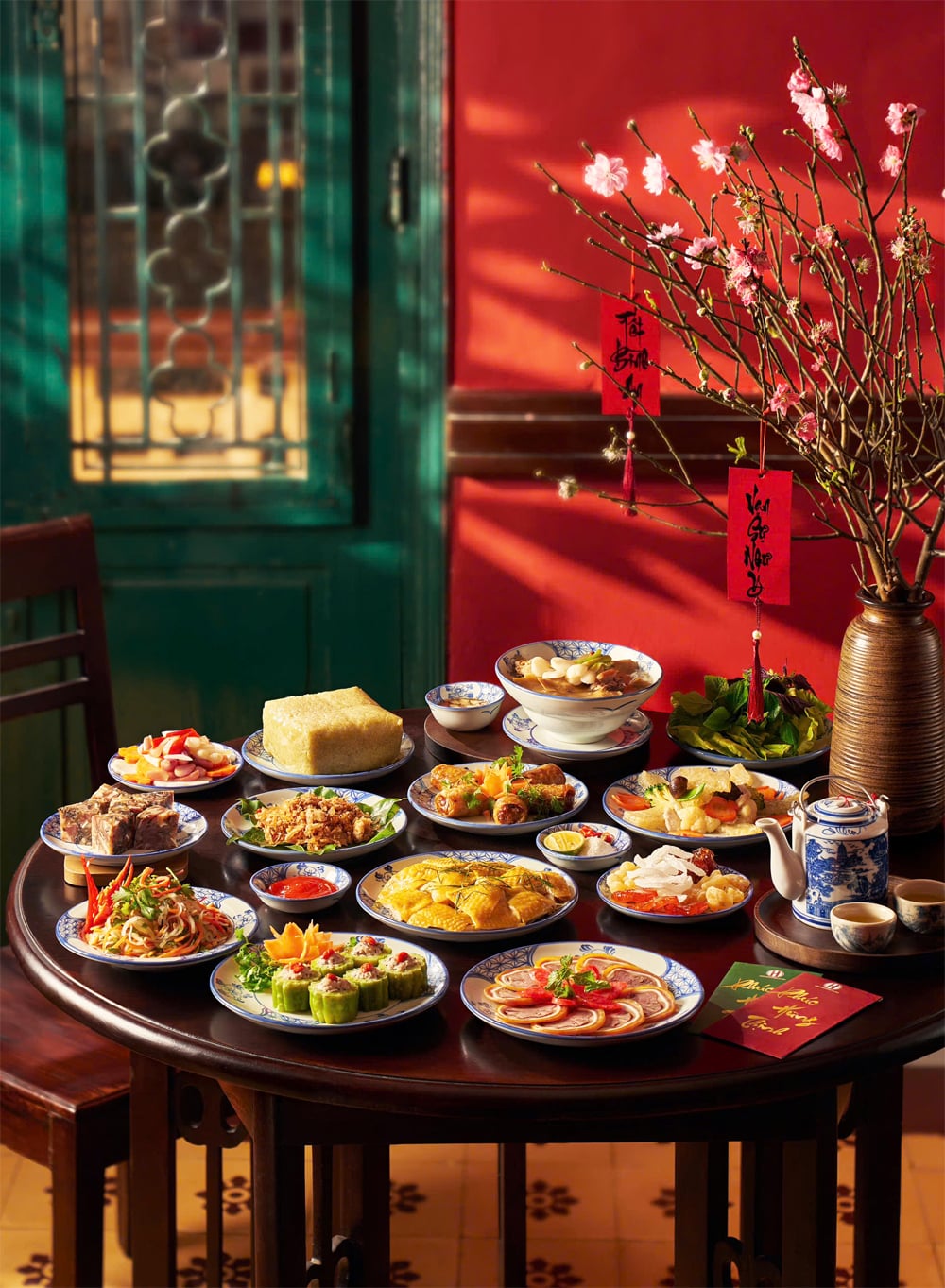 |
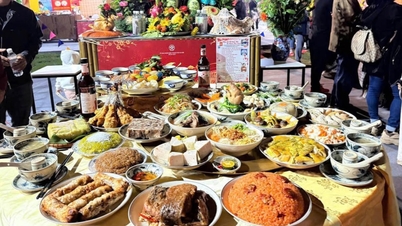
A complete and flavorful Tet feast is meticulously prepared. |
Traditionally, the Tet feast is offered to the ancestral altar at midnight on New Year's Eve or on the morning of the first day of the new year. After the incense-lighting ceremony, the whole family gathers together, starting the new year with a warm meal. This moment is often seen as a time to connect generations, setting aside the worries of the old year to look forward to a better future.
For generations, the Vietnamese New Year celebration has been incomplete without a feast featuring characteristic dishes rarely found on ordinary days. The feast is typically a vibrant display of colors, aromas, and flavors: the lush green of sticky rice cakes (bánh chưng), the deep red of gac fruit sticky rice (xôi gấc), the golden yellow of bamboo shoot soup (canh măng), the rosy hue of pork sausage (giò lụa)… creating a rich culinary tapestry reflecting the distinct Vietnamese identity. However, against this backdrop, each region weaves its own unique characteristics, reflecting the climate, soil, and lifestyle of its people.
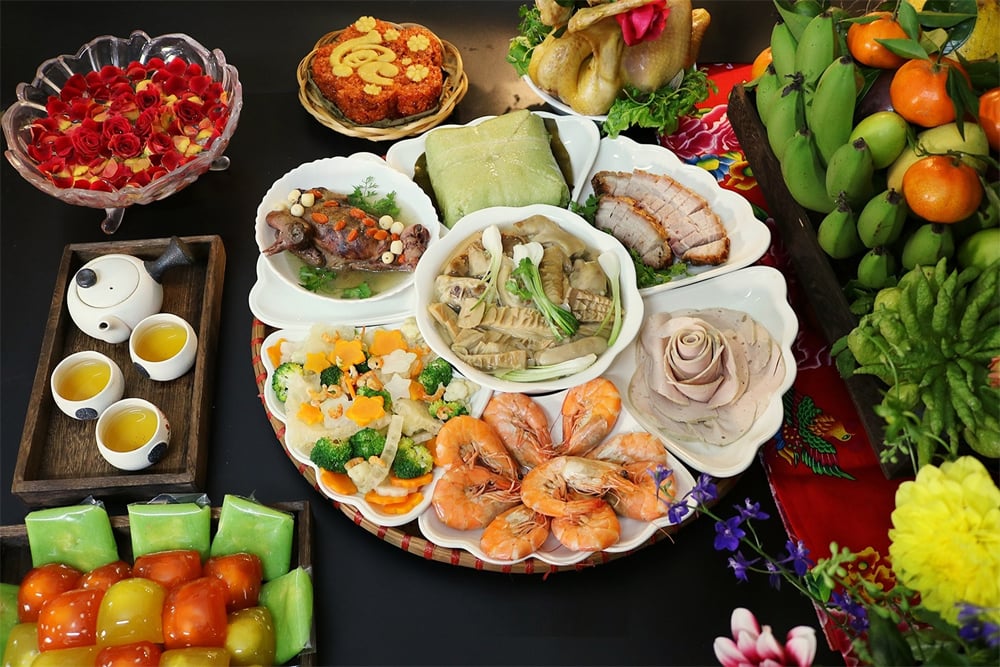 |
A traditional Tet feast in Northern Vietnam features dishes that are rich in energy and flavorful. |
In Northern Vietnam, the weather during Tet (Lunar New Year) is usually cold, so the Tet feast tends to feature dishes that are rich in energy and flavorful. This region has also been the capital for generations, so the Tet feast is often prepared meticulously, paying attention to both appearance and taste, with a balance between soups and dry dishes, and between meat and vegetables.
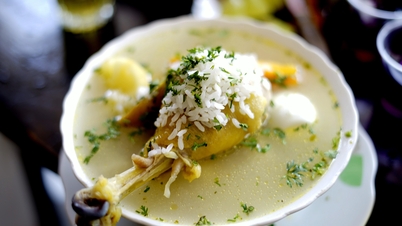
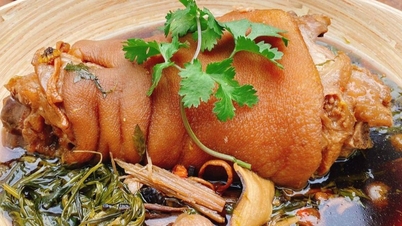
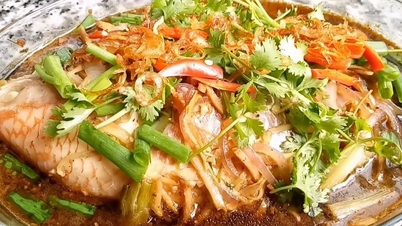
For people in Hanoi , banh chung (sticky rice cake) is an indispensable dish. Alongside it are sticky rice with gac fruit, pork sausage, stir-fried pork sausage, boiled chicken, fried spring rolls, carp or catfish stewed with galangal, and a plate of kohlrabi or papaya salad. Popular noodle soups include vermicelli soup with chicken offal, pork trotters stewed with bamboo shoots, and meatball soup… These dishes create the distinctive flavor of Tet in Northern Vietnam.
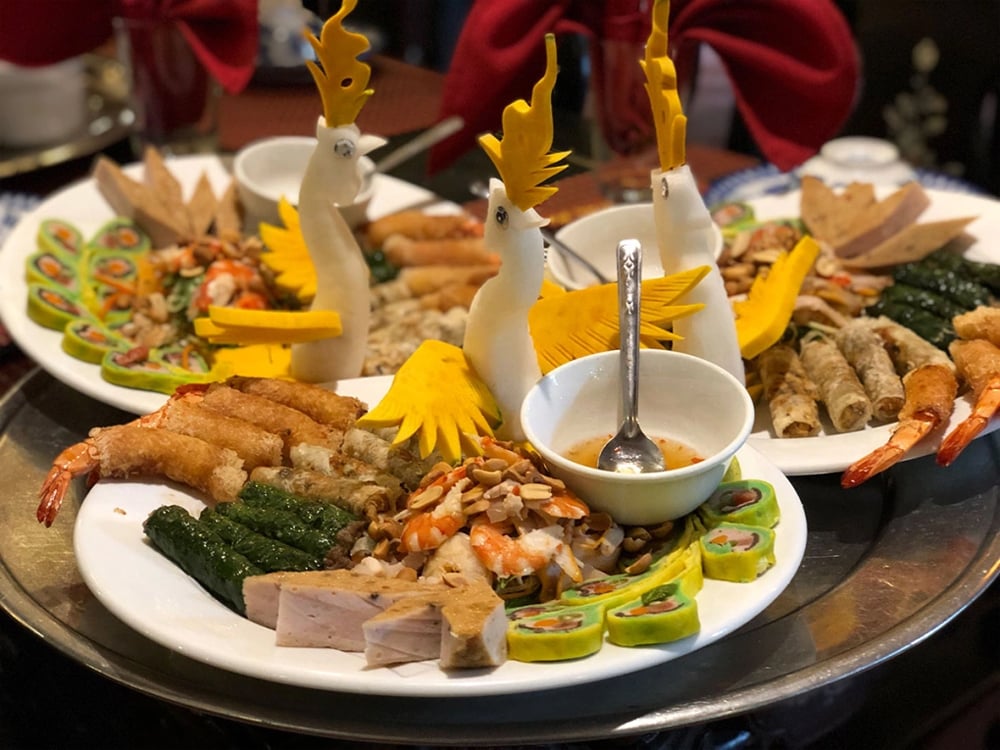 |
Nem cong cha phuong is an iconic dish of Hue's royal cuisine. |
The Tet feast in Central Vietnam is also prepared quite meticulously, but has its own unique characteristics. People in Central Vietnam usually make banh tet instead of banh chung. In addition, there are banh to, banh in, nem chua, and thit giam. In Hue, where many aspects of royal cuisine are still preserved, the Tet feast is even more elaborate with dishes such as sour shrimp and sliced pork, grilled beef skewers, shrimp cakes, and fig salad.
While Northern Vietnam has pickled onions, Central Vietnam has pickled vegetables, made from carrots, papaya, and shallots pickled in a salty and sour brine. Despite the simple ingredients, preparing pickled vegetables requires skill to achieve the right crispness and harmonious flavor.
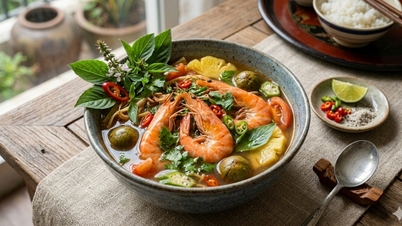
In contrast, the Tet feast in Southern Vietnam is usually simpler, featuring the abundant produce of the riverine region. The three most characteristic dishes are banh tet (sticky rice cake), braised pork, and bitter melon soup.
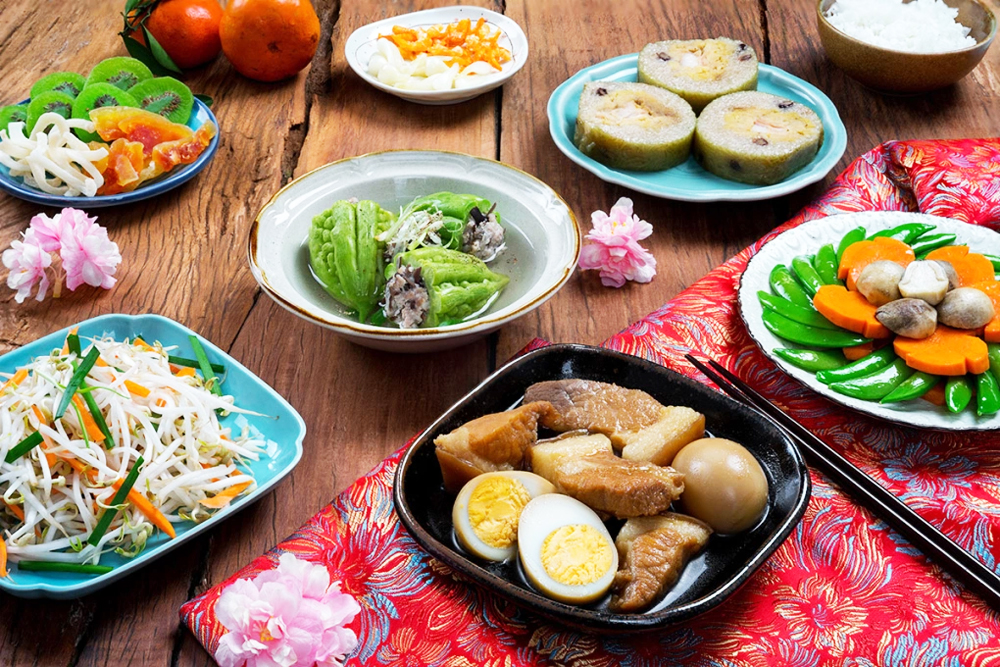 |
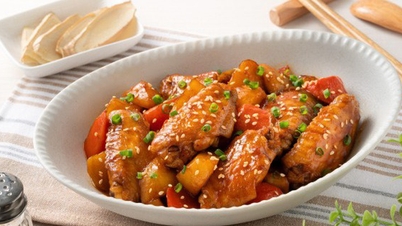
Traditional dishes for Tet (Vietnamese New Year) in Southern Vietnam. |
In Southern Vietnam, there are many types of bánh tét, such as savory bánh tét, vegetarian bánh tét, and sweet bánh tét. Some localities, like Trà Cuôn (Trà Vinh, now part of Vĩnh Long), are famous for their bánh tét making. The braised pork with eggs dish is usually cooked with coconut milk and served with white rice and pickled vegetables. A bowl of bitter melon soup stuffed with meat symbolizes bidding farewell to the difficulties of the old year and looking forward to a more prosperous new year.
In urban areas, Tet feasts are also adjusted to be healthier, with less oil and fat and more vegetables. However, no matter how it changes, traditional Vietnamese Tet cuisine still retains its unique identity, being both familiar and rich in cultural significance.
For many people living far from home, returning home for Tet to prepare the festive meal with their families remains a sacred experience, helping them to better appreciate the value of family bonds and traditions.
Source: https://baobacninhtv.vn/huong-vi-tet-trong-mam-co-ba-mien-postid439297.bbg
![[Image] Hanoi's urban life under the challenge of a "scorching hot" environment](https://vphoto.vietnam.vn/thumb/1200x675/vietnam/resource/IMAGE/2026/05/25/1779706979265_nang-nong-t5-2026-minh-duy-7-4636-jpg.webp)
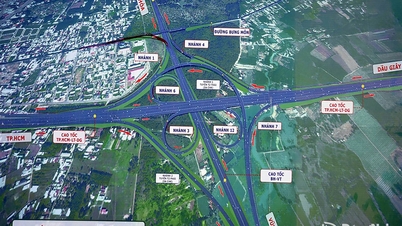
![[Image] Close-up view of the interchange connecting the two expressways and Long Thanh Airport.](https://vphoto.vietnam.vn/thumb/1200x675/vietnam/resource/IMAGE/2026/05/25/1779703378210_ndo_br_z7863716673926-224453a31600126cce10622af6290afd-4549-jpg.webp)










































































Comment (0)