

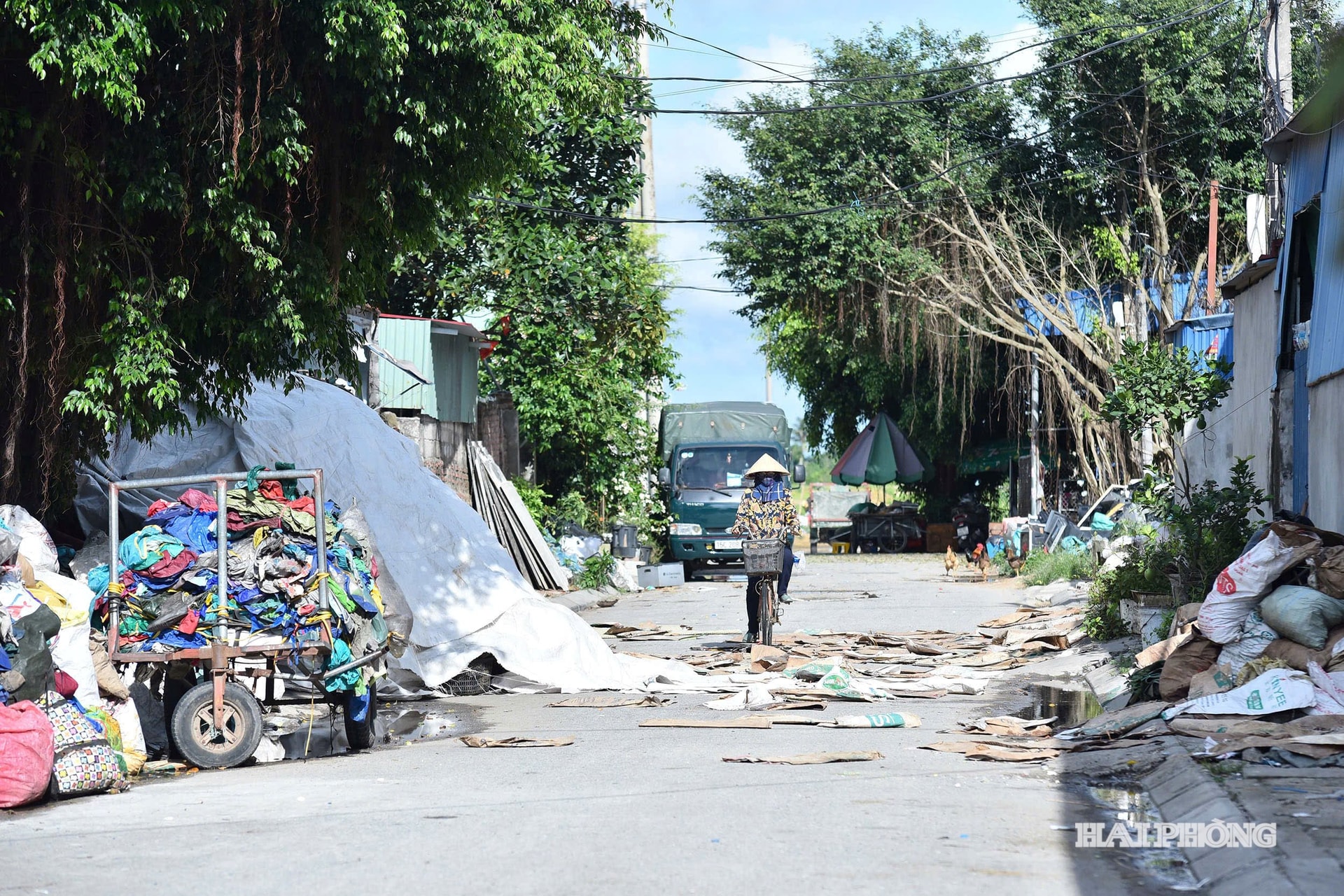
Lack of environmental protection infrastructure.
According to Pham Van Thuan, Deputy Director of the Department of Agriculture and Environment, there are 78 craft villages in the city, of which 17 are still operating in the eastern area and 1 is no longer operating (Tien Sa rattan and bamboo weaving village), while 60 are still operating in the western area.
Besides their economic and cultural value, production activities in craft villages in Hai Phong also pose many environmental challenges. A large portion of wastewater generated is not collected and treated according to regulations. The wastewater collection and treatment infrastructure is inadequate and lacks uniformity, posing a potential risk of pollution. Many types of hazardous solid waste and ordinary industrial solid waste are not managed and treated in accordance with regulations. Noise, emissions, and dust from production activities also directly affect the lives of local residents.
For example, the My Dong mechanical casting village (Le Ich Moc ward) has a history of over 100 years with approximately 150 production households interspersed within residential areas. Each day, the village generates about 700 m³ of solid waste from its production activities. A survey conducted in February 2026 by the Department of Agriculture and Environment revealed that the village lacks an environmental protection plan. Most production facilities have not completed their environmental documentation, have not established village regulations or environmental protection agreements, and lack a centralized wastewater and exhaust gas collection and treatment system. Untreated waste is affecting surface water, air quality, and the health of local residents.
The Trang Minh scrap recycling village (Phu Lien ward) was established in the 1980s and currently has 91 households participating in production, with an output of approximately 50 tons per day. Despite investing in a wastewater treatment system with a capacity of 500 m³ /day, the village still faces difficulties due to the overload of waste and accumulated scrap materials. Meanwhile, the collection of solid waste is also inadequate in the Hoang Dieu leather shoe manufacturing village in Gia Phuc commune.
Find fundamental solutions.
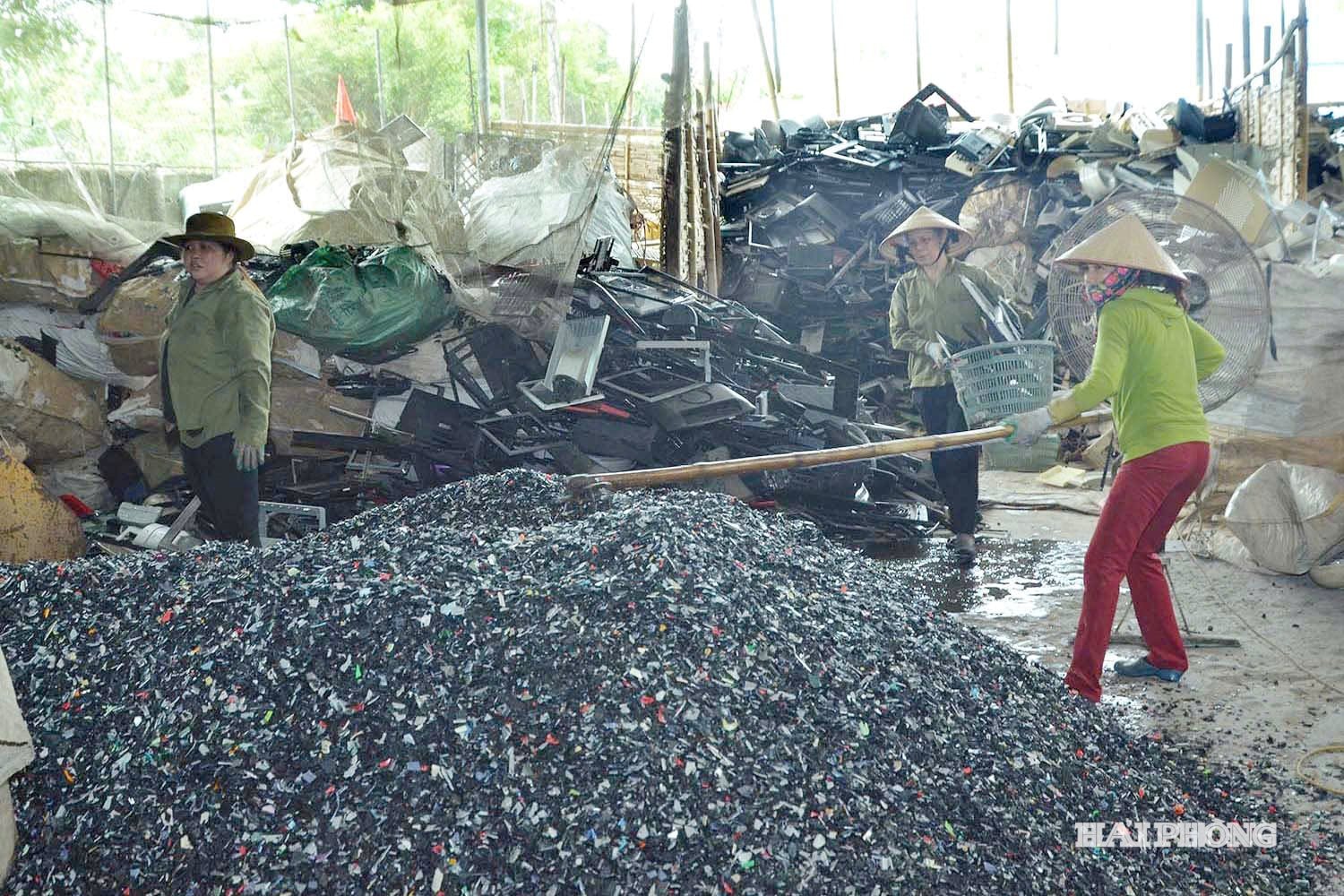
Environmental pollution in craft villages has been a long-standing problem, but it is not easy to overcome. The majority of production households operate on a small scale, spontaneously, and lack the resources to invest in environmental protection infrastructure. Many production facilities are also interspersed within residential areas.
Comrade Bui Van Thang, Member of the Standing Committee of the City Party Committee and Director of the Department of Agriculture and Environment, affirmed that, along with economic efficiency and job creation for thousands of workers, the issue of environmental pollution in craft villages needs to be addressed.
On May 12, 2026, the Department of Agriculture and Environment issued Document No. 5187/SNNMT-QLMT on strengthening environmental protection in craft villages in the city. Accordingly, to find effective solutions, a comprehensive survey and assessment of production activities in craft villages is needed.
The Department requests that the People's Committees of communes and wards review and provide data on environmental protection in craft villages before May 25, 2026; and at the same time, inspect existing production facilities in residential areas, encouraging them to relocate to concentrated production zones or switch to environmentally friendly production models. Local authorities should develop plans to shift industries that are not encouraged to develop in craft villages, relocate production facilities out of residential areas, and proactively improve environmental protection infrastructure.
Based on a comprehensive assessment of the current state of production activities, the department will advise on solutions to improve the effectiveness of state management in environmental protection in craft villages. Initially, localities need to strengthen propaganda and guidance for production households on waste sorting at source and preliminary wastewater treatment before connecting to the centralized treatment system; at the same time, they should promptly detect and prevent illegal wastewater discharge and review and establish self-governing organizations for environmental protection in craft villages in accordance with regulations.
BAO CHAUSource: https://baohaiphong.vn/khan-truong-cai-thien-moi-truong-lang-nghe-543222.html



























































































Comment (0)