The aspiration to revive the forests.
Nguyen Le Ngoc Linh was born and raised in a Tho ethnic family in the mountainous area of Hoa Quy commune, Nhu Xuan district (now Hoa Quy commune, Thanh Hoa province). In 2013, Linh graduated from university and started working at a company with a stable income. However, during her visits back home, witnessing the desolate forests and vast but barren and infertile land, Linh was deeply troubled by the reality that local people lacked sustainable livelihoods and the information and knowledge to rationally exploit forest resources.
With a lifelong love and passion for the mountains and forests, coupled with the knowledge accumulated during her studies and work, Linh harbored a burning desire to revitalize the forests and create stable livelihoods for her fellow villagers. For Linh, the problem wasn't just about capital or land; the core issue was that the people in the mountainous regions lacked information and concrete models to learn from and emulate.
Without hesitation, in 2019, Linh started building a "Native Forest Garden" model on 3 hectares of her family's hillside land. The early days of her entrepreneurial journey were not easy; capital was limited, and her knowledge of farming, medicinal plants, and forest development was still lacking. Linh worked while simultaneously researching information, learning through books, newspapers, training courses, advice from technical staff, and from practical production experience.
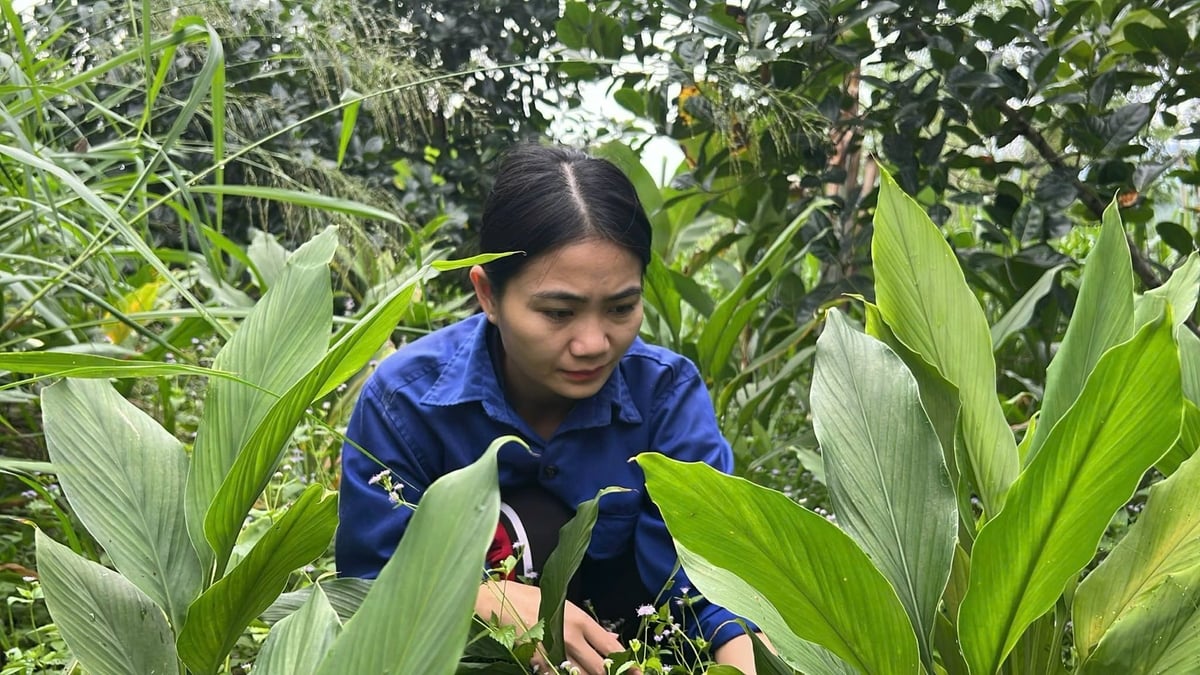
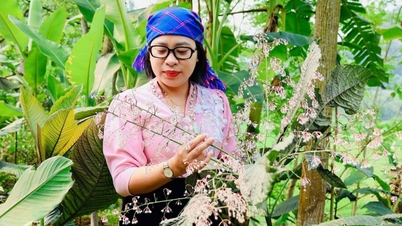
Nguyen Le Ngoc Linh grows medicinal plants under the forest canopy. Photo: Thanh Tam.
Persistently pursuing her chosen path, once she had secured sufficient capital, Linh purchased native tree species such as teak, mahogany, and black star to reforest the area, while also planting medicinal plants under the forest canopy. She absorbed and selectively applied knowledge of natural farming practices and ecosystem conservation to suit local conditions.
In 2020, Nguyen Le Ngoc Linh established the Ban Tho Cooperative with 7 members, mostly ethnic minorities and near-poor households. The cooperative collaborates with people living in the core areas of national and protected forests, raising bees under the canopy of old-growth forests and building a processing plant for fermented herbs and honey.
Sustainable agricultural development in mountainous regions
By the end of 2024, the Thổ village forest garden had reforested 6 hectares of barren hills with over 100 tree species such as: ironwood, Terminalia catappa, chestnut, Magnolia officinalis, Macadamia oleifera, and other varieties. Interspersed among these, medicinal plants (moringa, ginger, garlic, turmeric, perilla, chrysanthemum, butterfly pea, dandelion) were cultivated entirely organically, balancing production with the conservation of the natural ecosystem, and beekeeping for honey production was also practiced within the forest.
The indigenous forest garden model does not use chemical fertilizers, herbicides, pesticides, or growth stimulants, but allows plants to grow and develop naturally. At the same time, it retains grass and fallen leaves to retain moisture, create humus, and provide nutrients to the soil. The model is produced on natural hillside land, preserving all existing plant species without destroying the ecosystem.
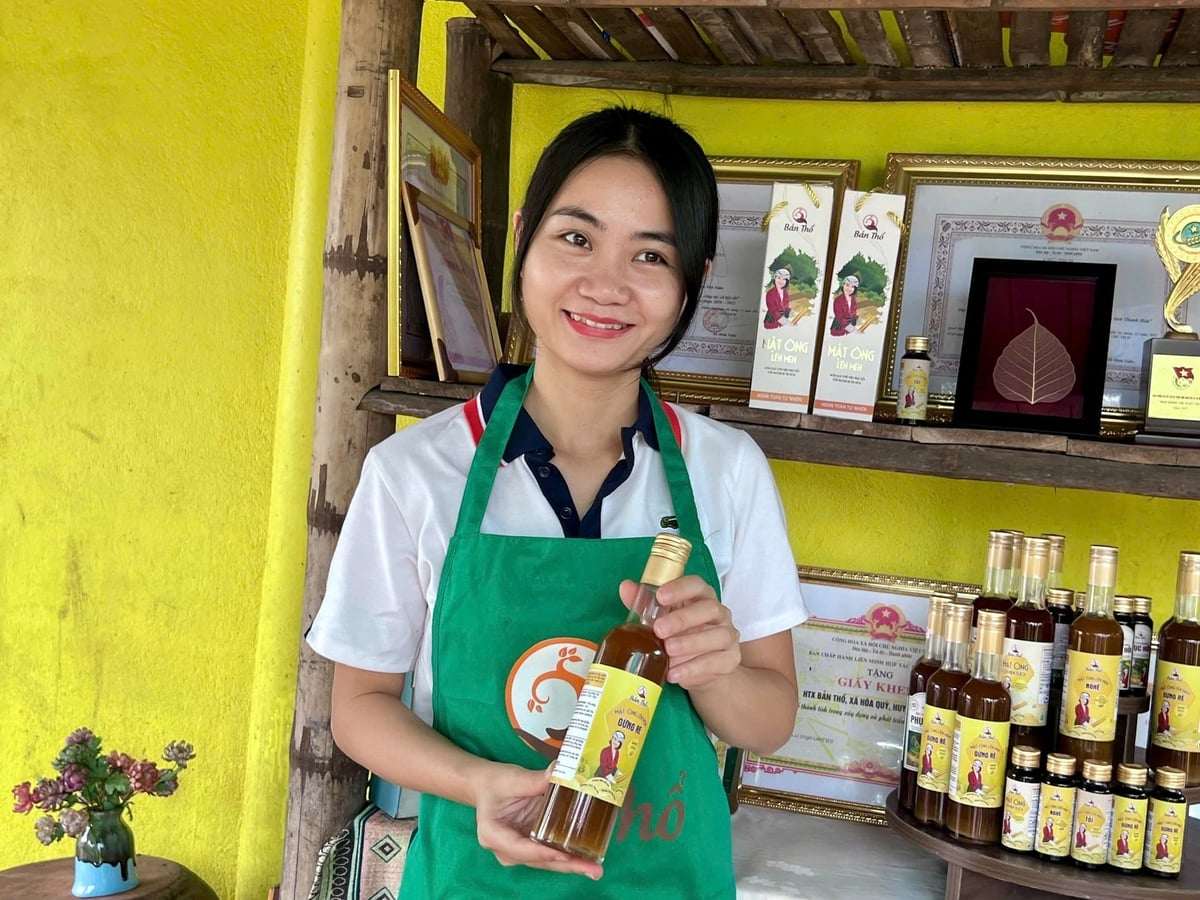
This honey product is fermented from medicinal herbs grown under the forest canopy. Photo: Thanh Tam.
The fermented honey product, combined with local medicinal herbs such as ginger, purple garlic, turmeric, moringa, and freeze-dried mint leaves, acts as both a natural antibiotic and contains many enzymes and beneficial bacteria that support the human digestive and immune systems. Currently, the Ban Tho Cooperative has 17 members and is linked with 23 farming households.
Nguyen Le Ngoc Linh was determined to overcome difficulties with the goal of creating a sustainable forest garden model, reviving forests; greening barren, uncultivable land with medicinal plants, aiming towards developing organic agriculture linked to the agricultural value chain. At the same time, creating sustainable livelihoods and improving income for local people.
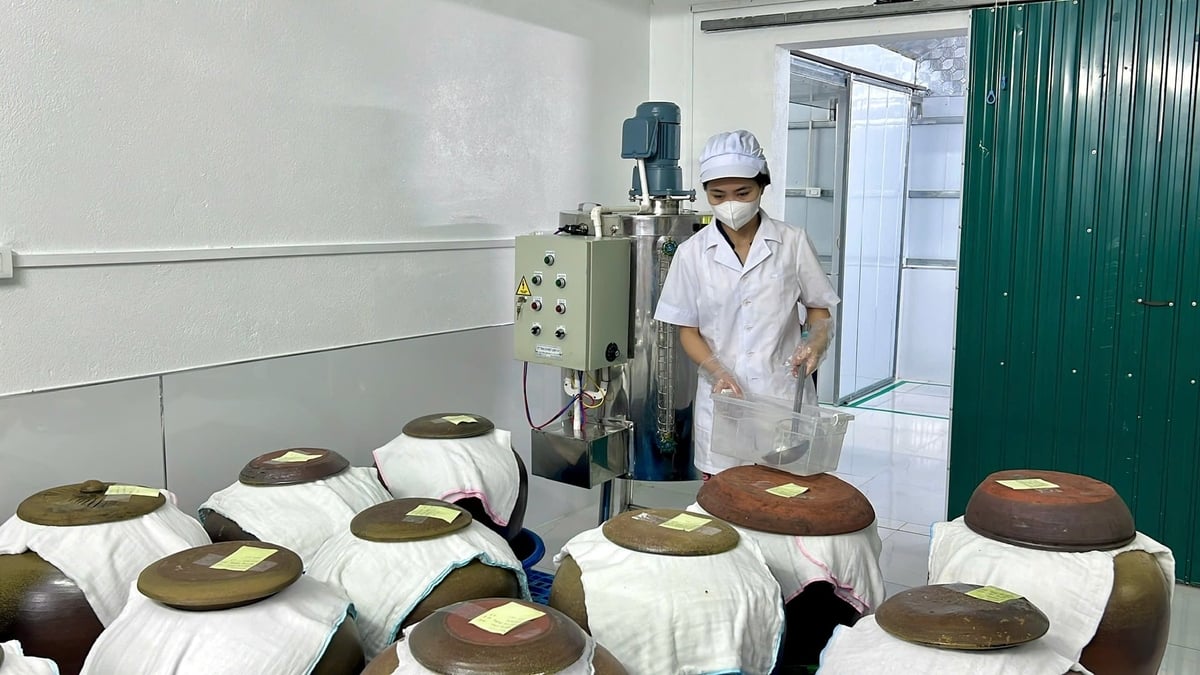
Honey is fermented with herbs. Photo: Thanh Tam.
In addition, the cooperative provides employment for 7 permanent workers, with an average income of 7 million VND/person/month, and 20 seasonal workers. Annually, it transfers scientific and technical advancements to approximately 20 households. From the business of its products, the Bản Thổ Forest Garden model achieves a revenue of 1.4 billion VND/year and an income of 300 million VND/year.
After more than six years of pursuing its own path, the aspiration to regenerate forests has now yielded results. The model of a naturally developed indigenous forest garden creates a stable and sustainable ecosystem, making a significant contribution to green growth , environmental protection, greenhouse gas emission reduction, and climate change adaptation.
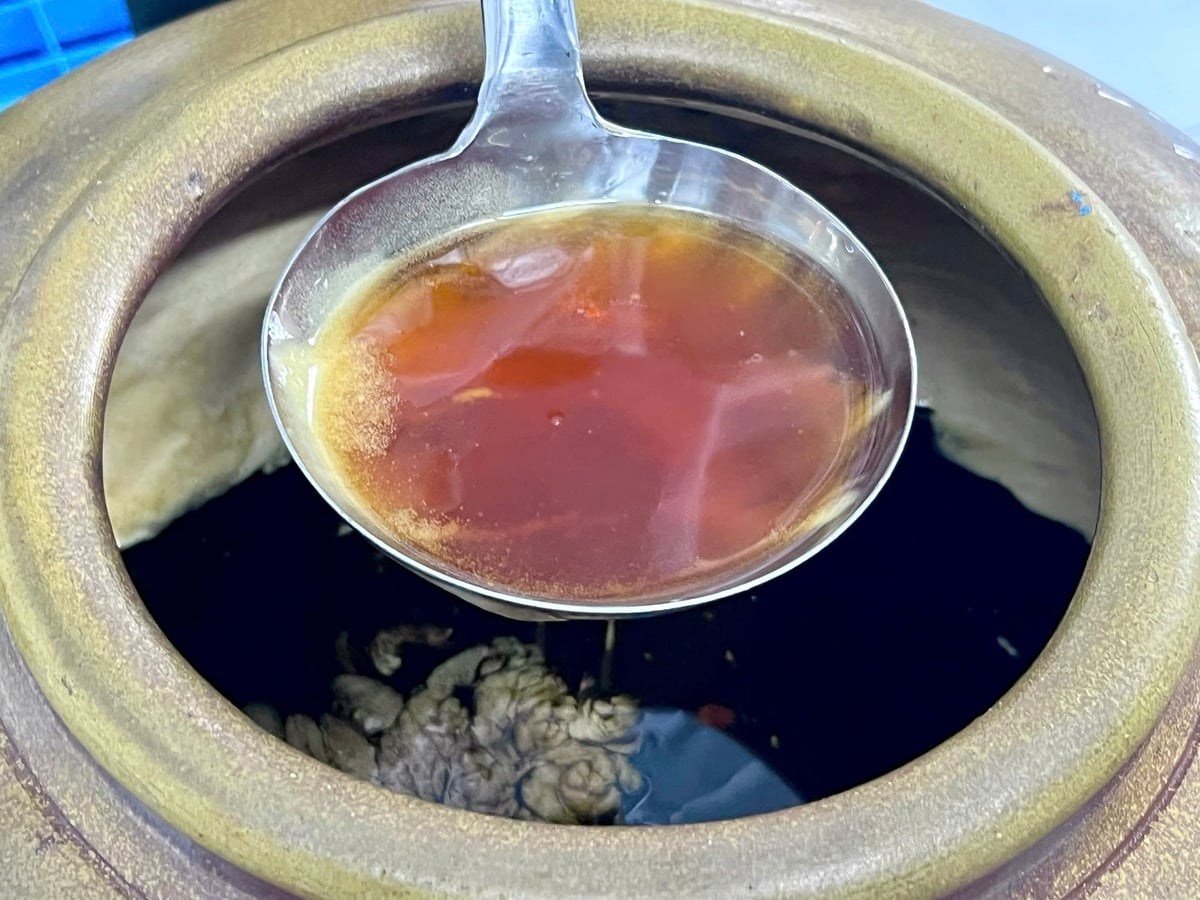
Honey has been fermented with herbs. Photo: Thanh Tam.
Evaluating the effectiveness of the "Native Forest Garden" model and the direction of developing the movement of skilled farmers in production and business in mountainous areas, Mr. Vu Tien Dung, Vice Chairman of the Thanh Hoa Provincial Farmers' Association, believes that in order for ecological and organic agricultural economic models to continue to be replicated, more comprehensive and practical solutions are needed.
According to Mr. Dung, first and foremost, it is necessary to focus on policies to attract young intellectuals to mountainous areas, especially those with scientific and technical knowledge, a spirit of innovation, and a willingness to commit long-term to ethnic minority regions, contributing to supporting the people in developing the economy and improving their living standards.
Furthermore, increasing preferential loan capital and simplifying loan procedures for farmers is a key factor in helping farmers and cooperatives easily access resources for production investment. At the same time, there is a need for specific support policies for exemplary and promising cooperative models, linking production with agricultural product consumption chains and building sustainable product brands in the market.
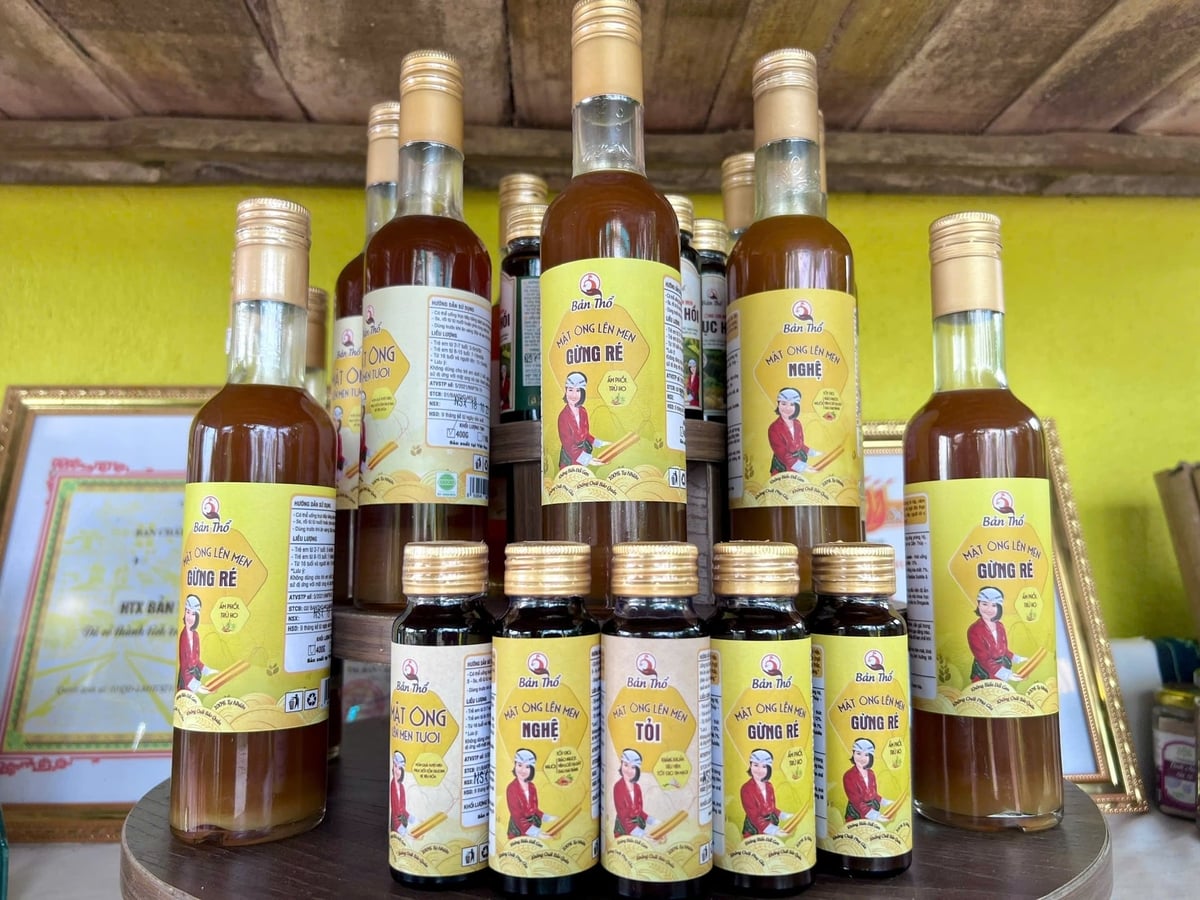
These products are reborn from the forests. Photo: Thanh Tam.
Mr. Dung also emphasized the role of developing organic agriculture in mountainous regions towards commercial agriculture, green, clean, safe, circular production, and adaptation to climate change; forming concentrated production areas, creating high-quality specialty products and OCOP products.
In addition, it is necessary to strengthen promotional and trade activities, support farmers and cooperatives in bringing their products to e-commerce platforms and social networks, in conjunction with the application of digital transformation in agriculture.
"Commending and replicating exemplary models like the 'Native Forest Garden' model will create a competitive spirit, spread the spirit of excellent production and business, and contribute to promoting sustainable socio-economic development in mountainous areas," Mr. Vu Tien Dung affirmed.
Source: https://nongnghiepmoitruong.vn/khat-vong-tai-sinh-rung-tao-sinh-ke-ben-vung-d789917.html



![[Photo] General Secretary and President To Lam presides over a meeting with the Central Organizing Committee.](https://vphoto.vietnam.vn/thumb/1200x675/vietnam/resource/IMAGE/2026/06/03/1780482764658_a1-bnd-4741-3342-jpg.webp)
![[Photo] Secretary of the National Assembly Party Committee, Chairman of the National Assembly presides over the meeting of the Standing Committee and Executive Committee of the National Assembly Party Committee.](https://vphoto.vietnam.vn/thumb/1200x675/vietnam/resource/IMAGE/2026/06/03/1780480353201_ndo_br_bnd-2585-jpg.webp)
![[Photo] First session of the 14th Congress of the Vietnam Trade Union](https://vphoto.vietnam.vn/thumb/1200x675/vietnam/resource/IMAGE/2026/06/03/1780465947883_ndo_br_img-3852-jpg.webp)

![[Infographics] Functional groups of digital applications in Thanh Hoa](https://vphoto.vietnam.vn/thumb/402x226/vietnam/resource/IMAGE/2026/06/03/1780479770325_infographics-ca-w1200t0-di2622d199d3163702t11359l1-cac-nhom-chuc-n3.webp)




















![The Essence of Viet Bac Villages: [Part 3] The Precious Fragrance of Nghinh Tuong](https://vphoto.vietnam.vn/thumb/402x226/vietnam/resource/IMAGE/2026/05/29/1780020600366_5237-tinh-tuy-ban-lang-viet-bac-bai-3-chuyen-o-nghinh-tuong-050626_700.jpeg)
![The Quintessence of Northern Vietnam's Villages: [Part 2] The Famous Cassava Noodles of Kunming](https://vphoto.vietnam.vn/thumb/402x226/vietnam/resource/IMAGE/2026/05/28/1779937455892_3929-3144-mien-dong-15-nongnghiep-023138.jpeg)
![The Essence of the Village: [Part 1] Wine on the mountain, tea in the clouds - Bang Phuc](https://vphoto.vietnam.vn/thumb/402x226/vietnam/resource/IMAGE/2026/05/27/1779841729178_3821-1jpg-nongnghiep-103814.jpeg)















![[Video] Sunset at Lap An Lagoon – Where the sun sets over the fishing nets](https://vphoto.vietnam.vn/thumb/1200x675/vietnam/resource/IMAGE/2026/05/31/1780192137701_beach-landscape-sea-water-nature-grass-745871-pxhere-com.jpeg)





























Comment (0)