

From conversations with chatbots to controversial incidents in Japan.
According to investigators, the incident occurred at Shinnosuke Abe's home in Shibuya Ward, Tokyo. While his two daughters were arguing, the former baseball star reportedly intervened to prevent them from continuing their conflict.
However, the situation quickly escalated when the eldest daughter reacted. In a fit of anger, Abe allegedly grabbed her by the collar and threw her to the ground. Although the girl was not injured, the incident subsequently led to police intervention and his arrest at his home.
What particularly drew public attention was not the altercation itself, but the way the incident was discovered.
 |
The 18-year-old daughter of Yomiuri Giants head coach Shinnosuke Abe said she sought advice from the AI chatbot ChatGPT before reporting the incident to a child counseling agency. |
According to the letter that was later released, Abe's 18-year-old daughter did not initially seek help from relatives, friends, or authorities. Instead, she chose to chat with ChatGPT to inquire about the situation she was facing.
According to the girl's account, the AI chatbot suggested that she could seek support from child counseling centers anonymously. She then called a child counseling center to ask for advice.
Upon receiving the information, experts at the center assessed this as a case requiring urgent attention and immediately contacted the police. Authorities quickly arrived at the scene, leading to the arrest of the famous coach.
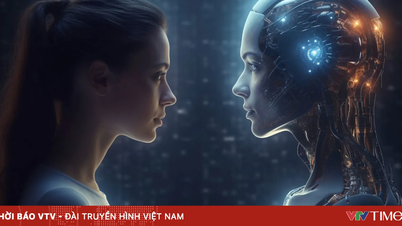
Although the final decision rests with users and authorities, this incident shows that AI today is no longer simply a tool for information retrieval or work assistance. With its ability to engage in natural dialogue, provide near-instantaneous responses, and operate continuously 24 hours a day, chatbots are gradually becoming the go-to place for many people when they need to share or seek advice on personal issues, instead of friends, family, or authorities.
When AI becomes a "mentor" for young people.
According to a survey by the Consumer Affairs Committee of Japan's Cabinet Office, an increasing number of teenagers are using AI-generated content to seek advice on life issues.
Isao Echizen, an information security expert at the National Institute of Informatics in Japan, argues that the responses of conversational AI models like ChatGPT can vary significantly depending on how users ask questions and the amount of information provided.
According to him, in the case of Shinnosuke Abe's daughter, the AI system offered a rather direct suggestion to contact a child counseling center. However, AI can only process information provided by the user and lacks the ability to fully understand the context like family members or those who directly witnessed the event.
Mr. Echizen argued that discussing the matter with family members or those familiar with the specific circumstances would have been a more natural and appropriate option.
This expert also acknowledged that AI generation is a convenient tool and that young people's reliance on it is an understandable trend. However, he discouraged elementary and middle school students from actively using this technology due to the risk of over-reliance on machine-generated responses.
One of the biggest risks, according to him, is that users tend to place absolute trust in what AI provides. With AI generation becoming increasingly widespread, from assisting with learning and essay writing to advising on personal issues, building the ability to think independently and evaluate information is more important than ever.
A survey by Japan's Cabinet Office revealed that more than half of the female teenagers aged 10 to 19 surveyed said they had used AI-generated content to seek advice on problems they were facing.
According to Mr. Echizen, many children turn to AI because they find it difficult to share their feelings with their parents or relatives. Meanwhile, AI systems are designed to create a sense of empathy and understanding, making it easier for users to build trust.
He emphasized that protecting children from the dangers of AI dependence is not just about controlling the technology, but also about starting with training their ability to distinguish right from wrong, critical thinking, and encouraging direct interaction with humans from an early age. "Those around them need to help children understand that AI isn't always right," he said.
The Shinnosuke Abe case is therefore more than just a story of a family conflict leading to unintended legal consequences. More broadly, it reflects a growing reality in modern society: artificial intelligence is becoming increasingly prevalent in daily life, becoming an integral part of how people seek information, advice, and make important life decisions.
Child counseling and guidance centers in Japan, established under the Child Welfare Act, are tasked with receiving reports concerning children under 18, including suspected cases of abuse. As of April this year, Japan has 243 such centers nationwide, staffed by professionals including social welfare workers, psychologists, doctors, and community health workers. One of the system's most important tools is the 189 hotline, which has been in operation since 2015. The name "Ichi-Haya-Ku" means "quickly" or "immediately," encouraging people to report cases of children at risk as soon as possible. Upon receiving a call, the hotline identifies the caller's location and connects them to the nearest child counseling center to assess the severity of the situation and determine appropriate intervention measures. |
Source: https://www.qdnd.vn/giao-duc-khoa-hoc/cac-van-de/khi-chatbot-buoc-vao-doi-thuc-1042130


![[Photo] General Secretary and President To Lam and the President of the Philippines hold talks.](https://vphoto.vietnam.vn/thumb/1200x675/vietnam/resource/IMAGE/2026/06/01/1780286997787_anh-man-hinh-2026-06-01-luc-11-09-43.png)



























































































Comment (0)