


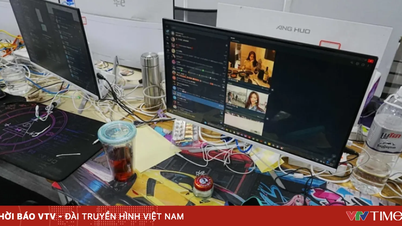
(Illustrative image)
AI is being used by many people for information retrieval and idea generation, but in the field of fact-checking, these tools still reveal many worrying limitations.
According to an article on WIRED, nearly half of Americans say they use AI to find information and generate ideas. This is understandable given the increasing amount of low-quality content on social media, while search engines also make it difficult for many to find reliable sources. However, when it comes to matters of truth, the risks from misinformation are far greater.
The author of the article, a fact-checker at WIRED, argues that AI cannot yet replace human fact-checking processes. This work involves more than just searching the internet; it also includes cross-referencing, prioritizing sources, checking assumptions, identifying conflicting information, contacting sources, and evaluating ethical and legal issues.
AI is now being used more in fact-checking after information has been published. In the UK, the organization Full Fact has developed AI tools to process large volumes of data, from social media posts to podcast recordings, thereby identifying claims that require further human investigation. However, Mark Frankel, head of public policy at Full Fact, emphasizes that this process still requires human intervention.
The main reason is that AI still often gives incorrect answers. A March 2025 study by the Tow Centre for Digital Journalism found that over 60% of responses from AI-integrated search engines are inaccurate. A BBC study also suggested that the error rate for chatbots is around 45%.
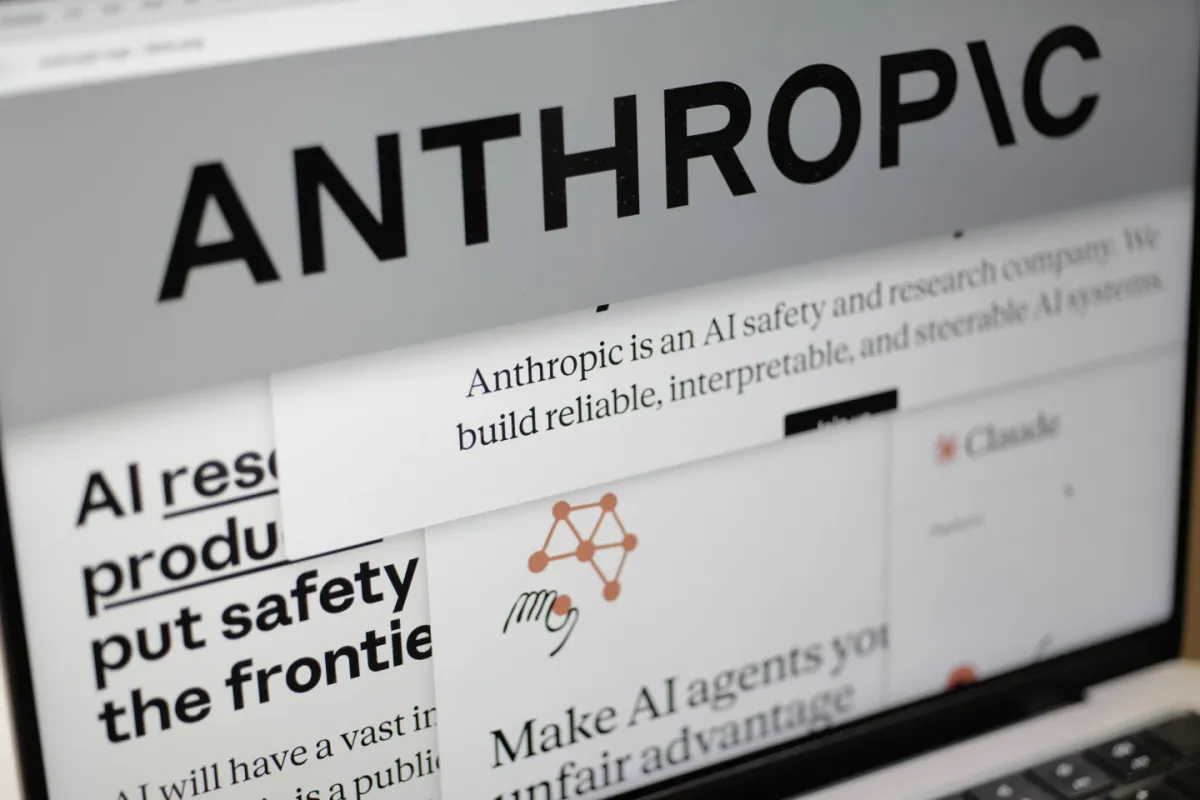
The Anthropic website and logo are displayed on a computer screen in New York, USA, on February 26, 2026. (Photo: AP)
Specialized tests also yielded cautious results. In RealFactBench, a fact-checking benchmark developed by computer scientists in China and the UK, Claude achieved 73% accuracy across all indicators. Meanwhile, OpenAI's SimpleQA showed that none of OpenAI's or Anthropic's models exceeded 50% accuracy on over 4,000 single-answer questions.
The author also attempted to apply a verification test to ChatGPT, Claude, Gemini, and Grok. The models could outline work plans, identify legal risks, or suggest verification methods, but they all stopped short of actually verifying the facts.
The article argues that human strengths lie in the ability to process information not readily available on the internet, recognize nuances in communication, assess the relationships between sources, and ask questions in sensitive situations. Therefore, AI can be a helpful tool, but fact-checking still requires human caution, experience, and responsibility.
Source: https://vtv.vn/ai-van-kho-thay-con-nguoi-trong-kiem-chung-thong-tin-10026052717475078.htm



![[Photo] Standing Committee member of the Party Central Committee Tran Cam Tu working with the Central Inspection Committee](https://vphoto.vietnam.vn/thumb/1200x675/vietnam/resource/IMAGE/2026/05/28/1779969579668_ndo_br_bnd-2495-jpg.webp)





























































































Comment (0)