

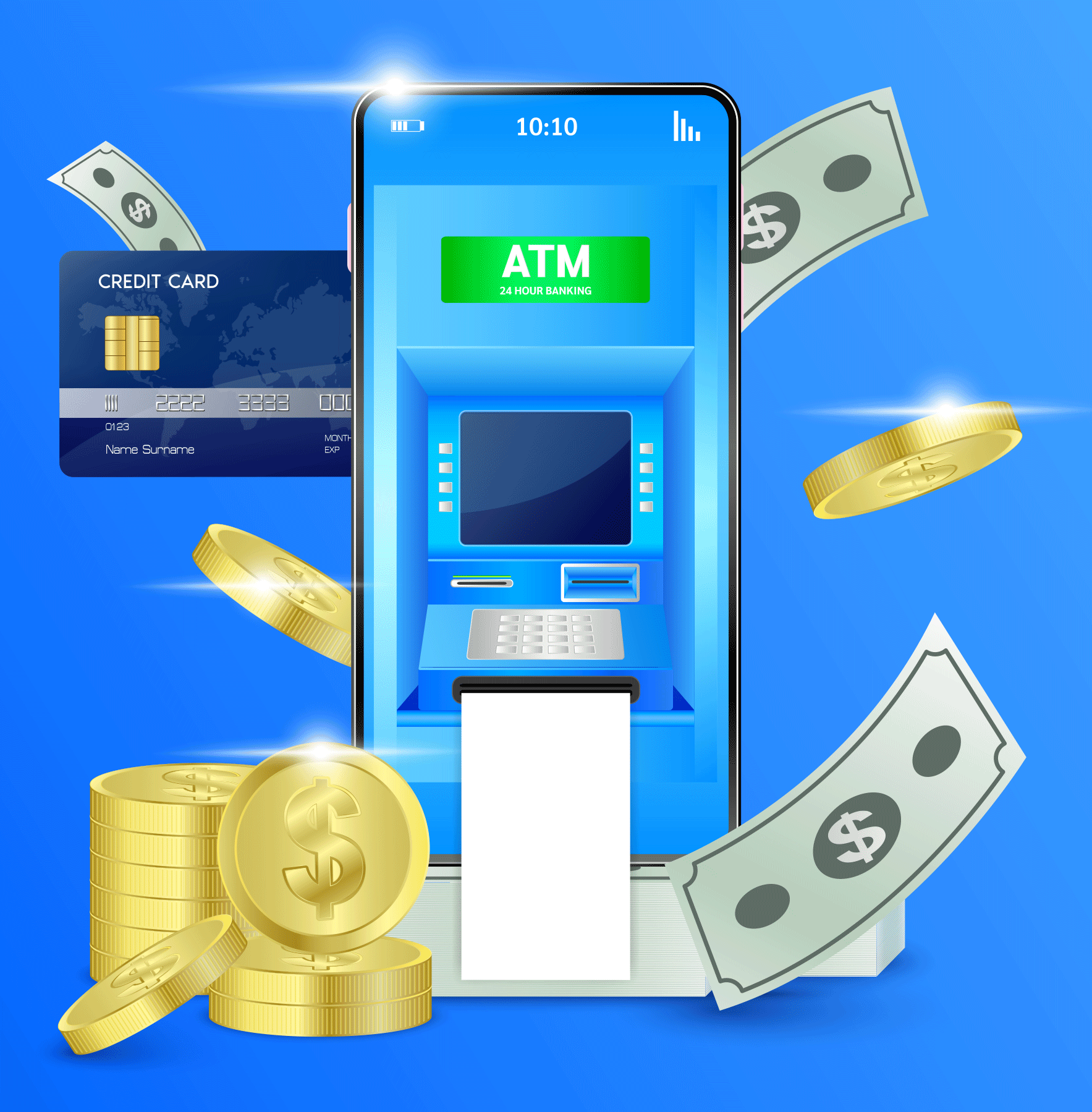
Today's digital wallets don't just hold money. They hold identity. They hold transaction history. They hold access to public and private services. A single tap can unlock an entire modern life, or silently shut it down. And the most important question is no longer how much money is in the wallet, but who designed it, and who controls what lies behind it.
When a wallet is no longer just a wallet.
For years, the debate about digital assets revolved around money: crypto, stablecoins, central bank digital currencies (CBDCs). But that's just the surface. The real shift lies elsewhere: in the wallet.
Digital wallets are the intersection of everything. Finances. Identity. Access. Whoever controls the wallet controls the gateway to the economy . When a wallet system becomes the default, “getting out” is no longer a practical option. No one is forced. But very few have the patience to live outside of that convenient system.
The history of technology shows this is nothing new. When a platform becomes a gateway, users stay not because they are forced to, but because the cost of leaving is too high. In the digital space, that cost is not just money. It's the loss of connection, the loss of convenience, the loss of the ability to participate in normal life.
Digital wallets, therefore, are not purely technological products. They are a soft institution, a form of miniature state, but without the need to declare sovereignty .
Different models of digital wallets
Countries have begun to answer this question in very different ways. In China, digital wallets linked to the digital yuan have been deployed quickly, conveniently, and widely. Payments have become seamless, but data is centralized and supervisory power is clearly defined.
In Europe, digital identity wallets are designed as an extension of the rule of law. Power rests with public institutions, enveloped by laws and data protection standards.
In the US, there is no national digital wallet. There is no publicly available digital currency doctrine. But this very "lack of choice" has created an unspoken order. Private wallets compete and innovate rapidly, but operate within a familiar legal and financial ecosystem. Users think they are choosing an app, but in reality, they are choosing freedom as defined by others.
If the story stopped at digital wallets, it would still just be an article about technology and privacy. But it doesn't end there. Because no wallet, whether private or public, open or closed, stands alone. Behind it all lies a larger, silent but powerful monetary order.
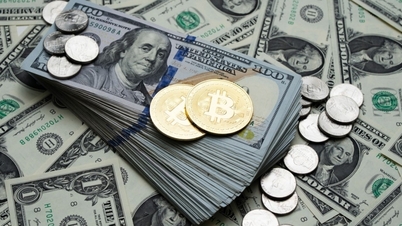
With USD. Not USD printed on paper. Not USD in a safe. But USD in the form of code.
The US dollar when it doesn't need a name.
There's an interesting paradox in the current monetary order: the less the US dollar is talked about, the harder it is to challenge its power.
In everyday life, very few people think of themselves as "using USD." They pay with digital wallets, buy and sell with local currencies, and trade with stablecoins. But at a deeper level, with payments being reconciled, risks being priced, and systems needing to communicate with each other, USD remains the default language.
This is no longer a story of a strong or weak currency. It's a story of a standard of operation. Like the voltage in a power outlet or the internet protocol, the USD exists as a fundamental condition. No promotion is needed. No persuasion is required. Everything simply needs to be designed to be compatible with it.
In the old order, monetary power lay in who could print money. In the new order, power lies in who can make others organize their systems around a single standard. The USD achieves this not through command, but through systemic inertia.
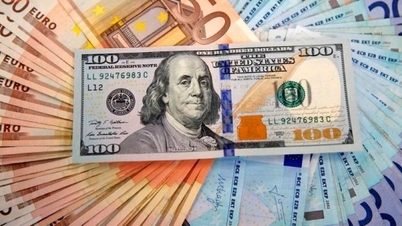
Banks and investment funds build portfolios around the USD because the capital market is accustomed to pricing financial products and services that way. Payment platforms choose the USD because liquidity lies there. International financial compliance standards mirror US law because it's the cheapest way to avoid risk. No one is forced. But very few people have other, sufficiently safe options.
The power of the USD, therefore, doesn't need to be displayed on a user interface. It lies in the fact that all financial pathways are already paved to pass through it.
When the wallet number encounters the USD code
This is where the two stories meet. The digital wallet is the front door to digital life. The USD is the operating system behind it. Users open the wallet, but the system routes funds according to the USD standard. Users verify their identity, but the value is measured in USD. Users think they are choosing the platform, but the platform has already chosen the currency system.
This combination creates a new form of power: no imposition, no declaration, just becoming the default.
Sovereignty in the Code Age
For middle-sized economies, this isn't just a story for rich countries. Every change in the global monetary infrastructure has ripple effects on domestic monetary systems and financial stability. The challenge is understanding how the new order operates. When the USD becomes the code, the issue isn't just about how much USD to hold.
The key is at which level you participate in the system. As an end user? As a compliant party? Or as a co-designer of the rules of the game in specific areas and technical contexts?
In the new order, monetary sovereignty is no longer absolute. It becomes the ability to manage dependence: knowing where to depend, to what extent, and knowing when to maintain distance.
Spring is the season when people clean their houses. They wipe down the altar. They rearrange their cupboards. They throw away things they no longer use, keeping only what is necessary.
Perhaps, in the digital age, it's time to reorganize our wallets. Not just to see how much money is in them, but to see who holds the key, who writes the rules, and for whom those rules are written.
The most powerful power is power that doesn't need to be displayed. The most powerful money is money that doesn't need to be held. And the most dangerous wallet is the one we open every day without ever asking ourselves: what system am I stepping into?
As spring arrives, people still need faith, whether it's in their hands or in a code.
What is a digital wallet and why is it more dangerous than we think?
Digital wallets, at first glance, seem like a very harmless invention. They allow for quick payments, eliminating the need for cash, remembering lengthy bank passwords, or carrying multiple cards. Just open your phone, tap, and you're done. In a busy world , this convenience easily gives people a sense of security that they are moving forward.
But today's digital wallets don't just hold money. They hold identity. They authenticate who we are, what we're allowed to do, and which spaces of the digital world we can access. From shopping and travel to education and public services, the wallet is becoming the default gateway. Without a wallet, or with a locked wallet, people not only face inconvenience but may also be excluded from seemingly normal activities.
Interestingly, digital wallets don't need to be coercive to become powerful. They just need to be convenient enough. When everyone uses them, not using them becomes an expensive option. In theory, anyone can refuse. In reality, very few people have the patience to live outside of such a convenient system.
The danger of digital wallets doesn't lie in their inherent flaws, but in the fact that they're too good to be suspected. Users are accustomed to asking if a wallet is cheap, fast, or easy to use, but rarely ask who writes the rules for it, where the data goes, and who has the final say in case of a dispute. These questions don't appear on the phone screen, but they shape user freedom in the long run more than any other feature.
In the digital age, freedom isn't just about how much money you have in your wallet. Freedom is also about the ability to leave that wallet and still live a normal life. When the wallet becomes infrastructure, and infrastructure is never neutral, the important question is no longer whether a digital wallet is convenient, but what system of power we are stepping into each time we open it.
A monetary standard that we did not choose.
During the Lunar New Year, few people think about global currency. People shop, transfer money, and give lucky money using familiar apps. Everything happens so smoothly that it seems like no underlying order is needed.
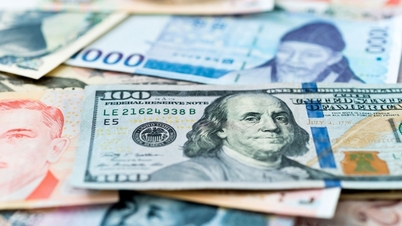
But this fluidity doesn't happen naturally. It relies on established standards, sometimes not chosen by us, but because the world is accustomed to operating that way. In many cross-border transactions, in how prices are compared, in how risks are calculated, there exists a common benchmark that very few countries can afford to ignore.
The key consideration isn't whether that standard is strong or weak, but rather the self-reliance of each economy when it has to rely on a standard it didn't set. On New Year's Day, when discussing digitalization and the future, perhaps the important thing isn't believing in any particular currency, but understanding where and to what extent we are dependent.
Source: https://www.sggp.org.vn/khi-chiec-vi-tro-nen-vo-hinh-post838109.html

































































































Comment (0)