Lieutenant Colonel and poet Nguyen Van A is a late but passionate literary phenomenon, focusing on the armed forces and revolutionary war. Born in Van Giang village, Son Thinh commune, Huong Son district (now Dai Thinh village, Son Tien commune), Ha Tinh province, he grew up amidst wartime. His journey spanned from a soldier in the Quang Tri battlefield (1971-1973), participating in the Ho Chi Minh Campaign in 1975, to international duty in Cambodia in 1977 and defending the northern border from 1978-1980. Throughout his 27 years in the military, he rose from private to Lieutenant Colonel, then transferred to become Head of the Financial Communications Department of the Vietnam Financial Times ( Ministry of Finance ) until his retirement. His war memories and life experiences are encapsulated in the pages of his memoir "South of the Ben Hai River" and his poetry collection "Dewdrop by the Window." In 2026, he continued to publish the poetry collection "Mountain Shadows" along with the memoir collection "In the Border Trenches".
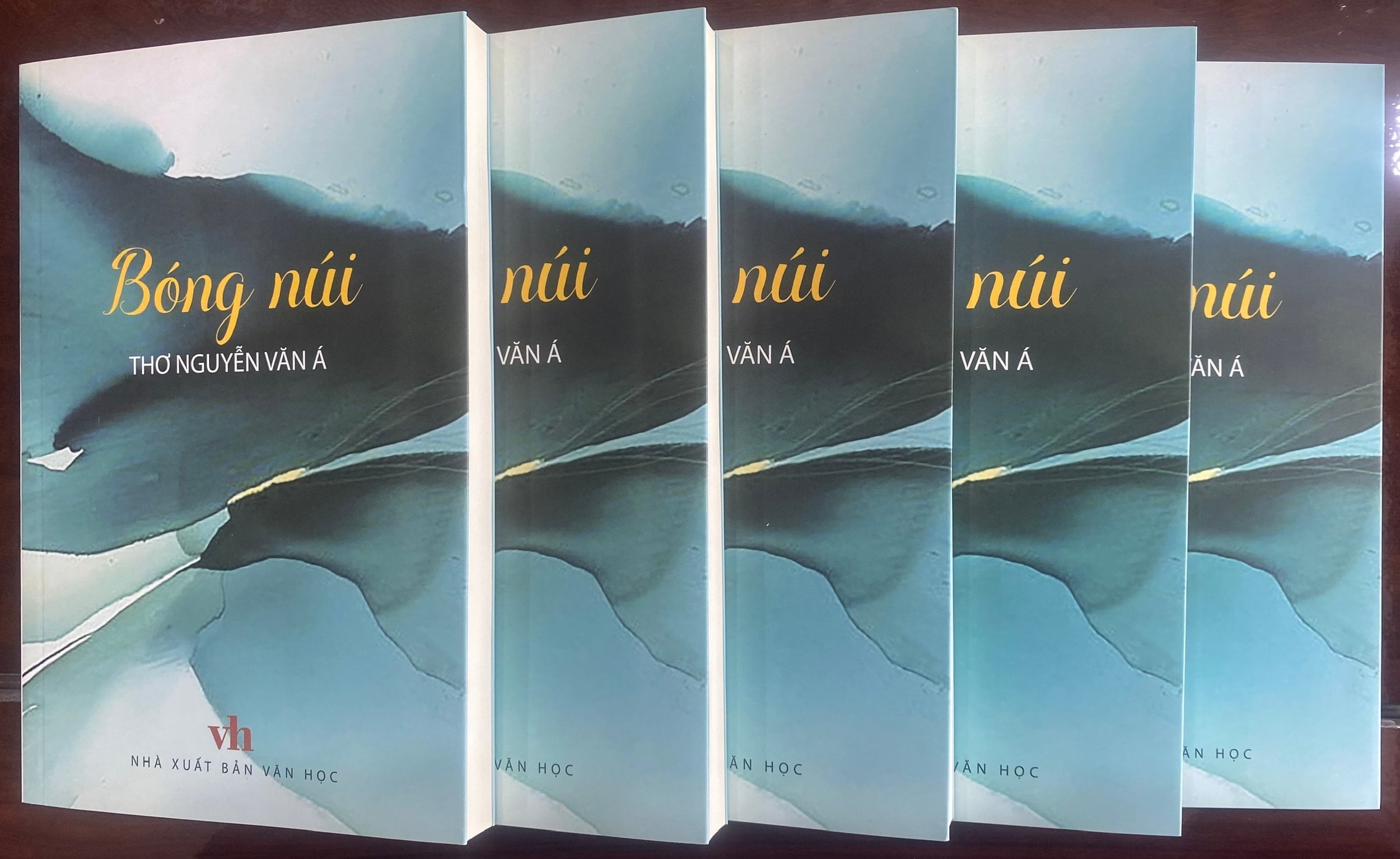
With his poetry collection "Mountain Shadows," comprising 96 poems divided into three parts: Nostalgia, Waiting for Spring, and Mountain Shadows, Nguyen Van A's poetic voice consistently explores three core themes: patriotism, love for his homeland, and romantic love. Transcending personal emotions and thoughts, the poems in the collection share a common awareness of expressing the individual self intertwined with the nation, personal memories becoming collective memories, and romantic love illuminated by the flames of war as well as the warmth of his homeland. A readily recognizable characteristic of Nguyen Van A's poetry is its simple, unadorned language combined with the musical structure of free verse, lục bát (six-eight syllable) verse, and tứ tuyệt (four-line quatrain) verse. This creates a harmonious, refined, and distinctly Vietnamese style, full of vitality, yet with a clear foresight and predictive insight into society and the times. This is especially evident in his poems about the homeland, soldiers, and love, which are harmonious and closely aligned with real life. This is the core value that makes his poetry easily accessible to middle-aged and older readers who appreciate traditional poetry.
1. The patriotic spirit and the desire for dedication and commitment of young people are clearly expressed in Nguyen Van A's poetry, even arguably as the central theme, the literary thread running through the work and creating its overall spirit. These are not empty slogans, but rather blood and bone, wounds "without bullet fragments," and an unceasing responsibility to comrades and the nation. He participated in the 81-day and night Quang Tri Citadel Campaign: "Bombs and bullets filled the sky / Drinking water from bomb craters / Burying comrades whose bodies were not intact / Three times buried by bombs / Blood flowed from my ears" (Self-Portrait). These details are not recounted to boast, but to deeply engrave the pain of loss: "My comrades after the war / Some returned with wooden crutches / Others returned with scarred bodies / The napalm scars could not be erased."
Because they had shared so much hardship and fierce battles together, Nguyen Van A always cared deeply for his comrades, whether alive or dead. He campaigned for the construction of many memorials to fallen soldiers in Quang Tri and readily supported and visited comrades who were in difficult circumstances or suffering from injuries. His poetry thus became a historical witness, reminding future generations of the value of peace, which was bought with the sacrifice of millions of people. His poems, written in the "battlefield" of Quang Tri, where he fought bravely alongside his comrades and compatriots, often haunt readers, such as "Night at Thach Han," "Night at Phuong Ngan," and "The Ancient Citadel This Afternoon" ... Before the Thach Han River, the poet reflected with emotion: "Where do you lie in the depths of the river? / Once, bombs and bullets rained down on the Thach Han." Standing before the Martyrs' Memorial, he reflected: "This land has seen so much bloodshed and fallen heads/The Martyrs' Memorial is even more deserted at night/The streetlights silently stay awake all night/Together with the soldiers, they light up a sense of pride."
The highlight of the entire collection is the poetic suite "We Sing the Song of the Homeland Again," a 146-line, 1,054-word poem with an epic tone and a tightly structured poetic style. Although the poetic language retains Nguyen Van A's characteristic directness, realism, and simple language, the poet tells a concise and poignant story about the country from the flames of war to the period of peace and integration. He always believed in the humane spirit of the nation and expressed: "The country is still poor / So many children don't have enough food to eat, enough clothes to wear / So many poor children are starving for education," but according to Nguyen Van A, Vietnamese people are still: "Ready / To share a grain of rice / To divide a bowl of rice in half / To cover the mirror frame with red silk." And then the poet seems to exclaim to himself, as if to affirm a belief: "How glorious are the two words 'Vietnam' / We are proud to be citizens of the country!"
2. If patriotism is a great aspiration, then love for one's homeland is the main emotional thread in "Mountain Shadow," with many impressive poetic images and themes. The four seasons of his homeland appear in his poetry beautifully and peacefully, with the red kapok flowers of March, the fragrant white pomelo blossoms in the early morning mist, the yellow mustard flowers in the fields and along the riverbanks... along with characteristic weather phenomena of the North Central region such as the hot, dry Lao wind, drizzle, and cool breezes... all anchored in Nguyen Van A's memory and transformed into poetic words affirming that his homeland is the "mountain shadow" that protects him, the place that preserves national identity.
As he confessed, "I was born behind the bamboo hedges of my village / I entered life without a mother / A single father raising his children / I became a scavenger / Filtering life to find a livelihood." Nguyen Van A's hometown of Ha Tinh is depicted through images of "the scorching midday sun of cicadas," "dragonflies fleeing the storm," and his mother's "crow's beak-shaped headscarf and brown robe." The image of the hardworking mother is: "Mother sits by the window waiting for her children / For so many years she still longs and waits / Her eyes look South, North, West, East / But why haven't the four of us returned?" or "With a crow's beak-shaped headscarf and a brown robe / Mother's feet are rooted in the cold mud" (My Mother). In his poetry, the lyrical image of the mother appears simple yet concrete: "My mother is as lonely as a solitary moon!"
His hometown of Quang Tri holds memories filled with pride, yet also with pain and an unceasing longing for his fallen comrades: “For decades I was away, never to return / I remained in the mountains and rivers of Quang Tri / Phuong Ngan village and the martyrs' shrine / To forever remain a source of sorrow for generations to come” (Night at Phuong Ngan). Nguyen Van A loved his homeland, his roots, and all the values that the land and its people had nurtured in him, shaping him into a soldier in wartime and a cultural and ideological warrior in peacetime. Through acts of gratitude to the past, "repaying kindness," and through his writings, his love for his homeland in poetry is always abundant, affirming the author's belief that love for one's homeland fosters patriotism, creating a crucial driving force to overcome all difficulties in protecting and building the country.
3. As mentioned above, the theme of romantic love also occupies many pages of poetry in the sections on Nostalgia and Waiting for Spring. Love in Nguyen Van A's poetry is inseparable from war and homeland. It is wartime love: "The time I loved you / The earth was full of gunfire / The time we loved each other / The lamp flickered" (The Time We Loved Each Other). That love is pure, incomplete, interrupted by bombs and duty, but it is precisely because of this that it becomes sacred: "I threw a ball / Into the small circle / Where your heart was left open / To welcome love day after day / But my dear, this afternoon / Spring comes knocking / My heart is filled with tears / I throw the ball into nothingness" (Throwing the Ball).
Writing about the girl he loves, the poet portrays her as "the last rays of sunlight," "a strange wind," "grapefruit blossoms," "mustard flowers"—familiar, simple images yet hauntingly powerful. Love is not just personal but intertwined with love for the country, as she was a young volunteer building the Truong Son Road, sacrificing her youth for the nation, and then returning "bewildered in the evening mist" amidst thousands of watchful eyes. Their love becomes mystical because it is linked to duty: "How many girls / Stirred how many poetic souls / How many young men / Lost in longing / Far away, guns roar / Eagerly 'Waiting for you to return'."
It can be said that the poet Nguyen Van A skillfully transformed romantic love into a "lyrical hinge" connecting the past with the present. A kiss under the moon, the scent of grapefruit blossoms, the flickering oil lamp… all become "flower dreams" for the poet to "gather the past in the night," "sigh with the lonely moon." This love is beautiful because it is humane, because it is not just personal but a symbol of an entire generation that sacrificed personal feelings for a greater cause. The line "a wound without bullet fragments" evokes in the reader the post-war pains that soldiers faced. It's not just physical injury, but also mental haunting, a lingering remorse for fallen comrades: "I gather the past in the night / Sigh with the lonely moon / Lull you to sleep on afternoons in the setting sun / Bathing myself in the purple twilight" (The Past).
However, along with the strengths of simple language combined with the musical structure of free verse, lục bát (six-eight syllable) verse, and tứ tuyệt (four-line quatrain) verse as mentioned above, some poems still lack the effort to make the language "shine" for the poetic meaning; some are even crude and lack the structure to convey the literary thought and imagery the author aims for. If more careful investment and bold application of new poetic techniques were possible, perhaps "Mountain Shadow" would be more complete for readers. However, within the scope of this article, I do not wish to specify. The author is always the one who best knows the strengths and weaknesses of their creation, so pointing them out is perhaps the most unnecessary and superfluous task for a critic.
And most importantly, literature is meant to be appreciated, as the scholar Le Quy Don said, not to be judged or criticized. I believe that the poetry collection "Mountain Shadows" has succeeded in bringing about warm and proud emotions, clearly expressing its character. The philosophical argument is: the wartime past is the foundation; the homeland is the spiritual anchor; and romantic love is the flame that warms memories. That's more than enough!
Source: https://congluan.vn/khi-tinh-yeu-doi-lua-hoa-tinh-yeu-dat-nuoc-10339710.html





![[Photo] General Secretary and President To Lam presides over a working session with the Central Policy and Strategy Committee on the development of the materials industry.](https://vphoto.vietnam.vn/thumb/1200x675/vietnam/resource/IMAGE/2026/05/21/1779359935432_a3-bnd-3129-1412-jpg.webp)







































































Comment (0)