

| Editor's Note : Less than a week after taking office, Prime Minister Le Minh Hung set a deadline for ministries and agencies to submit plans to reduce business conditions, lower compliance costs, and prioritize resources for institutional reform. These decisive directives send a very clear message: To achieve double-digit growth, Vietnam cannot continue to move slowly in reform. Cutting unnecessary permits, removing legal bottlenecks, and building institutional trust for the private sector are no longer just things to do, but essential if we want to unlock resources and pave the way for sustainable growth. |
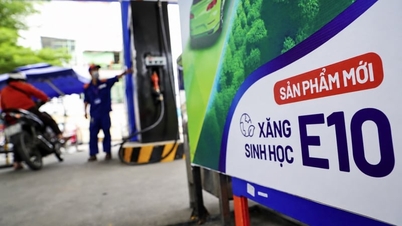
For example, businesses wishing to change the intended use of raw materials in their petroleum business operations must obtain written approval from the Ministry of Industry and Trade , according to the Draft Circular detailing certain provisions of the Decree on petroleum business.
What worries businesses the most is that the draft doesn't specify when approval will be granted, when it will be rejected, what the approval criteria are, or what the required documents are.
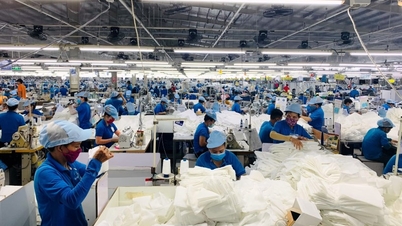
In reality, delays in procedures are not just about adding a few extra administrative costs. For businesses, a three-month delay can mean a lost business season, lost market opportunities, and a loss of competitive advantage.
Therefore, the story of reforming business conditions is not simply about cutting a few sub-licenses, but about the State managing the economy .

The 1999 Enterprise Law established a landmark principle for the first time: Businesses are free to conduct any activity that is not prohibited by law. This change led to the automatic abolition of thousands of licenses in the early 2000s.
By 2014, the Investment Law made another significant leap forward when, for the first time, a list of conditional business sectors and professions was issued alongside the law, clearly defining that only the National Assembly had the right to amend that list. Thousands of business conditions were once again rendered invalid.
However, as of today, the country still has 198 conditional business sectors and 4,603 business conditions.
Less than a week after taking office, Prime Minister Le Minh Hung set a deadline of April 20th for ministries and agencies to submit plans to reduce business conditions and administrative procedures. Setting the deadline within just a few days, requiring ministers to directly participate and hold them personally accountable for the results of the reforms, sends a very clear signal: the government no longer tolerates the familiar inertia of the bureaucracy.
The Prime Minister's approach reveals a different spirit: not just demanding cuts on paper, but requiring tangible results that businesses can feel.
The goals are also very specific: to reduce the number of conditional business sectors by 30%, reduce compliance time and costs by 50%, and abolish all outdated business conditions.
That figure shows that this is no longer a minor technical adjustment, but a major overhaul with very real enforcement pressure.
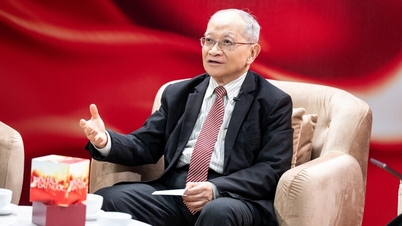
Dr. Nguyen Dinh Cung, former Director of the Central Institute for Economic Management Research, once said that forcing ministries to self-review and remove business conditions in their respective fields would be very difficult to do thoroughly, as it would be tantamount to asking them to reduce their own powers. That is why business environment reform has been slow for many years. Old licenses disappear, and new licenses appear under a different name.
Therefore, Dr. Nguyen Dinh Cung argues that it's not simply about changing a few regulations, but about changing the way things are managed, from tools and organization to enforcement capacity; in other words, it's about changing the entire system.
Therefore, the most important thing is not how many business conditions are eliminated, but how many fewer procedures businesses have to go through.
Therefore, Prime Minister Le Minh Hung emphasized that while reducing the number of business conditions is important, the nature and content within those conditions are even more crucial; the time and cost of compliance must be genuinely reduced. The number of reductions may not be large, but they can yield significant results.
This is a very significant shift in reform thinking.
The measure of reform is not the number of documents that are crossed out, but how many months faster a business can open a factory, how much compliance cost a household business can save, or how few signatures an investor has to obtain.
Conclusion 18-KL/TW of the Politburo also clearly indicated the direction: A strong shift in state management methods must be made from pre-inspection to post-inspection, linked to the development of standards, regulations, economic and technical norms, and strengthening inspection and supervision.
This isn't a technical change, but rather a shift in management philosophy stemming from a different logic: Businesses have the right to operate as long as their products meet technical, environmental, and safety standards; violations will be dealt with severely through post-inspection.
VCCI Deputy Secretary General Dau Anh Tuan proposed applying the "one-in, one-out" principle, meaning that each new business condition must be accompanied by the abolition of at least one equally unfavorable old condition. This is a worthwhile approach.
Furthermore, the Ministry of Justice needs to fulfill its role as a "gatekeeper," controlling administrative procedures and business conditions; ministers will be held accountable if unreasonable regulations are allowed to slip through. Citizens and businesses should only provide information once, and the responsibility for verification will fall to the administrative apparatus.
Institutional reform, ultimately, is not just about reducing paperwork on businesses' desks, but about empowering them to conduct business. Therefore, if we want the private sector to truly become a driving force for growth, the State, instead of being a "gatekeeper," must become a "pioneer."
Next time: 3.3 million trillion VND is waiting to be unlocked.

Source: https://vietnamnet.vn/khong-chi-cat-giay-phep-con-2510241.html

![[Photo] General Secretary and President To Lam presides over a working session with the Central Policy and Strategy Committee on the development of the materials industry.](https://vphoto.vietnam.vn/thumb/1200x675/vietnam/resource/IMAGE/2026/05/21/1779359935432_a3-bnd-3129-1412-jpg.webp)

![[Photo] Capturing the moment the tide recedes at Yen Binh Son rapids - a million-year-old scenic spot in Quang Ngai.](https://vphoto.vietnam.vn/thumb/1200x675/vietnam/resource/IMAGE/2026/05/19/1779175463885_yen9-1199-jpg.webp)

























































































Comment (0)