

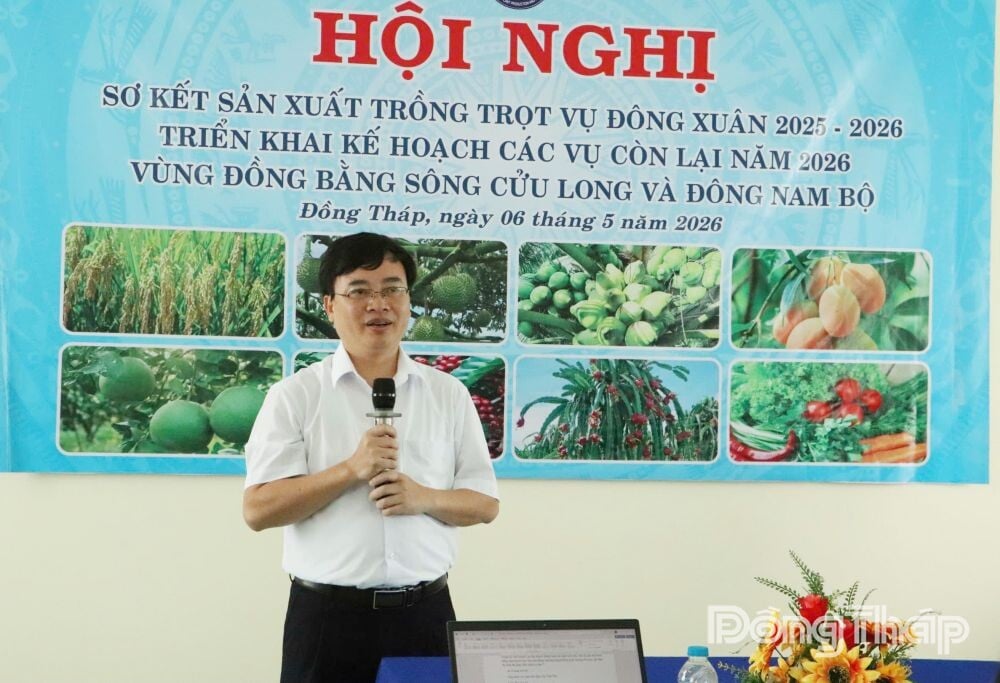
According to the Department of Crop Production and Plant Protection, the total area planted with rice in the 2025-2026 winter-spring crop in the Mekong Delta and Southeast regions is over 1.5 million hectares, with an average yield of 7.2 tons/ha, and a total production of 11.3 million tons. Major fruit crops such as mangoes, bananas, dragon fruit, tangerines, pomelos, longan, and durian are estimated to produce over 3.3 million tons.
In the process of consuming all rice and agricultural products from the Mekong Delta and Southeast region, units are strongly shifting towards sustainable models. For the rice cultivation area participating in the 1 million hectare high-quality, low-emission rice project, cooperatives play a central role, helping to connect farmers with businesses, stabilize output, increase value, and reduce price risks.

For fruit and vegetable crops, cooperatives and production groups have also signed consumption contracts with businesses, aiming for production according to VietGAP and GlobalGAP standards to meet the requirements of the domestic and export markets.
The process of assigning codes to growing areas and packaging facilities has been focused on, contributing to increased transparency and product traceability.
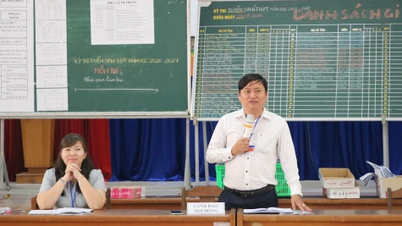
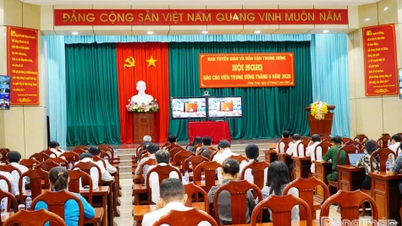
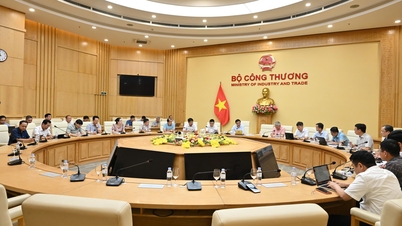
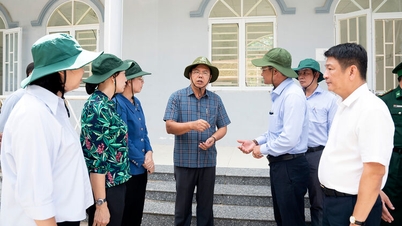
At the conference, provinces and cities provided information on the results of the winter-spring crop production in their localities; highlighted the advantages and difficulties; and outlined the direction for production development in the coming period.
According to Le Chi Thien, Deputy Director of the Department of Agriculture and Environment of Dong Thap province, in the coming time, Dong Thap will continue to focus on reorganizing production towards improving quality, efficiency and sustainability; expanding high-quality rice production models and reducing emissions.

Specifically, it is crucial to strengthen the linkage between production and consumption; enhance the management of planting area codes and packaging facilities. Simultaneously, it is important to promote the application of science and technology , mechanization, and digital transformation in production.
For the remaining seasons of 2026, Dong Thap province plans to plant over 200,000 hectares of summer-autumn rice, with an estimated yield of 1.42 million tons, and nearly 150,000 hectares of autumn-winter rice, with an estimated yield of over 900,000 tons.
Of the total area of summer-autumn and autumn-winter rice in the province in 2026, 100,000 hectares will be cultivated under the high-quality, low-emission rice project, completing the target of 134,200 hectares by 2027.
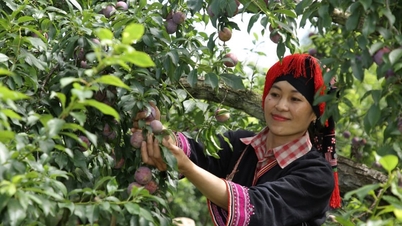
With fruit trees and other crops, Dong Thap province is expected to produce 163,000 tons, mainly focusing on mangoes, longan, durian, citrus fruits, dragon fruit, etc.
Speaking at the conference, Deputy Director of the Department of Crop Production and Plant Protection Nguyen Quoc Manh said that the total area for rice production in the summer-autumn and autumn-winter seasons of 2026 in the Mekong Delta and Southeast region is approximately 2.4 million hectares.
Of this, the area for rice production under the 1 million hectare high-quality, low-emission rice project is estimated at 38,500 hectares; and the area for rice production in buffer zones has been completed at over 400,000 hectares.

Regarding fruit trees, the development trend is stable, and it is recommended that localities in the Mekong Delta and Southeast Vietnam not expand the planted area indiscriminately, but instead focus on intensive farming, increasing productivity and value per unit area.
To achieve high efficiency in production during the last months of 2026, the Department of Crop Production and Plant Protection recommends that localities plant summer-autumn and autumn-winter rice crops according to strict plans for each ecological region and sub-region, adhering to the principle of avoiding pests and hydrological developments to ensure smooth production; reducing rice acreage, but ensuring double-digit growth as planned by the Ministry of Agriculture and Environment.
In the last seven months of 2026, the Department of Crop Production and Plant Protection plans to maintain stable production of industrial crops with a total area of over 900,000 hectares and a yield of 3.5 million tons, focusing on key crops such as coffee, cashew nuts, pepper, rubber, and coconuts… Of these, coconuts are mainly concentrated in the Mekong Delta, while coffee, cashew nuts, pepper, and rubber are concentrated in the Southeast region.
C. TRI - AT
Source: https://baodongthap.vn/khong-mo-rong-dien-tich-cay-an-trai-o-at-a240512.html




















![[Image] Hanoi's urban life under the challenge of a "scorching hot" environment](https://vphoto.vietnam.vn/thumb/1200x675/vietnam/resource/IMAGE/2026/05/25/1779706979265_nang-nong-t5-2026-minh-duy-7-4636-jpg.webp)





















































Comment (0)