


The Law on Special Urban Areas is expected to create an institutional breakthrough for Ho Chi Minh City.
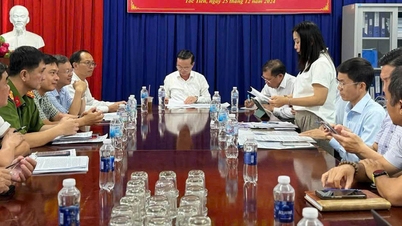
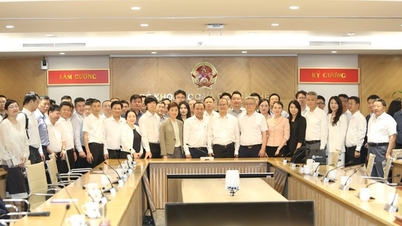
On May 8th, the Standing Committee of the Ho Chi Minh City People's Council, in collaboration with the Ho Chi Minh City University of Law, organized a scientific seminar titled "Law on Special Urban Areas - An Institutional Breakthrough for Ho Chi Minh City".
In his opening remarks at the workshop, Vice Chairman of the Ho Chi Minh City People's Council Nguyen Truong Nhat Phuong emphasized that Ho Chi Minh City has always been identified as the economic , financial, commercial, scientific-technological, and innovation center of the region and the entire country. Over the past period, the Party and State have issued many specific mechanisms and policies for the city through Resolution No. 54/2017/QH14, Resolution No. 98/2023/QH15, and Resolution No. 260/2025/QH15 of the National Assembly, creating an important foundation for effectively exploiting the potential and advantages of this special urban area.
The Law on Special Urban Areas is of significant importance in transforming the growth model.
However, in practice, pilot mechanisms are often limited in time and lack consistency with the existing legal system. Therefore, shifting from a "pilot resolution" mechanism to the development of a stable, long-term Law on Special Urban Areas is an urgent requirement to create a flexible, modern institutional framework that meets the long-term development needs of Ho Chi Minh City.
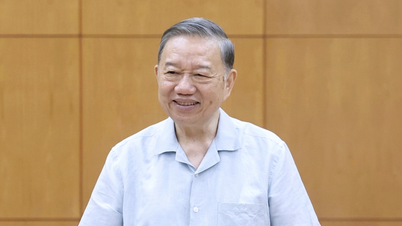
At a meeting with the Standing Committee of the Ho Chi Minh City Party Committee on April 27th, General Secretary and President To Lam affirmed that the Politburo , the National Assembly, and the Government support the city in drafting the Law on Special Urban Areas. According to Mr. Nguyen Truong Nhat Phuong, this is an important political basis for Ho Chi Minh City to finalize its proposal for a groundbreaking law on institutional reform.
The workshop focused on discussing several core issues such as: perfecting the two-tiered local government model towards a streamlined, modern, and efficient model; promoting decentralization and delegation of power; increasing autonomy in finance, budget, and staffing, coupled with transparent and accountable mechanisms in the spirit of "local authorities decide, local authorities act, local authorities are responsible".
In addition, delegates also proposed mechanisms for effectively mobilizing and exploiting land and financial resources; expanding public-private partnerships in the development of transportation, healthcare, and education infrastructure; and establishing specific mechanisms for science and technology, innovation, and emerging fields. Many opinions emphasized the need to design mechanisms to protect officials who dare to think and act, while simultaneously creating policies strong enough to attract experts, scientists, and high-quality human resources.
According to Vice Chairman of the Ho Chi Minh City People's Committee Nguyen Manh Cuong, the development of the Law on Special Urban Areas is of particular importance in the context of the city facing the requirements of transforming its growth model, promoting digital transformation, green transformation, and enhancing international competitiveness.
According to Mr. Nguyen Manh Cuong, after the administrative reorganization, Ho Chi Minh City needs a stronger and more appropriate legal framework to maximize its potential and advantages and maintain its role as the leading engine of socio-economic development in the country. The city is focusing on drafting the law under significant pressure from the expectations of the Party Committee, the government, the people of the city, and the Party and State leaders for a superior and more effective governance mechanism.
"The Law on Special Urban Areas will create a unified, synchronized, and superior legal framework, clearly defining the development model of Ho Chi Minh City as a megacity, a center leading the development of the region and the whole country; while strengthening decentralization and delegation of power to unlock, mobilize, and effectively utilize resources," the Vice Chairman of the People's Committee of Ho Chi Minh City emphasized.

Scientific conference "Law on Special Urban Areas - Institutional Breakthrough for Ho Chi Minh City"
Increase the autonomy of the City government in administration and governance.
Many experts at the conference argued that Ho Chi Minh City needs to be granted greater autonomy in finance, planning, organizational structure, and legislative power to reduce the "request-and-grant" mechanism and increase proactiveness in urban governance.
Dr. Nguyen Thi Thien Tri proposed that the law should clearly define the areas under the authority of the Central Government; the remaining contents should be given autonomy to Ho Chi Minh City to decide, especially issues related to urban governance, socio-economic development, and handling specific local problems.
Meanwhile, many delegates proposed granting more power to the Ho Chi Minh City People's Council in issuing legal documents, allowing the city to proactively handle new issues arising from practical situations. The main proposals focused on organizational structure, talent policies, finance and investment, planning and land, science and technology, and regulatory mechanisms.
From a business perspective, Mr. Dinh Hong Ky, Chairman of the Ho Chi Minh City Construction and Building Materials Association (SACA), believes that the current bottleneck lies not in a lack of capital or innovation, but in a lack of mechanisms for quick decision-making and clear accountability. Therefore, the law needs to design a "safe zone for testing," creating a legal framework so that officials can confidently perform their duties in a transparent, compliant manner and for the common good.
Speaking at the workshop, Deputy Minister of Justice Nguyen Thanh Tu said that the Central Committee has identified six key areas of focus for the Law on Special Urban Areas, including: breakthroughs in governance and decentralization; concretization of strategic resolutions; innovation in planning; mobilization of resources for infrastructure development; strengthening regional linkages; and addressing urban bottlenecks such as traffic, flooding, and environmental pollution.
According to Deputy Minister of Justice Nguyen Thanh Tu, the biggest focus of the law is to empower Ho Chi Minh City, especially by increasing the city government's autonomy in governance, administration, and the issuance of mechanisms appropriate to the development realities of this special urban area. However, decentralization must be accompanied by robust post-audit, supervision, and accountability mechanisms.
Experts unanimously agree that the enactment of the Law on Special Urban Areas is expected to create a sufficiently strong institutional foundation for Ho Chi Minh City to play its role as the leading engine, growth pole, and innovation center of the country in the new development phase.
Le Anh
Source: https://baochinhphu.vn/kien-tao-khung-the-che-vuot-troi-cho-tphcm-10226050815252941.htm

![[Image] Hanoi's urban life under the challenge of a "scorching hot" environment](https://vphoto.vietnam.vn/thumb/1200x675/vietnam/resource/IMAGE/2026/05/25/1779706979265_nang-nong-t5-2026-minh-duy-7-4636-jpg.webp)
![[Image] Close-up view of the interchange connecting the two expressways and Long Thanh Airport.](https://vphoto.vietnam.vn/thumb/1200x675/vietnam/resource/IMAGE/2026/05/25/1779703378210_ndo_br_z7863716673926-224453a31600126cce10622af6290afd-4549-jpg.webp)































































Comment (0)