

Works rich in emotion and profound in thought have the potential to create a positive ripple effect, strengthening the people's trust in the People's Public Security Force. Therefore, spreading the value of People's Public Security literature on the internet is an important solution to protect the Party's ideological foundation in the new situation.
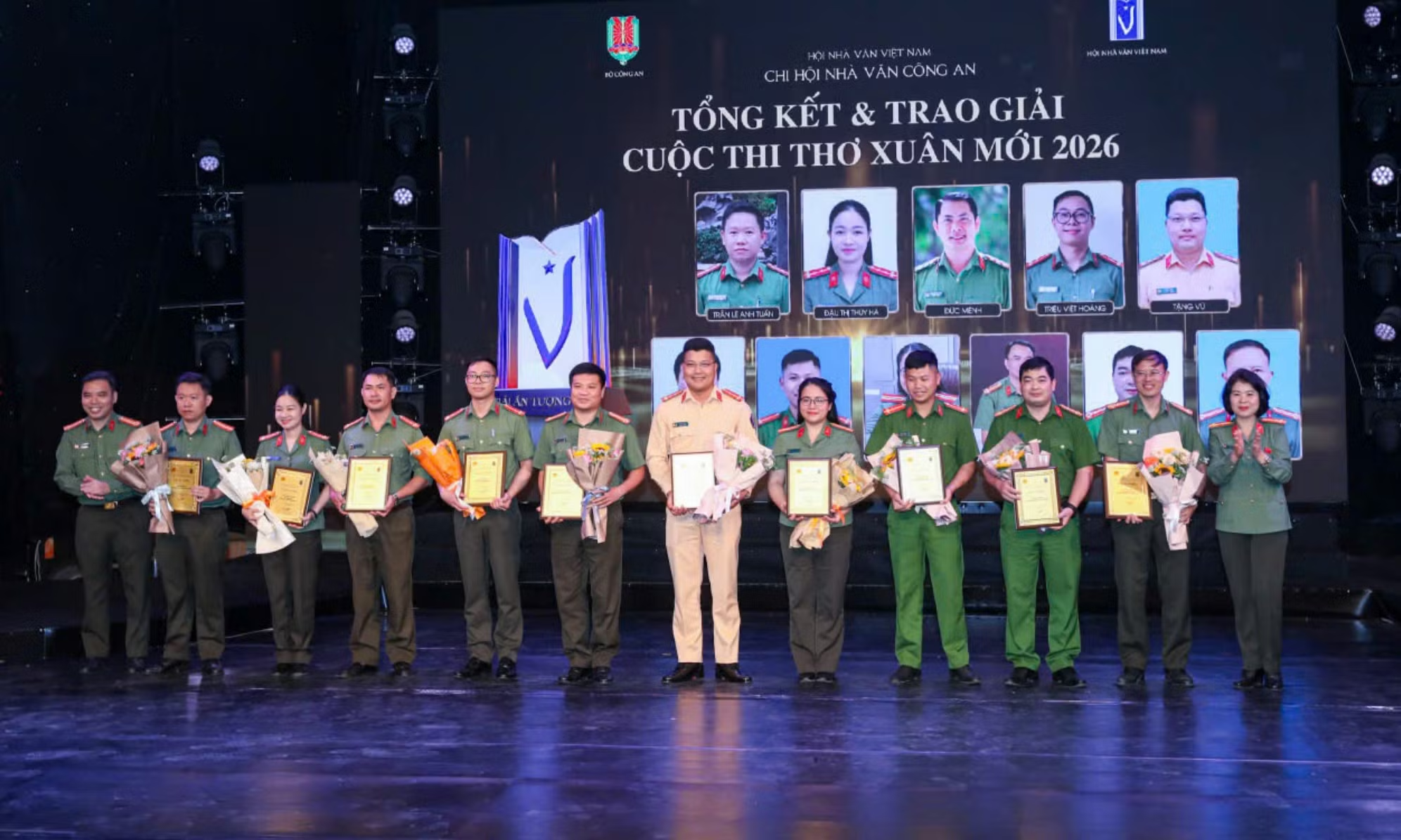
One of the dangerous tactics frequently employed by hostile forces is the distortion of revolutionary history, denying the achievements of the national liberation struggle and the construction of socialism in Vietnam. They deliberately distort historical truth, deny the leadership role of the Communist Party of Vietnam , and sow doubt about the path the nation has chosen. Through edited videos, unverified articles, or inflammatory statements on social media, these individuals seek to undermine the people's trust, especially that of the younger generation, in the Party and the regime.
Furthermore, the image of police officers frequently becomes a target of attacks and defamation on the internet. Based on isolated incidents or unverified information, subversive elements deliberately distort and misrepresent the nature of the People's Police Force, denying the immense sacrifices and contributions of the force in protecting national security and maintaining social order. They exploit the curiosity and sensationalism of some internet users to spread negative content, thereby creating a biased and distorted view of police officers.
Furthermore, hostile forces are promoting the infiltration of harmful cultural products, encouraging a pragmatic lifestyle, extreme individualism, prioritizing material enjoyment, and denying the nation's fine traditional values. Many anti-cultural and morally deviant contents are spreading rapidly on digital platforms, negatively impacting the awareness, lifestyle, and value systems of young people. This not only poses the risk of "self-evolution" and "self-transformation" in thought but also weakens society's cultural resilience against false information.
This can be seen as a new form of "peaceful evolution" in the ideological and cultural spheres, carried out through more sophisticated and harder-to-detect methods than before. While in the past, warfare was primarily conducted using military weapons, today, the struggle in cyberspace is waged through information, media, and cultural products. The ultimate goal of hostile forces remains to undermine the people's trust in the Party, divide the relationship between the people and the armed forces, and thereby gradually weaken the ideological foundation of the regime.
Therefore, protecting the Party's ideological foundation in cyberspace is not only the task of theoretical agencies, the press, or specialized forces, but also the responsibility of the entire political system, in which literature and art play a particularly important role on the ideological and cultural front today.
Although literature about the People's Public Security Force possesses profound ideological, humanistic, and educational values, the current reality shows that the dissemination of these works on the internet remains limited, not commensurate with the potential and requirements of protecting the Party's ideological foundation in the digital age.
Many literary works, essays, novels, and reports about the People's Public Security Force are meticulously produced, truthfully reflecting the struggle to protect national security and the admirable image of revolutionary police officers. However, many of these works have yet to strongly reach young audiences, the group that uses social media the most today.
While young people are gradually changing their information consumption habits towards faster, more visual, and multi-platform approaches, the promotion of literature about the People's Public Security Force still mainly follows traditional methods, lacking innovation in form and approach.
In many places, the content of propaganda and introductions to revolutionary literature is still one-sided, heavily focused on slogans, rigid, and lacking in interaction. Many communication programs about revolutionary literature still use outdated methods, failing to effectively utilize digital platforms such as social media, short videos, podcasts, audiobooks, or other forms of multimedia communication.
This is why many valuable works have not yet achieved widespread influence in social life, especially in the online environment, where fierce competition for information and ideological influence is taking place.
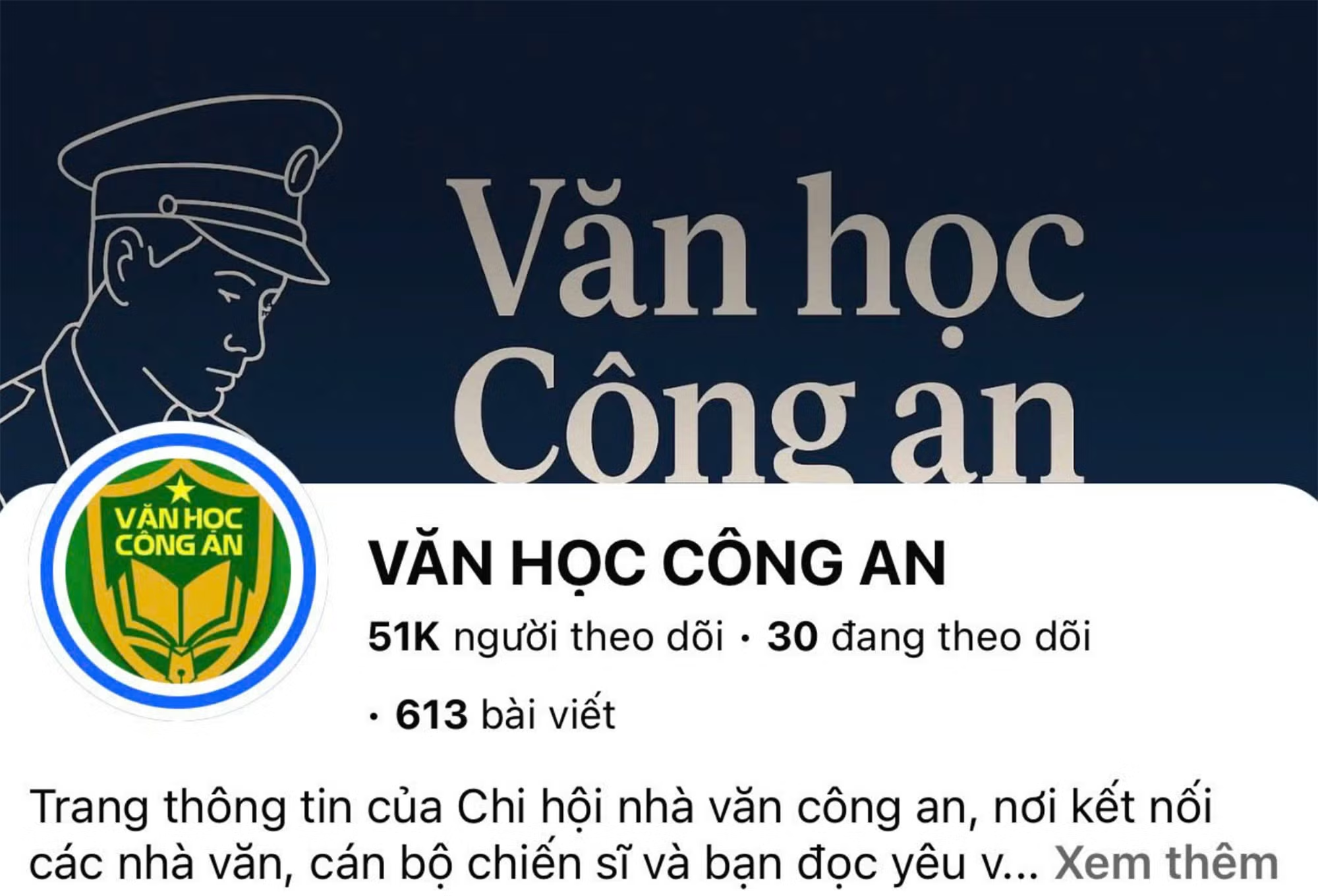
Interface of the Police Literature Fanpage.
Meanwhile, unselective entertainment content, fake news, misinformation, and harmful cultural products are being produced in a sophisticated and accessible manner, spreading rapidly on social media. The void left by positive information is easily filled by offensive, deviant, or intentionally distorted content. A segment of young people, lacking the ability to filter information, are easily influenced by erroneous viewpoints and deviant role models regarding lifestyles and social values.
The worrying aspect is that if revolutionary literature in general, and literature about the People's Public Security Force in particular, does not have a strong presence in the online space, positive, humane, and revolutionary values will gradually be overshadowed by misinformation, anti-cultural content, and extremist ideologies. When works rich in educational value are not competitive enough in the digital media environment, the public, especially young people, will easily be drawn to purely entertaining content lacking intellectual depth, or even be misled by distorted and subversive rhetoric.
Therefore, the current requirement is not only to create more valuable works about the People's Public Security Force, but more importantly, to strongly innovate the methods of disseminating these values in cyberspace. This is not simply a task of promoting literature, but also a political, ideological, and cultural task aimed at building social "resistance" against harmful information and protecting the Party's ideological foundation in the context of current digital transformation.
In the era of digital transformation, cyberspace is no longer merely an environment for connecting and sharing information, but has become a particularly important ideological and cultural front, directly impacting social awareness, political beliefs, and people's value systems. Recognizing the role of culture, literature, and art in protecting the Party's ideological foundation, the Party, the State, and the Central Party Committee of the Public Security Ministry have issued many important policies and resolutions to promote the power of culture and art in the new situation.
Notable examples include Resolution No. 05-NQ/ĐUCA dated September 28, 2021, of the Central Party Committee of the Public Security Ministry on improving the quality of cultural and artistic work to meet the requirements of building a revolutionary, regular, elite, and modern People's Public Security force; Plan No. 259-KH/ĐUCA dated June 21, 2024, implementing Conclusion No. 84-KL/TW of the Politburo on continuing to implement Resolution No. 23-NQ/TW of the 10th Party Congress on "Continuing to build and develop literature and art in the new era"; and especially Resolution No. 80-NQ/TW dated January 7, 2026, of the Politburo on developing Vietnamese culture in the new period.
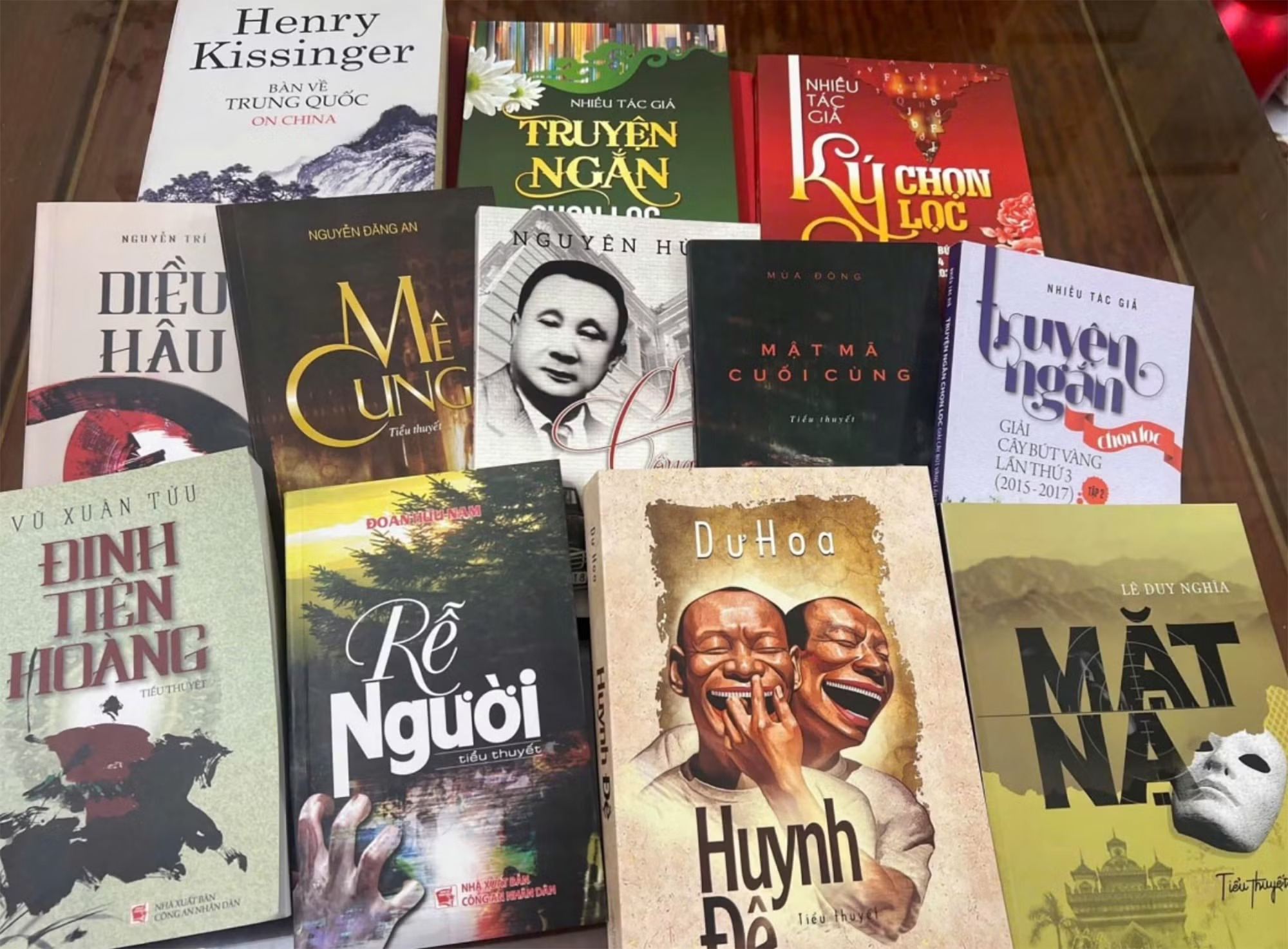
Some literary works on the theme of the People's Police Force.
These resolutions and plans not only affirm the position and role of culture, literature, and art in national development but also emphasize the need to leverage the power of culture on the ideological front, especially in today's digital environment. At the same time, to maintain the ideological battleground in the digital age, the Party has determined that it is necessary to implement a comprehensive set of solutions to build, consolidate, and disseminate the positive values of Marxism-Leninism, Ho Chi Minh Thought, the Party's guidelines, patriotic traditions, national spirit, and the beautiful humanistic values of the Vietnamese people. The digital environment should not only be limited to the dissemination of political theory but also create a healthy cultural environment, foster social trust, and form an ideological foundation against false and harmful information on the internet.
In this context, the dissemination of literary and artistic works with profound ideological and artistic value is an effective method to naturally and sustainably instill revolutionary values into the spiritual lives of the people, and literature about the People's Public Security Force plays a particularly important role. This is not only a literary genre reflecting the reality of the struggle to protect national security and maintain social order, but also a gentle yet profoundly impactful means of ideological education that deeply and lastingly influences people's perceptions and emotions.
While theoretical writings often directly influence thought, literature touches people's hearts through emotion, artistic imagery, and genuine humanistic values. Therefore, the influence of literature is often more enduring and profound than conventional forms of propaganda. Through the image of the dedicated, courageous, compassionate police officer ready to sacrifice for the people, literature contributes to strengthening social trust, arousing patriotism, and fostering revolutionary ideals in the younger generation.
Stories about the fight against crime and the protection of people's peaceful lives not only help the public better understand the duties, responsibilities, and silent sacrifices of the People's Police force, but also create empathy, sharing, and a bond between the people and the revolutionary police force.
In a digital environment dominated by a vast amount of chaotic information, disseminating literary values about the People's Public Security Force is even more significant as an ideological foundation rooted in cultural depth and social sentiment. Simultaneously, these works, rich in authenticity and humanism, effectively counter the distorted and misrepresented images of police officers that hostile forces are deliberately spreading on social media. Therefore, disseminating the values of literature about the People's Public Security Force is a harmonious combination of education, ideological guidance, and the struggle against erroneous viewpoints, contributing to maintaining the Party's ideological foundation in the current digital age.
(to be continued)
Source: https://cand.vn/ky-2-thach-thuc-tren-khong-gian-mang-post812707.html


![[Photo] First session of the 14th Congress of the Vietnam Trade Union](https://vphoto.vietnam.vn/thumb/1200x675/vietnam/resource/IMAGE/2026/06/03/1780465947883_ndo_br_img-3852-jpg.webp)
















































![[Video] Sunset at Lap An Lagoon – Where the sun sets over the fishing nets](https://vphoto.vietnam.vn/thumb/1200x675/vietnam/resource/IMAGE/2026/05/31/1780192137701_beach-landscape-sea-water-nature-grass-745871-pxhere-com.jpeg)





































Comment (0)