

I couldn't answer everyone's questions, because every journalist already knows the art of interviewing people, and saying more would be redundant. So I'll quote the famous American interviewer Larry King before he retired, in response to his "treasures": "Genuine curiosity." I've used this quote as the title of my book on interviewing.
Spy Pham Xuan An
Curiosity is often viewed negatively and rarely goes hand in hand with sincerity – it sounds paradoxical, and people are always "wary of journalists' recording devices." They fear saying something inappropriate, or wondering if the journalist is being sincere or will quote something unfavorable.
I also naively carried that old, "brick" voice recorder—a relic from the days before digital technology was so widespread—to place it in front of the veteran journalist and spy Pham Xuan An, and clumsily pressed the button so hard that it fell. He was probably amused and surprised, and kindly advised me: "You should probably find another topic. This thing is very difficult." "This thing"—he meant the intelligence profession. At that time, it wasn't publicly available, and no one in the public knew about him.
He even said candidly, "Sit here with me, and when you leave the gate, you'll be added to… my blacklist."
Sincerity allowed my curiosity to overcome all fear. After all, I'm doing my job honestly, so what is there to be afraid of?
Looking back now, it's truly frightening. Not because I was once called in by my boss at work and told, "You guys have a responsibility..." right after I started working there. "Just move aside, I'm writing something." Decades have passed, and now when I meet my boss at social gatherings, he says he's forgotten about it.
But now I'm afraid because I've "dive headfirst" into a difficult topic - the extraordinary man with vast and inaccessible professional secrets. Even if Western authors came to write about him with the advantage of declassified historical sources, I'm still certain he took many secrets to his grave.
Although I received a dedication from history professor Larry Berman: "Your book has paved the way for all of us…"; "Of all those who have written about Pham Xuan An, you understand his humanism better than anyone else."
Professor Thomas Bass (in an interview with journalist Thanh Tuan of Tuoi Tre Newspaper) commented: "Ms. Nguyen Thi Ngoc Hai is a leading author on Pham Xuan An. Her book is an important guide for all of us who follow in her footsteps to write about him."
...Even now, I'm still "afraid" of how reckless I was.
By writing about intelligence agents, I learned and discovered in them the subtle mannerisms of humanists.
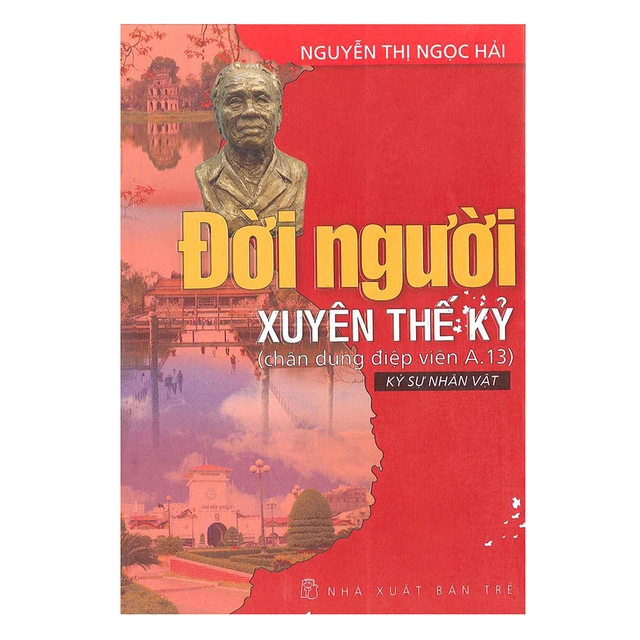
Book cover of "Life Across Centuries - A Story About Spy Hoang Dao" (Youth Publishing House)
PHOTO: ARCHIVE
Zodiac Spy
Agent Hoang Dao sought me out after reading an article I wrote in the newspaper. He didn't intentionally seek me out to tell me about himself, because he thought, "The story of attacking the ship is so old-fashioned; now is the time for more complicated 'stories'..." He wanted to vent his frustrations to someone who could discuss his "concerns of the times." Why do people behave this way or that way? Why is he always tormented and considered "different" from modern life?
Then he told me about his time working in Southern Vietnam, how, because of his personality and his longing for his mother, he was arrested and imprisoned by the "revolutionary side" for his indiscipline… He truly embodied the typical "Southern Vietnamese character."
He wanted to vent his many questions about current events and his haunting memories of the past. Through this, I discovered a thoughtful person, "outdated" by the times but never willing to fall behind.
All our conversations took place in the small, informal eateries scattered throughout District 3, Ho Chi Minh City. Sometimes, during arguments, he would raise his voice as if he were fighting. Now, wherever I go, I easily recall his image, even though the shops have been rebuilt to be bigger and nicer than before…
General Mai Chi Tho
As for General Mai Chí Thọ, I had many surprises after many years of writing the book "General Mai Chí Thọ ." He was extremely busy with important matters, and I hardly ever met him again after the work was done.
Then I fell ill and was hospitalized in Ho Chi Minh City. Suddenly, that morning, the entire courtyard was in a commotion. Nurses and doctors rushed to my room, cleaning and preparing everything quickly. Before I knew what the rush was about, I was surprised to see General Mai Chi Tho appear smiling at the door. He was the highest-ranking leader in the city at the time. When I hesitated to accept his gift of rare ginseng, he jokingly said something that made everyone in the room burst into laughter:
"Take it. People came to 'give alms' when I was sick, and now I'm 'giving alms' in return to you..."
On another occasion, when the elderly and frail General Mai Chi Tho went to China for medical treatment, he brought along the book "General Mai Chi Tho" that I had written. And from this detail, I found my close childhood friend, a Chinese expatriate from my time studying in Hai Phong – with whom I had lost contact and didn't know where to find him.
The story goes that when the general went to China, he had a Chinese-Vietnamese interpreter accompanying him. This interpreter was given a book as a gift. When he brought it home, his sister, Dung Lay Man, unexpectedly looked at the book and exclaimed, "The author of this book is a close friend of mine whom I've lost contact with for a long time!"
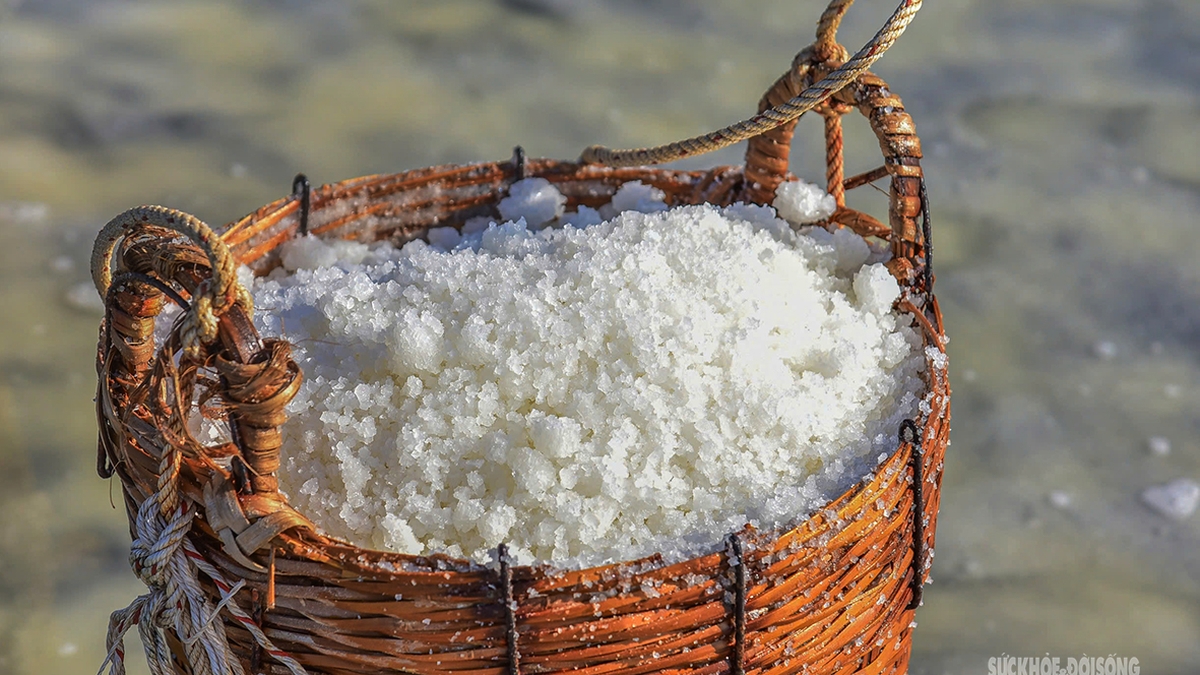
I've been close friends with Dung Lay Man since childhood. Man was still in my mother's elementary school. Once, Man was playing mischievously and climbed onto the roof of a bomb shelter to avoid American planes, fell, and broke his arm. My mother personally took Man to the hospital. Later, I worked as a journalist in Hanoi and felt very sorry for Man when I heard that he couldn't go to university and had to work on a salt factory in Do Son (Hai Phong).
In 1979, I was a reporter writing about the border war in the North. It was heartbreaking to see the crowds of Chinese, incited by the "overseas Chinese," fleeing back to their country. Looking at the chaotic throngs of people running, I felt a pang of sadness, hoping to see Màn among them, but I didn't see her.
Thanks to my book about General Mai Chí Thọ, Màn and her sister flew from Guangzhou (China) to Ho Chi Minh City to visit me. We went to Ben Thanh Market together, had fun, and reminisced about old times… I learned that Màn was among the people fleeing to the border to return home that year.
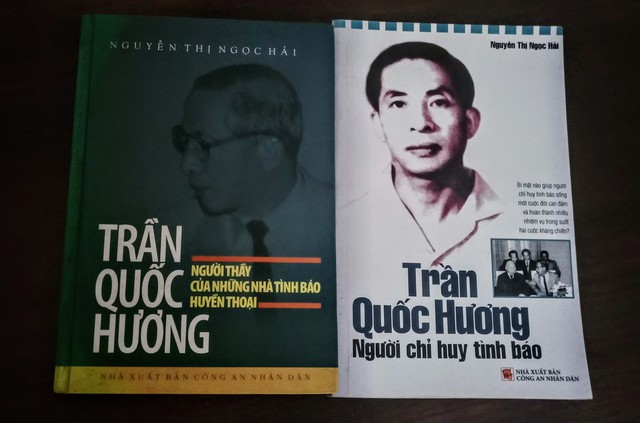
Book cover of Tran Quoc Huong - the intelligence commander (People's Police Publishing House)
PHOTO: ARCHIVE
Intelligence commander Tran Quoc Huong
With intelligence commander Tran Quoc Huong, we encountered another unexpected situation. Having already secured his agreement to meet, I led director Phong Lan's film crew to his house as arranged. With the equipment and cameras ready, we were surprised to learn that he was unwell and would need to finish the meeting quickly before heading to the hospital.
Some family members, feeling sorry for him and anxious, angrily rebuked the film crew. Everyone was terrified and ran away. The reporters grabbed their cameras and headed out the gate. We got into the car and drove back to Ho Chi Minh City, considering the trip a failure—a common occurrence in our profession: "returning home with a bloody head."
As the car was about to cross the Saigon Bridge, my phone rang. It turned out to be the intelligence commander calling to apologize on behalf of my family and said, "I'm in the car following yours. Drive straight to T78; I'll meet your group there."
We were surprised, relieved, and delighted. We could interview to our heart's content. Afterwards, he even treated the group to a simple lunch. It was truly a clever, unexpected, and humane gesture.
Many years have passed. He is now gone. But every time I cross the Saigon Bridge, I always recall this touching memory of the intelligent and humane behavior of such a great and refined person.
This year marks the great anniversary of national reunification, a cause to which great intelligence agents dedicated their efforts and lives, living in fear to achieve great victories. They have passed away.
I too have grown old, wandering the streets…
Works on intelligence by journalist Nguyen Thi Ngoc Hai:
- A Life Across Centuries - Spy Hoang Dao, the first major achievement of the intelligence service in attacking the French ship Amyot Dinville - Huynh Van Nghe Award (Youth Publishing House).
- General Mai Chí Thọ (People's Police Publishing House) - English translation by Thế giới Publishing House.
- Tran Quoc Huong - the intelligence commander (People's Police Publishing House).
- Pham Xuan An - A name like a life (People's Police Publishing House) - Award A in Literature for the 10-year period (1995-2005) from the Ministry of Public Security and the Vietnam Writers Association.
Source: https://thanhnien.vn/ky-niem-khi-viet-sach-ve-cac-nha-tinh-bao-185250609124508861.htm

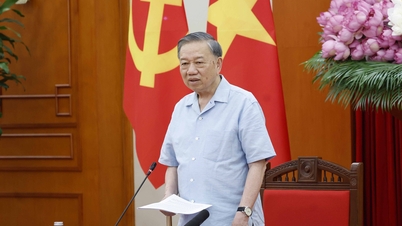
![[Photo] General Secretary and President To Lam presides over a meeting on preparations for the review of one year of operation of the three-tiered government system.](https://vphoto.vietnam.vn/thumb/1200x675/vietnam/resource/IMAGE/2026/06/02/1780391821195_a1-bnd-4595-9717-jpg.webp)

























































Comment (0)