The unique ant egg cake of the Muong people in Phu Tho .

According to generations of experience, young, plump ant eggs are the best ingredient for making cakes. These pristine white, rich, and fragrant eggs have a distinctive nutty flavor that no other ingredient can replace. Harvesting ant eggs also requires knowledge and experience, from correctly identifying the type of nest to choosing the right time for harvesting.

Ant eggs are the main ingredient in this unique and rustic cake.
Each trip into the forest to find ant nests, the villagers bring knives, trays, baskets, and bundles of reeds. After bringing the ant nest down, they skillfully separate it into many pieces, use bamboo sticks to secure them, and gently tap to make the ants and eggs fall into the tray. The older ants quickly crawl away or are swept away with the reeds, leaving only the creamy white eggs and pupae. The work seems simple but requires meticulousness and patience because even a slight mistake can cause the tiny eggs to break, affecting the quality of the dish.



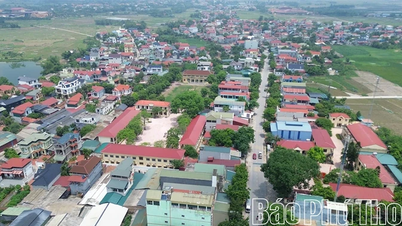
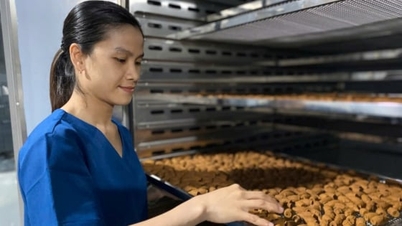
With the skillful hands of Ms. Le Thi Xuan (Tan Son commune), ant egg cakes with the distinctive flavor of the mountains and forests have been created.
While ant eggs are the key ingredient that gives this cake its unique character, the baker's skill and the use of various forest leaves contribute to its distinctive flavor. The cake batter is made from glutinous rice that has been soaked until soft, then ground finely and kneaded thoroughly until pliable. After being cleaned, the ant eggs are stir-fried with onions, pork fat, and spices. Depending on the family, the filling may also include some wild herbs such as wild greens, shallots, or banana blossoms to enhance the aroma.

The glutinous rice dough is shaped just enough to completely enclose the filling, then wrapped in young fig leaves – a type of forest leaf belonging to the fig family with a distinctive, mild aroma – before being steamed. When the cake is cooked, the aroma of the leaves blends with the rich, nutty flavor of the ant eggs, creating an irresistible appeal. Enjoying the cake while it's still hot, diners can clearly feel the chewy texture of the glutinous rice, the rich, creamy but not greasy taste of the ant eggs, and the refreshing aroma of the forest leaves.
More than just a traditional dish, ant egg cake is deeply intertwined with the cultural life of the Muong people. During the Thanh Minh festival (Qingming Festival), many families make the cake to offer to their ancestors, expressing their hopes for a year of favorable weather, abundant harvests, and a prosperous life. After the ceremony, family members gather to enjoy the cake as a way of preserving a beautiful tradition passed down through generations.

Nowadays, with the development of community tourism , especially in the buffer zone of Xuan Son National Park, ant egg cakes are becoming increasingly well-known. Many tourists choose to visit during the ant egg season to experience joining locals in the forest to find ant nests, then directly sifting the eggs, wrapping the cakes, and enjoying the dish right by the fire in a stilt house.
To allow visitors to enjoy ant egg cakes out of season, some families even preserve the ant eggs in their freezers; however, the best flavor comes from batches of cakes made with fresh ant eggs.
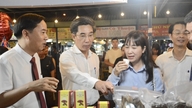

Among the many famous specialties of the ancestral land, ant egg cake still stands out with its simplicity, unique flavor, and the cultural values preserved in every step of its preparation. It is not only a dish made from mountain and forest products but also the culmination of the labor experience, the skill of Muong women, and the love for nature passed down through generations.
Phuong Thanh
Source: https://baophutho.vn/la-lam-banh-trung-kien-256683.htm

![[Image] Schools organize meetings and introduce teaching models to students admitted to grade 10.](https://vphoto.vietnam.vn/thumb/1200x675/vietnam/resource/IMAGE/2026/06/25/1782368077271_ndo_br_z7970052192242-1ec8daeb77a6eed1a4e9f58c564ddd3e-jpg.webp)

![[Photo] General Secretary and President To Lam receives Palestinian Ambassador Saadi Salama](https://vphoto.vietnam.vn/thumb/1200x675/vietnam/resource/IMAGE/2026/06/25/1782365384740_a1-bnd-9423-8322-jpg.webp)
![[Image] Ho Chi Minh City: Ma Lang area, Chicken-Rice Market about to change its appearance](https://vphoto.vietnam.vn/thumb/1200x675/vietnam/resource/IMAGE/2026/06/25/1782377698627_ndo_br_m1-jpg.webp)