

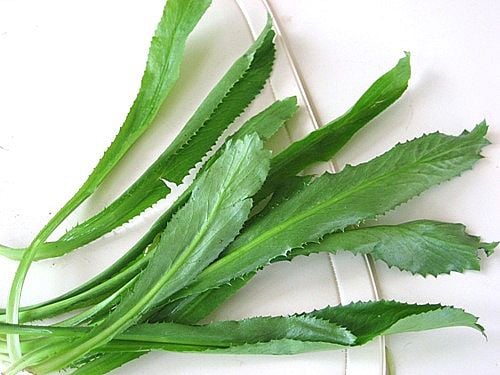
Coriander (Eryngium foetidum), also known as sawtooth coriander, is a familiar herb in Vietnamese cuisine and many Southeast Asian countries. It is an annual herbaceous plant, growing to a height of about 20-50 cm. The leaves grow close to the ground in a rosette shape, are narrowly lance-shaped, 7-15 cm long, with evenly serrated edges, are stiff and sharp, and are almost the same green color on both sides.
With its distinctive, slightly pungent aroma, coriander leaves are commonly used in soups, stews, salads, dipping sauces, and seafood dishes. Beyond its role as a spice, this leaf has long been used in folk medicine and traditional medicine due to its many beneficial bioactive compounds. Modern medicine also recognizes coriander's nutritional value and its anti-inflammatory, antibacterial, and digestive-aiding properties.
1. Nutritional components and bioactive compounds
- 1. Nutritional components and bioactive compounds
- 2. Benefits of coriander leaves
- 3. How to use coriander leaves
- 4. Who should limit their use of coriander leaves?
- 5. Some folk remedies using coriander leaves
- 6. Notes on using coriander leaves
Coriander leaves are rich in vitamins A and C, iron, calcium, and other minerals such as manganese and magnesium. Therefore, this herb helps boost immunity, supports strong bones, and protects cells from free radical damage thanks to its antioxidant compounds.
Coriander essential oil contains notable active compounds such as eryngial, β-caryophyllene, and camphor, which have antibacterial, anti-inflammatory, and antifungal effects. These phenolic compounds help reduce inflammation, support digestion, and contribute to improved liver and kidney function when used in the correct dosage.
Modern studies show that coriander leaf extract can inhibit the growth of certain gut bacteria and yeasts, while also supporting the balance of the gut microbiome. Therefore, coriander leaves not only have culinary value but also contribute to promoting digestive health.

Besides being used as a spice, coriander leaves have also been used as medicine in folk and traditional medicine for a long time...
2. Benefits of coriander leaves
According to traditional medicine, coriander has a pungent taste, a warm nature, and affects the spleen, stomach, and kidney meridians. Some commonly noted effects include:
- Relieving colds and mild fevers: Coriander leaves, when boiled in warm water or used in soups, can help alleviate mild cold and flu symptoms such as dry cough, nasal congestion, and fatigue.
- Supports digestion: Coriander helps reduce bloating and indigestion thanks to its properties that stimulate digestive enzymes and slightly increase bowel motility.
- Antibacterial and anti-inflammatory effects: For external use, crushed fresh leaves applied to insect bites or mild rashes help soothe symptoms.
- Supports body detoxification: Coriander leaf tea has a mild diuretic effect, contributing to the elimination of toxins through the urinary tract and helping to maintain the body's water balance.
In folk medicine, combining coriander with herbs such as ginger, perilla, and mint is used to enhance the effectiveness of relieving colds and improving digestive function.
3. How to use coriander leaves
In cooking: Wash, chop, and add to soups, stews, salads, seafood dishes, or dipping sauces; can be used fresh or dried; dried leaves retain their aroma but are milder than fresh leaves.
For oral consumption: Take a handful of fresh coriander leaves, wash them thoroughly, and boil them with 500-600 ml of water for 5-10 minutes. Drink warm, no more than 2-3 cups per day, to avoid excessive digestive irritation or diuresis. It can be combined with ginger or perilla leaves to enhance its effects in relieving colds and reducing bloating.
For external use: Crush fresh coriander leaves and apply to areas of skin affected by insect bites or rashes; a little coconut oil or olive oil can be added to avoid irritation.
Usage tip: Drying will help preserve it for longer, but the aroma will diminish. Combine it with ginger, perilla, and mint to enhance its effectiveness in aiding digestion and relieving colds. Do not use it as a substitute for medication, as coriander only has supportive effects.
4. Who should limit their use of coriander leaves?
Despite its many health benefits, this leaf is not suitable for everyone. Here are some groups of people who should be aware of its benefits:
- Pregnant women: Some sources suggest that the scent of coriander may affect the functioning of the female reproductive glands. Therefore, pregnant women should limit its use to avoid unwanted risks.
- People with respiratory conditions: Those with asthma, chronic obstructive pulmonary disease, or acute respiratory infections may experience dry throat and difficulty breathing if they consume too much coriander.
- People with stomach problems: Although coriander can aid digestion, excessive consumption can cause bloating and digestive disorders, especially in people with stomach issues.
- For people with liver disease: Coriander helps support some liver functions, but overuse can cause excessive bile secretion, negatively affecting the liver.
- People prone to allergies: Essential oils and compounds in coriander leaves can cause allergic reactions in sensitive individuals. This group should avoid contact with the plant or test small amounts before regular use.
5. Some folk remedies using coriander leaves
- To treat colds and indigestion: 10g of dried coriander, 6g of licorice root; boil with 300ml of water for 15 minutes, divide into 3 doses and drink while hot throughout the day.
- To treat mild fever: Cook 30g of coriander, 50g of finely chopped beef, and a few slices of fresh ginger with 600ml of water, adding a little pepper; eat hot and cover yourself with a blanket to induce sweating.
- Expectorant: Drinking a decoction of coriander helps expel phlegm from the throat when suffering from a cold or runny nose.
- Treatment of conjunctivitis: Dry coriander leaves in a cool place, then boil them to make a decoction and use it to wash the eyes when experiencing mild conjunctivitis.
- Home remedy for melasma: Soak finely chopped coriander leaves in warm water for 2 hours, strain out the residue, and apply the liquid to your face for 15-20 minutes, twice a day.
- To treat red pimples and rashes in children: Crush fresh coriander leaves, squeeze out the juice, and apply it directly. If irritation occurs, wash it off immediately.
- To treat bad breath: Boil coriander leaves until concentrated, add a few grains of salt, and use the resulting liquid to gargle and rinse your mouth several times a day for 5-6 days.
6. Notes on using coriander leaves
- Do not use excessive amounts, especially in the form of decoctions or extracts.
- Avoid eating it with pork or animal organs as it can easily cause bloating and indigestion.
- Individuals with underlying health conditions, pregnant women, and young children should consult a healthcare professional before regular use.
- People with kidney disease or those taking diuretics should exercise caution because coriander has a mild diuretic effect.
Coriander leaves are a familiar spice but also a medicinal ingredient with many health benefits such as aiding digestion, mild antibacterial properties, relieving colds, and detoxifying the body. However, its use needs to be appropriate for each individual and in specific dosages to ensure safety. With proper use, coriander is both a delicious spice and can become a "natural herb" to support daily health.
Readers are invited to read more:
Source: https://suckhoedoisong.vn/la-mui-tau-co-tac-dung-gi-169251205154743147.htm


![[Photo] Solemn bathing ceremony and Buddha procession in Hue](https://vphoto.vietnam.vn/thumb/1200x675/vietnam/resource/IMAGE/2026/05/31/1780228263543_1-jpg.webp)
![[Photo] Admire the coral "masterpiece" amidst the million-year-old heritage of Dak Lak province.](https://vphoto.vietnam.vn/thumb/1200x675/vietnam/resource/IMAGE/2026/05/31/1780221235105_anh-man-hinh-2026-05-31-luc-16-53-27.png)













![[Video] Sunset at Lap An Lagoon – Where the sun sets over the fishing nets](https://vphoto.vietnam.vn/thumb/340x192/vietnam/resource/IMAGE/2026/05/31/1780192137701_beach-landscape-sea-water-nature-grass-745871-pxhere-com.jpeg)








































![[Photo] Admire the coral "masterpiece" amidst the million-year-old heritage of Dak Lak province.](https://vphoto.vietnam.vn/thumb/402x226/vietnam/resource/IMAGE/2026/05/31/1780221235105_anh-man-hinh-2026-05-31-luc-16-53-27.png)




































Comment (0)