

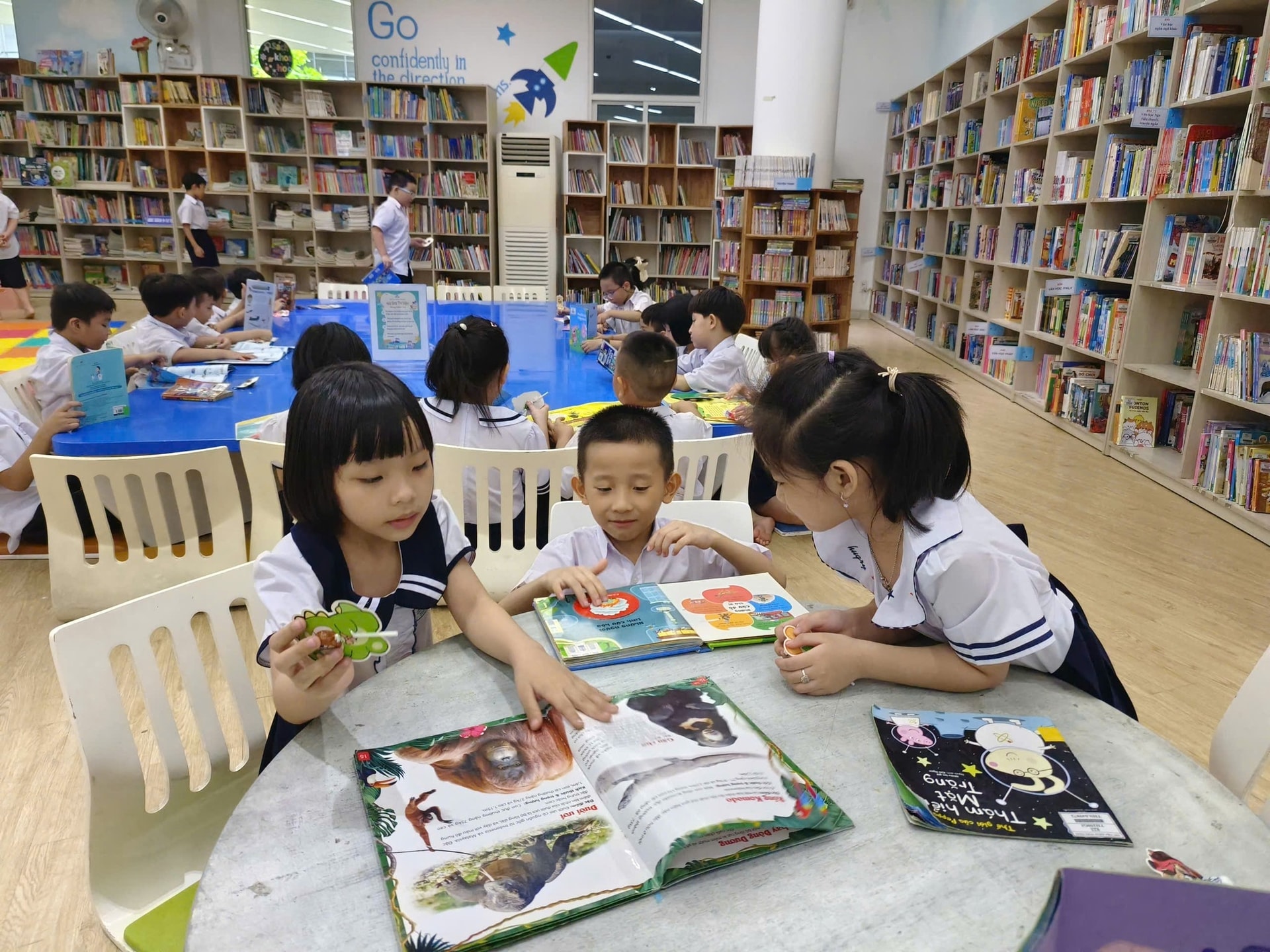
Ahead of Vietnam's National Book and Reading Culture Day on April 21st, this document outlines a new approach to the publishing industry, linked to digital transformation and the development of the cultural industry, while emphasizing the role of fostering reading habits.
Among the directions outlined, implementing reading sessions as a subject is considered a crucial solution that needs to be promoted. From here, the issue shifts to another step: design and implementation. The question is no longer about the policy itself, but about how to organize reading activities in schools to achieve tangible results.
From policy direction to implementation challenges
I still remember the atmosphere at the conference summarizing 20 years of implementing Directive 42-CT/TW of the Party Central Committee on improving the overall quality of publishing activities, which took place in August 2025, with the participation of many leaders from the Ministry of Culture, Sports and Tourism, the Publishing Department, the Publishing Association, and publishing units. Everything went quiet when Mr. Le Hoang – former Director and Editor-in-Chief of Tre Publishing House – presented a figure in his frank speech: On average, each Vietnamese person reads only about 1.3 books per year, excluding textbooks.
The situation is not new, but the figures were still shocking to the conference attendees, highlighting the urgent need for strong solutions to encourage young people to develop a reading habit. From a practical perspective, Mr. Le Hoang proposed incorporating two reading sessions per week into schools as a solution to foster reading habits from an early age.
Recent international studies show that the most evident impact of reading activity is on language proficiency. A 2024 meta-analysis synthesizing 47 studies with over 7,000 students found that independent reading in school positively influenced word recognition ability, fluency, and attitudes toward reading, with statistically significant effects.
When reading activities are structured – including appropriate book selection, consistent time allocation, and adequate teacher support – the effectiveness on overall reading ability increases significantly, especially for weaker students.
At the systems level, OECD PISA 2018 data shows that students who regularly read print books scored 49 points higher in reading than those who read little or no, after controlling for socioeconomic factors. This represents a significant difference in educational metrics.
Several recent studies have also indicated a link between reading habits and creativity. PISA 2022 data shows that education systems with high reading scores also tend to have better-than-expected creative thinking scores.
Overall, reading directly impacts language skills and indirectly affects many other abilities, from learning to critical thinking.
For many years, reading promotion programs in schools have often remained at the level of mere campaigns: organizing reading days, launching competitions, or building "beautiful bookshelves." However, the reality shows that most libraries and classroom bookshelves remain in a "dead" state – existing in form but not being used in practice.
The root cause lies not in a lack of books, but in the system's design. To cultivate a sustainable reading habit, we need to shift from a fragmented approach to building a "living" reading ecosystem that operates continuously and has a clear mechanism.

Reading ecosystem
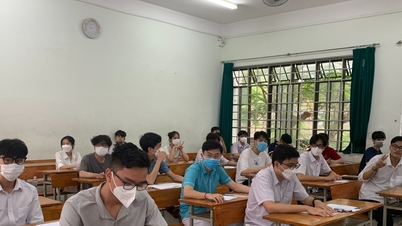
First and foremost, reading needs to be integrated into the formal structure of the school system through a stable "reading session." Habits are only formed when behaviors are repeated regularly, so allocating time for reading daily or at least a few times a week is a prerequisite. However, time is only part of the equation. Without appropriate content and a specific operating mechanism, reading sessions can easily become merely a formality.
At the implementation level, the "classroom bookshelf" model can play a pivotal role in the reading ecosystem, especially at the secondary school level. Unlike the decorative bookshelves currently in use, classroom bookshelves need to be designed as a truly functional system.
Each class needs a number of books equivalent to the class size, ensuring that at least 50% of the books are new to the students in that class. The book list is not fixed but is updated monthly through additions from parents, the school, publishers, or through exchange between classes and grades. This rotation mechanism helps maintain the "life" of the book collection, preventing repetition and boredom.
A key point is empowering students with choices. Reading lists should be proposed and developed by the students themselves on a monthly or semester basis, with input from teachers and the library, but not imposed. When students are involved in the decision-making process, reading is no longer a chore, but a meaningful personal choice.
However, for the system to operate effectively, clear usage rules are needed. Each student should read at least one new book each month and provide feedback – such as writing reviews, sharing, or recommending books – on a common platform for the class or school.
This isn't about testing, but about creating a "read - share - spread" loop. A news site or digital platform dedicated to reading can become a connecting space where students can both express themselves and learn from each other.
This is coupled with a well-designed incentive mechanism. Monthly, semester, and annual voting and recognition systems can provide initial motivation, but should avoid becoming mere competition. The key is to create community-based recognition – from the class and grade level to the entire school – while ensuring genuine teacher involvement in evaluation and monitoring. When class and individual student reading results are linked to overall performance evaluation, the system will have sufficient momentum to be sustained.
Alongside encouragement is a system of measurement. Simple indicators such as the number of books circulated, the percentage of students who read enough each month, the level of participation and sharing, or the diversity of book choices can reflect the health of the reading ecosystem. This data helps schools adjust policies in a timely manner, instead of relying solely on subjective assessments.
If implemented consistently throughout the four years of lower secondary school, this model can have a significant impact. Each student could read approximately 10 books per year, while simultaneously developing a habit of self-selection and self-learning. From the school's perspective, the library would be continuously "refreshed" through contributions and circulation, becoming a truly vibrant space of knowledge, closely linked to the cognitive development of students each year.
From a broader perspective, the problem of promoting reading cannot be solved by simply "adding books" or "launching campaigns." It requires a systemic design where every element—from time, infrastructure, catalogs, experiences, to evaluation and encouragement—is interconnected. When that system operates smoothly, reading will no longer be a chore, but a natural part of students' learning and development.
From the figure of 1.3 books read per year, to the proposal for 2 reading sessions per week, and to a provision in the Party Central Committee's new directive, it is clear that the issue of reading is being re-examined within a broader context. Directive 04-CT/TW opens up directions for solutions to promote reading and, more broadly, to boost demand for the publishing industry.
However, the effectiveness of this approach depends on how it is implemented within the education system. If properly organized, reading sessions can become an important tool for enhancing students' reading, thinking, and learning abilities. Conversely, without proper design and monitoring, this activity is unlikely to produce significant change. Here, the focus is not on adding another lesson, but on building a foundational and long-lasting learning habit.
Source: https://baodanang.vn/lam-sao-de-doc-sach-tro-thanh-tiet-hoc-duoc-lua-chon-3331022.html



![[Photo] General Secretary and President To Lam presides over the meeting to approve the draft report on the results of the second inspection by the Politburo of the Standing Committee of the Hanoi City Party Committee.](https://vphoto.vietnam.vn/thumb/1200x675/vietnam/resource/IMAGE/2026/05/26/1779789811432_a2-bnd-4430-9620-jpg.webp)




























































































Comment (0)