Quang Phu Cau incense village - a popular check-in spot during Tet holiday.
Báo Lao Động•07/01/2025
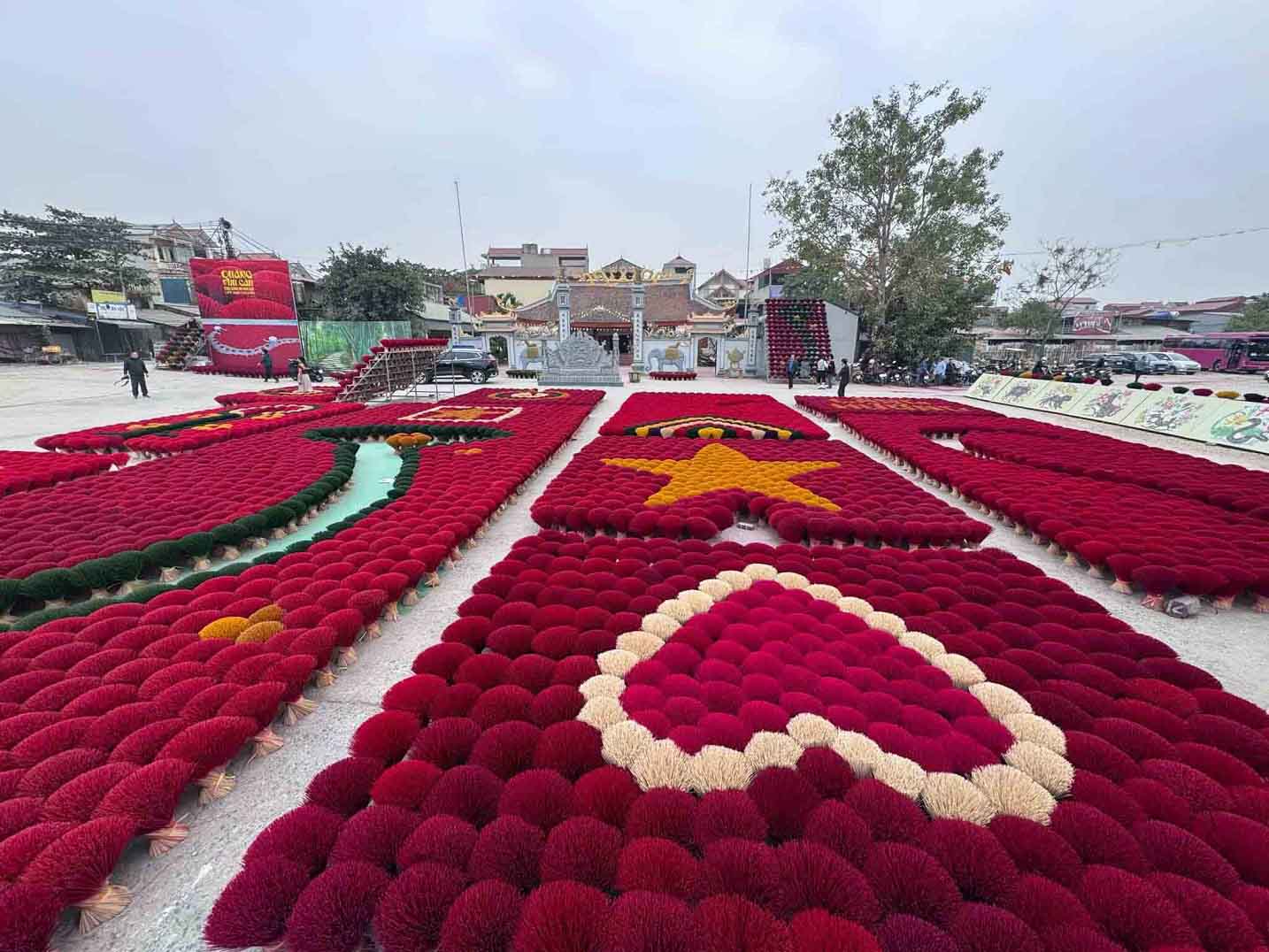
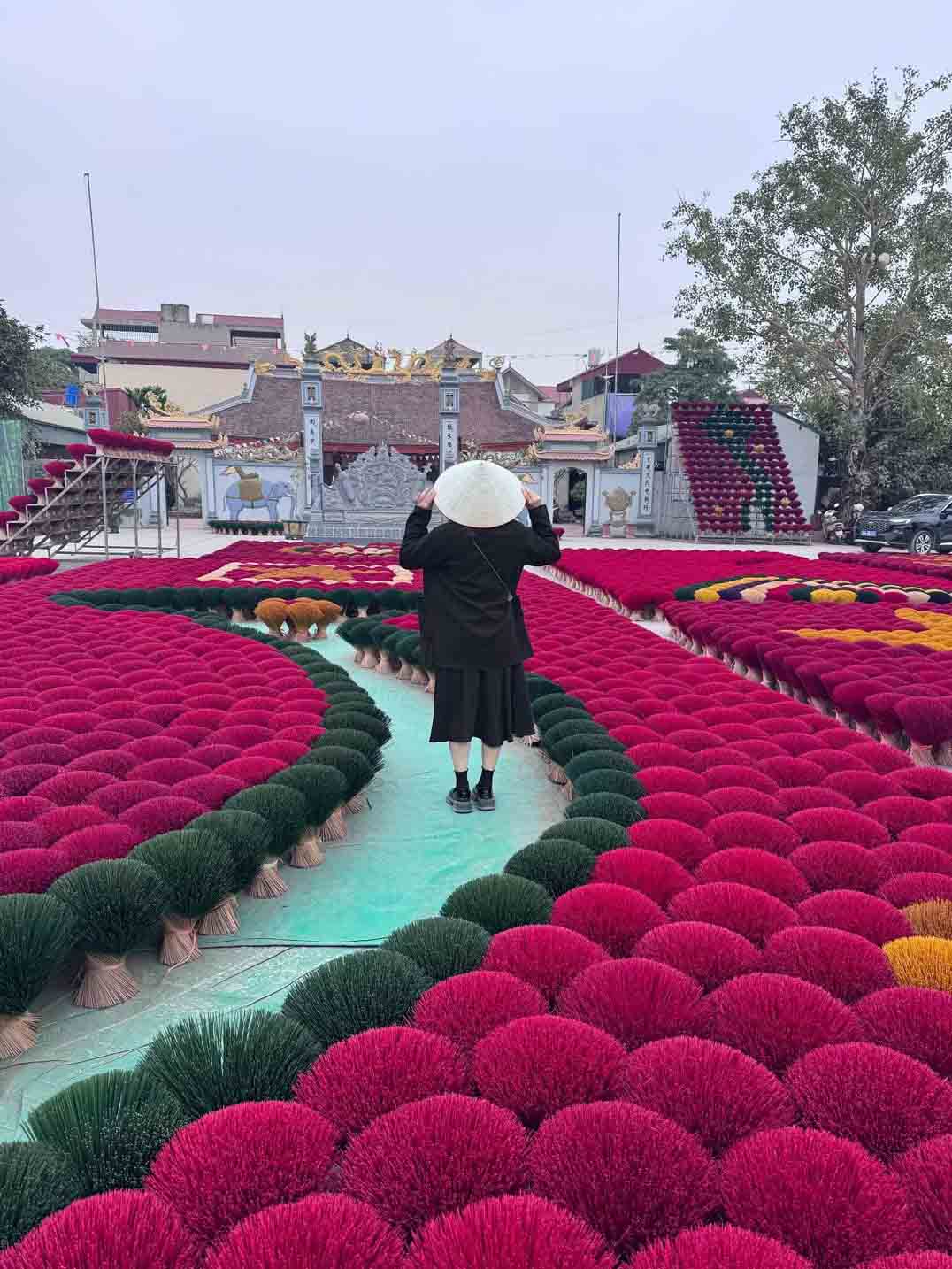
Hanoi - Visiting Quang Phu Cau incense village (Ung Hoa district) in the days leading up to Tet, tourists can see the incense stick drying yards ablaze with vibrant colors.
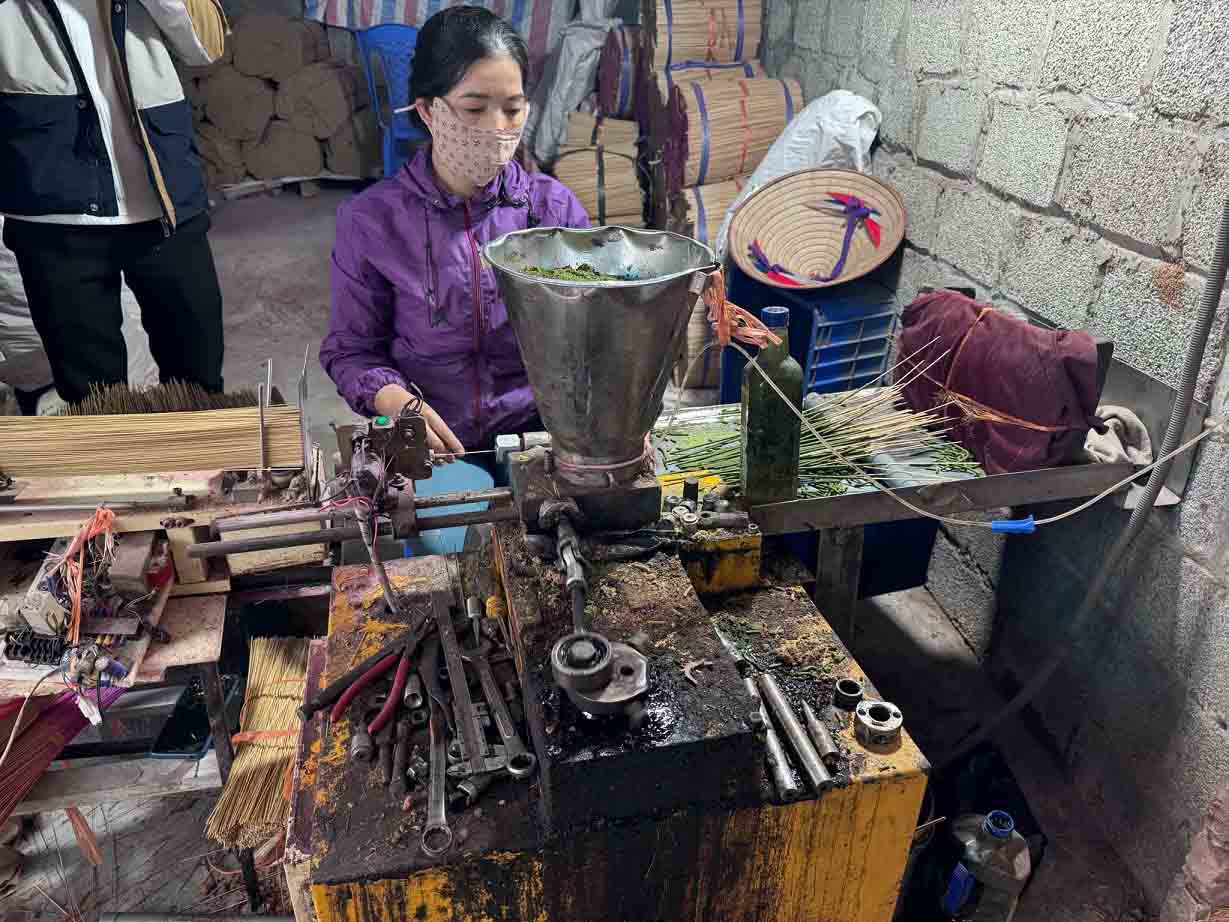
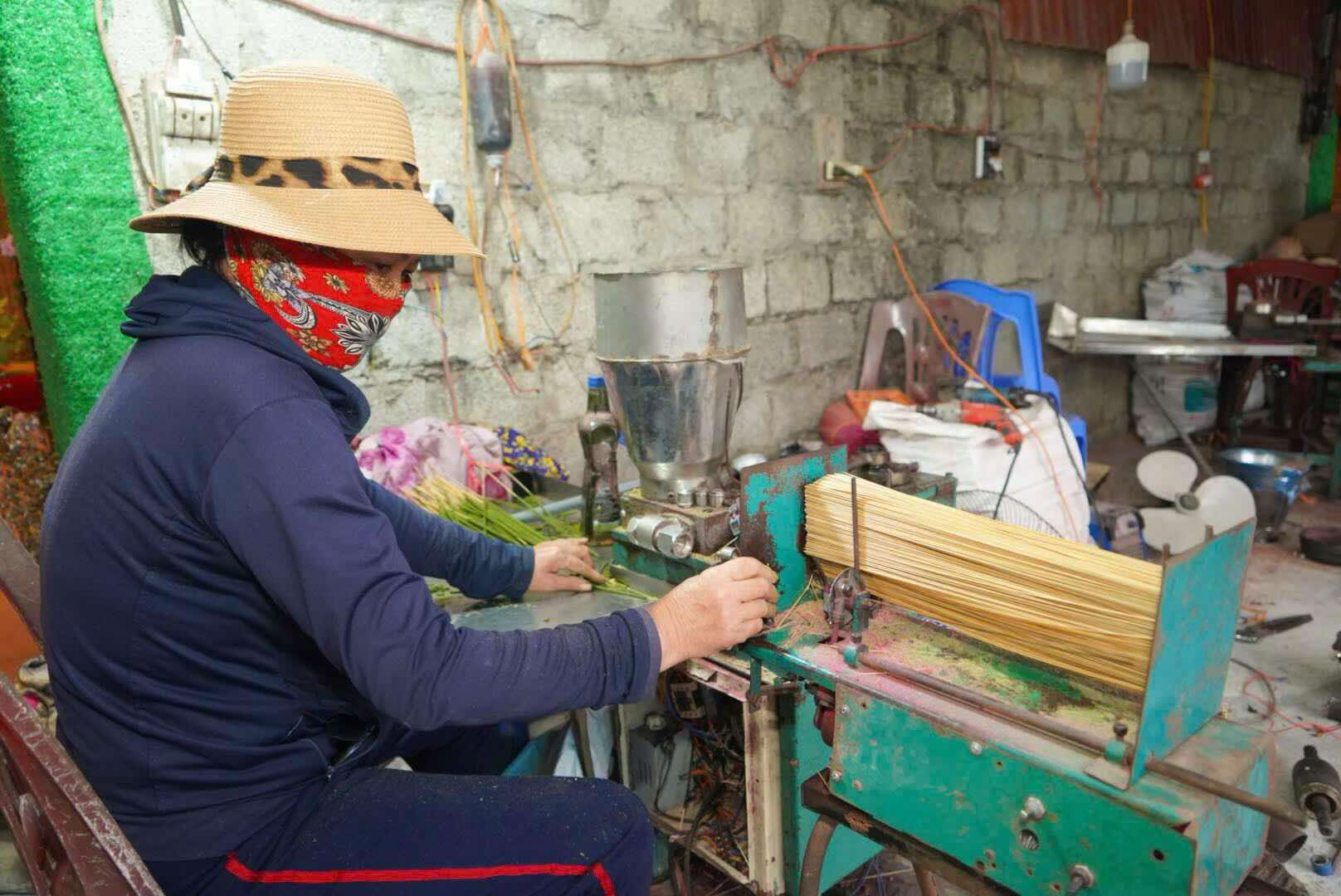
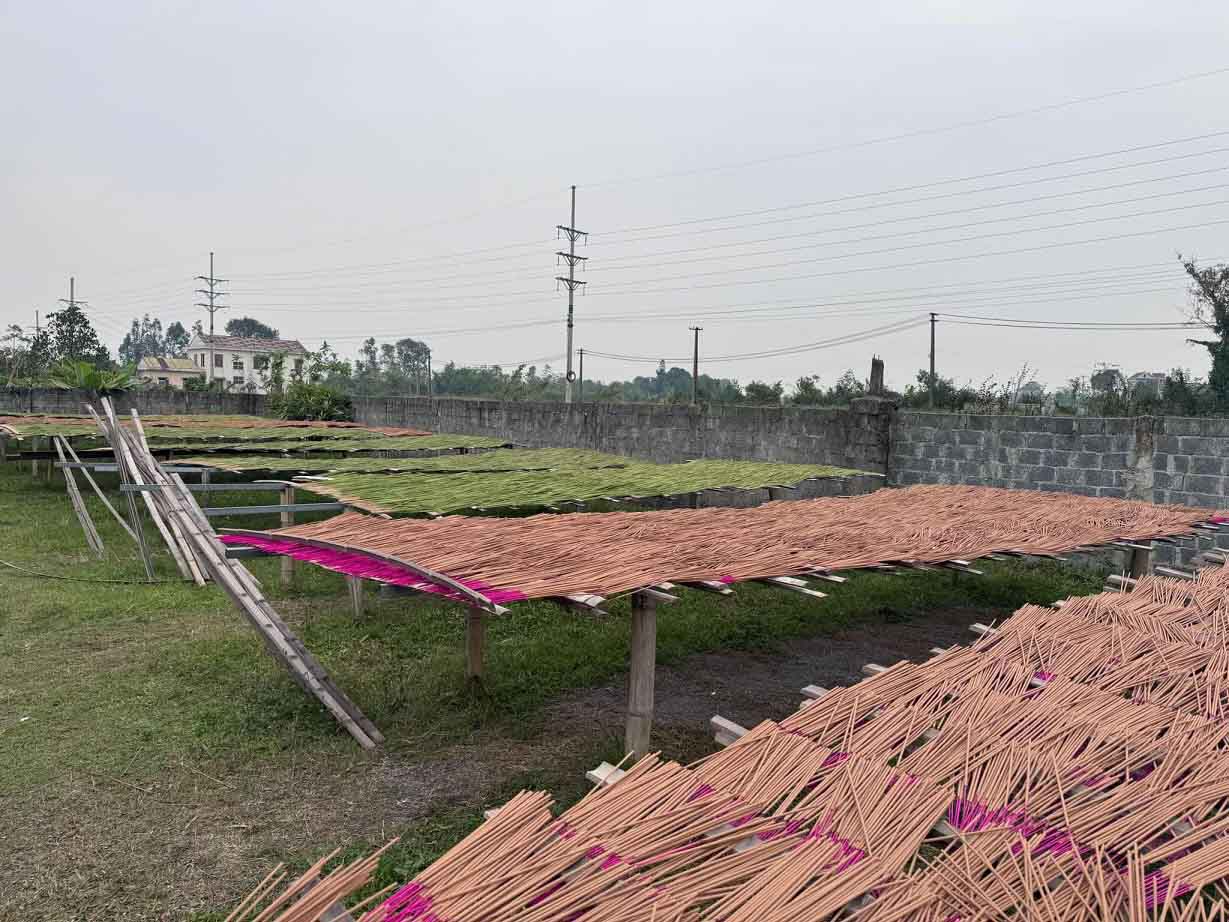
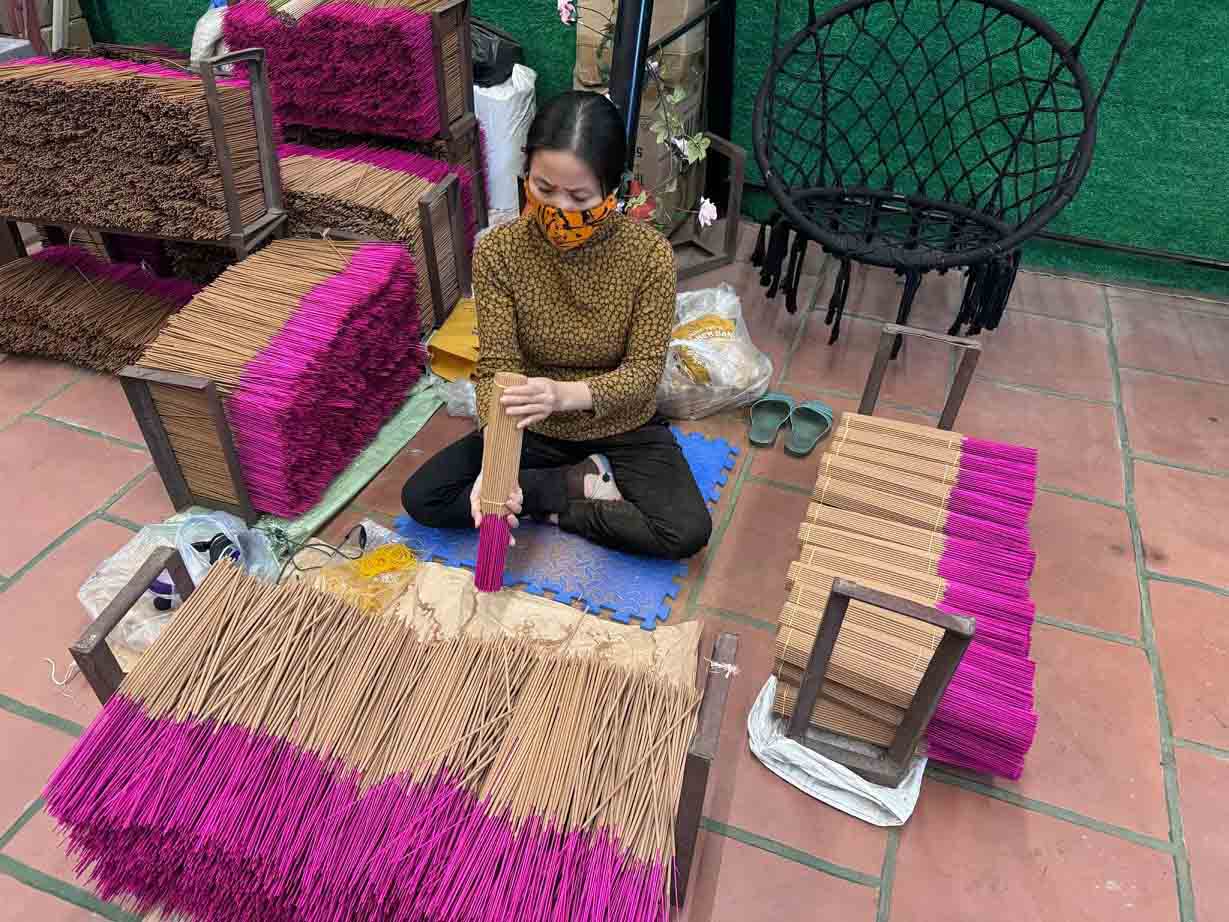
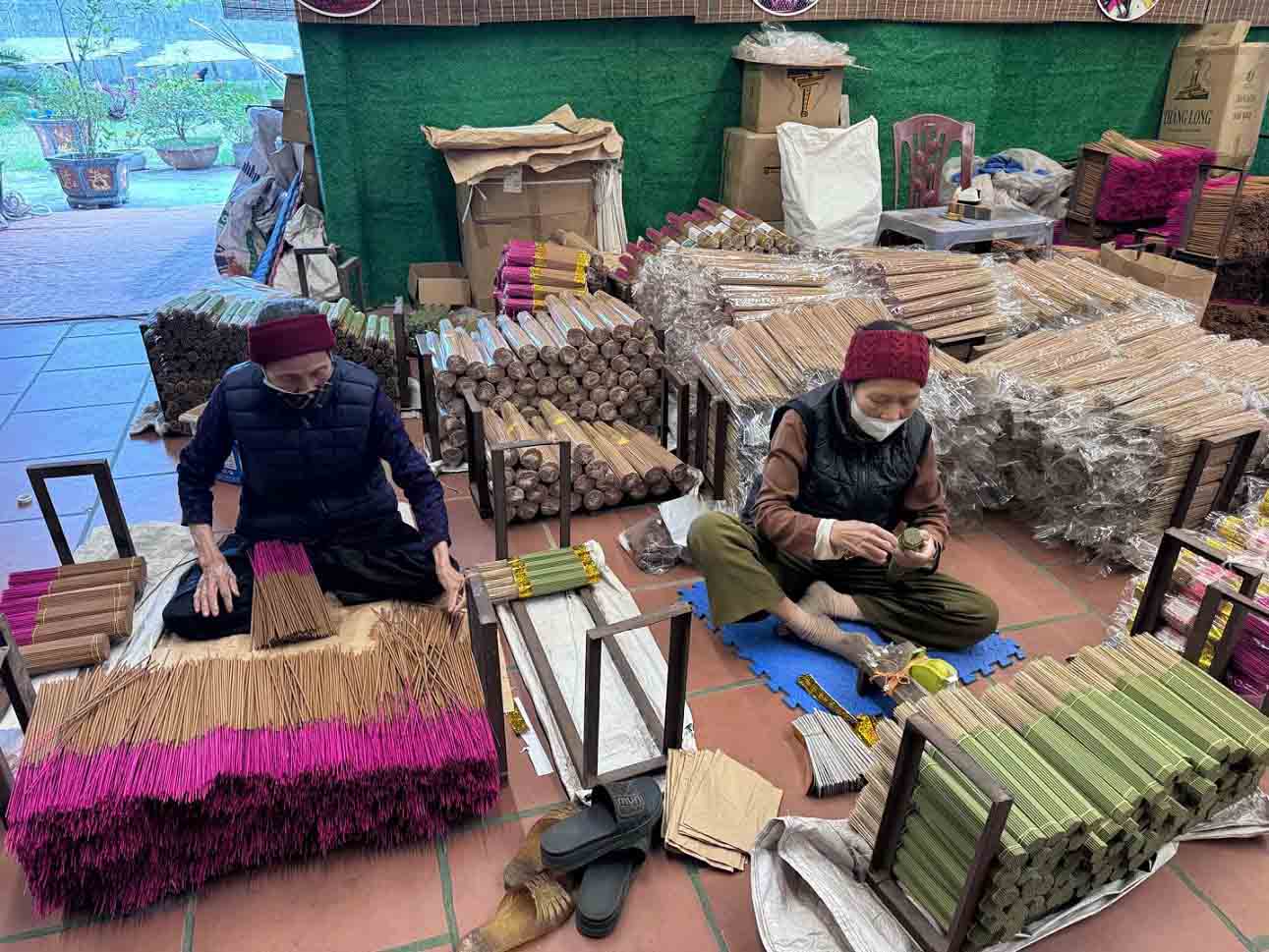
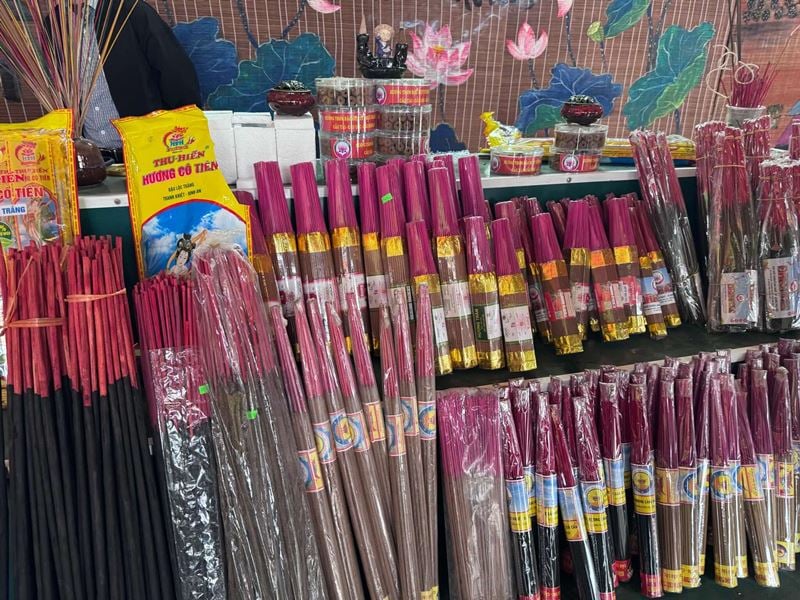
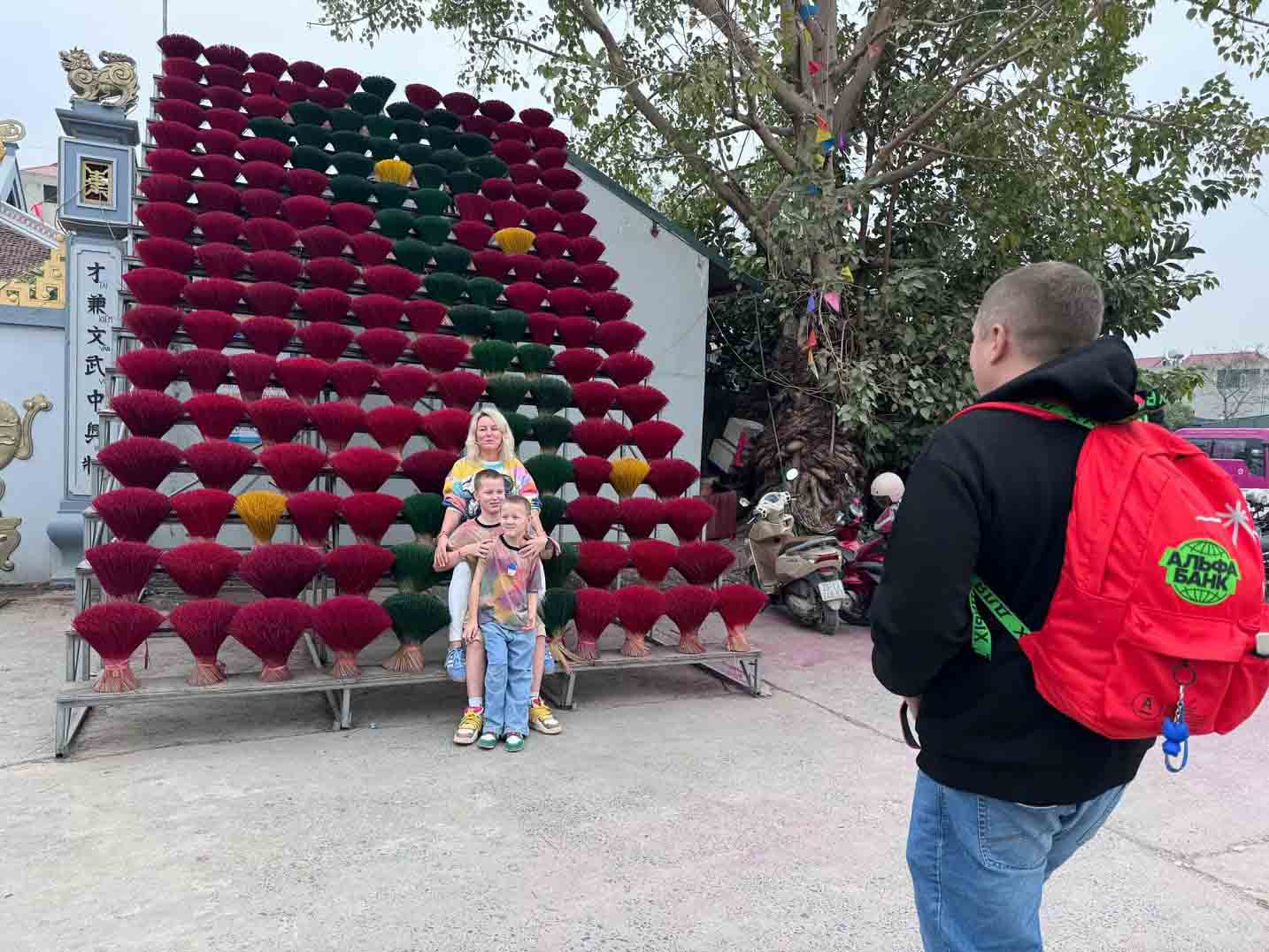
Located about 35km south of Hanoi city center, Quang Phu Cau incense-making village has a history of traditional incense stick making spanning over a century. Today, this incense-making village has become a place that preserves the cultural heritage of the Northern Delta countryside. Quang Phu Cau incense village, Ung Hoa district, Hanoi. Photo: Linh Boo Initially, the people of Quang Phu Cau primarily earned their living by weaving baskets, fans, and mats. Legend has it that in the early 20th century, Mr. Le Xuan Vinh, a resident of Phu Luong Thuong village, was buying bamboo to split into strips when he met a trader buying incense sticks. The two decided to cooperate; one would split the sticks for sale, the other would buy them. From then on, the people of Phu Luong Thuong village acquired the craft of splitting incense sticks, which spread to Phu Luong Ha village – the hometown of Mr. Le Xuan Vinh's wife. The incense-making craft gradually became a business model that spread to all six villages in the commune. From then on, incense stick making became a hereditary craft, maintained and developed to this day. The large commune of Quang Phu Cau has developed into one of the most prominent incense-making villages in the suburbs of the capital, providing employment for thousands of local workers. A craftsman making incense sticks by hand. Photo: Linh Boo In 2010, Mr. Nguyen Huu Chuyen, the owner of an incense stick production facility in Phu Luong Thuong village, after several visits to India, boldly invested in incense stick making machines and modern equipment, changing the production method. Previously, each worker could only split about 50-60 kg of wet incense sticks per day. With machinery replacing manual labor, production increased to 2-3 quintals of dry incense sticks. Each finished incense stick embodies the dedication of the craftsman. From making the sticks, dyeing the base, rolling the incense, to drying and packaging, every step is performed meticulously and carefully by the workers. The base of the incense stick is usually dyed lotus pink or bright red, while the body is yellow. Incense sticks are dried in the sun. Photo: Linh Boo Traditionally, when rolling incense sticks, the craftsman would roll them firmly but gently to ensure the powder adheres evenly to the stick. However, thanks to modern machinery, this process has been shortened, increasing productivity many times over. After rolling, the incense must be dried in a dry, clean place with sufficient sunlight to prevent mold and ensure longevity. During the rainy season with strong winds, people have to use ovens to dry the incense until it reaches the desired consistency. Sunny and dry weather is ideal for drying incense. After drying, the incense sticks are neatly stacked and packaged into small bundles for transport to their destination. Photo: Linh Boo The finished incense products are sold on the market, and tourists can buy them as souvenirs. Photo: Linh Boo There are many types of incense made from various corresponding ingredients such as: agarwood, pine, cypress, angelica, patchouli, star anise, cinnamon, resin from the Terminalia catappa tree, roots and tubers of the fragrant plant, charcoal from the Xoan tree, etc. The herbal ingredients, combined with unique blending techniques and meticulous processing at each stage, ensure that the incense from Quang Phu Cau village always has a long-lasting fragrance and color. Many local incense products, including coiled and compressed incense sticks, have received OCOP 3-4 star certification. As a result, Quang Phu Cau incense and incense sticks are popular with consumers in Hanoi, available throughout the provinces and cities, and exported to China, India, Malaysia, and other countries. The incense village attracts many domestic and international tourists who come to visit and take photos. A photo spot featuring incense sticks in Cau Bau village. Photo: Linh Boo In recent years, the people of Quang Phu Cau village have joined hands to develop craft village tourism , attracting many tourists to learn about its unique cultural values. The brightly colored incense stick drying yards have also become an attractive check-in spot, attracting photographers and tourists to take pictures. Especially during the Lunar New Year, the incense village becomes a very popular location for taking photos in traditional Vietnamese ao dai dresses.









































































Comment (0)