Taking root in new soil
They are Hmong people from Cao Bang, like birds tirelessly flying in search of new lands. Then, in 1991, they settled in Hamlet 10B, Bao Lam 3 Commune. For a long time, they have lived together in a village, so the locals often call it the Hmong village. "Where the land is good, birds will settle," and the villagers' lives gradually left poverty behind. The residents now enjoy stable and prosperous lives; their beautiful cultural values are preserved and promoted.
In the mind of Mr. Thào Hùng Khải (born in 1966), a Party member of the Party branch in Hamlet 10B and a respected figure in the Mong village, the past 35 years have been marked by the initial hardships faced by the first settlers. However, thanks to the attention and investment of the Party, the State, and the local authorities, the people now enjoy a stable life, their economy is developing day by day, their cultural heritage is preserved, and their children receive a proper education.
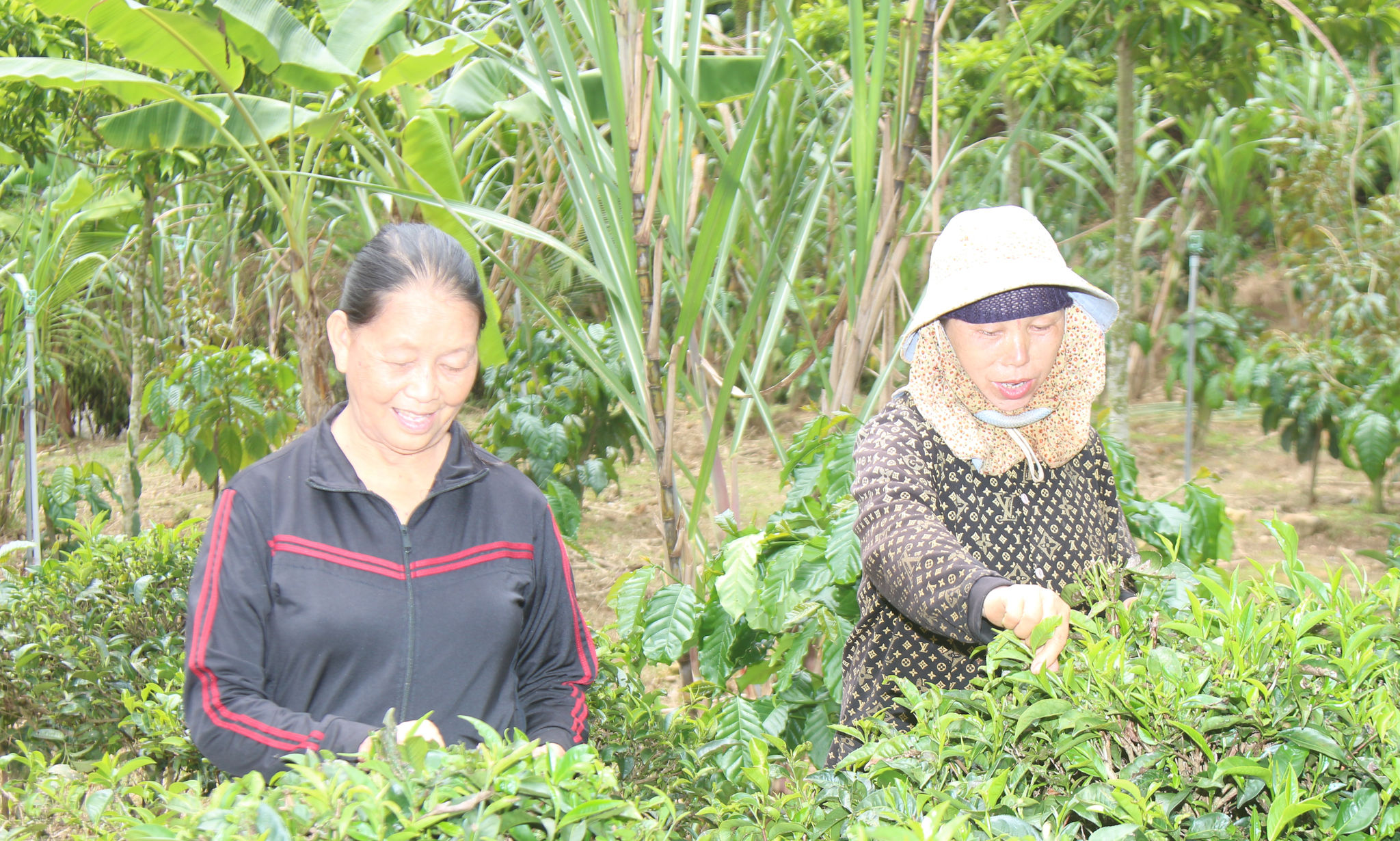
“Back then, life was very difficult; we worried about having enough to eat each day. People from Cao Bang were already familiar with growing corn on rocky slopes and eating men men (a type of corn porridge). When we came here, we started planting industrial crops like tea, coffee, and durian. Wherever we planted, the plants took root and grew lush and green; people's spirits lifted and they became more enthusiastic. With hoes and plows, we tilled the land, and the scent of the newly cleared soil captivated us,” Mr. Khai added.
Currently, Hamlet 10B in general and the Mong people in particular enjoy stable lives and development in all aspects. Bountiful coffee harvests, lush green tea plantations, and fragrant durian trees bearing fruit have brought high incomes to the villagers. Most households in Mong village are now well-off and wealthy. For example, Mr. Thao Hung Khai's family, currently cultivating 2 hectares of coffee along with fruit trees, tea, and fish ponds, earns approximately 300 million VND per year after deducting all expenses.
Along with that, Mr. Khai started raising swallows, exploiting the "white gold" mine in the sky. After a few years of raising them, he gets about 2 kg of swallow nests each year, creating additional income for his family. This is also a new profession for people in the village to learn from and follow, creating jobs for people in rural mountainous areas.
For example, Mr. La Van Ngoc's family cultivates 3 hectares of coffee, earning several hundred million dong annually from selling coffee beans. Mr. La Van Ngoc has never felt so prosperous and comfortable as he does now. Before, they had to pick corn cobs, sometimes having enough to eat, sometimes not; now they have billions of dong in their hands. To achieve these results, each individual and resident of Mong village silently thanks the Party, the State, the local authorities, and the land that has nurtured them and given them bountiful harvests.


On the other hand, with coffee cultivation as the main crop, the villagers have consistently enjoyed good harvests and high prices for the past few years, enabling them to build spacious houses, acquire many household items, and invest in their children's education. In addition, the local government has focused resources on investing in infrastructure, providing business capital, and supplying seedlings and livestock, which has helped the villagers and residents of Mong village achieve remarkable economic development and apply scientific and technological advancements to farming and animal husbandry.
According to Ms. Pham Thi Thu Phuong, Deputy Secretary of the Party Branch and Head of Village 10B, the village has 267 households, of which about 60 are Mong ethnic households. Currently, most of the villagers live in relatively good conditions, and their beautiful cultural traditions are always preserved. In recent years, the people have actively engaged in production, and their children have received a proper education.
The charm and beauty of the Hmong village
With their stomachs full, the children's education became a priority. So, Mr. Thào Hùng Khải donated two acres of coffee plantation land to establish the Vừ A Dính Primary and Secondary School (a separate branch) as it stands today. Back then, children had to wake up at 3 a.m. to walk to school; now, the school is a spacious and sturdy building located right in the middle of the village.
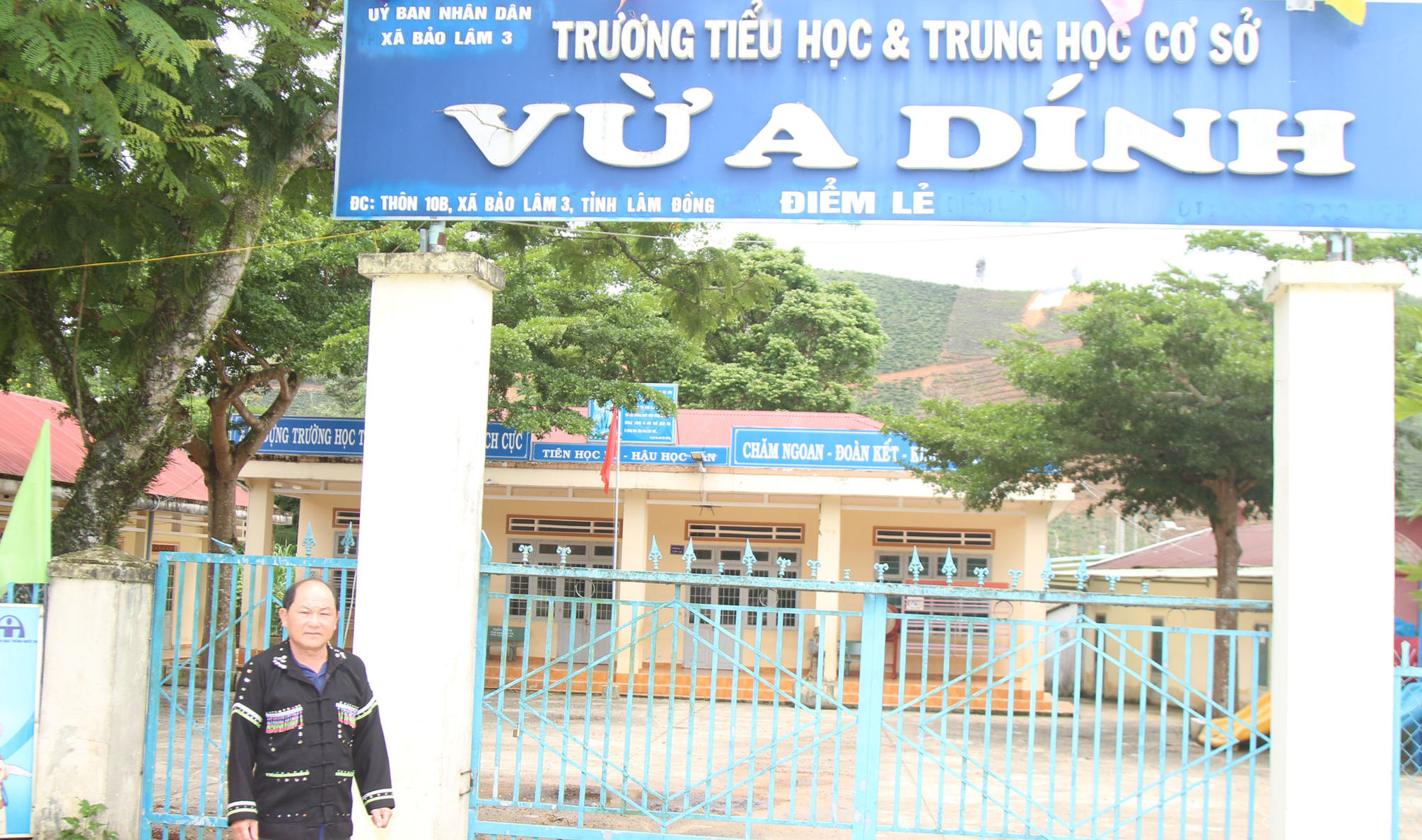
Mr. Thào Hùng Khải shared: “In the past, the school was very small, made of bamboo and forest wood. Students had to study in combined classes, and it was incredibly difficult in the rain and wind. Now, it has been renovated, the national flag flies in the wind, and children only need to walk a few minutes to get to class. What could be more wonderful than witnessing such changes and improvements day by day in almost a lifetime?”
Currently, Mr. Thào Hùng Khải's main concern is for the local authorities and the school to quickly transfer ownership of the land his family donated to the school. Mr. Khải shared: “Before donating the land, my family had agreed on the terms, and the land use certificate is still in my name. Therefore, in the future, I hope the local authorities and the school will proceed with transferring the land ownership to the school. Because whatever I promise or do, I must see it through to the end, all for the sake of our beloved children and the future generation.”
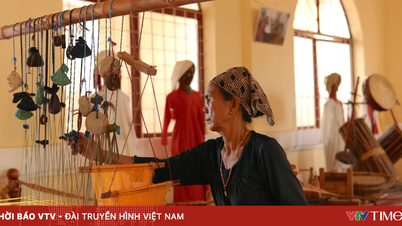
Along with economic development and focusing on their children's education, the Hmong people in Hamlet 10B are also diligently preserving their beautiful traditional culture. Mr. Hoang Van Muoi (born in 1962) is a teacher of the Hmong flute to the younger generation here. He is considered a true artisan, having taught over 30 young people in the village the flute melodies. According to Mr. Muoi, the Hmong flute is a unique beauty of the ethnic group, a cultural symbol, performed at festivals, markets, and as a way for young men and women to get to know each other and find love. Therefore, over the years, he has taught approximately 60 flute melodies in the vast forests of the Southern Central Highlands.
Mr. Vu Minh Doan, Vice Chairman of the People's Committee of Bao Lam 3 commune, said: "As a locality with a large ethnic minority population, in recent years, thanks to the attention and investment of the Party, the State, and the local authorities, each village and hamlet has completely changed in appearance, and the lives of the people have continuously improved."

In the Mong village of Hamlet 10B, the people always strictly adhere to the Party's guidelines and policies, and the State's laws and regulations. They actively participate in production, contribute to building a new rural area, and preserve and promote the beautiful cultural values of their ethnic group. Through this, they contribute to building a more prosperous, modern, and civilized life for all ethnic groups in the area.
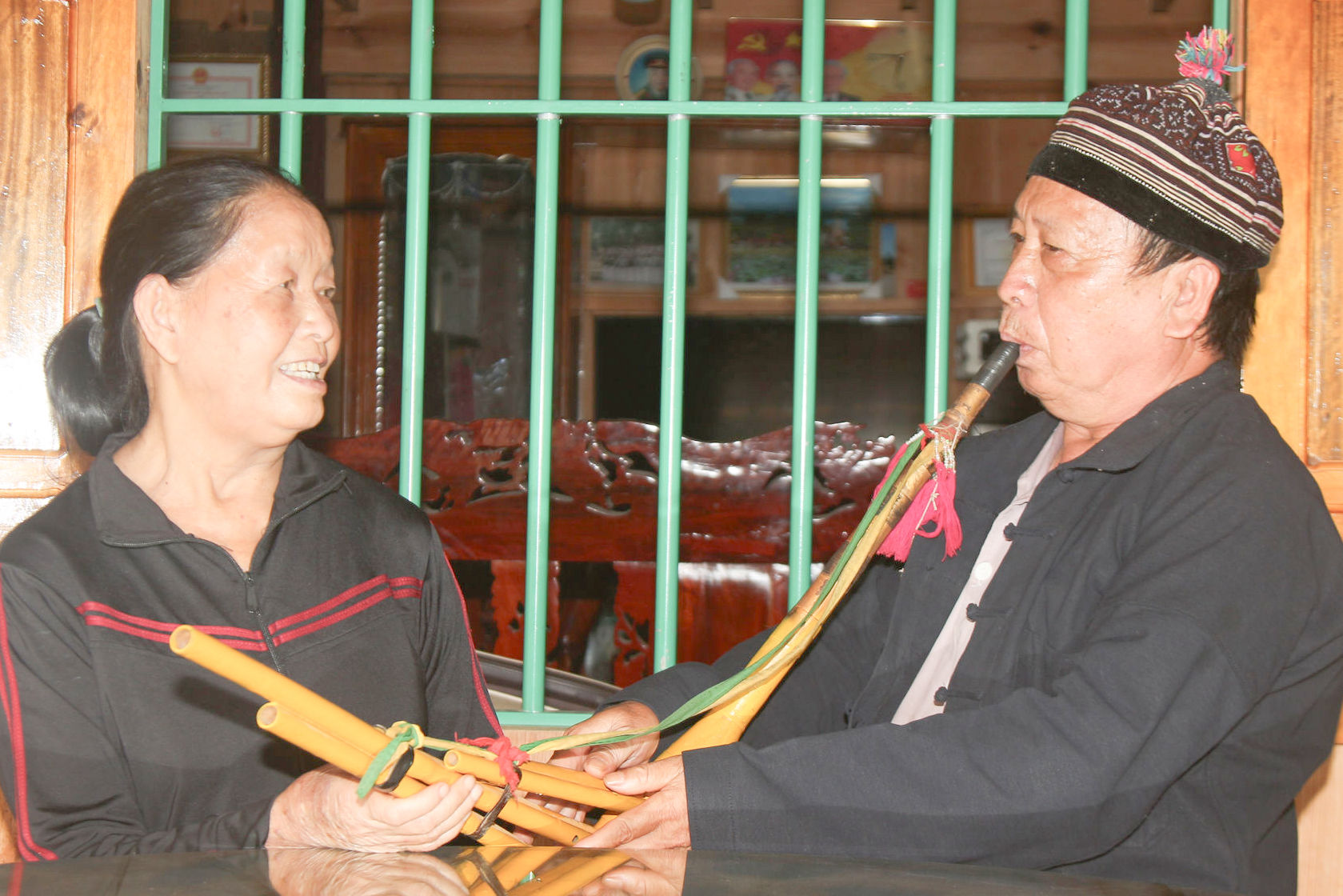
What could be more beautiful than, beneath the misty Chua Mountain, beside the cascading Ta Ngao waterfall, the image of the Hmong people diligently working every day to build a new life that is increasingly prosperous and happy? Young men and women weave verses of poetry to the enchanting sounds of the Hmong flute.
Source: https://baolamdong.vn/lang-mong-duoi-ngon-nui-chua-449106.html
![[Photo] General Secretary and President To Lam receives Palestinian Ambassador Saadi Salama](https://vphoto.vietnam.vn/thumb/1200x675/vietnam/resource/IMAGE/2026/06/25/1782365384740_a1-bnd-9423-8322-jpg.webp)

![[Image] Ho Chi Minh City: Ma Lang area, Chicken-Rice Market about to change its appearance](https://vphoto.vietnam.vn/thumb/1200x675/vietnam/resource/IMAGE/2026/06/25/1782377698627_ndo_br_m1-jpg.webp)
![[Image] Schools organize meetings and introduce teaching models to students admitted to grade 10.](https://vphoto.vietnam.vn/thumb/1200x675/vietnam/resource/IMAGE/2026/06/25/1782368077271_ndo_br_z7970052192242-1ec8daeb77a6eed1a4e9f58c564ddd3e-jpg.webp)