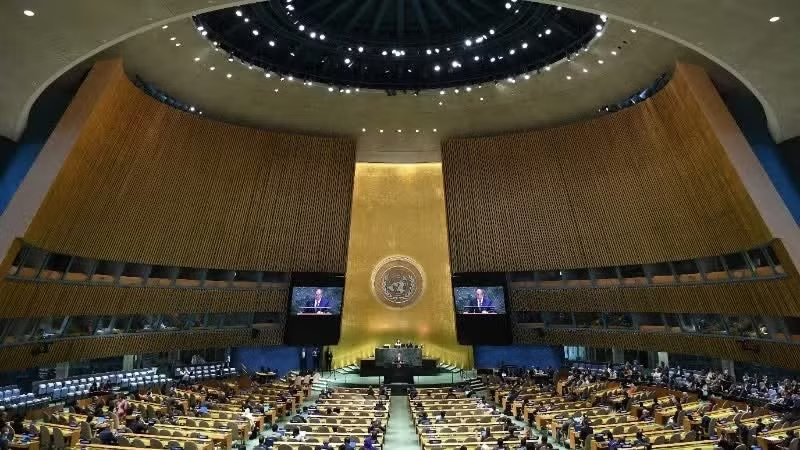
The United Nations' "Peacebuilding Week," held from June 22 to 26, offers an opportunity to reflect on the progress made and look towards the next phase in the process of fulfilling the mission of peace.
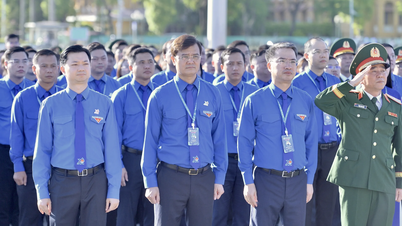
This June, the first "Peacebuilding Week" was held, bringing together a large number of policymakers, experts, scholars, and representatives of the younger generation from many countries around the world .
In their messages commemorating this important event, the delegates shared a common view: the United Nations remains the irreplaceable "captain" of global governance.
From diplomatic initiatives to prevent conflict and coordinate aid operations to peacekeeping missions deployed in a range of conflict hotspots, the United Nations affirms its leading role in efforts to maintain peace, promote sustainable development, and address challenges that no single nation can tackle alone.
However, since the United Nations was founded in 1945, many decades have passed with countless historical ups and downs. The current global geopolitical landscape is markedly different from what it was more than 80 years ago.
Although peace and cooperation remain the main currents in international relations, the world is increasingly fragmented, and unilateralism is on the rise.
In addition, the burden of global issues such as conflict, climate change, and recurring epidemics weighs heavily on the shoulders of the United Nations.
UN Secretary-General Antonio Guterres emphasized that intertwined crises are posing multifaceted challenges to the "common home" of 193 member states. Among these, conflict hotspots are the greatest obstacle to the UN's peace mission.
A report recently published by the Oslo Peace Research Institute shows that the number of armed conflicts worldwide is at its highest level since World War II.

Between 2021 and 2025 alone, more than 930,000 people were killed in state-sponsored conflicts, nearly equaling the total number of deaths recorded in the preceding 20 years.
The price paid is not only the lives of hundreds of thousands of innocent people, but also a series of serious consequences such as poverty, illegal migration, economic decline, and educational backwardness in many countries.
Increased responsibilities coupled with budget cuts present the United Nations with unprecedented challenges.
Over the past two years, funding shortfalls have forced the United Nations to operate below its approved budget, freeze recruitment, and scale back global programs.
Worryingly, according to Secretary-General Antonio Guterres, the issue of "financial health" is not expected to improve in 2026.
If the budget gap is not filled soon, many of the United Nations' activities risk being stalled, leaving the multilateral organization powerless. From an internal perspective, the changing international situation demands that the United Nations reform itself to maintain its role as the "conductor" of the organization.
Secretary-General Antonio Guterres has repeatedly emphasized that the organization needs to change rapidly to enhance its adaptability and meet the demands of the new context.
Reform presents both challenges and opportunities for the United Nations to enhance its effectiveness and continue contributing to building a sustainable future for humanity.
Established after the end of World War II, the United Nations carries humanity's shared aspiration for a peaceful, stable, and prosperous world.
The world has undergone profound changes over the past 80 years, but the core mission of the United Nations—to maintain international peace and security, promote human rights, and achieve sustainable development—remains as relevant as ever.



To continue fulfilling its historical mission in the new context, the United Nations is undertaking a restructuring of its apparatus to adapt to the current geopolitical realities.
However, this effort can only succeed if it receives practical support and cooperation from all member states.
Source: https://nhandan.vn/lien-hop-quoc-ngon-co-dau-xay-dung-hoa-binh-post971030.html
![[Photo] Prime Minister Le Minh Hung presides over the thematic session on promoting science and technology development and innovation.](https://vphoto.vietnam.vn/thumb/1200x675/vietnam/resource/IMAGE/2026/06/23/1782207872934_ndo_br_dsc-1724-jpg.webp)