

The demand for banh tet (Vietnamese sticky rice cake) has increased many times compared to normal days, peaking at nearly 1,000 cakes per day before Tet.
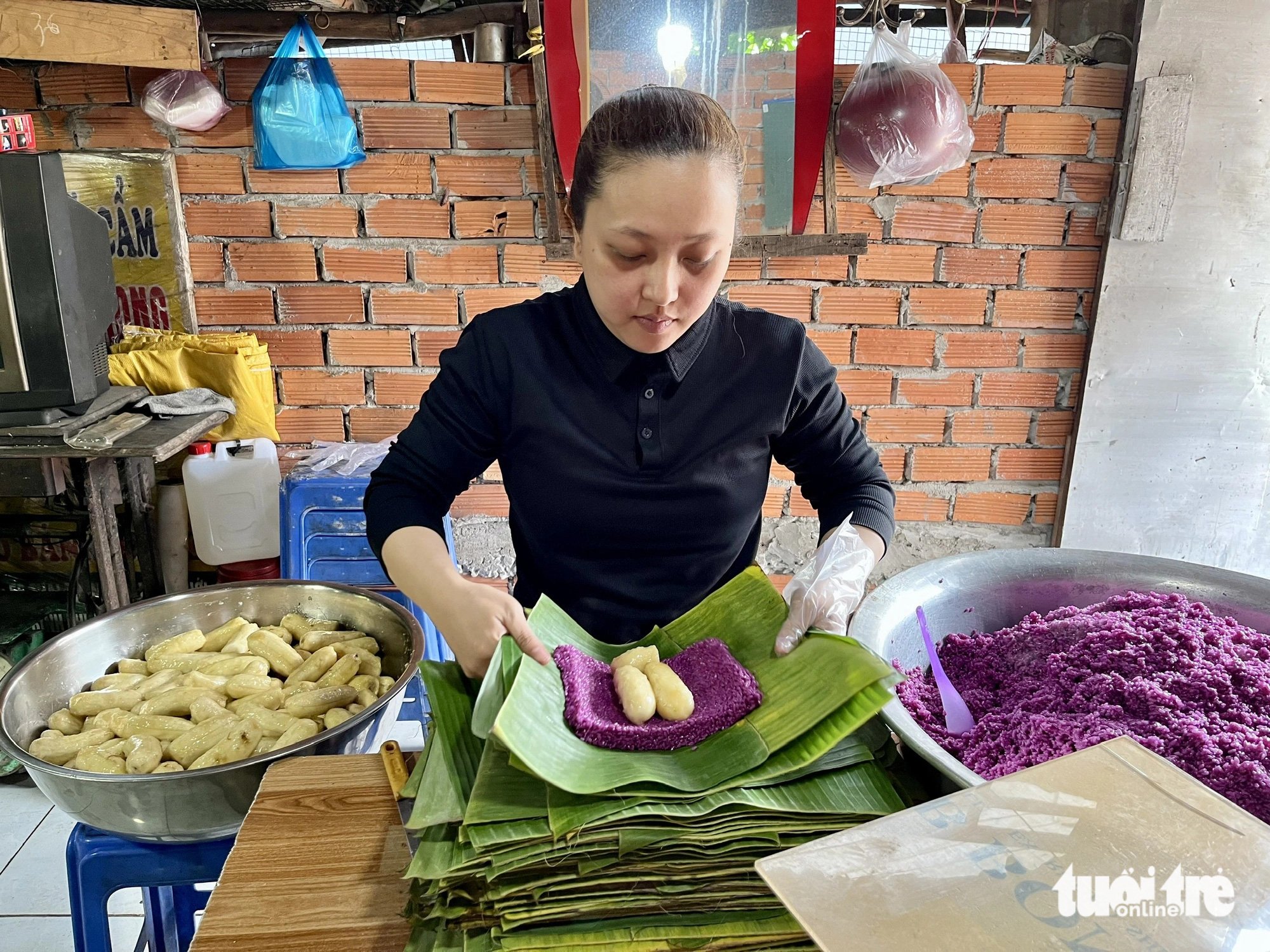
Banh tet is an indispensable food during Tet (Lunar New Year) in the Mekong Delta region - Photo: LAN NGOC
On January 19th, Tuoi Tre Online observed a bustling atmosphere of wrapping banh tet (Vietnamese sticky rice cakes) at the home of Ms. Le Duong Tuyet Van (owner of Ut Be banh tet bakery, An Thoi ward, Binh Thuy district, Can Tho ).
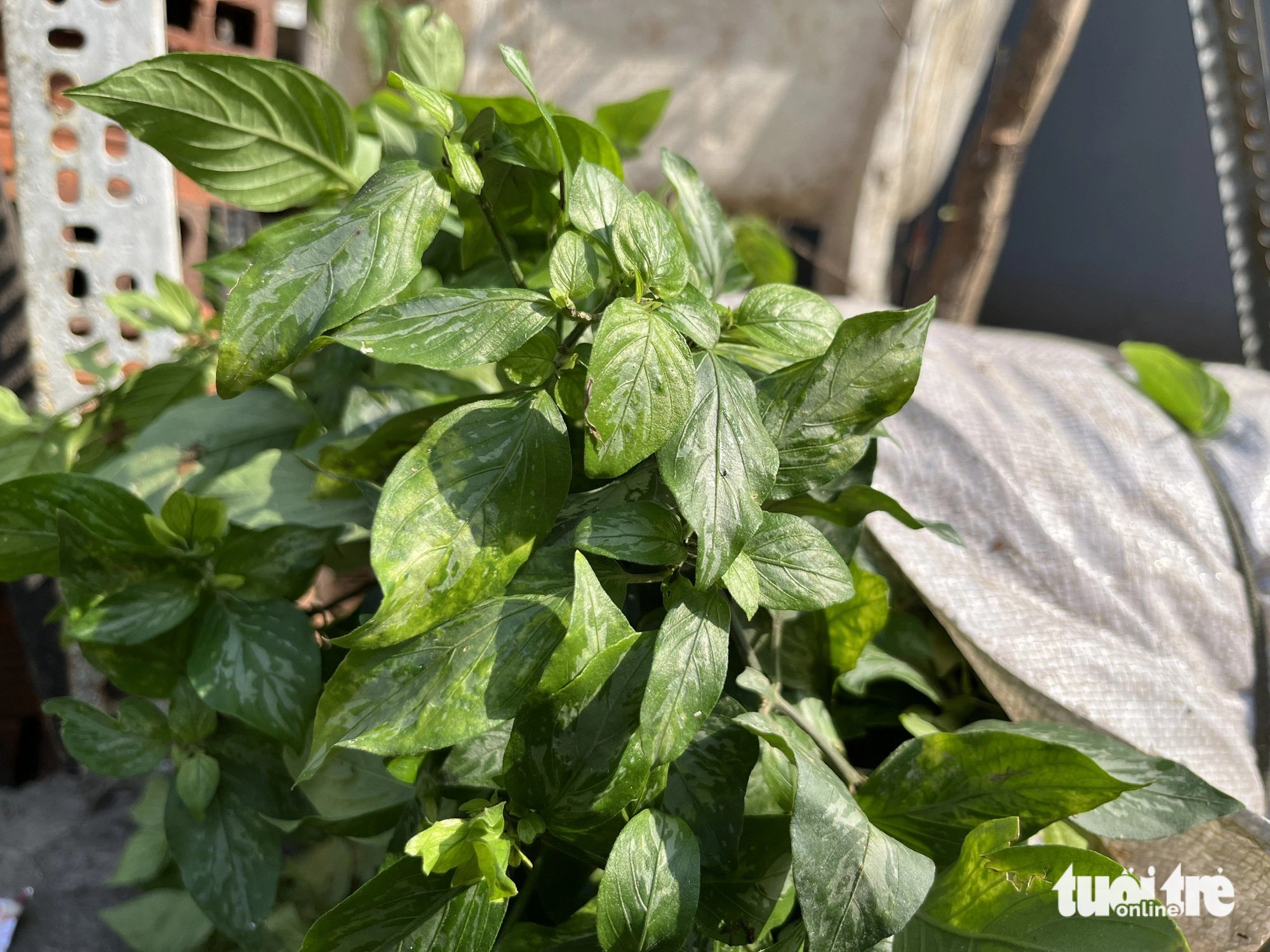
The natural purple color of the perilla leaves gives the banh tet (Vietnamese sticky rice cake) a unique and visually appealing taste.
For four generations, her family has maintained the traditional craft of making banh tet (Vietnamese sticky rice cake), a rare tradition in Can Tho. This establishment offers various types of banh tet, such as mixed banh tet wrapped in purple leaves, mixed banh tet with three colors, mixed banh tet with dried shrimp, banh tet with sweet bean filling, banh tet with banana filling, and banh tet with bean and pork fat filling.
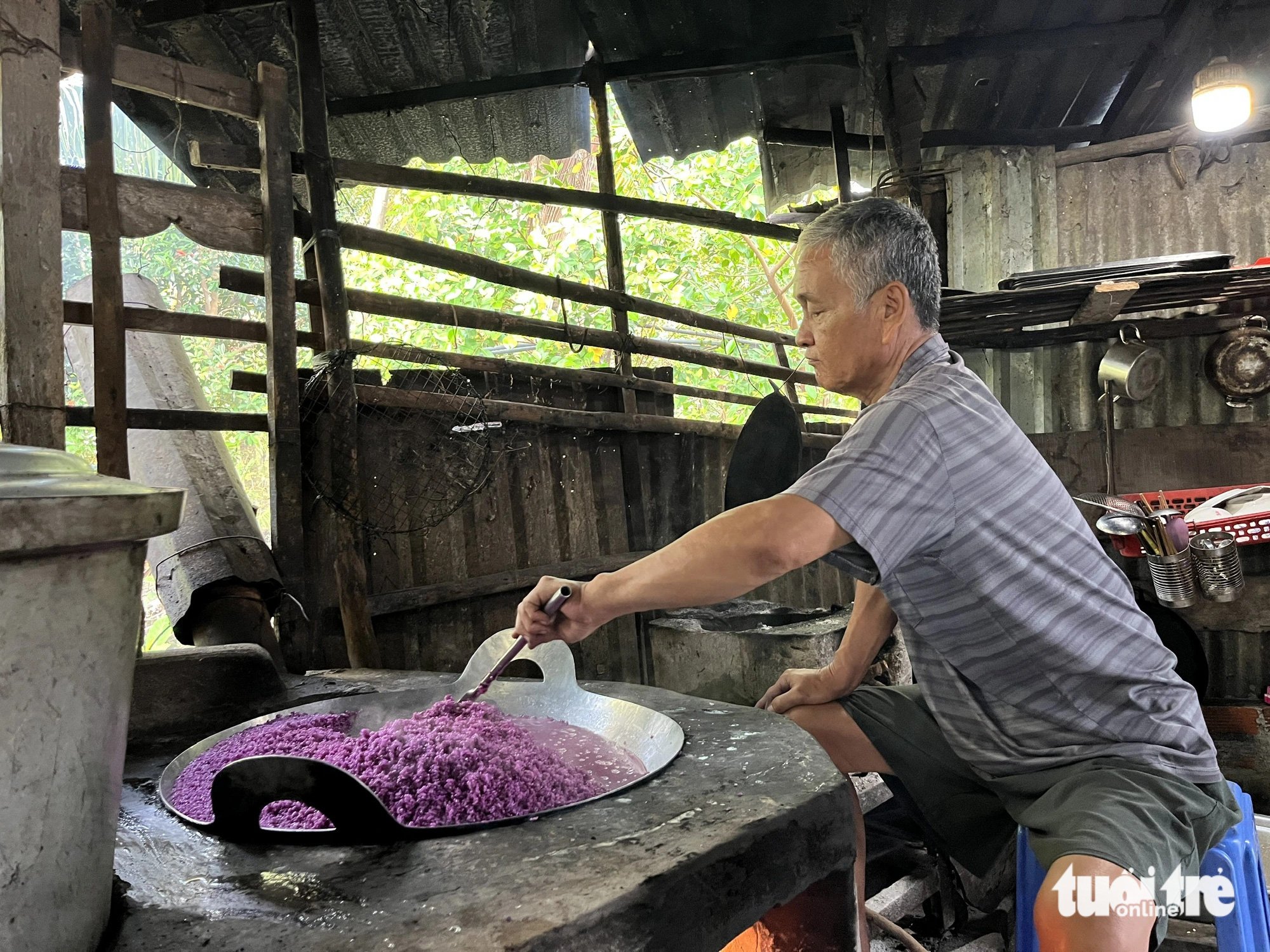
The process of making the glutinous rice with purple leaves used for the outer layer of banh tet (Vietnamese sticky rice cake).
The cake's colors are entirely natural, ensuring both food safety and hygiene while being visually appealing, with purple from perilla leaves, green from pandan leaves, and orange-red from gac fruit.
In particular, the purple sticky rice cake (bánh tét lá cẩm) is a traditional and famous cake in Can Tho that the Tuyet Van family (fourth-generation descendant) has preserved and developed to this day.
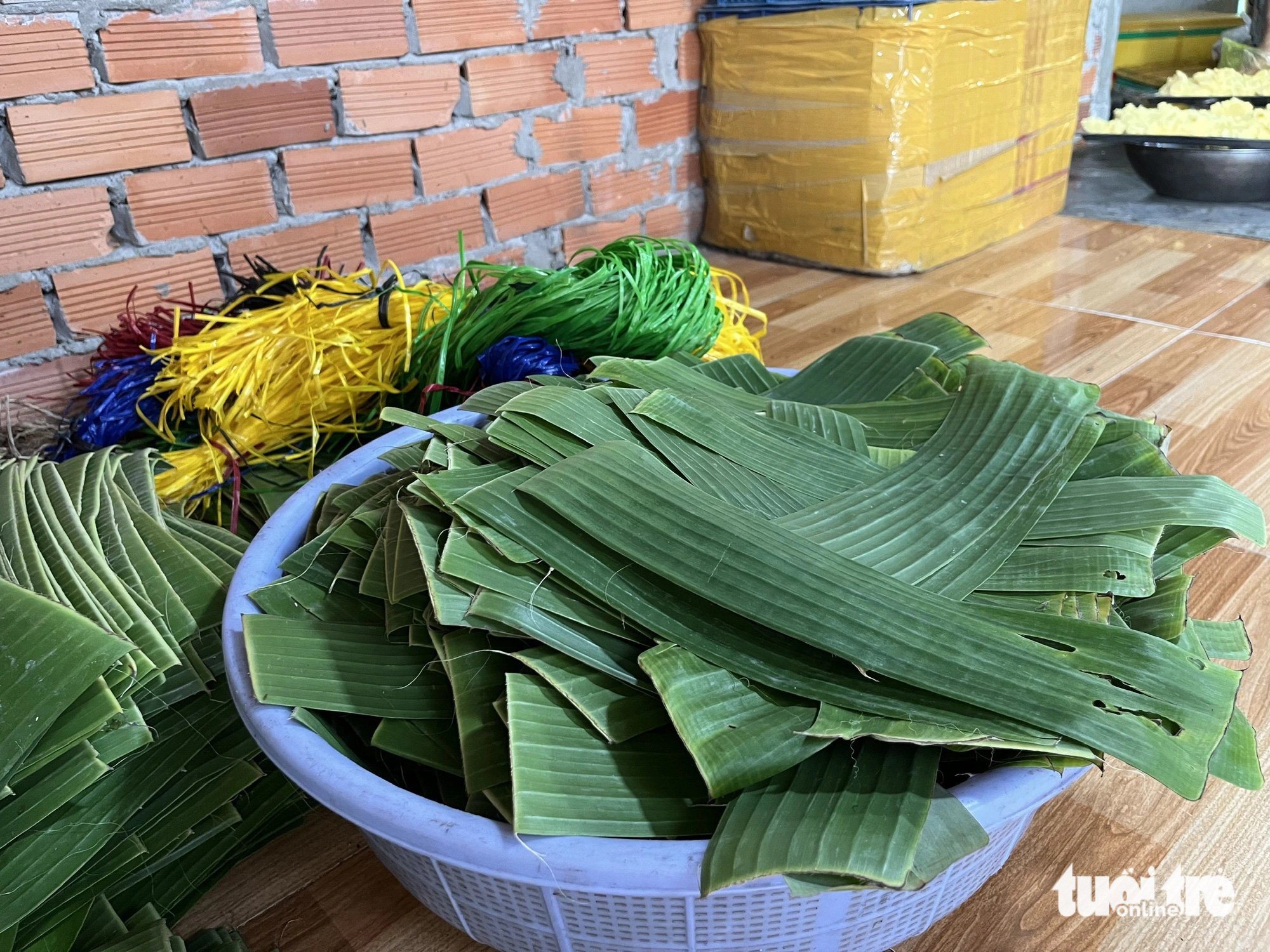
The outside of the bánh tét (Vietnamese sticky rice cake) is wrapped in many layers of banana leaves.
Ms. Vân said that her grandmother, Ms. Huỳnh Thị Trọng (Sáu Trọng) - a famous artisan from Tây Đô - used the purple color of perilla leaves to make bánh tét (Vietnamese sticky rice cakes).
During Tet (Vietnamese New Year), the quantity of cakes is so large that Ms. Van has to hire several women from the neighborhood to help make them in order to deliver to customers on time.
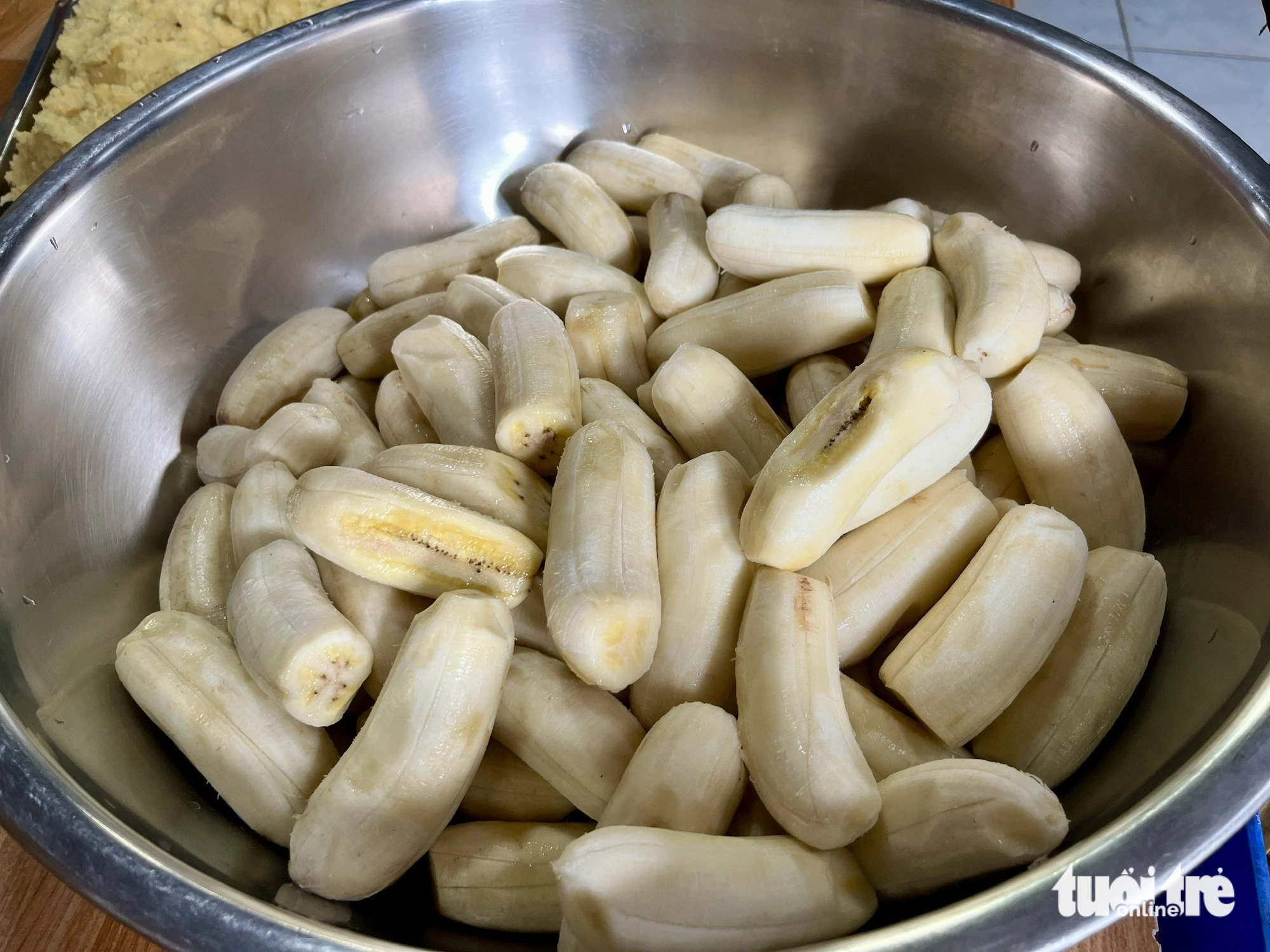
Ripe Siamese bananas, with their natural sweetness, are used as filling for banh tet (Vietnamese sticky rice cake).
Currently, the bakery is processing an average of about 100 cakes per day; during the days leading up to Tet (Lunar New Year), this number increases to 600-1,000 cakes per day. At this time, the bakery operates at full capacity, sometimes working through the night to meet customer demand.
In recent days, customers have also ordered more banh tet from the establishment to send as gifts to the US and Australia so that people living far from home can also enjoy banh tet with the taste of their homeland.
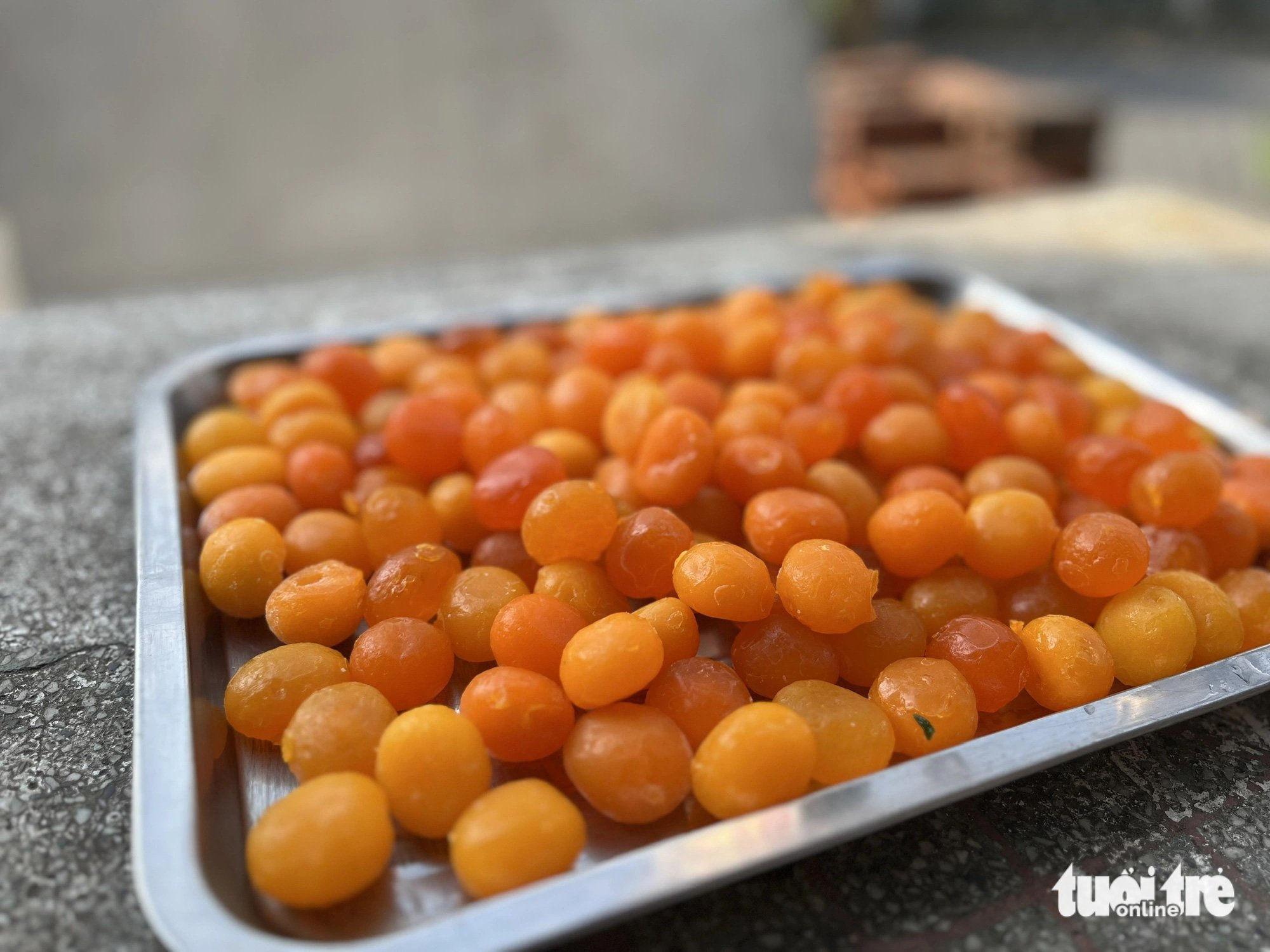
The delicious salted egg yolk filling in each sticky rice cake evokes the taste of Tet (Vietnamese New Year) from home for those far away.
The vacuum-sealed cakes can be preserved for 5 days and eaten on the same day, or they can be frozen for a month (when needed, they can be steamed for 45 minutes, cooled, and served as usual).
Mixed sticky rice cakes (Bánh tét thập cẩm lá cẩm), mixed three-color sticky rice cakes (Bánh tét) with dried shrimp, sweet beans, banana, and fatty beans are priced at 40,000-50,000 VND per cake (550g); and 90,000-120,000 VND per cake (900g).
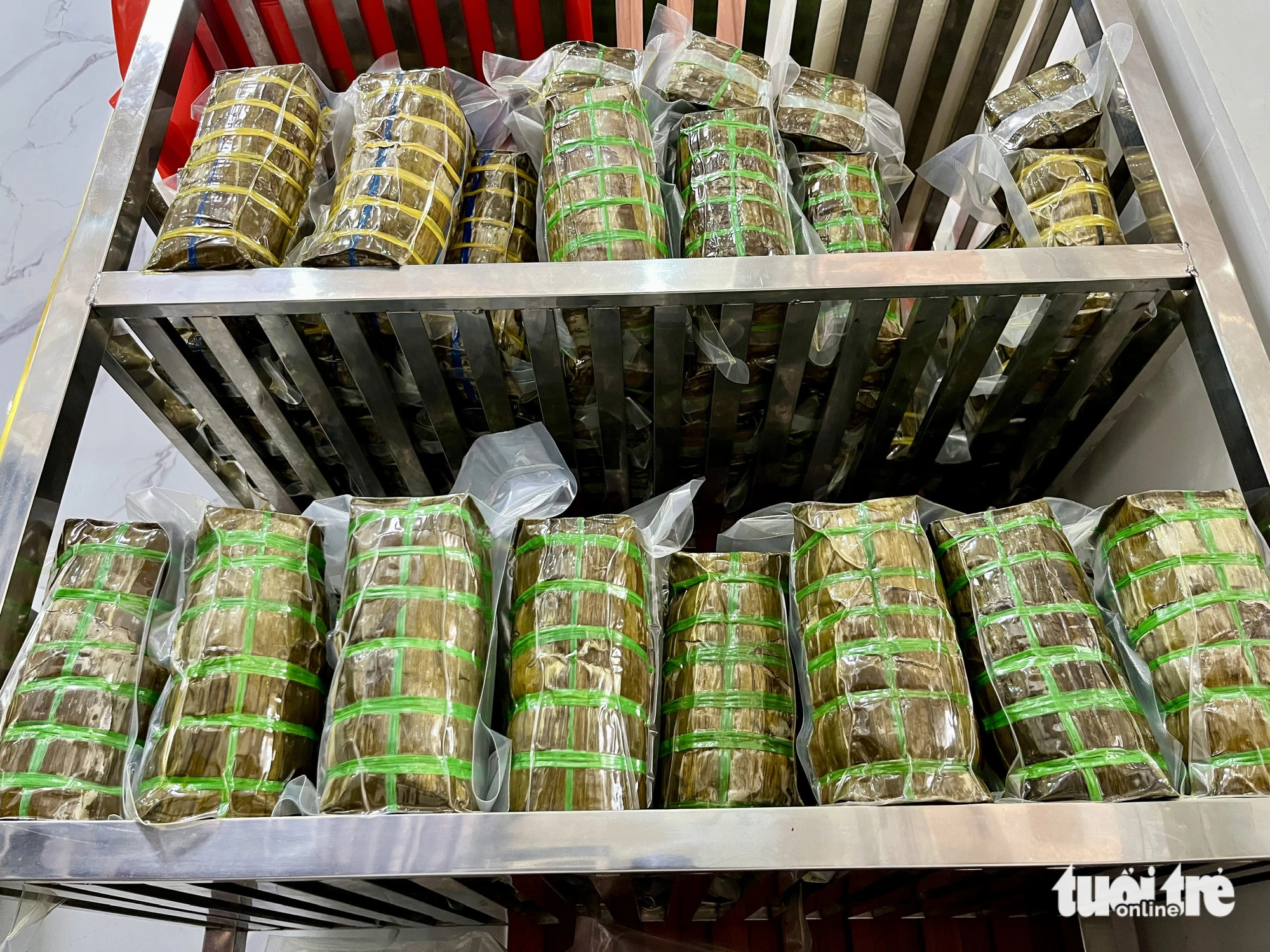
The finished banh tet (Vietnamese sticky rice cake) is vacuum-sealed to help preserve it better.
Source: https://tuoitre.vn/lo-banh-tet-4-doi-nuc-tieng-xu-tay-do-do-lua-ngay-dem-20250119125611099.htm





















































Comment (0)