

The initial movements revealed a noteworthy fact: the system remained intact, basic operations were maintained, and in many places, a new operational rhythm was established, in line with the requirements of streamlining, effectiveness, and efficiency.
However, behind that initial stability, many fundamental problems have also emerged, requiring frank assessment and more fundamental solutions in the next phase, especially in the context of implementing Resolution 80-NQ/TW on cultural development.

The challenges and difficulties that arise
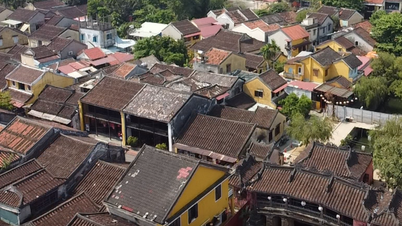
The experience of Hue City, a centrally-governed city with a rich heritage system and complex cultural management characteristics, provides a relatively clear picture. Immediately after implementing the two-tiered model, the Department of Culture and Information proactively reviewed and reorganized its structure, issued implementation plans, and quickly adapted to the requirements of decentralization and delegation of authority.
Notably, 100% of administrative procedures in the field of culture and sports have been provided online at level 4; all procedures have been updated into the national data system; the decentralization of management of 200 historical sites has been implemented promptly; and the mass sports movement continues to be maintained with 100% of communes and wards organizing grassroots-level sports congresses. These figures demonstrate something even more important: the two-tiered government model has not disrupted cultural and social life at the grassroots level.
Nationwide, this trend is also confirmed as the new government system begins to operate smoothly, many administrative procedures are streamlined, and responsibilities are redefined to be closer to the people, faster, and clearer. Particularly in the field of culture and arts, the issuance of regulations on decentralization and guidance manuals for the commune level has contributed to creating a relatively clear "implementation framework" in the initial transition phase.
However, simply assessing "stable operation" is insufficient. The question now is no longer whether it can operate, but how to operate in a way that truly improves the quality of governance, in line with the spirit of administrative reform and the requirements of new development. One of the biggest difficulties is the lack of clarity in defining responsibilities.
In reality, many areas such as professional assessment, cultural activity licensing, and specialized inspections still face confusion in identifying the lead agency, leading to delays or inconsistent handling. This reflects a reality: Decentralization, if not accompanied by standardized processes and detailed regulations, can easily become a situation of "decentralization on paper" while still requiring approval from multiple levels in practice.
Another bottleneck lies in the grassroots-level staff. When the workload increases significantly, and many officials have to handle multiple areas, ensuring consistent quality of implementation becomes difficult. This is a fundamental issue. The two-tiered government model can only be effective when the commune level truly has the capacity to "handle the work," not just "receive" it.
Ensuring implementation also presents a significant challenge. In many localities, especially in remote areas, information technology infrastructure is inadequate; cultural institutions are deteriorating; and the local broadcasting system has not been upgraded comprehensively. When the new governance model demands higher processing speed, transparency, and connectivity, these limitations become even more apparent.
In particular, the issue of resources continues to be a familiar but unresolved "bottleneck." The reality is that approximately 30-40% of historical sites are deteriorating but lack the necessary funds for restoration; social mobilization remains limited; and non-budgetary resources have not been effectively utilized. This is not just a problem for one locality, but a common issue nationwide, as frankly pointed out in Resolution 80.
Clarify the outstanding results and the difficulties and obstacles encountered.
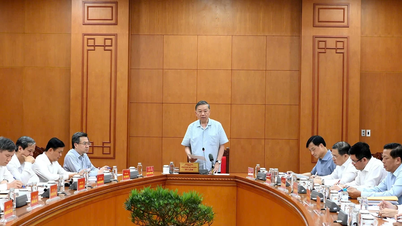
On May 15th, Deputy Prime Minister Pham Thi Thanh Tra chaired a meeting on the development of a preliminary review of one year of operation of the two-tiered political and local government system. At the meeting, the Deputy Prime Minister emphasized that the preliminary review aims to comprehensively and objectively assess the results of one year of implementing the reorganization of administrative units at all levels and operating the two-tiered local government model nationwide; clarifying outstanding achievements, effective models, difficulties, obstacles, causes, and lessons learned during the implementation process.
Based on this, ministries, sectors, and localities will propose key tasks and solutions for the 2026-2030 period to further improve the two-tiered local government model, enhance the effectiveness and efficiency of state management, especially at the commune level, and meet the development requirements of the new period.
T. SUONG
A strong shift from "adaptation" to "quality improvement".
In this context, Resolution 80-NQ/TW opened up a new approach: viewing culture not only as a spiritual foundation, but also as an endogenous resource, a driving force for development, and a soft power of the nation. This is not a general slogan, but a very clear policy direction with actionable implications.
When the demands are to ensure the effective functioning of cultural institutions at the grassroots level, to digitize heritage, to increase investment in culture and develop the cultural industry, the two-tiered government model serves as a practical "test" of its ability to realize those goals.
From this perspective, it is clear that the next phase requires a strong shift from "adaptation" to "quality improvement." First and foremost, it is necessary to continue perfecting the institutional framework in a way that clarifies authority, responsibility, and procedures. Any overlaps or inconsistencies need to be reviewed and adjusted promptly to avoid prolonged confusion at the grassroots level.
More importantly, improving the capacity of commune-level cultural officials must be considered a breakthrough. Cultural officials at the grassroots level cannot simply be administrative task-givers; they must be organizers of community cultural life, managers of heritage, operators of institutions, implement policy communication, and adapt to the digital environment. This requires a systematic, continuous, and comprehensive training and development program.
Simultaneously, focused investment is needed in the system of cultural institutions, grassroots information, and sports. Investment shouldn't be scattered, but rather targeted to address bottlenecks and meet practical needs. For localities like Hue, where culture is both a heritage and a driving force for development, investing in cultural institutions not only serves the public but is also directly linked to the strategy of developing a heritage city and the cultural industry.
One indispensable direction is to accelerate digital transformation. In a two-tiered government model, digital transformation is no longer a supporting tool, but a condition for the system to operate effectively. From managing historical sites and organizing cultural and artistic activities to communicating policies and providing public services, everything needs to be based on a digital, interconnected, and data-driven platform.
Finally, a shift in mindset regarding resource mobilization is necessary. Culture cannot rely solely on the state budget. The mechanism for social mobilization needs to be redesigned to be transparent, efficient, and attractive to businesses and the community. When culture truly becomes a resource for development, mobilizing social resources will become more natural.
It can be said that, after nearly a year of operating the two-tiered local government model, the fields of culture, information, and sports have passed the "initial stabilization" phase with many positive signs. However, a long road lies ahead with even higher demands. From "getting things done" to "doing things well," from "decentralization" to "effective governance," from "maintaining" to "developing"... these are not easy transitions, but they are inevitable.
And in that journey, the spirit of Resolution 80 serves as a crucial guiding principle: Culture must truly become the foundation, driving force, and soft power for development. In that case, the two-tiered government model will not only be a reform of the organizational structure, but will become a substantial step forward in the management of cultural development in Vietnam.
( To be continued )
Source: https://baovanhoa.vn/van-hoa/lo-dien-nhung-van-de-mang-tinh-can-cot-229726.html


![[Photo] General Secretary and President To Lam presides over a working session with the Central Policy and Strategy Committee on the development of the materials industry.](https://vphoto.vietnam.vn/thumb/1200x675/vietnam/resource/IMAGE/2026/05/21/1779359935432_a3-bnd-3129-1412-jpg.webp)
![[Photo] National Assembly Chairman Tran Thanh Man working with the Standing Committee of the Law and Justice Committee](https://vphoto.vietnam.vn/thumb/1200x675/vietnam/resource/IMAGE/2026/05/21/1779378929214_ndo_br_1-4610-jpg.webp)




































































Comment (0)