

(Dan Tri Newspaper) – For the past 40 years, Vietnam has only produced one type of radioactive drug for clinical treatment, and even that only meets a fraction of the needs of patients in nuclear medicine departments nationwide.
Recently, the Ministry of Science and Technology announced that Vietnam and Russia are cooperating on a project to establish a Nuclear Science and Technology Research Center, with the goal of building a nuclear reactor to support research.
Accordingly, the new nuclear reactor is expected to have a capacity of 10 MW, using low-enriched fuel manufactured in Russia. After site surveys and preliminary design, the reactor will be located in Long Khanh City, Dong Nai Province. The reactor's primary mission is to produce radiopharmaceuticals for use in cancer treatment and diagnosis.
This is considered very good news, because every year Vietnam detects 180,000 new cancer cases, but the treatment rate is only about 40%, much lower than the 70% rate recorded worldwide .
A reporter from Dan Tri newspaper contacted Dr. Nguyen Xuan Canh, Head of the Department of Nuclear Medicine at Cho Ray Hospital (Ho Chi Minh City), to learn about the current state of nuclear technology application in medicine, as well as the necessity of building a new nuclear reactor.

There are reports that Vietnam will soon build a new nuclear reactor in Dong Nai province, bordering Ho Chi Minh City, which could increase the production of radiopharmaceuticals by 5-7 times compared to the current level. What are your thoughts on this?
Radioactive isotopes have many applications in life, such as nuclear power, agriculture, and industry. In medicine, radioactive isotopes are used in a wide range of fields, including nuclear medicine, oncology, neurosurgery, and blood transfusion.
For many years, the Da Lat Nuclear Research Institute has produced the radioactive isotope I-131 (iod-131), supplying it to many hospitals for the treatment of thyroid cancer and Graves' disease. However, due to insufficient production, some hospitals have to import additional radioactive isotopes from abroad to serve their patients.
The construction of the new nuclear reactor is of great significance, not only ensuring the domestic demand for I-131 but also producing many other radioactive isotopes for use in both treatment and diagnosis.
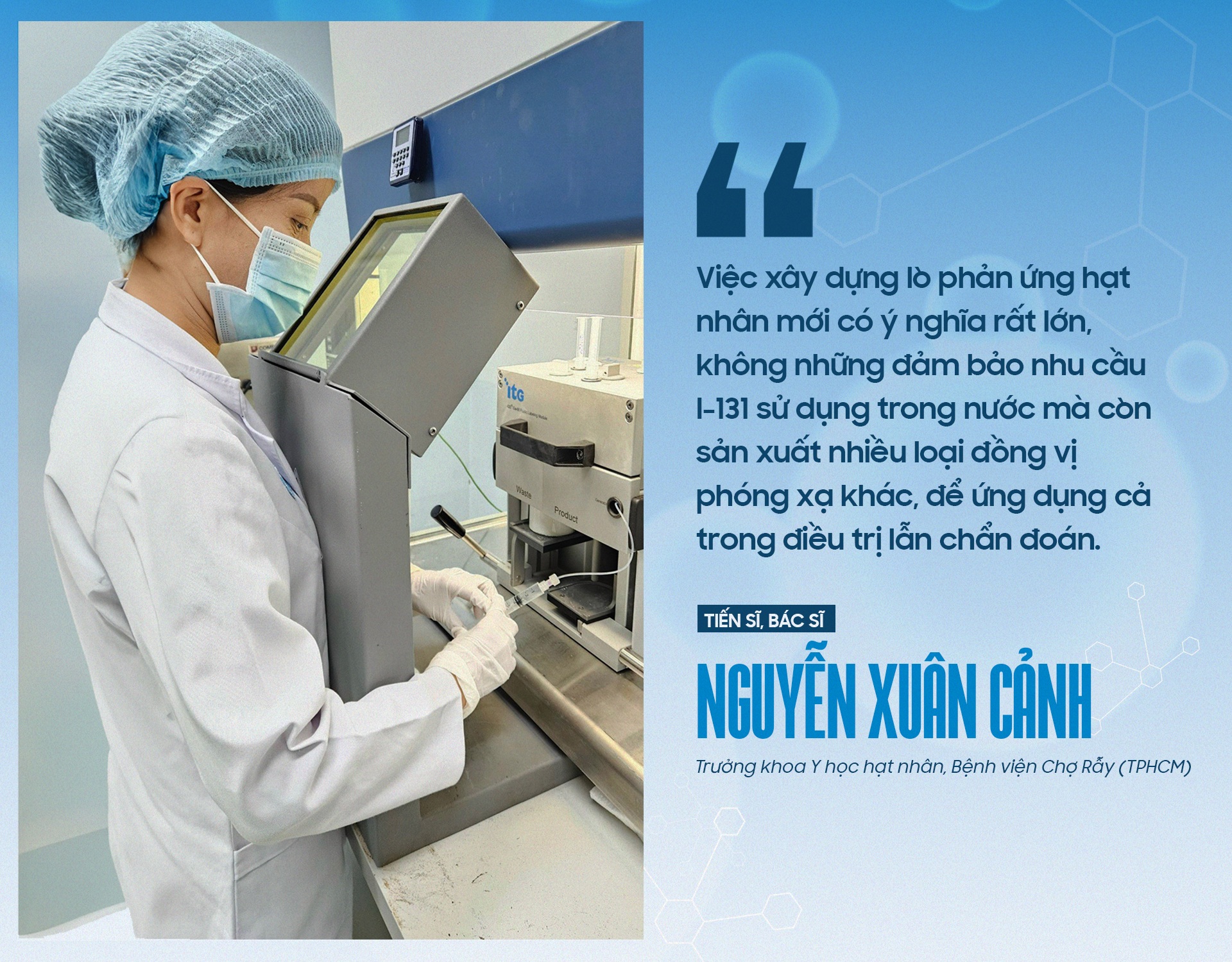
Could you please explain in more detail the mechanism of using radioactive isotopes in disease diagnosis and treatment so that the public can understand?
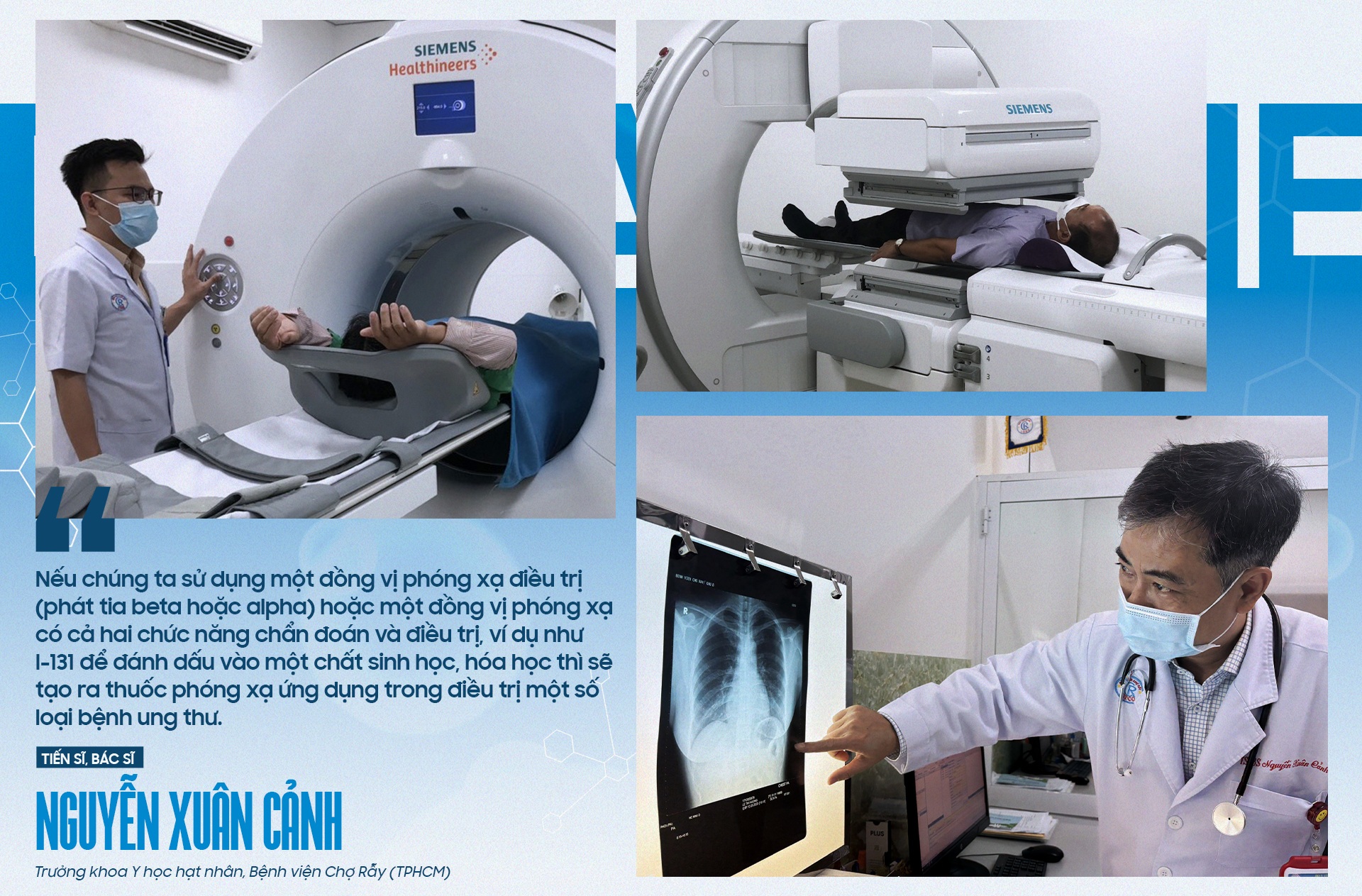
– Specifically for diagnosis, we use a diagnostic radioactive isotope (emitting gamma rays) to label a biological or chemical substance (also called a conjugate or carrier that a normal body or pathological tissue uses) to create a radiopharmaceutical.
The patient is then given this radioactive drug via injection or oral administration, and doctors can record the locations where the radioactive drug is concentrated using imaging systems such as: thyroid iodine uptake analyzers, SPECT machines, SPECT/CT machines (for diagnosing and monitoring bone, kidney, thyroid, and heart diseases); PET/CT machines (for diagnosing and monitoring breast, lung, colorectal, nasopharyngeal, esophageal, prostate, endocrine, and liver cancers).
It is also used in the diagnosis of certain cardiovascular and neurological diseases. This is a method for imaging molecules, metabolism, and function at the cellular level.
If we use a therapeutic radioactive isotope (emitting beta or alpha rays) or a radioactive isotope with both diagnostic and therapeutic functions, such as I-131, to label a biological or chemical substance, we can create a radiopharmaceutical that can be used in the treatment of certain types of cancer.
According to him, radioactive isotopes offer many benefits in medicine. But what is the current reality of producing radioactive isotopes for application in our country?
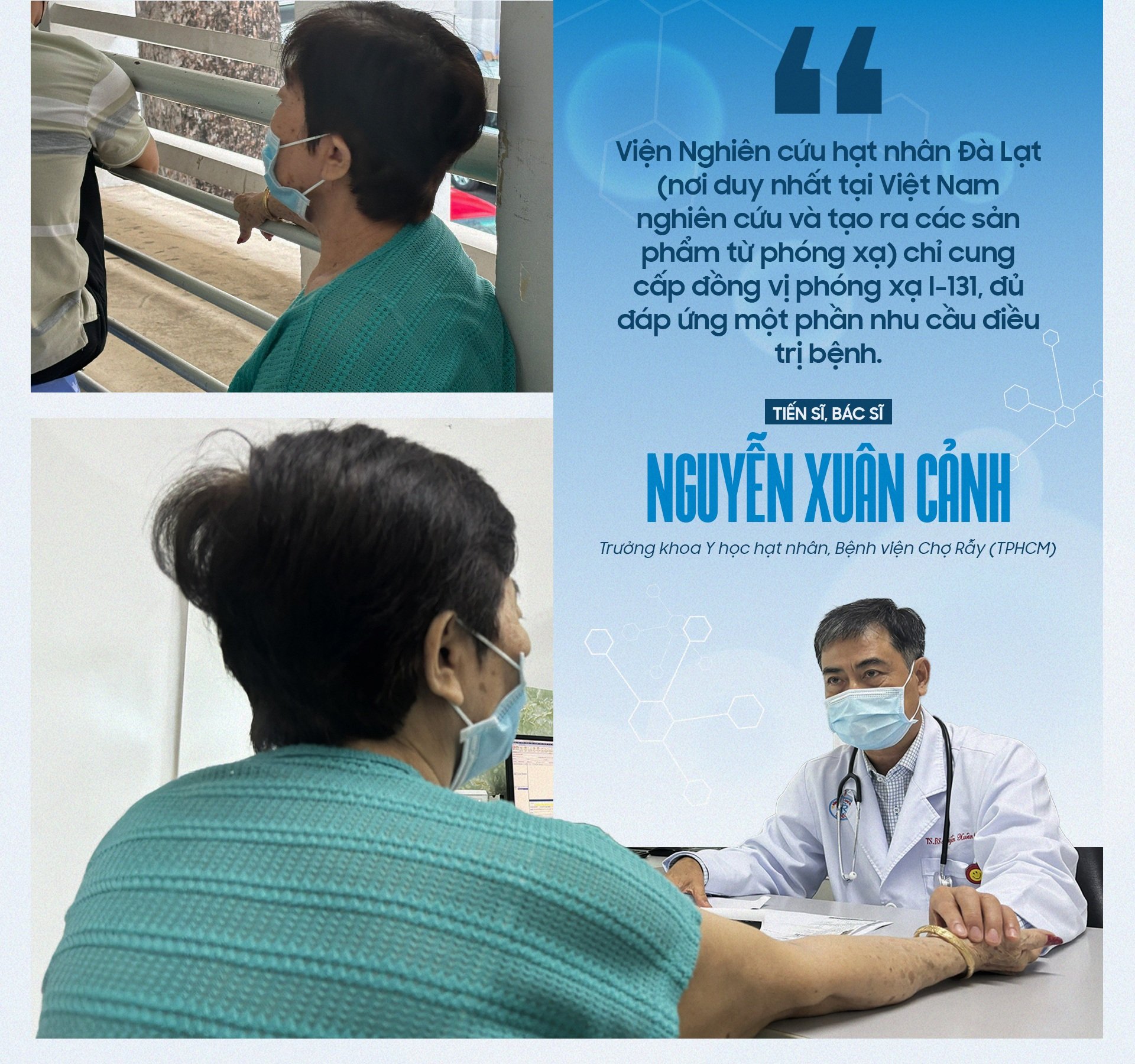
– As mentioned above, the Da Lat Nuclear Research Institute (the only place in Vietnam that researches and produces products from radioactivity) only supplies the radioactive isotope I-131, enough to meet a portion of the demand for disease treatment.
In addition, another radioactive isotope used for diagnosis is F-18, produced at several domestic facilities with cyclotron accelerators. This is used to synthesize the radiopharmaceutical F-18 FDG (a glucose analog) used in patients for PET/CT diagnostic imaging. This radiopharmaceutical has a half-life (T1/2) of 2 hours and a usage time of less than 8 hours.
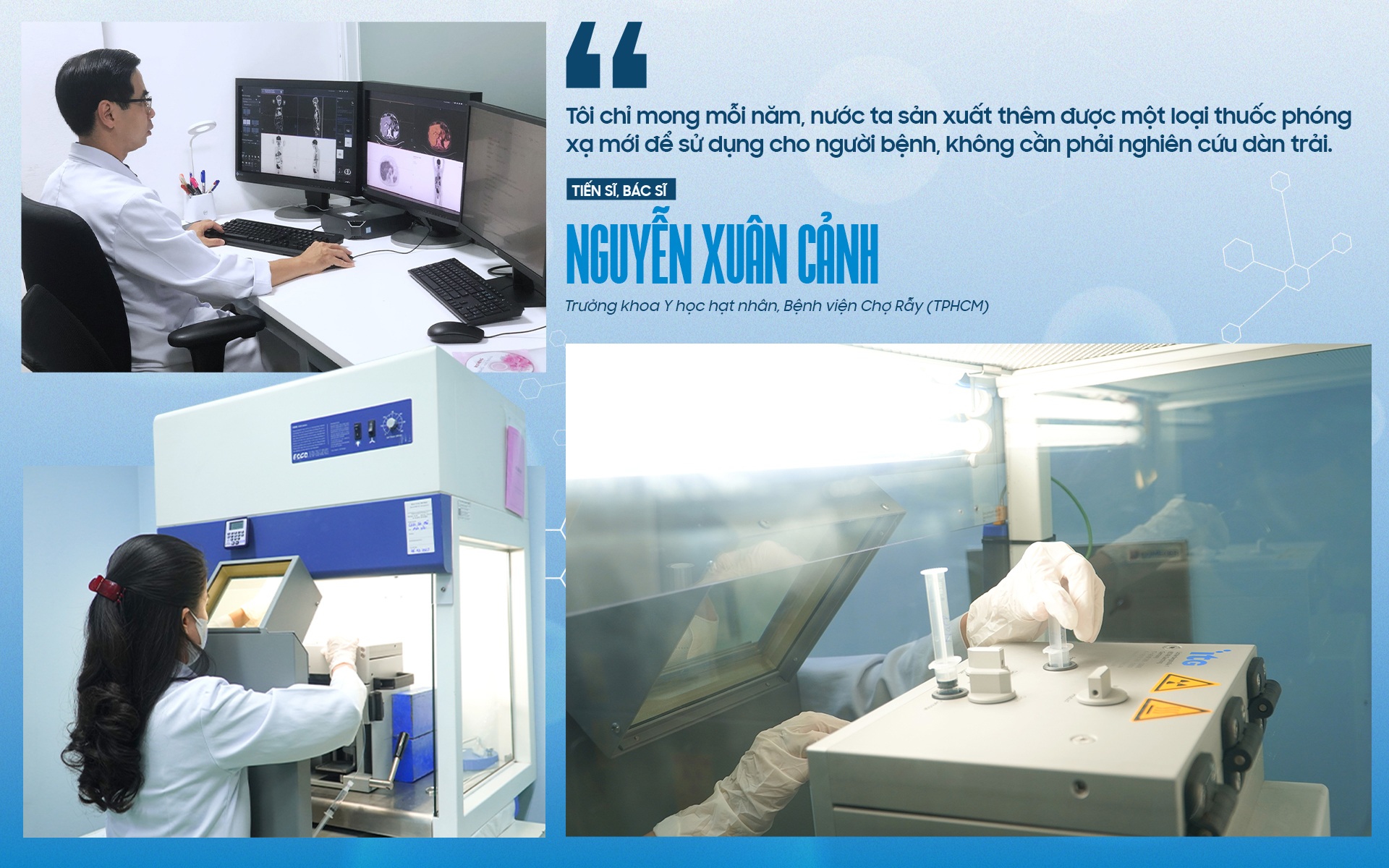
Currently, nuclear medicine departments are capable of preparing radiopharmaceuticals for patient imaging diagnostics using SPECT and SPECT/CT machines. However, they have to purchase the necessary materials, such as Tc-99m radioisotope generators from abroad (such as Europe and South Korea) and conjugates and conductors.
Each Tc-99m radioactive isotope generator costs 50-60 million VND, is used for 100-200 patients for about two weeks, and cannot be extended because the radioactive isotope will have lost its activity by then. Importing them is also very difficult due to the need to meet stringent radiation safety requirements.
In Vietnam, besides Cho Ray Hospital, which has been equipped with a Cyclotron rotary accelerator since 2009, several other facilities nationwide, such as Military Central Hospital 108 and Da Nang General Hospital, also have Cyclotrons. The cost to equip this system is approximately 200 billion VND, with an average construction time of 6 months.
Recently, Cho Ray Hospital also equipped itself with a system for synthesizing radiolabeled drugs containing the radioactive isotope Ga-68. We had to purchase the raw materials, including the Ga-68 isotope generator (with a lifespan of 9 months) and biological substances to successfully synthesize and use the radiolabeled drug Ga-68 PSMA (used in the diagnosis of prostate cancer) and Ga-68 Dotatate (for the diagnosis of neuroendocrine tumors).

What are the reasons why Vietnam is largely dependent on foreign sources for its radioactive isotopes, sir?
– We have been asking this question for a long time. The Da Lat nuclear reactor has a small capacity and has been in operation for many years, so it cannot possibly meet the demand for producing radioactive isotopes used for diagnosis and treatment by dozens of nuclear medicine departments nationwide.
Secondly, we need to research the production of radiopharmaceuticals that are already widely used worldwide, such as Sm-153 EDTMP (for pain relief in bone metastases), Lu-177 Dotatate for the treatment of neuroendocrine tumors, or Lu-177 PSMA for the treatment of prostate cancer… In fact, besides I-131, the Da Lat Nuclear Research Institute has also prepared many other types of radiopharmaceuticals, but they have not yet been applied to patients.
So, is investing in the production of radiopharmaceuticals in our country feasible, sir?
– The demand for radioactive drugs among patients is very high. At the Nuclear Medicine Department of Cho Ray Hospital alone, an average of 200 patients per month require treatment for thyroid diseases (primarily thyroid cancer) using I-131. The cost of treatment is entirely feasible if the drug supply can be self-sufficient.
Therefore, Vietnam urgently needs to invest in building a nationwide center for producing radiopharmaceuticals for treatment and diagnosis. From a technological standpoint, I believe we have the capability to meet this requirement.
I only hope that each year, our country can produce one new type of radioactive drug for use in patients, without the need for extensive research. Only by doing so can we achieve practical results in saving patients' lives.
Thank you for sharing your thoughts.

Speaking with a reporter from Dan Tri newspaper , Dr. Pham Thanh Minh, Director of the Center for Radioactive Isotope Research and Production at the Da Lat Nuclear Research Institute, said that for the past 40 years (since its restoration and operation in 1984), the Institute has only produced one radiopharmaceutical product used in treatment: I-131. The reason is that the Institute's nuclear reactor capacity is too small (500 kWt), making it impossible to produce other therapeutic products.
Therefore, when Vietnam builds a large-capacity nuclear reactor, it will focus on producing many new radioactive isotopes, which will be used in both diagnosis and treatment.
Dr. Minh affirmed that Vietnam is fully capable of independently producing radioactive isotopes. However, the project in Dong Nai is only in the initial planning stage, and there is no information yet regarding the timeline for construction.
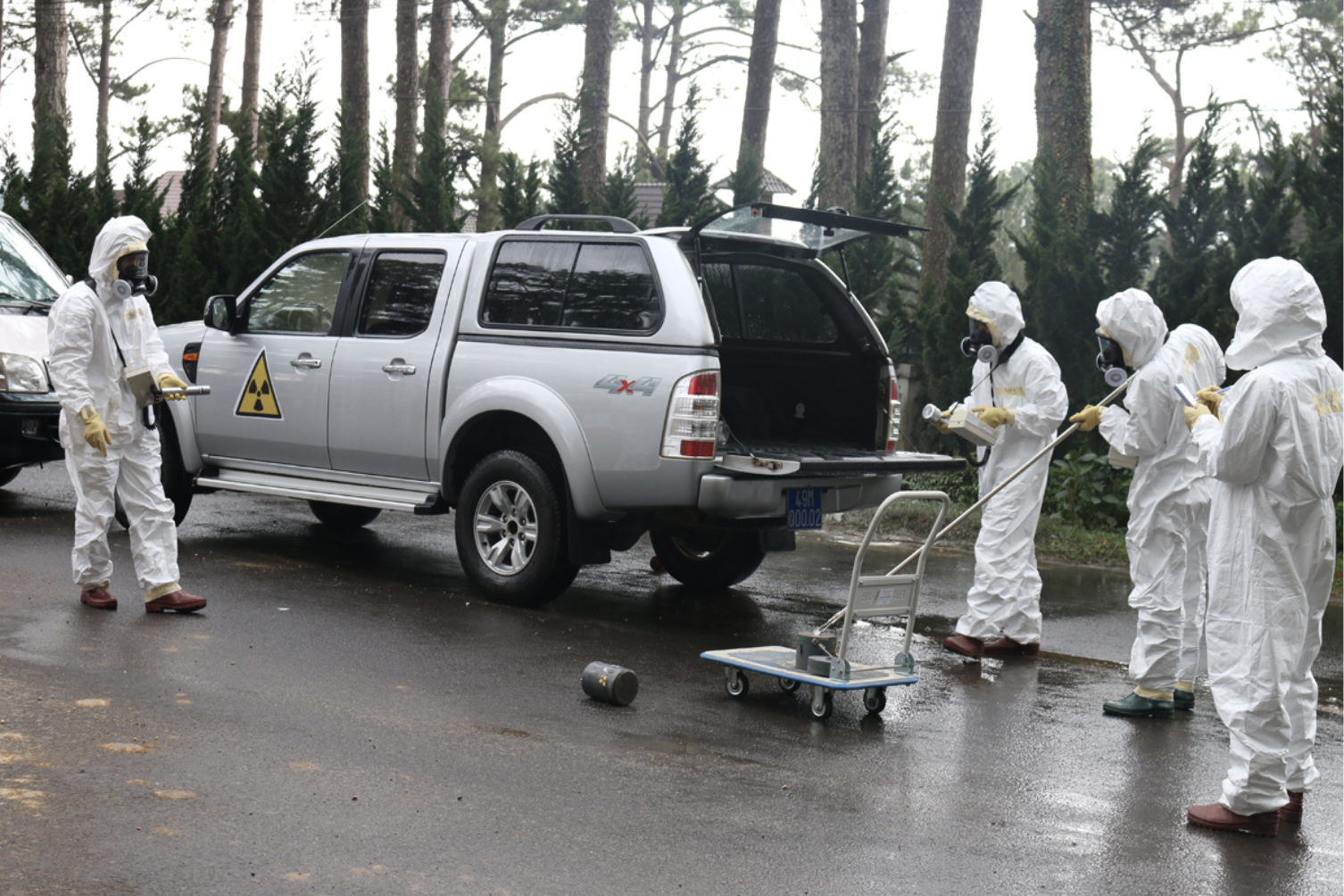
Content by: Hoang Le
Design: Thuy Tien
Photo: Hoang Le, Cho Ray Hospital, Da Lat Nuclear Research Institute
Source: https://dantri.com.vn/suc-khoe/lo-phan-ung-hat-nhan-viet-nam-va-mong-moi-cua-chuyen-gia-y-hoc-20240801161602355.htm


![[Photo] Prime Minister Pham Minh Chinh presides over a meeting on private sector economic development.](/_next/image?url=https%3A%2F%2Fvphoto.vietnam.vn%2Fthumb%2F1200x675%2Fvietnam%2Fresource%2FIMAGE%2F2025%2F12%2F20%2F1766237501876_thiet-ke-chua-co-ten-40-png.webp&w=3840&q=75)






















































































Comment (0)