

.jpg)
When consumers become "storytellers"
Having learned about EchoBag recycled mesh bags through friends' posts on social media, Ms. Le Thi Hoang An (born in 1983, Hai Chau ward) was quite surprised to see the product being sold at Danavi Mart supermarket. “I was impressed by the story of recycling old fishing nets into environmentally friendly shopping bags. When I saw the product at the supermarket, I decided to buy one for long-term use, to replace single-use plastic bags,” Ms. An said.
For Ms. Nguyen Thi Hoai Nhu (born in 1993, Hai Chau ward), the bag was initially bought for her mother to use when going to the market. However, after trying it out and finding it convenient and available in a variety of designs, she continued to buy more for her trips. When she and her mother used it, many acquaintances became curious and asked her to buy some for them. From then on, she gradually became a "bridge" connecting the product to those around her.
It is evident that consumers not only buy for use but also contribute to spreading awareness of the product. According to Ms. Pham Bich Ha, strategic advisor at EchoGreen Co., Ltd. (Huong Tra ward), the development of green products depends not only on ideas or technology but also on the choices and consumption habits of the community.
"We can produce recycled bags, but if buyers don't use them regularly, or don't carry them when going to the market or shopping, then that effort will only be in the production stage," Ms. Ha said.
EchoGreen's idea for recycled mesh bags stems from the reality in coastal villages in Central Vietnam. According to Ms. Ha, in many coastal areas, old fishing nets are increasingly being abandoned. When damaged, these nets are often thrown into the sea or buried, forming "ghost nets," harming marine life and affecting the tourism environment.
“Fishing nets are made of very durable plastic, taking hundreds of years to decompose. We asked ourselves why not leverage that very durability to extend the material's lifespan,” Ms. Ha shared. From there, EchoGreen began collecting old nets from fishermen, cleaning and disinfecting them, and then handcrafting them into various types of shopping bags and fashion bags.
According to Ms. Ha, today's consumers are more concerned about the "carbon footprint" of products and the impact their choices are having. Therefore, EchoGreen has built a closed-loop circular economy model, from collecting old nets to producing bags. When the bags are no longer usable, the company continues to collect them, shred them, and recycle them into accessory parts for new products.
In this cycle, consumers play a central role. Their choices, regular use, and sharing of personal experiences not only determine the effectiveness of the circular economy model but also become the most natural channel for dissemination. Ms. Ha said that the spread of EchoGreen mainly comes from the community, when people see others using it, ask about it, and then buy it themselves.
Buyers "guarantee" the quality of the product.
The role of consumers as "brand ambassadors" is not only evident in everyday consumer products but also in the green industry sector. Mr. Nguyen Minh Thong, Director of ENSO Dana Co., Ltd. (Hoa Xuan Ward), believes that in the product development process, buyers are not only the final destination but also a crucial link determining the growth of the business.
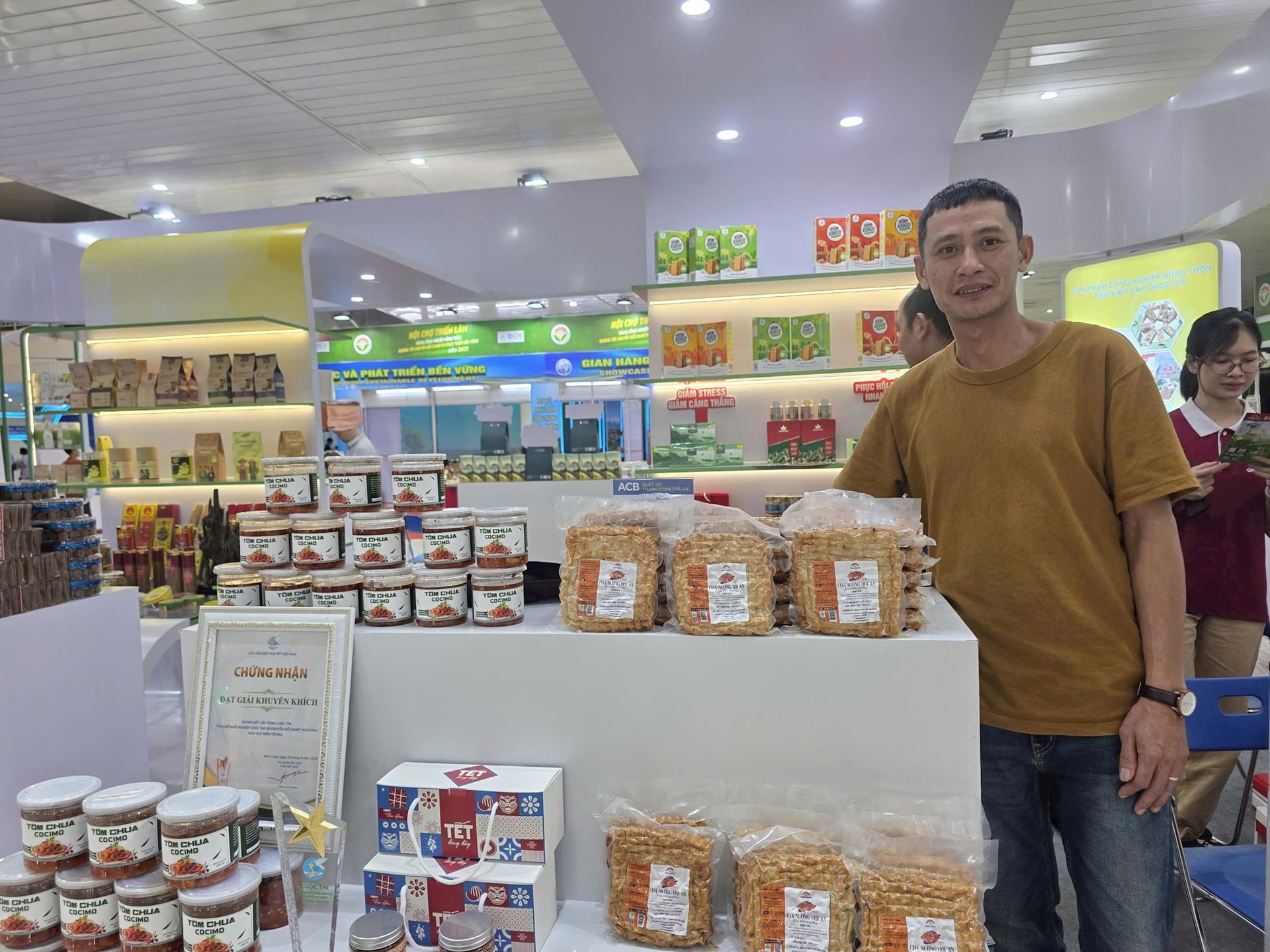
ENSO Dana manufactures deodorizing granules for air pollution treatment, suitable for household and industrial use. From the outset, the company has chosen a "green from root to tip" approach, from safe raw materials and clean production processes to packaging that is biodegradable after 24, 36, or 60 months.
Mr. Thong said that some customers had complained about the packaging deteriorating during use and suspected the product was defective. "When we explained that this was a biodegradable feature, the customers not only understood but also returned to support us even more strongly," he recounted.
Based on this reality, Mr. Thong believes that customers are the most effective communication channel for businesses. Through word-of-mouth, sharing experiences, and reviews on social media, users build trust with new customers – something that commercial advertising can hardly replace.
For Son Ngan Trading and Service Co., Ltd. (Hoi An Dong ward), the journey of building a brand began in the kitchen. Mr. Dinh Viet Thanh, co-founder of the company, said that his family's production facility started on a small scale nearly 9 years ago, mainly serving acquaintances.
As businesses complete legal procedures and gradually build their brands, new products gradually reach kitchens, restaurants, and tourist areas. "Over time, chefs themselves recommend the products to each other. Buyers then become the guarantors of quality," Thành shared.
According to Mr. Dinh Van Phuc, Deputy Director of the Da Nang Industrial Promotion and Trade Promotion Center (Da Nang Department of Industry and Trade), in the current competitive environment, quality alone is not enough. Each product needs its own story to create an impression and connect emotionally with buyers. "However, the story only truly comes alive when someone continues to tell it. And the most convincing storyteller is the consumer," Mr. Phuc stated.
According to Mr. Phuc, feedback and real-world experiences from customers are crucial sources of information that help businesses adjust and improve their products. When the product story aligns with the voice of consumers, brands can go far without needing excessive advertising.
Source: https://baodanang.vn/nhung-dai-su-thuong-hieu-tu-nhien-3315866.html


![[Photo] General Secretary and President To Lam presides over the meeting to approve the draft report on the results of the second inspection by the Politburo of the Standing Committee of the Hanoi City Party Committee.](https://vphoto.vietnam.vn/thumb/1200x675/vietnam/resource/IMAGE/2026/05/26/1779789811432_a2-bnd-4430-9620-jpg.webp)








































































Comment (0)