


Unlocking resources with a series of mega-projects.
At the recent session of the Ho Chi Minh City People's Council, the council members approved a list of 33 land plots to be used as payment for Build-Transfer (BT) projects, creating a legal basis for mobilizing social resources in the context of limited budget. Many prime land plots in the city center and the Thu Thiem urban area, such as 8-12 Le Duan and 2-3-4 Hai Ba Trung, have been put into development, contributing to "awakening" public assets and reducing pressure on infrastructure investment capital.
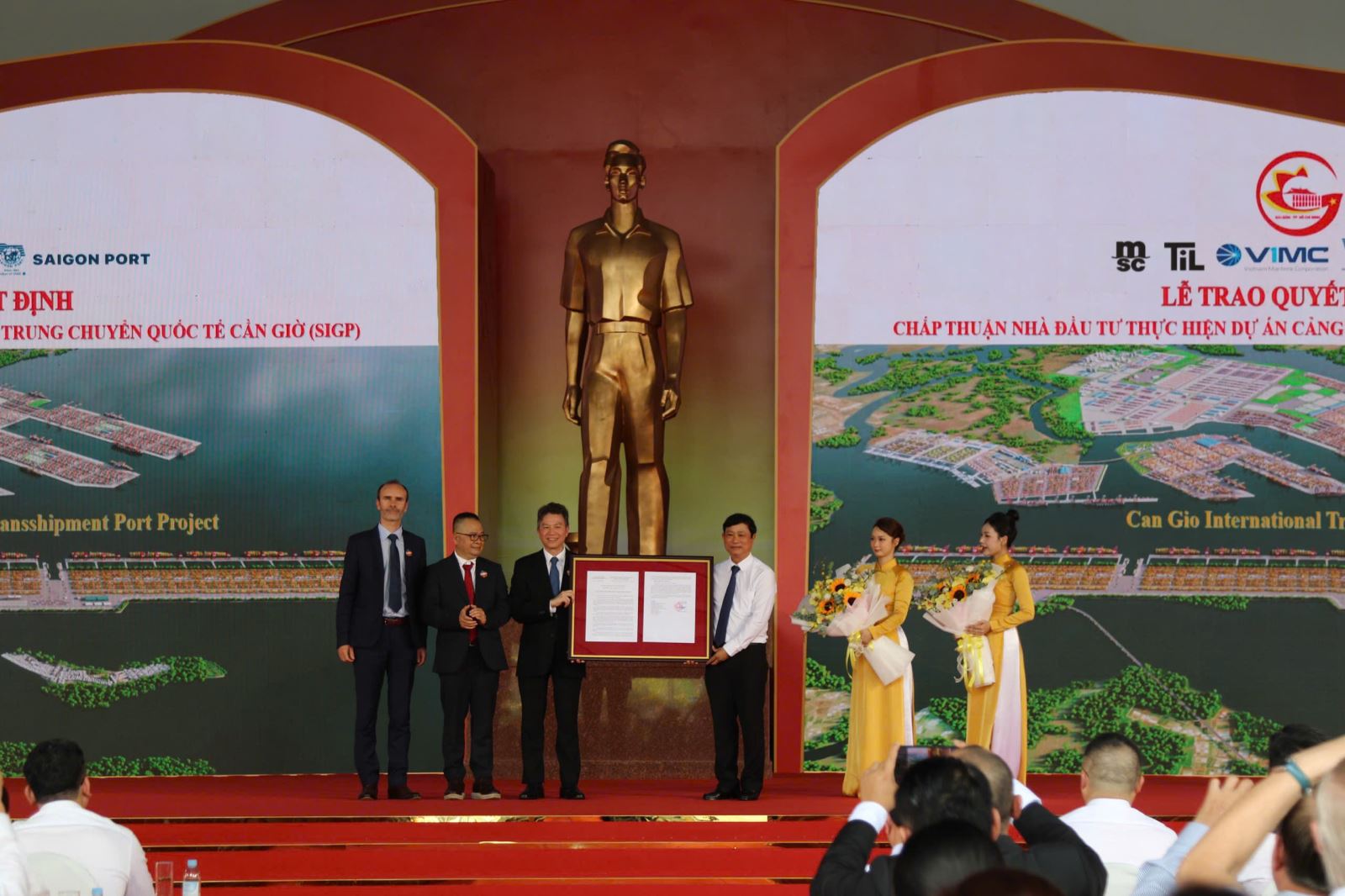
Building on that foundation, Ho Chi Minh City entered a phase of accelerated development by simultaneously launching a series of large-scale projects during the April 30th - May 1st holiday. Accordingly, on April 29th, approximately 7 key projects were commenced with a total investment of up to 320,000 billion VND, spanning from transportation and seaports to urban development and new economic spaces.
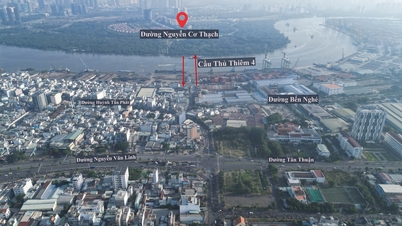
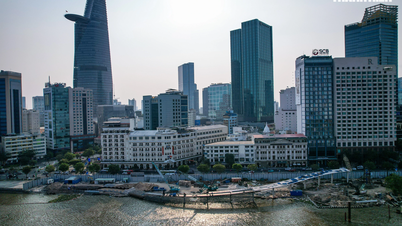
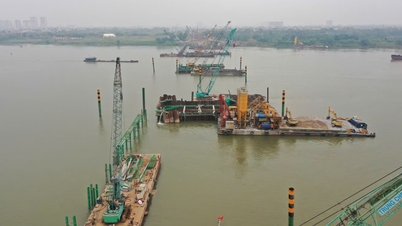
Among these, Metro Line 2, specifically the Ben Thanh - Thu Thiem section, is considered one of the key projects, contributing to connecting the existing city center with the new urban area in the East. Upon completion, this metro line will not only alleviate traffic congestion but also promote the formation of urban development corridors oriented towards public transportation.

Furthermore, international transshipment port projects such as Can Gio and Cai Mep Ha are expected to enhance logistics capacity, helping Ho Chi Minh City become a cargo transshipment hub for Southeast Asia. These are strategically significant projects, not only serving local economic development but also contributing to raising the nation's standing.
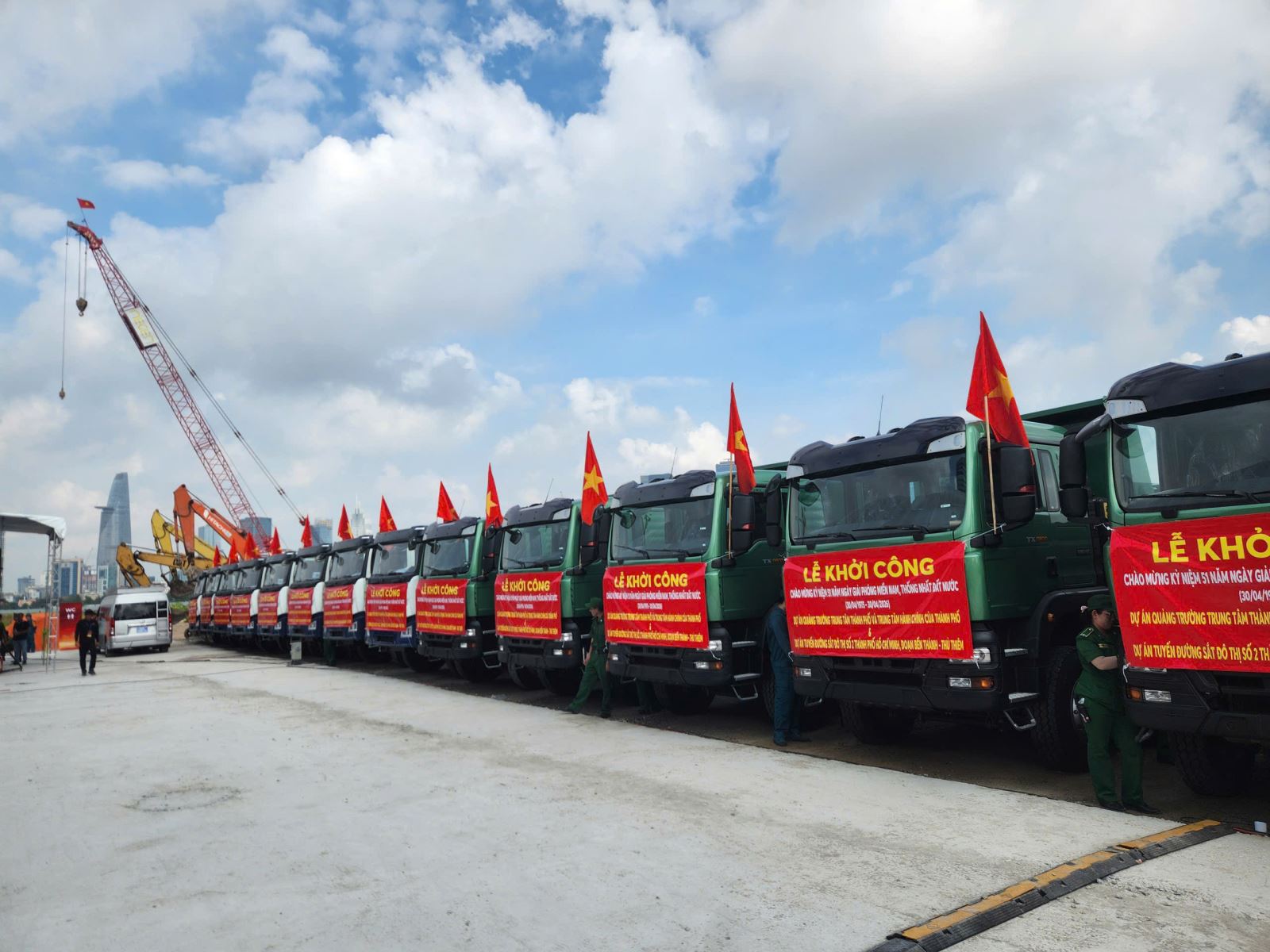
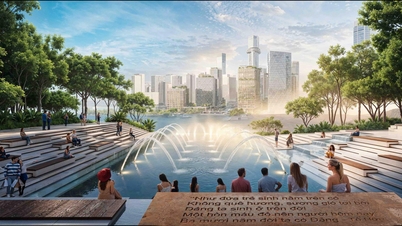
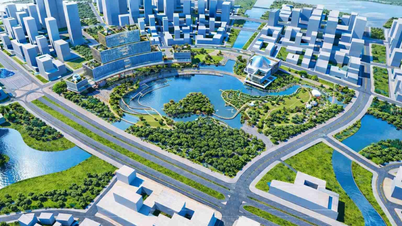
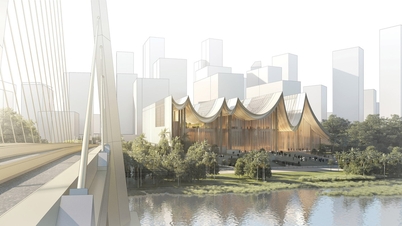
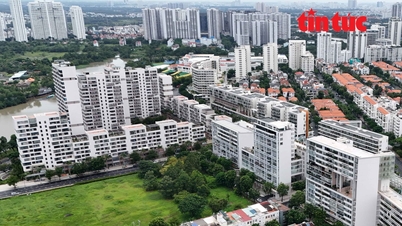
Notably, the Central Square – Administrative Center complex in the Thu Thiem urban area, with a total investment of nearly 30,000 billion VND, was also inaugurated on this occasion. The project, covering nearly 47 hectares, is envisioned to become the city's modern administrative core, housing approximately 8,000 officials and civil servants and serving thousands of citizens daily.
Mr. Dang Minh Truong, Chairman of the Board of Directors of Sun Group, stated that the company's participation in large-scale projects in Ho Chi Minh City is not only a business opportunity but also a responsibility to contribute to the city's transformation. Accordingly, Sun Group is committed to mobilizing maximum financial resources, technology, and experience to implement projects with high quality and guaranteed progress, thereby contributing to changing the infrastructure and urban landscape of the city.
Mr. Truong emphasized that the increasing participation of the private sector in strategic infrastructure projects is creating important resources, helping Ho Chi Minh City to form a synchronized, modern, and sustainable urban ecosystem in the future.
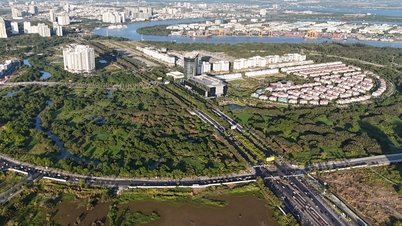
Not only focusing on the East, Ho Chi Minh City is also expanding its development space towards the Northwest. Specifically, in Xuan Thoi Son commune, Vingroup has started construction of the International University Urban Area, covering more than 880 hectares with a total investment of approximately 59,000 billion VND.
The project is being developed as a knowledge-based urban model, integrating education, research, commerce, and housing, with a scale to serve approximately 135,000 residents and 60,000 students. This urban area is directly connected to National Highway 22, Ring Road 3, and the Ho Chi Minh City – Moc Bai Expressway, creating favorable conditions for its development into a future education and innovation hub. This is considered an important step in exploiting the potential of the Northwest region, which still has significant room for development.
According to Mr. Le Hoang Chau, Chairman of the Ho Chi Minh City Real Estate Association, utilizing public land to implement BT projects, combined with the development of large-scale urban areas, is a direction that is consistent with reality.
Mr. Le Hoang Chau stated that Ho Chi Minh City is gradually perfecting its mechanisms to attract private capital to participate more deeply in infrastructure and urban development. “This not only helps solve the capital problem but also creates momentum for long-term development. The city's simultaneous implementation of projects on the occasion of the 51st anniversary of the Liberation of Southern Vietnam is not only symbolic but also demonstrates its determination to build a new foundation for development,” Mr. Le Hoang Chau emphasized.
Shaping a multi-centered megacity
According to Dr. Huynh Thanh Dien, Ho Chi Minh City's simultaneous unlocking of land resources and implementation of large-scale infrastructure projects will create a "synergistic" effect on the economy. In the short term, these projects contribute to boosting investment disbursement, creating jobs, and stimulating related industries such as construction, materials, and services. In the long term, these projects open up new development opportunities, helping the city restructure its growth model towards a more sustainable and efficient direction.
“Ho Chi Minh City is shifting from a centralized development model to a multi-center model, in which Thu Thiem and the Northwest area will become two important growth poles. The Thu Thiem urban area is positioned as a new financial, administrative, and service center, with modern infrastructure and high connectivity. Meanwhile, the Northwest area, with projects such as the university city, will become a center for education, research, and innovation, contributing to improving the quality of human resources,” said Mr. Huynh Thanh Dien.
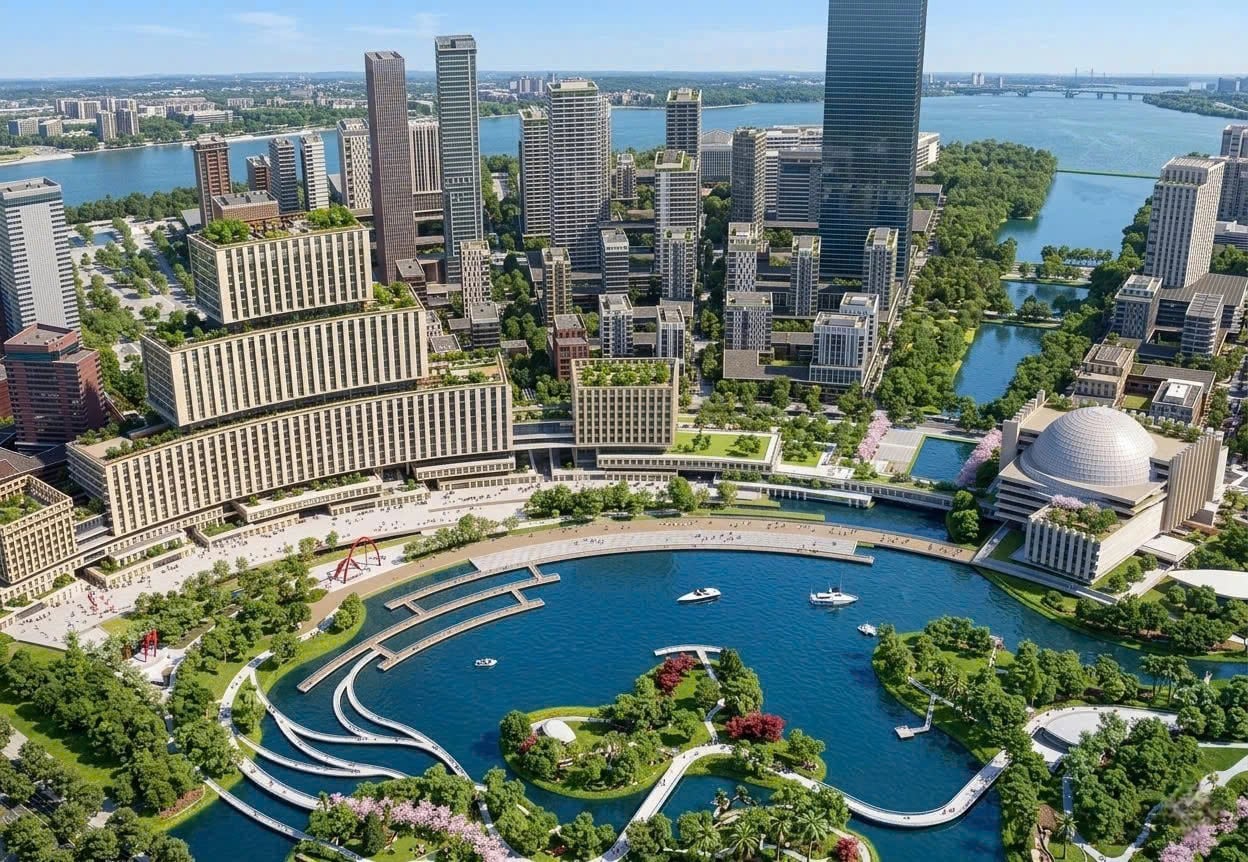
According to Dr. Huynh Thanh Dien, the synchronized development between the East and West areas not only helps reduce pressure on the existing central area but also creates balance in population and economic distribution. This is a crucial factor for Ho Chi Minh City to maintain a high growth rate in the context of increasingly fierce competition.
Notably, the new administrative center in Thu Thiem is seen as a foundation for building a digital government and improving urban governance efficiency. With a centralized administrative apparatus, the provision of public services will be more convenient, contributing to reduced costs and time for citizens and businesses.
From a management perspective, Mr. Nguyen Van Duoc, Chairman of the People's Committee of Ho Chi Minh City, believes that the simultaneous commencement of key projects on the occasion of the 51st anniversary of the Liberation of Southern Vietnam clearly demonstrates the political determination and development vision of the city. This is a concrete step to realize the orientation of building a synchronous and modern infrastructure system, creating a foundation for Ho Chi Minh City to continue to maintain its role as the economic locomotive and enhance its competitiveness.

According to Mr. Nguyen Van Duoc, in the context of rapid urban development, infrastructure investment not only meets immediate needs but also aims to expand long-term development space, strengthen regional connectivity, and remove bottlenecks. At the same time, the effective combination of land exploitation and infrastructure investment promotion is creating a "new impetus" for growth. The projects being implemented not only have economic significance but also reflect the aspiration to build Ho Chi Minh City into a dynamic, modern, and integrated metropolis.
It is clear that the simultaneous transformation of Ho Chi Minh City's urban landscape on the occasion of the 51st anniversary of national reunification not only carries historical significance but also opens a new chapter of development – where Ho Chi Minh City continues to affirm its leading position and rise strongly on the regional and international economic map.
Source: https://baotintuc.vn/tp-ho-chi-minh/loat-sieu-du-an-tao-xung-luc-moi-cho-tp-ho-chi-minh-20260429190220101.htm


![[Photo] First session of the 14th Congress of the Vietnam Trade Union](https://vphoto.vietnam.vn/thumb/1200x675/vietnam/resource/IMAGE/2026/06/03/1780465947883_ndo_br_img-3852-jpg.webp)































![[Video] Sunset at Lap An Lagoon – Where the sun sets over the fishing nets](https://vphoto.vietnam.vn/thumb/1200x675/vietnam/resource/IMAGE/2026/05/31/1780192137701_beach-landscape-sea-water-nature-grass-745871-pxhere-com.jpeg)
























Comment (0)