

However, what's noteworthy is that many of these "year-end summaries" are written and shared in the middle of the night, accompanied by familiar promises: next year, they'll go to bed earlier and live healthier. Could it be that a lifestyle with a time zone imbalance is emerging, where evening – even late at night – is the time to begin all planning?
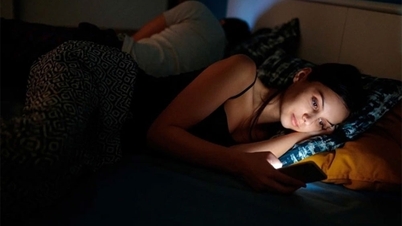
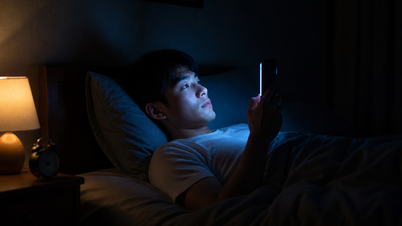
The popularity of social media has made the image of a "night owl" commonplace. As night falls, the online space becomes increasingly vibrant: studying, chatting, creating content, or shopping online. The midnight and early morning hours are when e-commerce platforms launch major deals, attracting a large number of buyers. To meet this demand, many cafes stay open all night, becoming places where young people work on their laptops, chat with friends, or find a private space for themselves.
Not only personal lives, but the workplace is also gradually adapting to the new rhythm of life. In some businesses, especially in the creative and technology sectors, receiving emails, reports, or documents at midnight is no longer unusual. For a segment of Gen Z, working hours are no longer confined to office hours, as long as the work is completed on time and efficiently. This flexibility, from a positive perspective, helps young people be more proactive and develop their abilities during their own "golden hours."
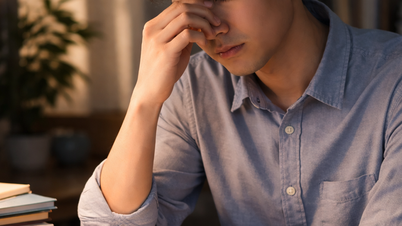
However, behind this flexibility lie unavoidable consequences. Prolonged late nights disrupt the body's biological clock, leading many to experience fatigue, lack of concentration, and a decline in both physical and mental health. Daytime lethargy and nighttime excessive alertness create a cycle where the promise to "sleep early next year" is repeated over and over. When jet lag becomes a habit, the line between personal freedom and self-harm becomes blurred.
In reality, each generation organizes its time in a way that suits its living and working conditions. The issue isn't about staying up late or working at night, but about the ability to self-regulate to maintain balance. Therefore, summarizing the year is not only about reflecting on what has been accomplished, but also about asking: what rhythm are we living at, and is that rhythm sustainable enough for the journey ahead?
Source: https://www.sggp.org.vn/loi-song-lech-mui-gio-post832785.html




















![[Photo] Reception to welcome General Secretary and President To Lam and his wife on their State visit to the Philippines](https://vphoto.vietnam.vn/thumb/1200x675/vietnam/resource/IMAGE/2026/06/01/1780295488620_vna-potal-chieu-dai-chao-mung-tong-bi-thu-chu-tich-nuoc-to-lam-va-phu-nhan-tham-cap-nha-nuoc-toi-philippines-8798060-7855-jpg.webp)






















































Comment (0)