

Facing numerous risks
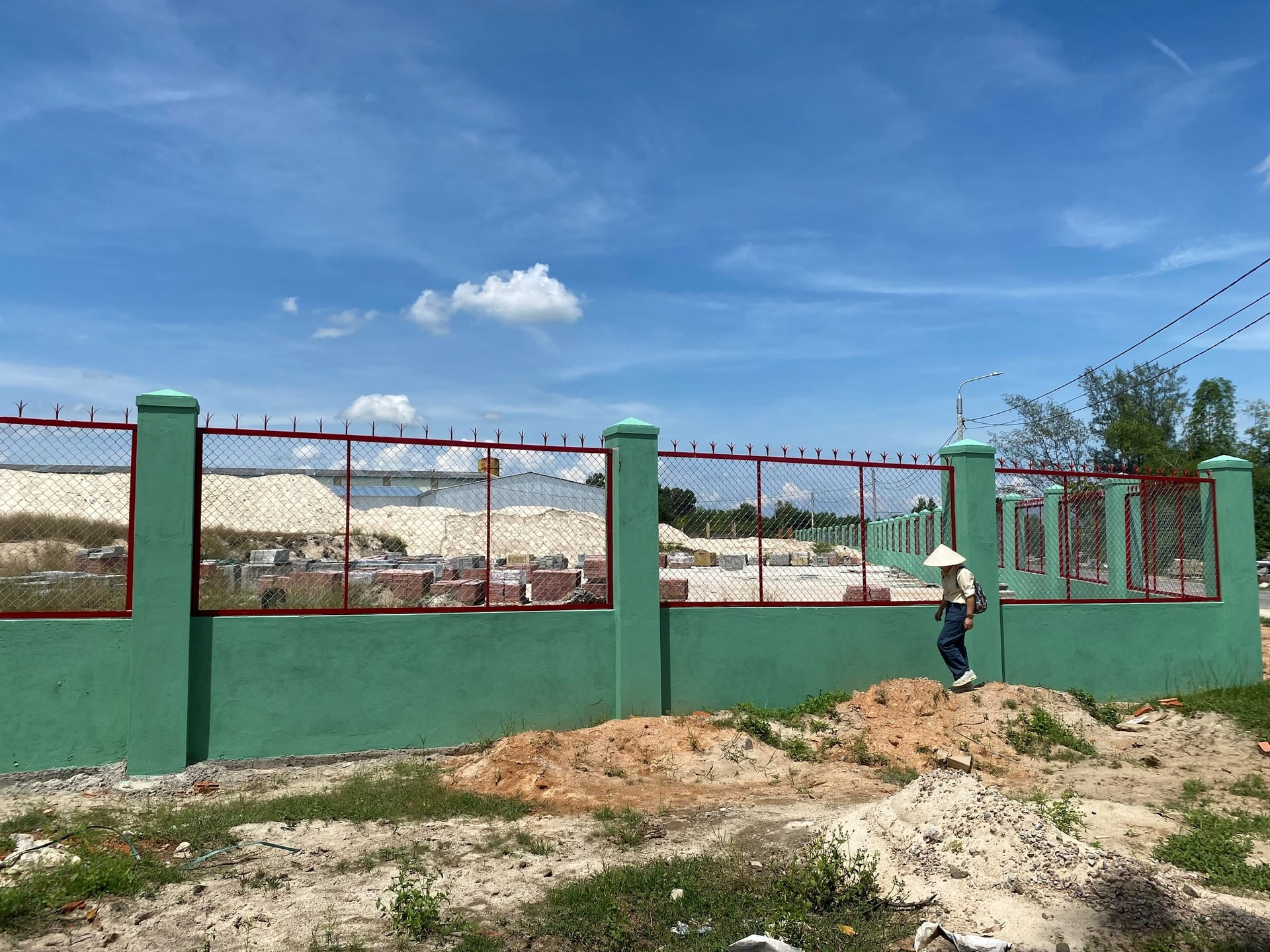
Once considered a valuable archaeological site within the Sa Huynh cultural system in Da Nang city, the Go Ma Voi site (An Hoa village, Duy Xuyen commune) now seems to have disappeared.
The excavation site from years ago is now hidden within the grounds of an active industrial plant, separated from the outside by a fence.
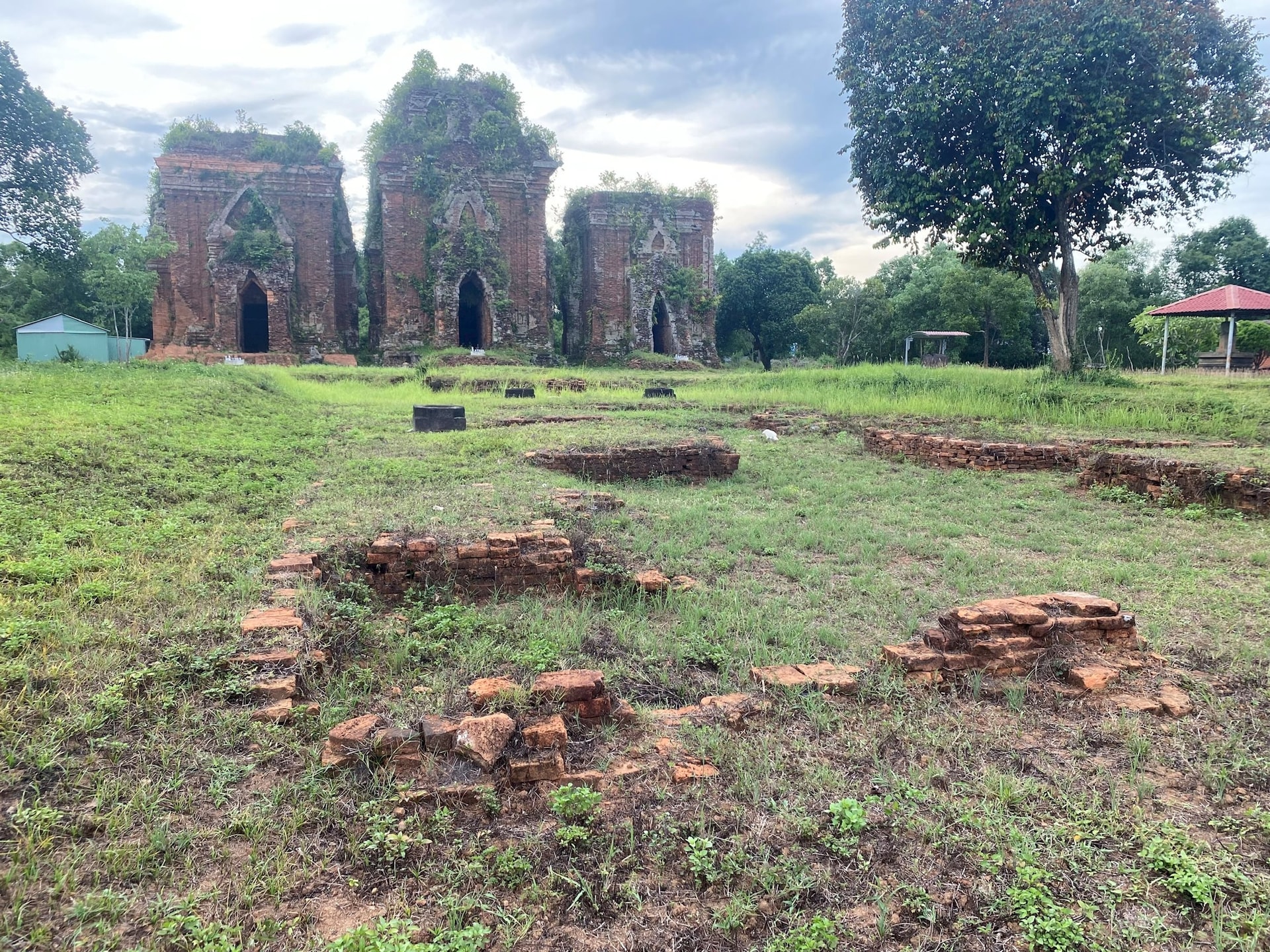
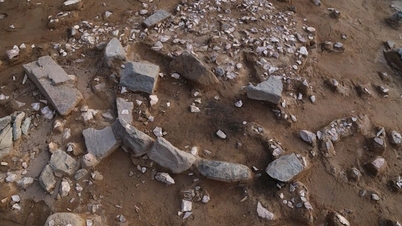
Not far from there, the laterite stone pillars of the Go Loi relic site (Chiem Son valley, Duy Xuyen commune) also lie exposed to rain and sun and show signs of weathering due to the effects of nature…
Da Nang city currently has 564 classified historical sites, including 6 special national historical sites, 84 national historical sites, 474 provincial-level historical sites, and more than 200 sites in the inventory list.
Over the years, while significant progress has been made in the preservation and promotion of historical sites, it cannot be denied that many relics and ruins, especially archaeological sites, have not received adequate protection and are suffering from the impacts of climate and human activity.
Surveys conducted throughout the city reveal that many historical sites, such as Go Ma Voi and Go Loi, are being neglected or not adequately protected.
Notable examples include the ruins of the Phong Le Cham tower (Cam Le ward), the ruins of the Duong Bi tower, the Tra Kieu citadel (Duy Xuyen commune), the Ba Temple relic (Dien Ban Bac ward), the Go Ngoai burial jar relic (Dai Loc commune), and even some ancient tombs of famous figures… all facing risks and impacts from human activities, economic development, and weather conditions.
According to the Da Nang City Department of Culture, Sports and Tourism, due to its geographical location in a region with harsh weather conditions and the extreme impacts of climate change, storms and floods occur frequently.
While many historical sites are architectural structures hundreds, even thousands of years old, such as Cham temples and towers, they are constantly threatened and face the risk of degradation, damage, or even collapse if not properly protected and restored.
However, due to limited annual investment in monument restoration (primarily from local budgets), conservation efforts have only focused on preventing deterioration and have not been able to implement large-scale projects. This is clearly evident at some archaeological sites, resulting in monuments not being properly preserved and protected.
Furthermore, the human resources for cultural heritage management are not commensurate with practical requirements, especially in fields requiring specialized experience such as monument restoration, archaeology, history, fine arts, information technology, and chemistry.
Minimize impact
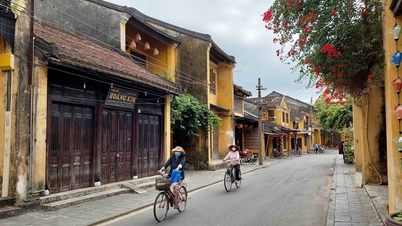
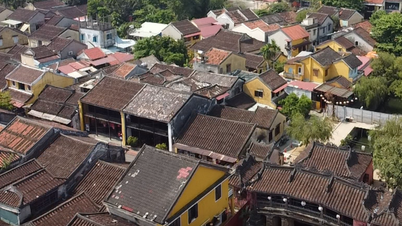
In reality, over the years, the impact of nature and climate change on the system of historical relics in Da Nang has been quite significant. This is not only evident in the ancient houses of Hoi An or some archaeological relics and ruins, but is even more pronounced in Champa temple and tower architecture, such as the phenomenon of wild plants encroaching on the walls of Bang An tower (An Thang ward), Chien Dan tower (Tay Ho commune), or the erosion of bricks on the walls of the Cham towers of Khuong My (Tam Xuan commune)...
According to architect Dang Khanh Ngoc, Director of the Institute of Conservation of Monuments, the impact of climate change on monuments is unavoidable and varies in many ways and degrees depending on location, building materials, surrounding environment, and the resilience of each monument.
For example, temperature fluctuations, intense heat, and heavy rainfall have caused expansion and contraction of materials (bricks, stones), leading to cracks and breakage in the architectural components of historical sites.
In addition, high humidity creates favorable conditions for the growth of microorganisms and mold, which is quite evident on the Champa temple ruins and some wooden architectural structures in Hoi An.
Furthermore, frequent flooding and waterlogging damage the foundations, causing cracks in walls and subsidence of the structure. Not to mention, prolonged dampness causes materials such as wood, mortar, bricks, and stones to rot and peel off.
Dr. Nguyen Ngoc Quy from the Vietnam Institute of Archaeology observes that very few localities possess cultural sediments and such a large number of historical sites as Da Nang.
The Thu Bon River alone is home to numerous important relics and ruins of ancient cultures, such as the Tra Kieu citadel, the Chiem Son cathedral, the My Son historical site, the Thanh Chiem administrative center, the Hoi An trading port, the Dai Chiem estuary, and even the Dong Duong royal Buddhist monastery…
Because Da Nang has so many sedimentary deposits and relics, the sheer volume of work makes it very difficult for archaeologists and cultural management agencies to prioritize certain objectives.
While the impacts of increasingly complex and extreme weather events are affecting historical sites, in the long term we need a comprehensive plan encompassing policies, techniques, management, and the shared responsibility of local communities to protect historical sites and archaeological sites, and to mitigate the impacts of natural disasters, storms, and floods caused by climate change.
Source: https://baodanang.vn/lua-chon-muc-tieu-uu-tien-bao-ton-3306537.html


![[Photo] National Assembly Chairman Tran Thanh Man working with the Standing Committee of the Law and Justice Committee](https://vphoto.vietnam.vn/thumb/1200x675/vietnam/resource/IMAGE/2026/05/21/1779378929214_ndo_br_1-4610-jpg.webp)
![[Photo] General Secretary and President To Lam presides over a working session with the Central Policy and Strategy Committee on the development of the materials industry.](https://vphoto.vietnam.vn/thumb/1200x675/vietnam/resource/IMAGE/2026/05/21/1779359935432_a3-bnd-3129-1412-jpg.webp)



















































































Comment (0)