

By the end of 2023, the Ho Chi Minh City real estate market had faced nearly three years of difficulties and challenges, with both supply and demand declining.
Many believe that the overall picture, dominated by dark colors, may not have ended yet and is likely to continue into the coming year.
The test of fire continues.
Commenting on the Ho Chi Minh City real estate market in 2024, Mr. Vo Hong Thang, Director of Consulting and Project Development Services at DKRA Group, believes that in the short term, the market is unlikely to see positive changes and will continue to be a "test by fire" for investors, buyers, and all parties involved in the real estate market.
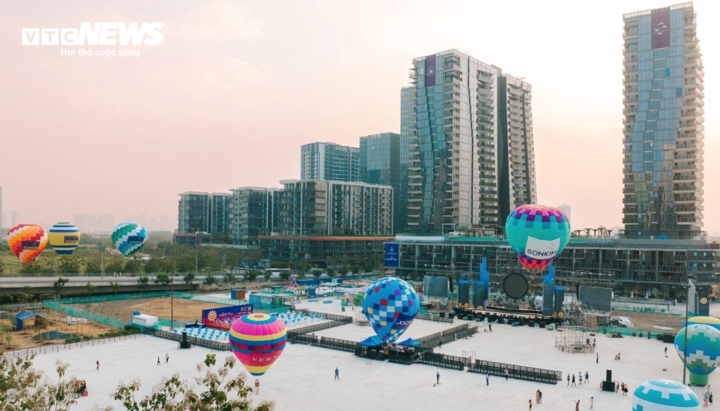
In 2024, the real estate market will develop in a more sustainable, secure, and transparent manner.
The reason for this situation is that policies and legal obstacles need time to take effect and cannot bring about many positive changes in the short term, inadvertently increasing pressure on new supply entering the market.
The prolonged project implementation time contributes to increased financial costs and erodes the profits of investors and real estate businesses. Although the listed primary selling prices do not fluctuate much, investors will still indirectly maintain "discounts" through policies such as grace periods for principal/interest payments, extended payment schedules, or offering discounts of up to 15% - 20% for customers who make payments ahead of schedule…
Meanwhile, in the secondary market, looking at the situation individually, there will still be cases of properties being offered for sale at a discount of 10% - 20%, or even more than 30% of the original contract value.
Most of these transactions involve buyers who use high levels of bank loan leverage, up to 70% - 80% of the total property value, but experience cash flow problems after the grace period for principal/interest payments ends. These transactions are largely concentrated in large-scale urban development projects located relatively far from the city center.
Confidence among buyers has yet to be restored, despite continuous downward adjustments in deposit interest rates. The majority of buyers still choose to save money in banks rather than invest in real estate due to the unclear prospects for recovery.
Nevertheless, the end of 2024 can be seen as the beginning of another growth cycle for the real estate market.
Residential real estate segments are expected to lead the market recovery, especially projects in major city centers or surrounding areas with well-developed regional transportation networks, high population density, and consistently high housing demand.
For example, the apartment segment in Ho Chi Minh City and neighboring provinces (Binh Duong, Dong Nai , Ba Ria - Vung Tau, Long An, Tay Ninh) is projected to see significant improvements in supply in 2024, expected to reach approximately 12,000 units, mainly concentrated in the Binh Duong and Ho Chi Minh City markets.
Furthermore, as directives to remove legal obstacles take effect, the disbursement rate of public investment increases, and lending/deposit interest rates maintain a downward trend… all contribute to noteworthy positive developments in the real estate market.
Legal standardization in the new cycle
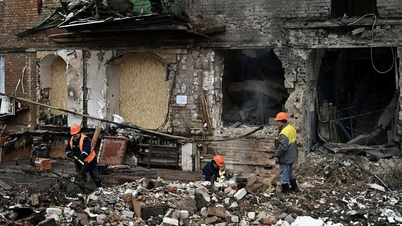
Project legal issues are considered one of the major bottlenecks in the real estate market in general, and for housing projects under construction in particular. Legal issues account for up to 70% of the obstacles faced by projects in the market today.
According to statistics from the Ministry of Construction , in Hanoi and Ho Chi Minh City alone, an estimated 400 projects are facing procedural obstacles, and these bottlenecks have persisted for many years without being thoroughly resolved.

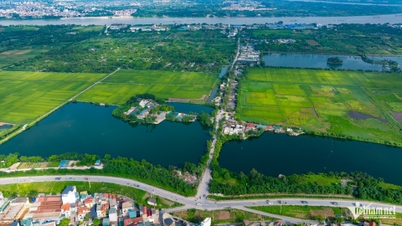
In 2024, the Ho Chi Minh City real estate market is unlikely to see positive changes.
For the same reason, many real estate businesses operating in the market have been and are willing to circumvent the law, launching projects for sale before completing the legal procedures, posing many risks and drawbacks for buyers as well as for the businesses themselves.
In the future, with the passing of the Housing Law and the amended Real Estate Business Law, along with the synchronized implementation of policies to remove obstacles, it can be said that project legal compliance will no longer be a "necessary condition" but will gradually become a "sufficient condition," a prerequisite for a project to bring its products to market.
This will contribute to making the market more transparent, avoiding stalled projects and violations, and maximizing the protection of real estate buyers' rights.
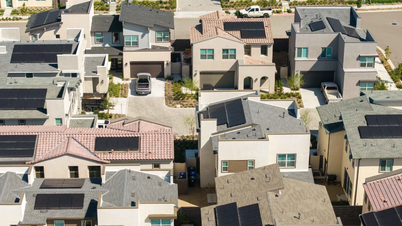
Currently, green real estate has gradually become an inevitable development trend not only in Vietnam but also worldwide . This is not simply a set of standards for the residential segment but is also applied to many other types of real estate such as industrial parks, offices, resorts, etc.
At COP26 (the 26th Conference of the United Nations Framework Convention on Climate Change), Vietnam committed to achieving net-zero emissions by 2050, demonstrating the government's appropriate concern for environmental protection. Consequently, the application of green standards in real estate development will gradually become a prerequisite in the development phase of any real estate project.
Above all, 2024 is a year of screening and resolving existing problems in the market to prepare for a new cycle of sustainable, safe, and transparent real estate market development.
Thy Hue
Source































































































Comment (0)