

Iris recognition technology
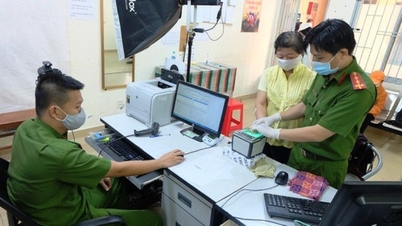
Regarding the Law on Identity Cards, which was passed by the National Assembly on the morning of November 27th, Article 15 of the Law stipulates the information in the identity card database. This includes personal identification information; biometric information (face image, fingerprints, iris, DNA, voice); occupation (excluding the People's Army, People's Police, and Cryptography forces)...
Regarding biometric information such as DNA and voice, the Identity Card Law stipulates that this information is collected when citizens voluntarily provide it, or when criminal prosecution agencies or agencies managing individuals subject to administrative sanctions, in the course of resolving cases according to their functions and duties, request expert examination or collect biometric information such as DNA and voice of citizens, and share this information with the identity card management agency for updating and adjusting the identity card database.

The National Assembly votes to pass the Law on Identity Cards (Photo: National Assembly).
According to Le Tan Toi, Chairman of the National Defense and Security Committee, current science has proven that, along with fingerprints, a person's iris has a complex and unique pattern that does not change much over time.
Iris recognition technology (also known as iris scanning technology) is a method that uses algorithms and images to identify a person based on the structure of the iris ridges (where a person's eye color is determined), and has been widely applied in many fields.
Currently, many countries have adopted this technology for citizen identification, passport verification, online verification, and more.
At the same time, this technology is highly accurate, simple, easy to use, and does not require complex operations.
Therefore, in addition to collecting fingerprints, the draft law has added a provision for collecting iris data in identity card information to serve as a basis for cross-referencing and verifying each individual's information.
Assistance is provided in cases where a person's fingerprints cannot be obtained (due to disabilities or deformed fingerprints caused by objective or subjective reasons...).
Remove information about place of origin and fingerprints.
Accordingly, the newly passed Identity Card Law also clarifies the changes to the information fields displayed on the identity card.
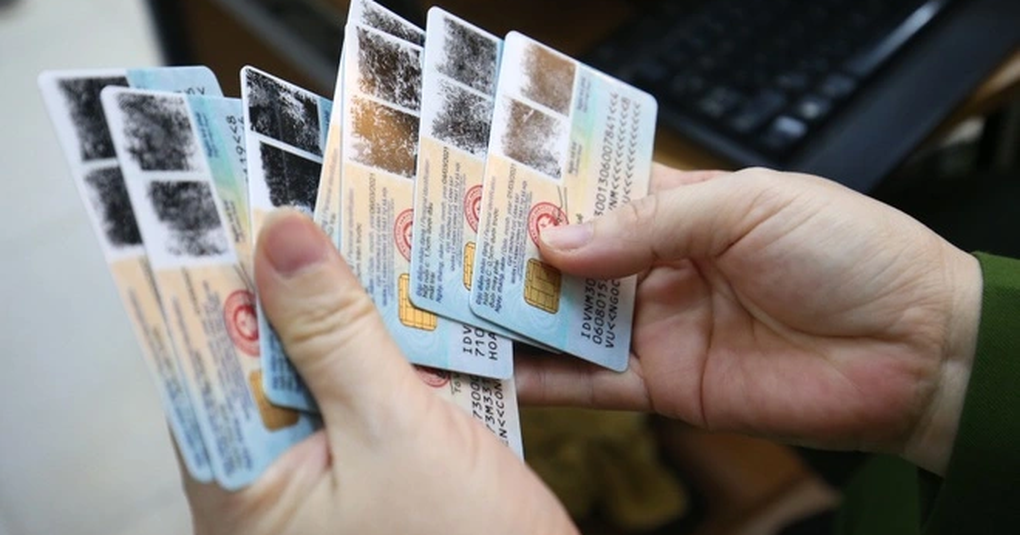
According to the Identity Card Law, information about place of origin and fingerprints will be removed.
This includes a facial photograph; personal identification number; surname, middle name, and given name; date of birth; gender; place of birth registration; nationality; place of residence; card issuance date and expiration date.
Thus, compared to the 2014 Citizen Identity Card Law, the fields for place of origin and fingerprints have been removed and are no longer required to be shown on the identity card.
Those eligible for identity cards include Vietnamese citizens aged 14 and above who must complete the identity card issuance procedure; Vietnamese citizens under 14 years old may be issued identity cards upon request.
The identity card serves as proof of identity and other information integrated into the cardholder's identity card for carrying out administrative procedures, public services, and transactions within the territory of Vietnam.
Identity cards are used in place of immigration documents in cases where Vietnam and a foreign country have signed an international treaty or agreement allowing citizens of the signatory countries to use identity cards instead of immigration documents within each other's territories...
Source


![[Photo] General Secretary and President To Lam presides over a meeting on preparations for the review of one year of operation of the three-tiered government system.](https://vphoto.vietnam.vn/thumb/1200x675/vietnam/resource/IMAGE/2026/06/02/1780391821195_a1-bnd-4595-9717-jpg.webp)



























![[Image] Affirming the aspirations and new standards of the Vietnamese real estate market in the new era.](https://vphoto.vietnam.vn/thumb/1200x675/vietnam/resource/IMAGE/2026/06/03/1780441948766_giai-thuong-bat-dong-san-2026-minh-duy-6-7364-jpg.webp)






























































Comment (0)