


Expanding the scope of development
At the recent seminar "Solutions to promote double-digit growth from traditional and new drivers in the context of ensuring energy stability in Ho Chi Minh City," Chairman of the People's Committee of Ho Chi Minh City, Nguyen Van Duoc, emphasized that the Law on Special Urban Areas will be a "huge lever," a "major impetus" creating more room for the city to fully develop its role as the economic center of the country.
This assessment reflects expectations for specific mechanisms that closely align with the development needs of a major city like Ho Chi Minh City.
From a research perspective, Dr. Bui Ngoc Hien from the Ho Chi Minh City Academy of Cadres believes that the law should be built as a fundamental institutional framework for a large-scale urban area, rather than merely adding individual mechanisms. According to him, a "expanding" approach will struggle to meet the city's new development requirements. What is needed is to establish a comprehensive policy framework capable of unlocking and mobilizing resources.
One point that Dr. Bui Ngoc Hien particularly emphasized was the right to experiment with new models, because in a rapidly changing city, without a controlled testing mechanism, many initiatives would be difficult to implement.
“The law needs to allow cities to pilot appropriate management and socio-economic development models, with clear limits on scope, time, and evaluation mechanisms. When done well, this will be a way for policies to be validated in practice,” said Dr. Bui Ngoc Hien.
Sharing the same view, Ms. Dinh Hoang Ha, National Director of Hanbridge Academy Singapore, believes that core issues such as decision-making authority and financial mechanisms should be directly stipulated in the law, minimizing the delegation of authority through sub-legal documents. At the same time, it is necessary to clearly define that ministries and agencies only provide technical guidance, without imposing additional conditions or interpreting the authority in a way that restricts it.
According to him, the law should grant Ho Chi Minh City the right to proactively issue detailed regulations within its delegated authority, ensuring the principle of "local authorities decide, local authorities implement, and local authorities bear full responsibility." This is an important condition to avoid overlapping and prolonged implementation times.
Among the topics currently under consultation, Master of Architecture Nguyen Binh Duong from the Ho Chi Minh City Institute of Construction Planning is particularly interested in the content of "proactiveness in urban planning and land use".
According to him, the major shortcoming currently is that planning always lags behind the pace of development. The adjustment process is lengthy, while population and market demands fluctuate rapidly, causing many investment opportunities to be missed. Therefore, the Urban Planning Law should especially empower cities to proactively adjust local planning, applying flexible indicators in newly developed areas, instead of being dependent on multiple levels of authority.
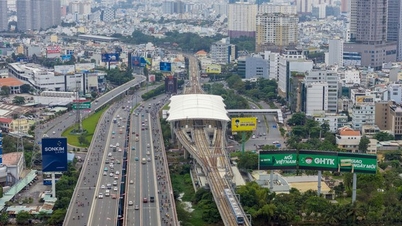
Furthermore, several other bottlenecks need to be addressed simultaneously, such as the renovation of old apartment buildings and the upgrading of residential areas, which are hampered by high consensus requirements and a lack of suitable financial mechanisms; the development of metro lines that are not linked to the exploitation of surrounding land according to the TOD model; and the limited resources for infrastructure investment due to a lack of sufficiently robust financial tools. In addition, issues such as the exploitation of underground and elevated spaces, and the creation of a legal framework for new economic models, also need to be addressed in the law.
“Flexible planning mechanisms, institutionalizing the TOD model, exploiting underground space, and expanding financial space are not privileges, but scientific , evidence-based tools to unleash resources, attract investment, and reshape a modern, sustainable urban space worthy of the nation's expectations,” said Architect Nguyen Binh Duong.
Several mechanisms and policies are being reviewed to assess their necessity if included in the Law on Special Urban Areas:
- Increase autonomy in finance and budget (deciding on spending and retaining revenue).
- Strong decentralization of public investment management and investor selection.
- Be proactive in urban planning and land use.
- Specific mechanisms for attracting and rewarding talented individuals and experts.
- Piloting new policies on science and technology and digital transformation.
- Streamline the organizational structure and increase the authority of urban governments.
- Environment - quality of life
Policies that address pressing issues
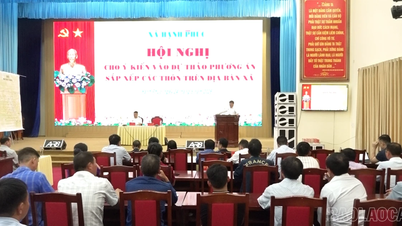
While at the policy level, the Law on Special Urban Areas is expected to open up space for development, at the grassroots level, people are more concerned about concrete changes in their lives.
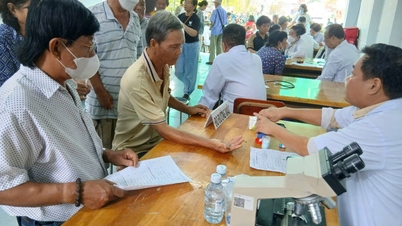
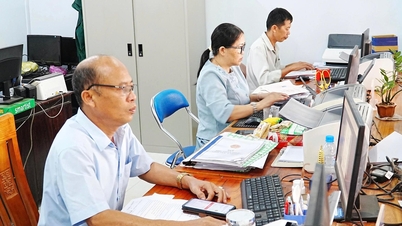
Mr. Duong Quang Kien, Secretary of the Party cell of My Thanh neighborhood, Phu My ward, said that what people most desire is convenience in administrative procedures. Things like paperwork and house repairs, if cumbersome and requiring multiple trips, will cause fatigue. Therefore, the law needs to create mechanisms to simplify processes, promote online public services, and link data between agencies so that people do not have to repeatedly provide information.
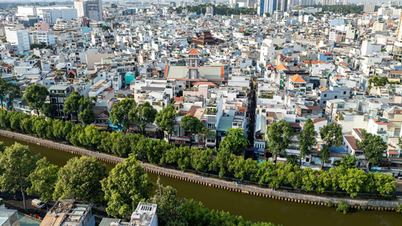
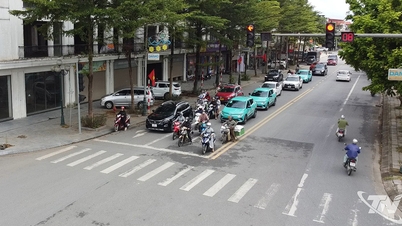
In addition, urban infrastructure also needs to be improved comprehensively, starting with very practical needs such as clean, flood-free alleyways, adequate lighting systems, and a safe and less polluted living environment.
The law needs a mechanism to prioritize resources for these specific social issues, avoiding scattered and inefficient investments. According to him, if these social needs are given due attention, people will clearly feel the effectiveness of the policies.
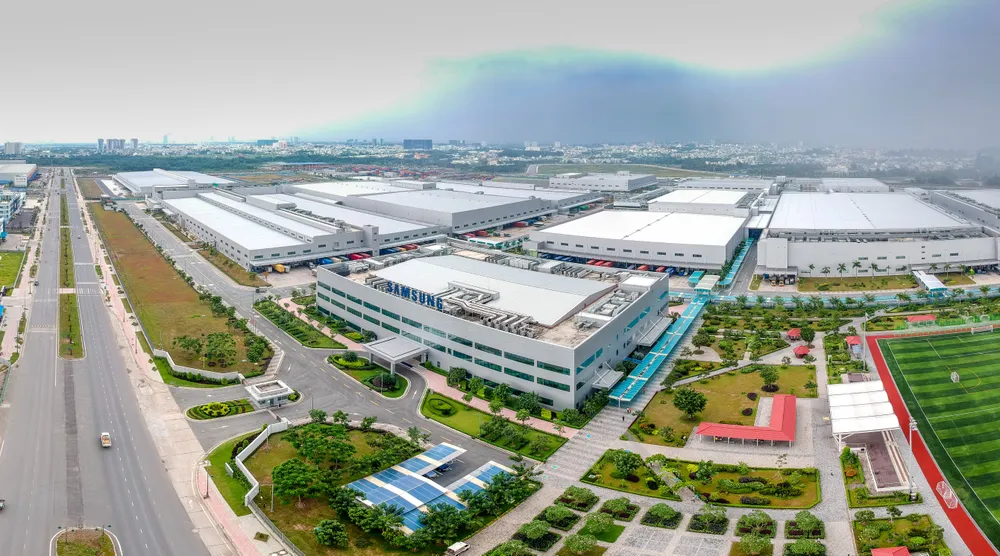
As an employee, Ms. Nguyen Thi My Linh, from Juki Vietnam Co., Ltd. (Tan Thuan Export Processing Zone, Ho Chi Minh City), shared that although she doesn't fully understand all the in-depth details of the mechanisms and policies the city plans to develop in the Special Urban Area Law, the easiest thing for her to imagine about the practicality of this special law is the concrete changes it will bring to her daily life.
Ms. Linh hopes the city will develop its economy more strongly to create more stable jobs, improve workers' incomes, and make healthcare more convenient. She also hopes to avoid the daily commute to work being crowded with vehicles or long traffic jams; and to no longer have to worry about wading through water on her way home when it rains.
Ms. TO THI BICH CHAU, former Vice Chairperson of the Central Committee of the Vietnam Fatherland Front:
The law must promote the role of oversight and social consensus.
In drafting the Law on Special Cities, I believe two points should be considered: maximizing and substantive decentralization of power to Ho Chi Minh City, and emphasizing accountability that is quantifiable rather than qualitatively vague.
Once empowered, individuals must possess the capacity to effectively implement those powers in order to produce tangible results that serve society. In other words, the shift from a "request-and-grant" mechanism to one of self-determination and accountability, or through indicators of urban governance effectiveness, requires a consistent and substantive capacity for assessment, critical analysis, and oversight throughout the entire process, from drafting legislation to its effective implementation.
From my many years of experience working within the Vietnam Fatherland Front system, I have observed that social consensus does not form naturally, but must be nurtured through ensuring that citizens are fully informed, participate in providing feedback, and receive clear responses.
Therefore, during the law-making process, emphasis should be placed on designing regulations that ensure openness and transparency, especially for matters directly related to the interests of citizens, such as urban planning, infrastructure development, and urban renovation.
A crucial point is to fully institutionalize the supervisory and social critique role of the Vietnam Fatherland Front and other socio-political organizations. This is a channel for gathering broad opinions from all strata of the people, helping to detect emerging problems in practice early and propose appropriate adjustments.
Source: https://www.sggp.org.vn/luat-do-thi-dac-biet-ky-vong-tu-thuc-tien-tphcm-post850712.html























































































Comment (0)