

A parent whose child is in sixth grade recounted that recently, the math teacher in the class was criticized by the school administration for grading too strictly, resulting in "unattractive" report cards. The parents' concern is very real: if Ho Chi Minh City switches to using academic transcripts for admission to 10th grade, today's scores could determine tomorrow's chances of getting into a public school.
This story is part of the debate in recent days, as the Ho Chi Minh City Department of Education and Training announced that, starting from the next school year, some areas may switch from entrance exams to evaluating academic records for 10th grade admissions. With this shift from a single exam to an assessment of the entire learning process, many people breathed a sigh of relief as exam pressure decreased, but there were also concerns about fairness and the quality of education .
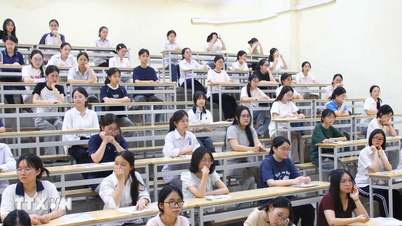
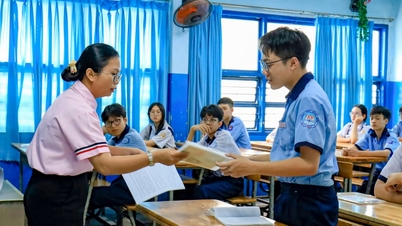
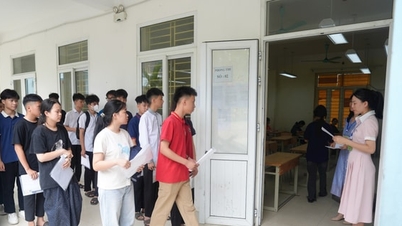
Objectively speaking, the 10th grade entrance exam over the years has created excessive pressure, especially in a megacity with approximately 2.5 million students like Ho Chi Minh City. In the current context, completing high school has almost become the minimum requirement for young people to enter the labor market, so gradually reducing the competitiveness of the 10th grade exam is reasonable.
Assessment of the learning process can be considered a more comprehensive solution than assessment through an exam. However, is the academic transcript a viable "measure" for admissions? Currently, regular assessments are initiated by teachers, while periodic assessments are developed by individual schools. When "assessment standards" are not uniform, it can create unfairness between regions, schools, and even among students within the same school or class. If not properly controlled, evaluating academic transcripts can easily turn into a "grade-based race," distorting the educational environment.
The Ho Chi Minh City Department of Education and Training stated that many subjects are facing a severe shortage of teachers. To achieve rapid and sustainable universalization of high school education, two issues need to be addressed simultaneously: educational infrastructure must keep pace with population growth; and policies for training, attracting, and retaining teachers must be strong enough. Alongside this, competency assessments or entrance exams should be maintained for top-tier and specialized schools to ensure differentiation and improve the quality of advanced education.
Source: https://www.sggp.org.vn/can-nhac-tuyen-sinh-lop-10-bang-hoc-ba-post854234.html

![[Photo] Ba Lang An Lighthouse - the "eye of the sea" amidst the "rock museum" of Quang Ngai province.](https://vphoto.vietnam.vn/thumb/1200x675/vietnam/resource/IMAGE/2026/05/29/1780038698840_anh-man-hinh-2026-05-29-luc-14-10-42.png)



![[Image] Pleasant weather helps students enter the 10th grade entrance exam with confidence.](https://vphoto.vietnam.vn/thumb/1200x675/vietnam/resource/IMAGE/2026/05/29/1780034401612_ngay-1-thi-lop-10-minh-duy-8-5009-jpg.webp)

























































































Comment (0)