

 |
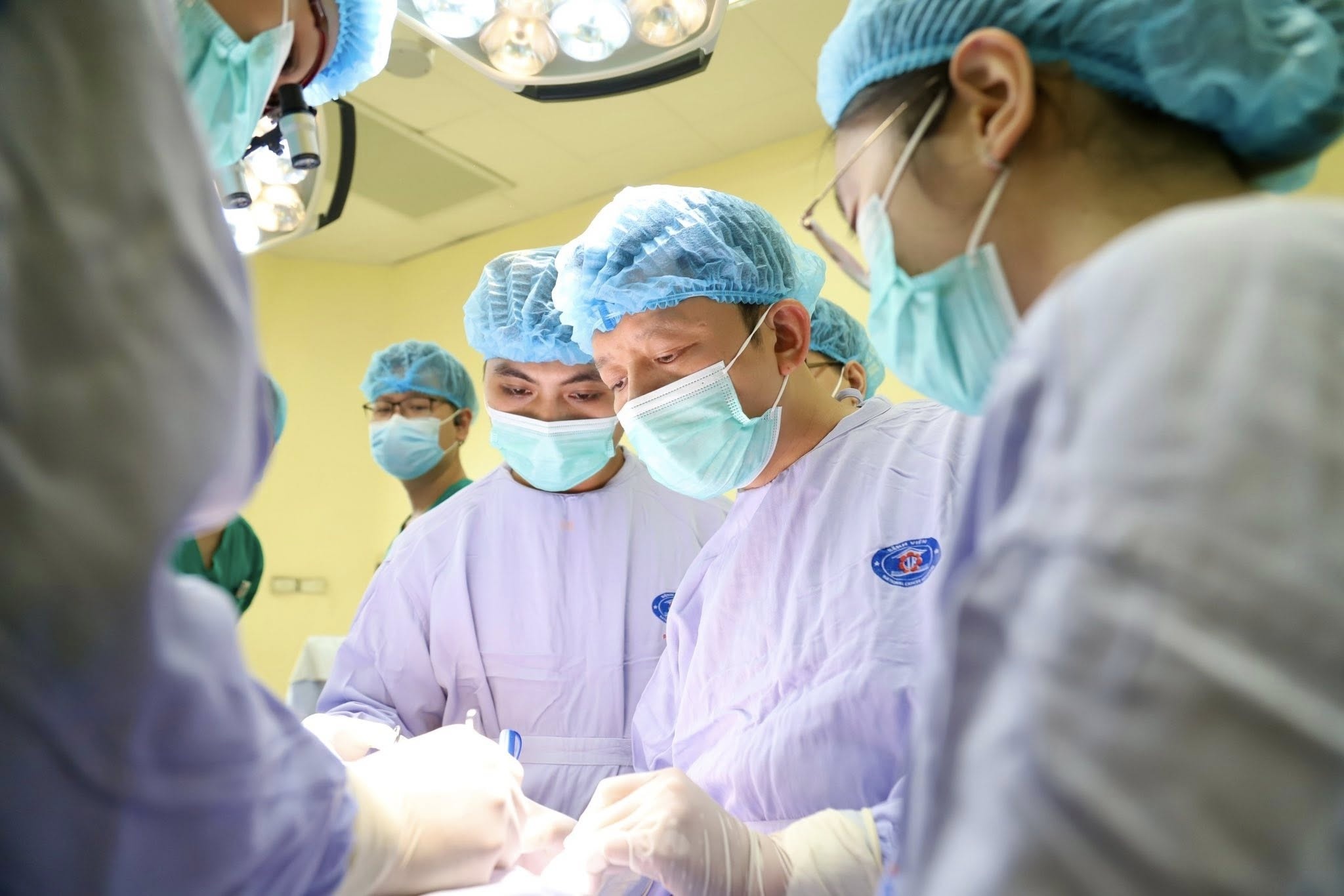
After suffering from mouth ulcers for four months, the 33-year-old man was hospitalized and found to have tongue cancer. |
For four months, Mr. NVV (33 years old, residing in Lao Cai) suffered from persistent pain and ulcers on his tongue, self-medicating with various remedies without success. Upon examination at K Hospital ( Hanoi ), doctors discovered a proliferative ulcerated tumor on the right side of his tongue.
The examination and assessment results determined that Mr. V. had squamous cell carcinoma - a type of cancer that originates from the surface cells of the tongue.
Fortunately, the tumor had not metastasized to the lymph nodes and had not invaded neighboring areas. On May 20th, the Head and Neck Surgery team held a consultation and agreed to perform microsurgery to partially remove the right tongue, combined with right cervical lymph node dissection and tongue reconstruction for the patient.
According to Dr. Ngo Xuan Quy, Head of the Head and Neck Surgery Department, tongue cancer is one of the most common malignant diseases in the oral cavity. However, in the early stages, the disease is often easily mistaken for canker sores or ulcers caused by teeth rubbing against each other, so many people overlook it.
"In patient V.'s case, the ulcerated mass on the right edge of the tongue measured approximately 2x2.5 cm. The maxillofacial MRI showed a tumor measuring 26x10 mm. Pathological examination confirmed it to be invasive squamous cell carcinoma grade II," Dr. Quy stated.
At this stage, if treated according to the correct protocol, the cure rate can reach 70-80%.
According to Dr. Ngo Xuan Quy, for localized tongue cancer, surgery is the core treatment method and determines the possibility of a cure.
The primary goal of the surgery was to widely excise the entire affected area to thoroughly remove cancerous cells and reduce the risk of recurrence. In patient V.'s case, the doctors performed a partial resection of the right tongue combined with right cervical lymph node dissection to prevent further tumor invasion or metastasis.
"A characteristic of tongue cancer is that cancer cells often respond poorly to radiation and chemotherapy. Therefore, the role of surgery becomes even more important," said Dr. Ngo Xuan Quy.
However, tongue cancer surgery is a difficult technique because the tongue has a complex vascular system and many nerves related to sensation, taste, and movement. Removing a large portion of the tongue requires the surgeon to both completely remove the tumor and preserve as much healthy structure as possible to maintain the patient's ability to eat and speak.
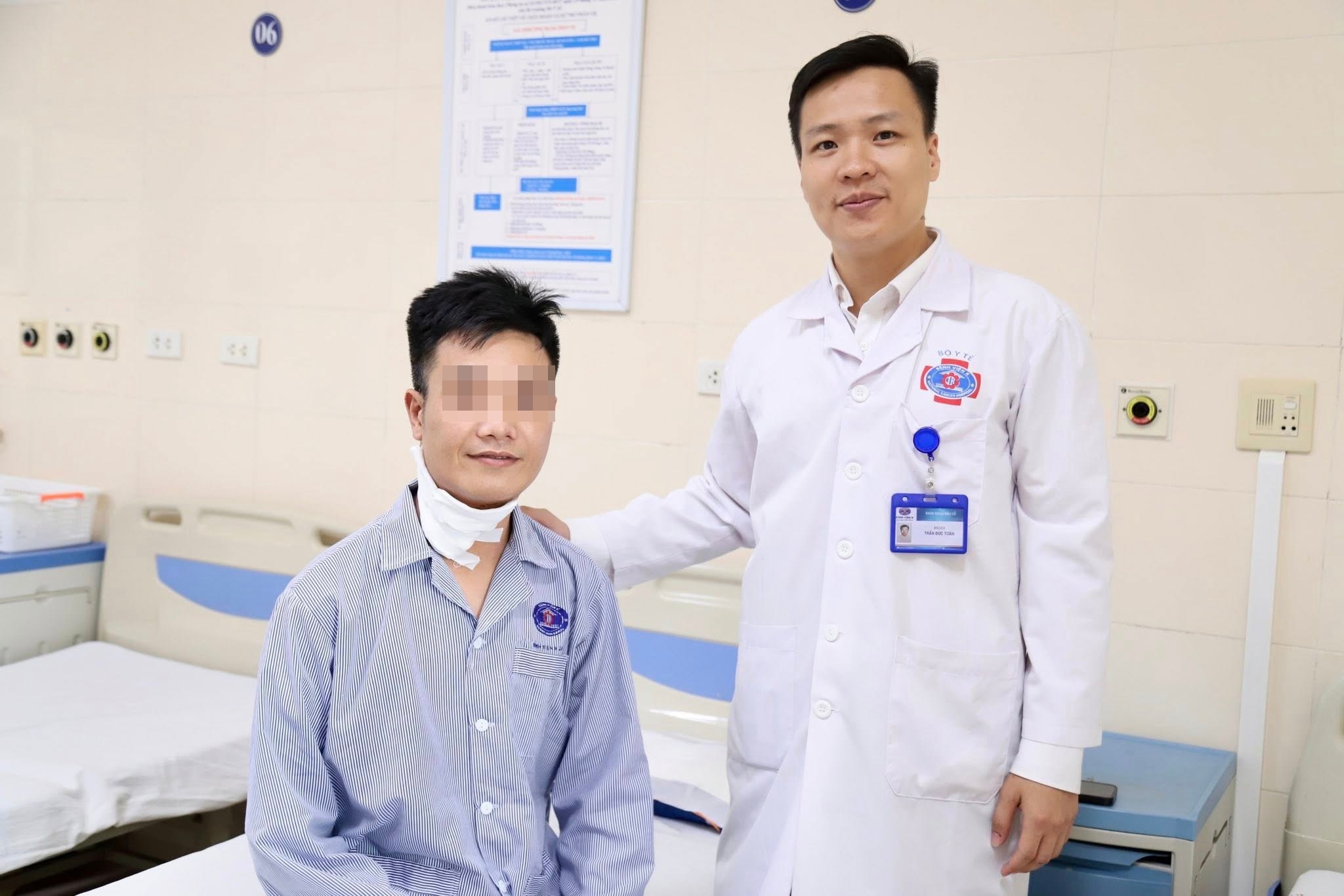 |
Microsurgery helps patients regain their ability to eat and talk sooner. |
In addition, the team also performed a right cervical lymph node dissection to remove lymph nodes that might contain metastatic cancer cells, even when ultrasound images did not show clear lesions.
After removing half of the right tongue, the patient faces the risk of a large defect in the oral cavity. If only conventional suture closure is used, the tongue may be severely retracted and deformed, seriously affecting swallowing, speech, and post-operative psychology.
To remedy this, the doctors applied microsurgical techniques. The team used a skin flap from the patient's own forearm to create a new tongue. Under a surgical microscope, the doctors connected each tiny blood vessel and nerve of the tissue flap to the vascular system of the neck to nourish the reconstructed tongue.
The skin flap is designed to ensure that speech and swallowing functions are preserved without obstructing the airway, thus eliminating the need for a tracheostomy.
Thanks to the close collaboration between the surgical and anesthesia teams, the operation was successful. Just 5 days later, the patient was able to eat and drink orally and communicate quite well with those around them.
Dr. Ngo Xuan Quy advises that early signs of tongue cancer are often subtle and easily mistaken for common oral diseases. Therefore, when unusual symptoms appear, such as persistent mouth ulcers, small bumps, or ulcerated growths on the tongue, cheek, or any other location in the oral cavity, people should go to a reputable medical facility for timely examination and treatment.
Source: https://znews.vn/mac-ung-thu-luoi-o-tuoi-33-tu-dau-hieu-nhieu-nguoi-de-bo-qua-post1654671.html



![[Photo] The heat at the fireworks display site on the opening night of the Da Nang International Fireworks Festival 2026](https://vphoto.vietnam.vn/thumb/1200x675/vietnam/resource/IMAGE/2026/05/27/1779889741485_ndo_br_z7872039145157-fecaba5112f39e8352544099d7ef4738-5140-jpg.webp)
![[Photo] The courage of new recruits of Brigade 144 on the training ground.](https://vphoto.vietnam.vn/thumb/1200x675/vietnam/resource/IMAGE/2026/05/27/1779881651341_anh-man-hinh-2026-05-27-luc-18-32-52.png)























































![[Photo] The courage of new recruits of Brigade 144 on the training ground.](https://vphoto.vietnam.vn/thumb/402x226/vietnam/resource/IMAGE/2026/05/27/1779881651341_anh-man-hinh-2026-05-27-luc-18-32-52.png)































Comment (0)