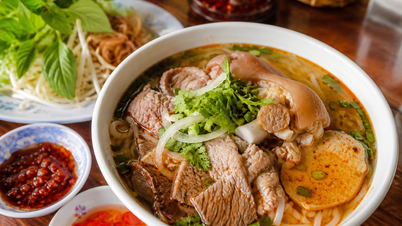
Steamed fermented fish paste - a rustic dish of the countryside, savory, rich, and served with garden vegetables. Photo: BAO KHANH
My family was poor, and our daily meals didn't have much meat or fish, but in the corner of the kitchen, there were always a few jars of fermented fish paste that my mother had prepared, from snakehead fish paste to catfish paste, shrimp paste... Every rainy season, when there was plenty of fish, my mother would select the fish, wash them clean, salt them just right, and neatly arrange them in earthenware jars. The jars of fish paste were sealed and left in the corner of the kitchen, waiting for the sun and time to do their job. When the lids were opened, the salty aroma filled the whole house. Besides eating the fish paste raw, my mother also prepared many other dishes, such as steamed fish paste, braised fish paste, and fish paste noodle soup. Each dish was easy to eat, easy to remember, and my "favorite" food. I often whispered to my mother, "Whenever there's fish paste at a meal, I feel hungry sooner!"
What I remember most is steamed snakehead fish paste. My mother would simply take the fish paste, mash it, mix it with duck eggs, add some chopped lemongrass, onions, and a few slices of chili peppers, then steam it over a wood fire. By the time the rice was cooked, the fish paste was also perfectly cooked. Opening the lid, the rich, salty, and spicy aroma blended together, creating an irresistible scent. Taking a bite of the steamed fish paste with rice, adding a slice of cucumber, a piece of unripe banana, or a crunchy pickled eggplant, the delicious flavor spread across my tongue – salty without being harsh, rich without being greasy. The deliciousness of this fish paste is unique; the more you chew, the more the flavor infuses, and the more you eat, the more addictive it becomes.
The days of planting and harvesting are when fish sauce reigns supreme. The whole family goes to the fields early in the morning, wading through the water to plant rice, and takes a break at noon. Mom spreads a small mat on the edge of the field, takes out rice, and a bowl of raw fish sauce mixed with chili peppers. The accompanying vegetables are hastily picked from the banks and ditches, such as water spinach, water lilies, and young shoots of the chayote plant. In the windy fields, with hands and feet still covered in mud, the midday meal is always completely finished. That deliciousness comes not only from the fish sauce, but also from the feeling of sitting together after work, from the cheerful laughter of siblings, and from the faint scent of young rice in the breeze.

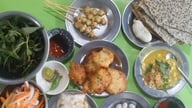

There were days when, after the harvest, the whole family was exhausted, and my mother would cook fermented fish stew. A pan of fermented fish stew with freshwater fish, a little pork belly, shrimp, and eggplant was placed on a wood-fired stove, bubbling and simmering. Smoke rose, stinging the eyes. The aroma of the fermented fish mingled with the smoke, creating a flavor difficult to name, but unforgettable. Eating fermented fish stew required plenty of vegetables, eating until sweat beaded on your forehead and your mouth felt a little spicy and salty. The meal wasn't elaborate, but it was satisfying.
Growing up, I came to understand that making fish sauce wasn't just about meeting daily meal needs, but also a reflection of a way of life, how people in the Mekong Delta adapt to nature. If there's too much fish to eat at once, they make fish sauce to preserve it and enjoy it year-round. Each jar of fish sauce is the result of careful saving, patience, and generations of experience. In my neighborhood, there's Mrs. Sau Lanh, who has been making fish sauce the old way for 40 years. I remember going to her house with my mother, watching her wash the fish by the water jar, her hands moving swiftly. She spoke slowly as she worked: "To make good fish sauce, the fish must be fresh, the salt must be just right, and it must be sun-dried sufficiently. Most importantly, you have to know how to wait. Impatience will ruin the fish sauce."
Mrs. Sau Lanh didn't make a lot of fish sauce; she mainly made it for her family and shared it with neighbors. Many times she gave my mother a jar, telling her to use it slowly. Her fish sauce wasn't overly salty, it had a mild aroma, and it was very comforting to eat. She often said, "Homemade fish sauce, it's good for your stomach." For her, making fish sauce wasn't just about eating it, but also about preserving family traditions and the familiar flavors of her homeland.
Nowadays, fish sauce is no longer just a home-cooked dish. In An Giang , many localities have gradually standardized the process and improved product quality. Fish sauce made from snakehead fish, catfish, and shrimp paste is packaged cleanly in jars, labeled, and traceable, becoming OCOP products, carrying the cultural story of the land and its people. From a traditional jar of fish sauce, it has traveled further, appearing in supermarkets, accompanying tourists as gifts, and contributing to increasing the value of local agricultural products. I'm happy that fish sauce is more appreciated, but I still prefer the traditional jar of fish sauce from my hometown, fish sauce made to eat, without needing any fancy presentation.
Now, every time I go back to my hometown, I stop by Mrs. Sau Lanh's house to buy fish sauce. Each time, she gives me some, smiling and saying happily, "It makes me happy when people praise my fish sauce." Even when I'm away on business, I still seek out a bowl of fish sauce noodle soup, or simply a bowl of rice with steamed fish sauce. Just the aroma of fish sauce brings back childhood memories: the harvest fields, the sun-drenched rice paddies, the simple yet warm meals. Some dishes are delicious in a sophisticated way, but fish sauce is delicious in a very down-to-earth, genuine, and simple way, just like the people of my hometown.
Homemade fish sauce sits in earthenware jars in the corner of the kitchen and remains in the memories of many generations. It's a flavor associated with simple meals, with the frugality and patience of the people of the Mekong Delta who live in harmony with the rivers and seasons. These values, over time, have remained.


Source: https://baoangiang.com.vn/mam-que-a475300.html