

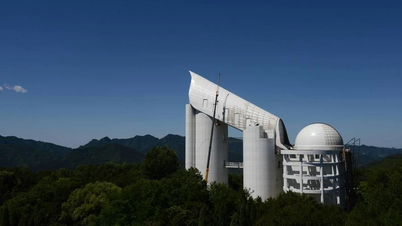
Atop Cerro Pachón, a 2,682-meter-high mountain located approximately 482 kilometers north of Chile's capital, Santiago, the Vera Rubin Observatory's new telescope is preparing to launch.
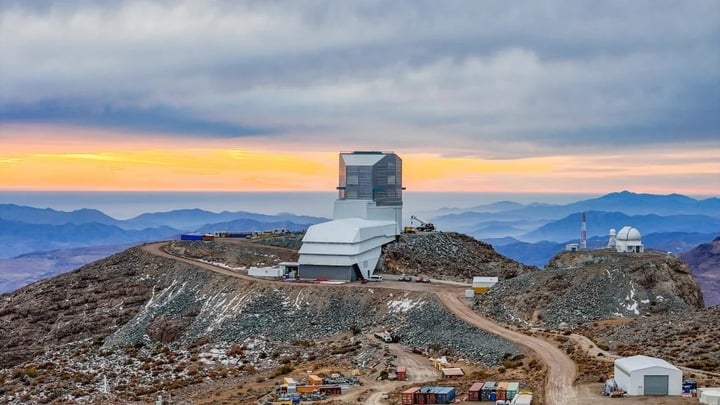
The Vera Rubin observatory is under construction atop Cerro Pachón, Chile. (Photo: SLAC)
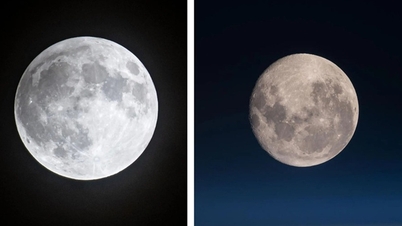
Dubbed the world's largest digital camera, this telescope's camera boasts a resolution of 3,200 megapixels, equivalent to the pixel count of 300 mobile phones, and each image will cover an area of the sky 40 times the size of a full moon.
Every three nights, the telescope photographs the entire visible sky, creating thousands of images that allow astronomers to track anything that moves or changes in brightness. The Vera Rubin telescope expects to discover around 17 billion stars and 20 billion galaxies never before seen by humans on Earth.
"There are so many missions Rubin will accomplish," said astronomer Clare Higgs of the observatory. "We are exploring the sky in ways we've never done before, giving us the ability to answer questions we never thought possible."
The telescope will survey the night sky for exactly a decade, taking 1,000 pictures each night. "In 10 years, we'll be talking about new fields of science , new classes of objects, new discoveries. That's really exciting," added Ms. Higgs.
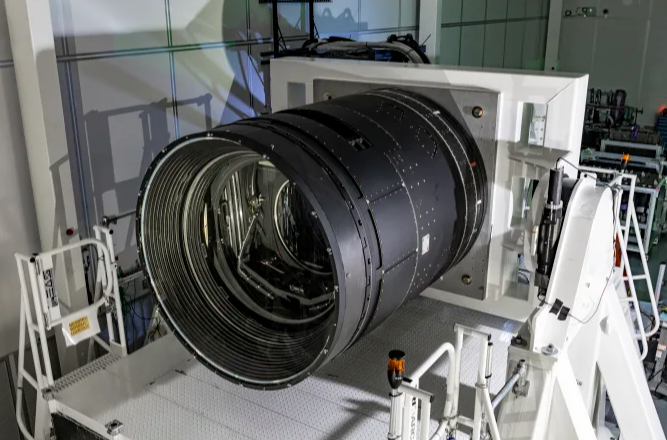
Inside the Rubin telescope is the world's largest camera, the size of a small car, weighing 3,000 kg and boasting a resolution of 3,200 megapixels. (Image: SLAC)
The switch is about to turn on.
Construction began in 2015, and the telescope is named after the pioneering American astronomer Vera Rubin, who died in 2016. Rubin was the first to confirm the existence of dark matter – the elusive substance that makes up most of the matter in the universe but has never been observed.
Although Vera Rubin is the U.S. national observatory, it's located in the Chilean Andes. "For optical telescopes, you need a high, dark, and dry location," Higgs says, referring to issues with light pollution and humidity, which reduce the sensitivity of the instruments. "The quality of the night sky in Chile is exceptional, which is why there are so many telescopes here."
Currently in its final stages of construction, the Rubin telescope is expected to be switched on in 2025. "We're aligning everything, ensuring all systems, from the top down to the pipelines and data, are seamlessly connected and as optimized as possible. It's all been in preparation for a decade ," said Ms. Higgs, but noted that the schedule is still subject to change.
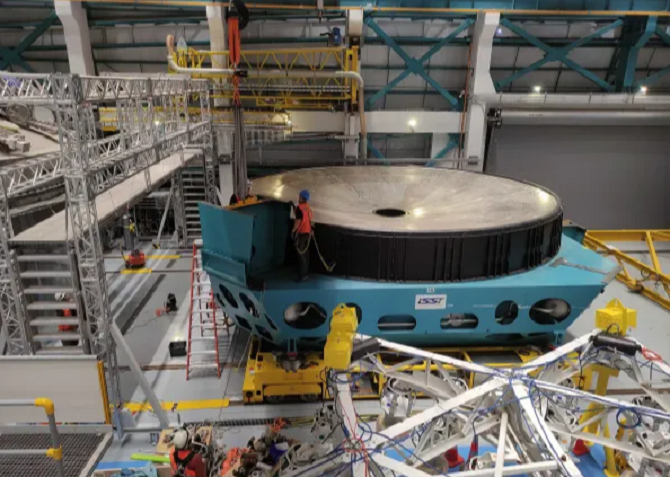
The telescope's primary mirror has a diameter of 8.4 meters. (Photo: SLAC)
Unraveling the ancient mysteries of the universe.
The Rubin telescope's primary mission is called the Space-Time Heritage Survey (LSST), which will last for 10 years.
Rubin's camera can capture an image every 30 seconds, generating 20 terabytes of data in 24 hours. Once completed, the survey will produce over 60 million gigabytes of raw data.
However, it only takes 60 seconds to transfer each image from Chile to the research lab in California (USA), where artificial intelligence and algorithms will pre-analyze it, looking for any changes or moving objects and generating an alert if anything is detected.
"We anticipate receiving around 10 million alerts per night from the telescope," said Higgs. "The alerts are anything that changes in the sky and encompass a wide range of scientific possibilities, such as objects in the solar system, asteroids, and supernovae. We anticipate millions of stars in the solar system and billions of galaxies, which is why machine learning technology is so essential."
Ms. Higgs stated that the data will be released annually to a select group of astronomers, and after two years, each dataset will be made public for the global scientific community to study.
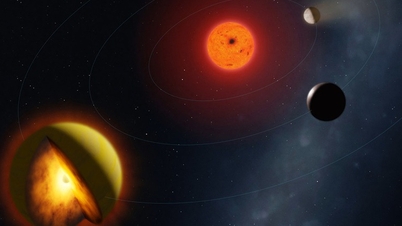
There are four main areas of research that scientists are hoping to explore: cataloging the solar system – including the discovery of several new celestial bodies and perhaps even a hidden planet known as Planet Nine; mapping the entire galaxy from which Earth is located; discovering a special type of object called "transient objects" that can change position or brightness over time; and understanding the nature of dark matter.
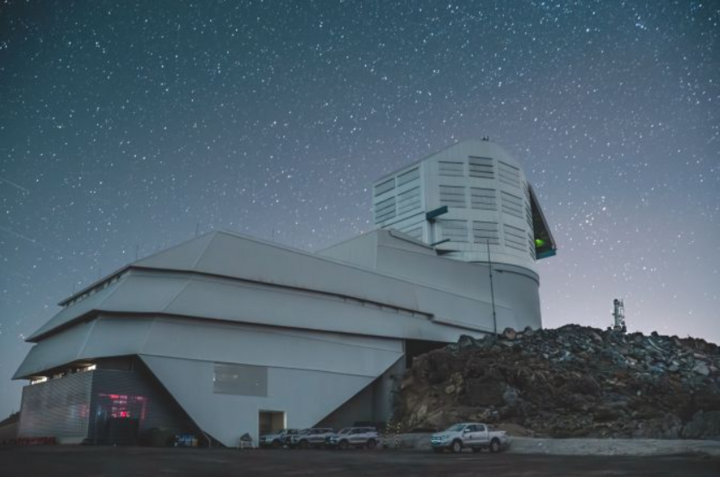
The Rubin Observatory's telescope is expected to be able to unravel the deepest mysteries of the universe. (Image: SLAC)
The astronomical community is very excited about the Vera Rubin Observatory. David Kaiser, a professor of physics and history of science at the Massachusetts Institute of Technology (MIT), believes that this telescope will shed light on long-standing questions about dark matter and dark energy – two of the most mysterious concepts in the universe.
Another long-standing cosmic puzzle that the Rubin telescope could solve is the hunt for Planet Nine. Konstantin Batygin, a professor of planetary science at the California Institute of Technology, says the telescope offers a real opportunity to directly detect Planet Nine. Even if the planet cannot be directly observed, the detailed mapping of the solar system's dynamic architecture—especially the orbital distribution of smaller celestial bodies—would provide crucial tests for the Planet Nine hypothesis.
“The prospects are fascinating and there are certainly revolutions in space science underway,” Priyamvada Natarajan, professor of astronomy and physics at Yale University, praised the Rubin telescope.
Source


















![[Video] Sunset at Lap An Lagoon – Where the sun sets over the fishing nets](https://vphoto.vietnam.vn/thumb/340x192/vietnam/resource/IMAGE/2026/05/31/1780192137701_beach-landscape-sea-water-nature-grass-745871-pxhere-com.jpeg)








![[Image] A brilliant symphony and explosive power in the skies of Da Nang.](https://vphoto.vietnam.vn/thumb/1200x675/vietnam/resource/IMAGE/2026/05/31/1780196945787_anh-man-hinh-2026-05-31-luc-10-08-51.png)





































































Comment (0)