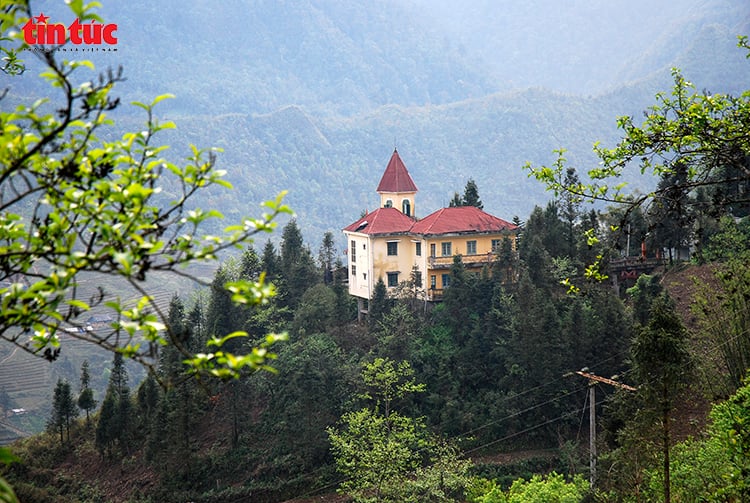
Ancient architectural structures bearing historical imprints amidst the mountains and forests of Sa Pa are a highlight in the journey of exploring the culture and landscape of the Northwest highlands. Photo: Le Phu/News and Ethnic Groups Newspaper.
Northern Vietnam - where nature and culture blend together.
More than just a way to relax after months of work, summer travel reflects the growing appeal of Vietnam's "smoke-free industry." According to statistics from the Vietnam National Tourism Administration, in the first four months of 2026 alone, Vietnam welcomed over 8.8 million international visitors, a 14.6% increase compared to the same period last year. Domestic tourists are estimated at around 51 million, with total tourism revenue reaching approximately 370 trillion VND.
Behind those growth figures lies the allure of regions with unique beauty, where each journey is not just a vacation but also an experience of the culture, nature, and distinctive lifestyle of each Vietnamese countryside.
- Sa Pa ( Lao Cai province)
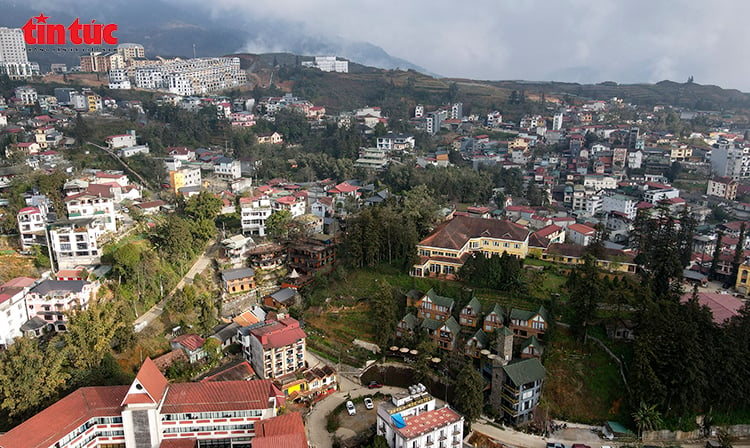
A panoramic view of Sa Pa town from above, with houses nestled between the mountain slopes and green forests, creating a harmonious urban landscape in the highlands. Photo: Le Phu/News and Ethnic Groups Newspaper.
Every summer, Sa Pa consistently ranks among the most popular tourist destinations in Northern Vietnam. Unlike the scorching heat of the lowlands, Sa Pa offers a refreshing coolness with much lower temperatures. The sprawling terraced rice fields, the villages nestled on the mountainside, and the clouds covering Fansipan peak create a scene that is both majestic and poetic.

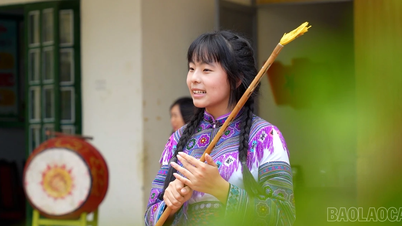
Performing cultural shows showcasing the rich ethnic traditions of the people of Sa Pa for the enjoyment of locals and tourists. Photo: Thanh Tung/TTXVN
But what makes Sa Pa so appealing is not only its natural beauty but also its rich cultural heritage. Visitors can encounter Hmong and Red Dao ethnic women in traditional costumes, colorful highland markets, or the echoing sounds of the Hmong flute amidst the mountains and forests. In a context where many destinations around the world are gradually becoming "urbanized," the interplay between nature and local identity is the unique value that makes Sa Pa an irreplaceable destination.
- Ha Long Bay (Quang Ninh province)

Beautiful scenery in Ha Long Bay. Photo: Minh Duc/TTXVN.
If Sa Pa represents the beauty of the mountainous region, then Ha Long Bay is the symbol of northern coastal tourism. Thousands of limestone islands rising above the turquoise waters create one of the most famous landscapes in Vietnam.
Every summer, cruise routes on the bay operate at almost full capacity. Beyond exploring caves, kayaking, or relaxing on the sea, tourists today also seek out Ha Long Bay for a "slow living" experience amidst nature. Sunrise over the bay, the moment the sunlight bathes the rocky mountains, or the tranquil space amidst the vast expanse of water become unforgettable images for many international visitors.
The strong development of transportation infrastructure in recent years, such as the Hanoi-Ha Long expressway and Van Don airport, has also contributed to making Ha Long a leading coastal tourism center in the North, with much more convenient connectivity than before.
Central Vietnam - a land of blue seas and heritage.
While the North is attractive for its mountains and climate, the Central region is blessed with beautiful, long stretches of coastline. This is also the most vibrant area during the summer tourist season.
- Da Nang City

The peaceful pace of life on Cu Lao Cham Island, Da Nang City. Photo: Do Truong/VNA.
For many years, Da Nang has consistently been among the leading localities in terms of tourist arrivals. The city possesses a rare advantage: it has both beaches and mountains, a modern infrastructure, and the capacity to organize professional tourism services.
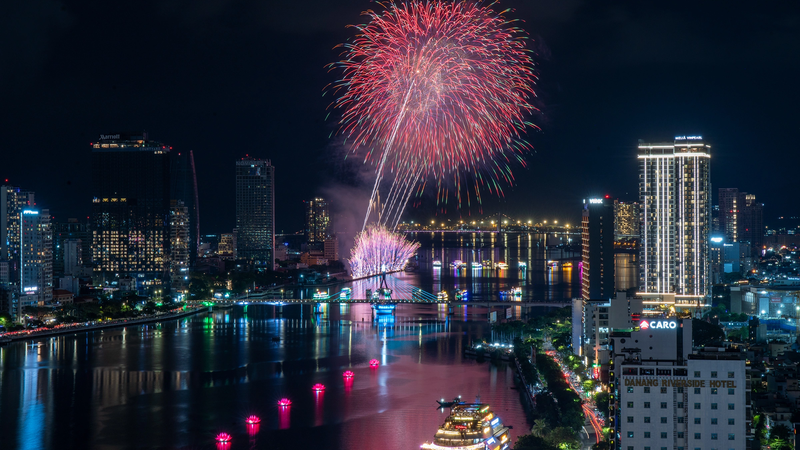
Famous beaches like My Khe, Non Nuoc, Nam O, and Xuan Thieu, with their long stretches of sand and clear blue water, have become familiar destinations for millions of tourists every year. But Da Nang's appeal lies not only in its beaches. The city has also successfully built an image of a dynamic tourist city with international fireworks festivals, vibrant nightlife, high-end resort services, and a modern entertainment system.

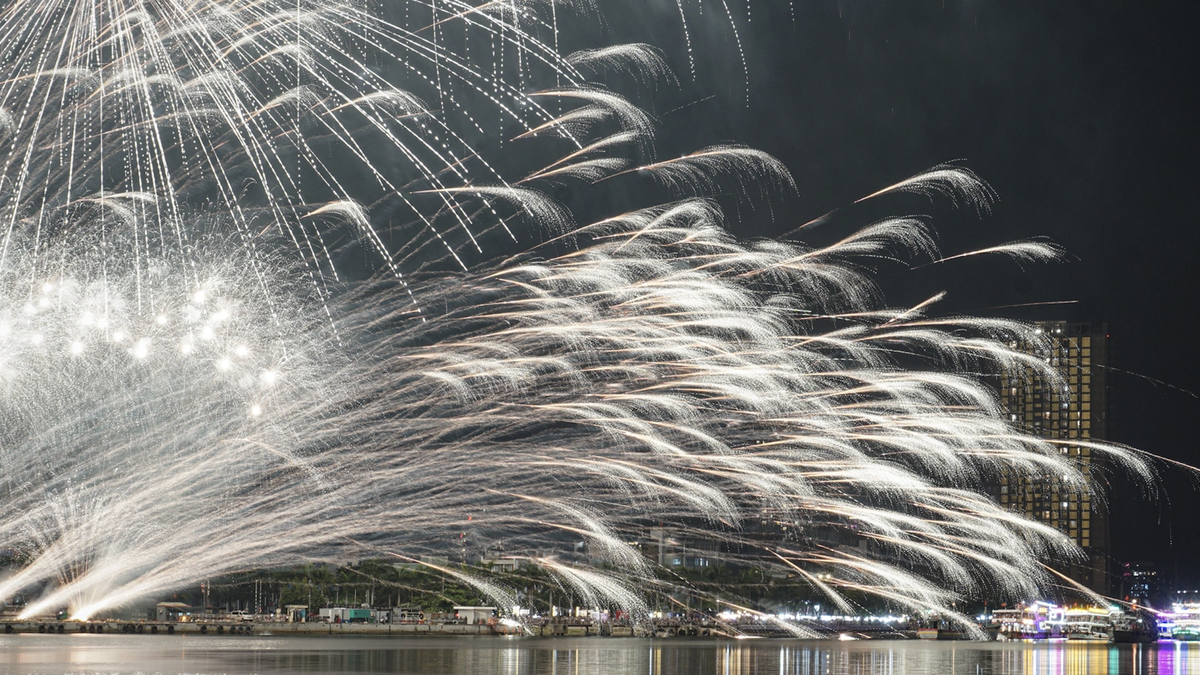
Fireworks display by the Da Nang team (Vietnam). Photo: Tran Le Lam/VNA.
Besides its famous beaches, Da Nang also attracts tourists with the unique cultural atmosphere of Hoi An Ancient Town. The ancient roofs covered in the patina of time, the vibrant lanterns, and the Hoai River, steeped in history and culture, create a tranquil and ancient Hoi An, offering visitors unforgettable experiences.
What makes Hoi An special is that it's not just "beautiful to look at," but also a place where tourists can immerse themselves in the local culture, from cuisine and traditional crafts to folk art activities. This blend of modernity and cultural depth creates a unique appeal for tourism in Da Nang every summer.
- Hue City

Kien Trung Palace is an attractive destination for tourists exploring the Hue Imperial Palace. Photo: Do Truong/TTXVN
Not far from the center of Da Nang, Hue city offers a different facet of Central Vietnam tourism. Summer in Hue is not only about sunshine but also about the rich cultural values of the royal court and the depth of its history.
Structures such as the Imperial Citadel, the Nguyen Dynasty tombs, Thien Mu Pagoda, and the Perfume River have become symbols of the ancient capital. For many international tourists, Hue is attractive because of its serene atmosphere and its ability to preserve almost intact the imprint of an ancient capital.
In recent years, heritage tourism has become a growing trend attracting more attention from travelers. Instead of just seeking a relaxing vacation, many people want to gain a deeper understanding of local history and culture, and Hue has a clear advantage in this trend.

The beach in the center of Quy Nhon city. Photo: Ngoc Bich/TTXVN
Furthermore, the former Phu Yen region (now part of Dak Lak province) and Quy Nhon (now part of Gia Lai province) are also attractive destinations in Central Vietnam thanks to their pristine beauty and peaceful resort atmosphere. The unique basalt rock formations of Ghenh Da Dia, Bai Xep beach, Mui Dien cape, and the rustic coastal roads have created a distinct charm for Phu Yen. Meanwhile, Quy Nhon attracts tourists with its beaches that retain their natural landscape, reasonable travel costs, and increasingly improved infrastructure. What makes these areas so popular with tourists is not the hustle and bustle, but the sense of peace and unspoiled nature – something increasingly rare amidst the rapid development of modern tourism.
Southern Vietnam - a paradise for relaxation and waterways.
- Phu Quoc (An Giang province)

Hon Thom fishing village, Phu Quoc. Photo: Duong Giang/TTXVN.
In the southern region, Phu Quoc continues to assert its position as Vietnam's leading beach resort destination. The pearl island boasts many beautiful beaches, a system of high-end resorts, and a series of large-scale entertainment and recreation complexes. Beyond relaxation, Phu Quoc also strongly develops experiential tourism such as snorkeling, exploring small islands, ecotourism, and seafood cuisine.
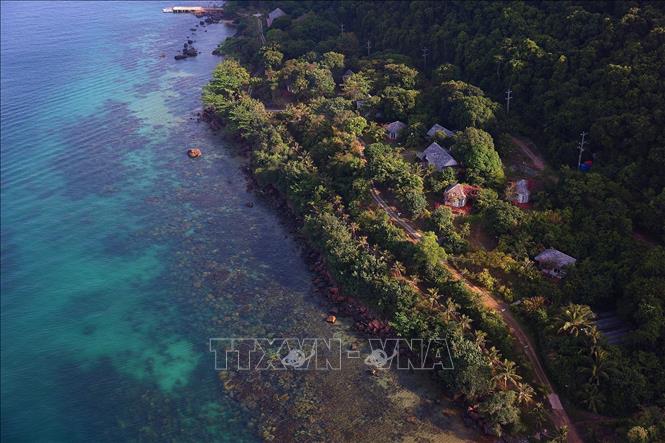
The sea area south of Phu Quoc Island. Photo: Duong Giang/TTXVN.
In recent years, Phu Quoc has consistently appeared in international tourism rankings, contributing to raising the image of Vietnam's coastal tourism on the regional and global map. According to tourism industry statistics, the number of visitors to Phu Quoc has continuously increased sharply in recent summer seasons, especially in the high-end international tourist segment. The opening of many new direct international flights has helped the island become a competitive destination against many famous resort centers in Southeast Asia.
- Ho Chi Minh City

International tourists experience the tourist atmosphere at the Central Post Office in Ho Chi Minh City. Photo: Hong Dat/TTXVN.
Ho Chi Minh City is an important transit point for tourism in Southern Vietnam. Every summer, the number of domestic and international tourists visiting the city increases significantly thanks to its diverse range of services, vibrant nightlife, and many unique cultural and culinary spaces.
From Ho Chi Minh City, tourists can easily connect to popular coastal destinations such as Vung Tau or other provinces in the Southeast region. Coastal roads, weekend resorts, and an increasingly完善 transportation infrastructure are making tourism in the South much more convenient.
- Mekong Delta

Tourists paddle boats to explore the Tra Su Melaleuca Forest. Photo: Thanh Sang/TTXVN.
Unlike the vibrant atmosphere of Ho Chi Minh City, the Mekong Delta (Southwest Vietnam) offers a completely different ambiance. Without high-rise resorts or modern entertainment complexes, this region is appealing due to its characteristic rural lifestyle and the simple beauty of its riverine culture.
Summer is also the fruit season in many localities in the Southwestern region of Vietnam. Orchards laden with rambutan, durian, mangosteen, or mangoes become a delightful experience for tourists. Many people choose community-based tours to pick fruit themselves, paddle canoes through small canals, or explore floating markets in the early morning.
The Mekong Delta region is also attractive because of its unique and unmistakable cultural characteristics. The folk songs, traditional music, the slow pace of life along the riverbanks, and the bustling scene of boats create a very special charm for this land. For many international tourists, this is a place that helps them better understand the local life of the people of Southern Vietnam.
Preserving natural beauty, conserving local cultural values, and improving service quality.
The strong growth of tourism in Vietnam in recent years shows that this industry is no longer simply a service activity but is becoming a key economic sector, making an important contribution to the growth and development of the country.
In 2025, Vietnam is expected to receive approximately 21.2 million international visitors, serve over 135.5 million domestic tourists, and achieve total tourism revenue exceeding 1 trillion VND for the first time. In 2026, the Vietnamese tourism industry aims to welcome around 25 million international visitors, serve 150 million domestic tourists, and generate total revenue of approximately 1,125 trillion VND (about 43 billion USD), making a significant contribution to the government's double-digit economic growth target.

Foreign tourists visit Cai Rang floating market (Can Tho). Photo: Thanh Liem/TTXVN.
To realize this goal, Director Nguyen Trung Khanh said that the industry will focus on perfecting the institutional framework, proposing amendments to the 2017 Tourism Law; advising the Government to issue policies to remove obstacles for service businesses, and coordinating with localities to plan tourism products based on the strengths of each region.
Experts assess that Vietnam is emerging as one of the fastest-growing tourist destinations in the region thanks to its diverse landscapes, culture, cuisine, and competitive costs. However, this rapid development also places greater demands on service quality, resource conservation, and sustainable development. Many destinations are currently facing pressure from overcrowding during peak seasons, tourist waste issues, and the risk of over-commercialization.
According to experts, to address this situation, localities need to strictly control tourism planning, rationally manage tourist flow during peak seasons, strengthen environmental management at tourist areas and destinations, and limit uncontrolled development that disrupts natural landscapes. In addition, developing green tourism products and community-based tourism linked to the preservation of local culture is also considered a necessary direction to reduce pressure on popular destinations.
In the vibrant flow of the summer tourist season, the appeal of Vietnamese tourism stems not only from its diverse natural landscapes but also from its cultural depth and unique experiences specific to each region. Preserving natural beauty, conserving local cultural values, and improving service quality will be the foundation for the sustainable development of Vietnamese tourism, continuing to be an attractive destination for both domestic and international tourists.
Source: https://baotintuc.vn/du-lich/du-lich-viet-nam-hanh-trinh-kham-pha-ve-dep-bat-tan-20260531072716058.htm



![[Photo] The General Secretary, President and his wife begin their state visit to the Philippines.](https://vphoto.vietnam.vn/thumb/1200x675/vietnam/resource/IMAGE/2026/05/31/1780230559452_anh-man-hinh-2026-05-31-luc-19-28-11.png)
![[Photo] Admire the coral "masterpiece" amidst the million-year-old heritage of Dak Lak province.](https://vphoto.vietnam.vn/thumb/1200x675/vietnam/resource/IMAGE/2026/05/31/1780221235105_anh-man-hinh-2026-05-31-luc-16-53-27.png)
![[Photo] Solemn bathing ceremony and Buddha procession in Hue](https://vphoto.vietnam.vn/thumb/1200x675/vietnam/resource/IMAGE/2026/05/31/1780228263543_1-jpg.webp)
















![[Video] Sunset at Lap An Lagoon – Where the sun sets over the fishing nets](https://vphoto.vietnam.vn/thumb/340x192/vietnam/resource/IMAGE/2026/05/31/1780192137701_beach-landscape-sea-water-nature-grass-745871-pxhere-com.jpeg)































![[Photo] Admire the coral "masterpiece" amidst the million-year-old heritage of Dak Lak province.](https://vphoto.vietnam.vn/thumb/402x226/vietnam/resource/IMAGE/2026/05/31/1780221235105_anh-man-hinh-2026-05-31-luc-16-53-27.png)


























Comment (0)