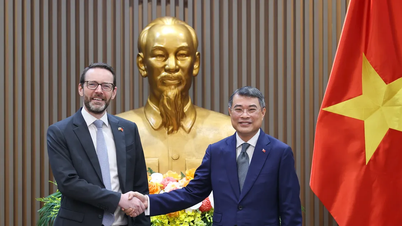
Against the backdrop of complex global economic and geopolitical shifts, the presence of the Vietnamese Prime Minister at this conference sends a clear message about a proactive, positive, and responsible Vietnam. The Prime Minister's visit not only involves discussions on major regional issues such as energy security, food security, and ASEAN's resilience, but also contributes to promoting bilateral relations in a substantive, effective, and mutually beneficial manner.
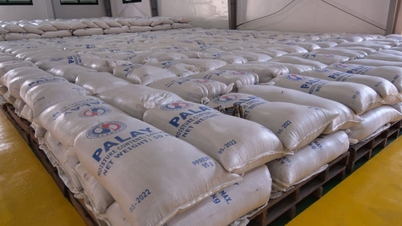
It is no coincidence that for many years, the Philippines has consistently been Vietnam's largest rice import market, accounting for approximately 40% of total exports. The trade relationship between the two countries is therefore not only complementary but also mutually dependent, especially in the area of food security. One of the greatest expectations from this visit is to strengthen and upgrade the cooperation framework on rice between the two countries. In the context of climate change, volatile global food prices, and increasing pressure to ensure food security, the Philippines needs a stable long-term supply, while Vietnam needs a sustainable market with large and stable absorption capacity.
For the business community, especially rice exporters, this trip opens up four notable expectations. Firstly, the expectation of policy stability. A clear signal from the leaders of both countries could help businesses reduce the "psychological lag" in contract signing, encourage more investment in raw material areas, and improve product quality. Secondly, the expectation of upgrading the value chain. Expanding Vietnam-Philippines cooperation towards chain linkages – from production and processing to distribution – will help Vietnamese rice escape its position as a "raw export." This is a crucial point if Vietnam wants to increase added value and build a national brand for Vietnamese rice. Thirdly, the expectation of increasing the added value of Vietnamese rice. If cooperation goes beyond exporting raw rice and moves towards chain linkage models – from production and processing to distribution – Vietnamese businesses can gradually shift from "selling what they have" to "selling what the market needs." Fourthly, there is the expectation of minimizing technical barriers and transaction costs. Reaching bilateral agreements on quality standards, quarantine, or logistics will help businesses save costs, shorten lead times, and improve business efficiency.
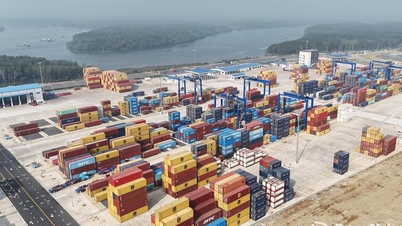
Prime Minister Le Minh Hung's inaugural visit also opens up the possibility of expanding cooperation into new areas such as renewable energy, maritime economy , and logistics. These are areas where both countries have complementary needs and advantages, especially in the context of ASEAN's focus on green growth and sustainable development. From a broader perspective, the visit is also an opportunity to "transform" foreign policy commitments into concrete benefits for the economy. The success of the trip will not only be measured by the number of meetings or joint statements, but more importantly by the substantive changes in the cooperation environment, in business confidence, and in market expectations, which could create a "boost" for bilateral relations.
To realize those expectations, we need the concerted efforts of all levels of government, from regulatory agencies to the business community. Diplomacy paves the way, but the economy is the ultimate goal. Therefore, this trip to the Philippines is not only a milestone marking the beginning of the Prime Minister's foreign policy activities, but also an opportunity to shape a new, more substantive, effective approach that is more closely aligned with the interests of the people and businesses. Expectations are well-founded, but more importantly, how to translate those expectations into concrete results – something the public and the market are waiting for after this trip.
Dr. Tran Huu Hiep
Source: https://www.sggp.org.vn/mo-rong-khong-gian-hop-tac-asean-post851369.html








































































Comment (0)