

"Trans-dimensional" learning sessions – connecting knowledge without borders.
Today's English lesson for class 5A3 at Bac Cuong No. 1 Primary School (Cam Duong Ward) was truly special. Not only did the teacher and 36 students participate directly, but the lesson also included remote participation from students in class 5 of Hop Minh Primary and Secondary School (Au Lau Ward).
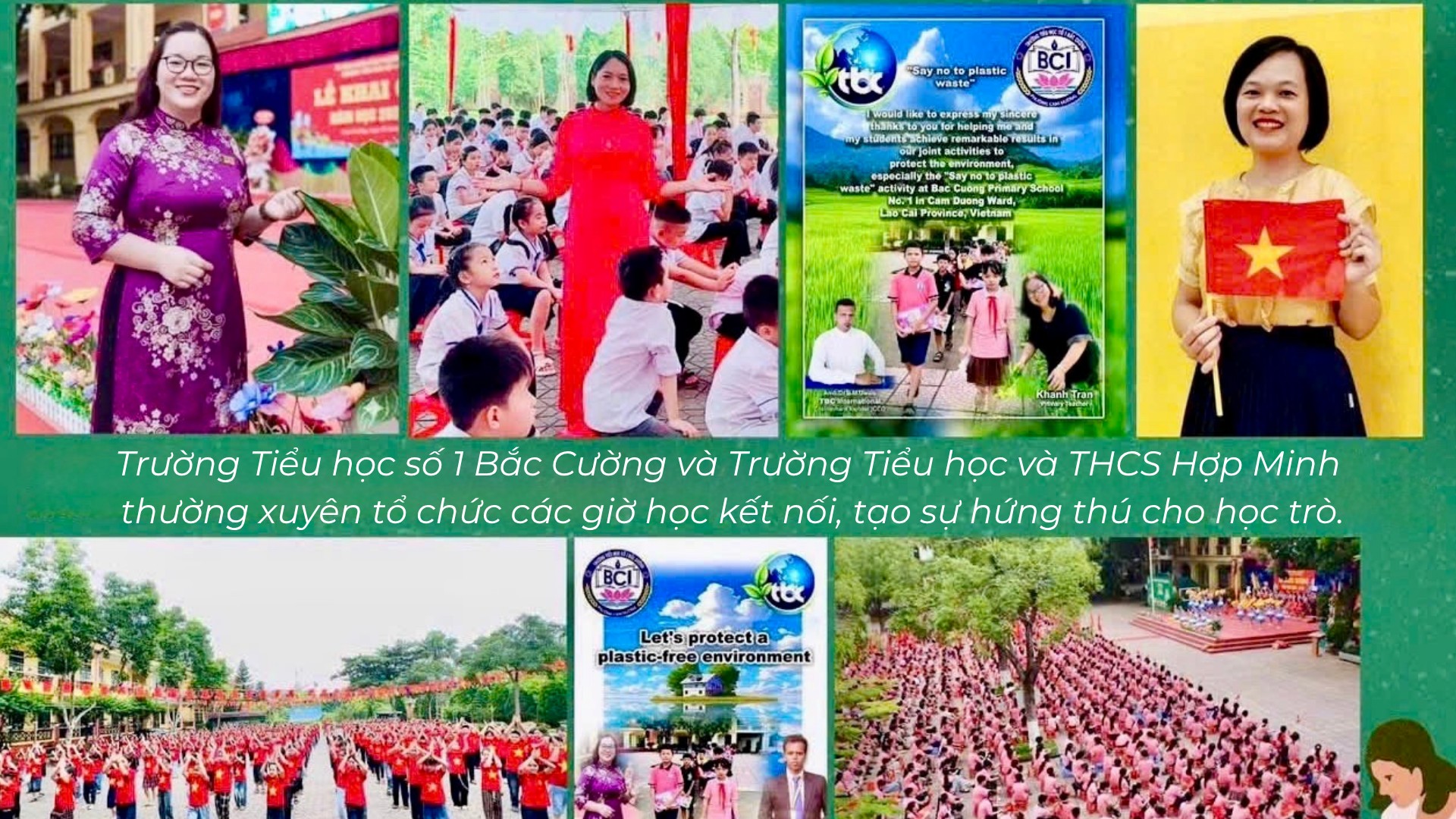
Two classrooms, located nearly 200 km apart, were easily connected via a smart whiteboard and high-speed internet. During this "cross-space" lesson, students from both ends exchanged ideas in English on the topic of "Ecological Schools – Saying No to Plastic Waste."
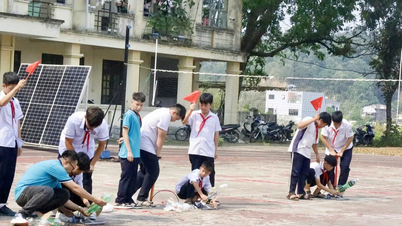
The atmosphere was vibrant from the very first minute. The students eagerly listened, confidently shared their opinions, and discussed solutions for environmental protection: recycling discarded plastic into useful STEM products such as flower vases and pencil cases; promoting the reduction of plastic bag use; and sorting waste at the source... All of this was expressed in English – lively, natural, and full of creativity.

Teacher Tran Thi Hong Khanh, who directly teaches at the Bac Cuong branch, shared: “We organize these connected lessons to hone listening and speaking skills, and increase students' confidence in communicating in English. Each lesson is an opportunity for students to apply their knowledge to real-life situations, interact, and learn from each other. To succeed, teachers from both schools must jointly choose the topic, develop the lesson plan, and ensure the technology system operates stably.”
Excited after class, Van Thuc Minh, a student in class 5A3, shared: “Since first grade, we have participated in these connecting lessons. Thanks to them, I’ve made many new friends and learned more about different regions across the country. I really enjoy these lessons!”
Towards digital education – expanding the learning space.
Ms. Tran Thi Minh Chung, Principal of Bac Cuong No. 1 Primary School, said: Bac Cuong No. 1 Primary School and Hop Minh Primary & Secondary School have maintained a collaborative teaching and learning program for the past three years. The learning content is rich and varied, ranging from traditional clothing, cuisine , and scenic landscapes to traditional festivals. Through each lesson, students not only improve their academic performance but also develop communication skills, cultural understanding, and a greater love for their homeland.
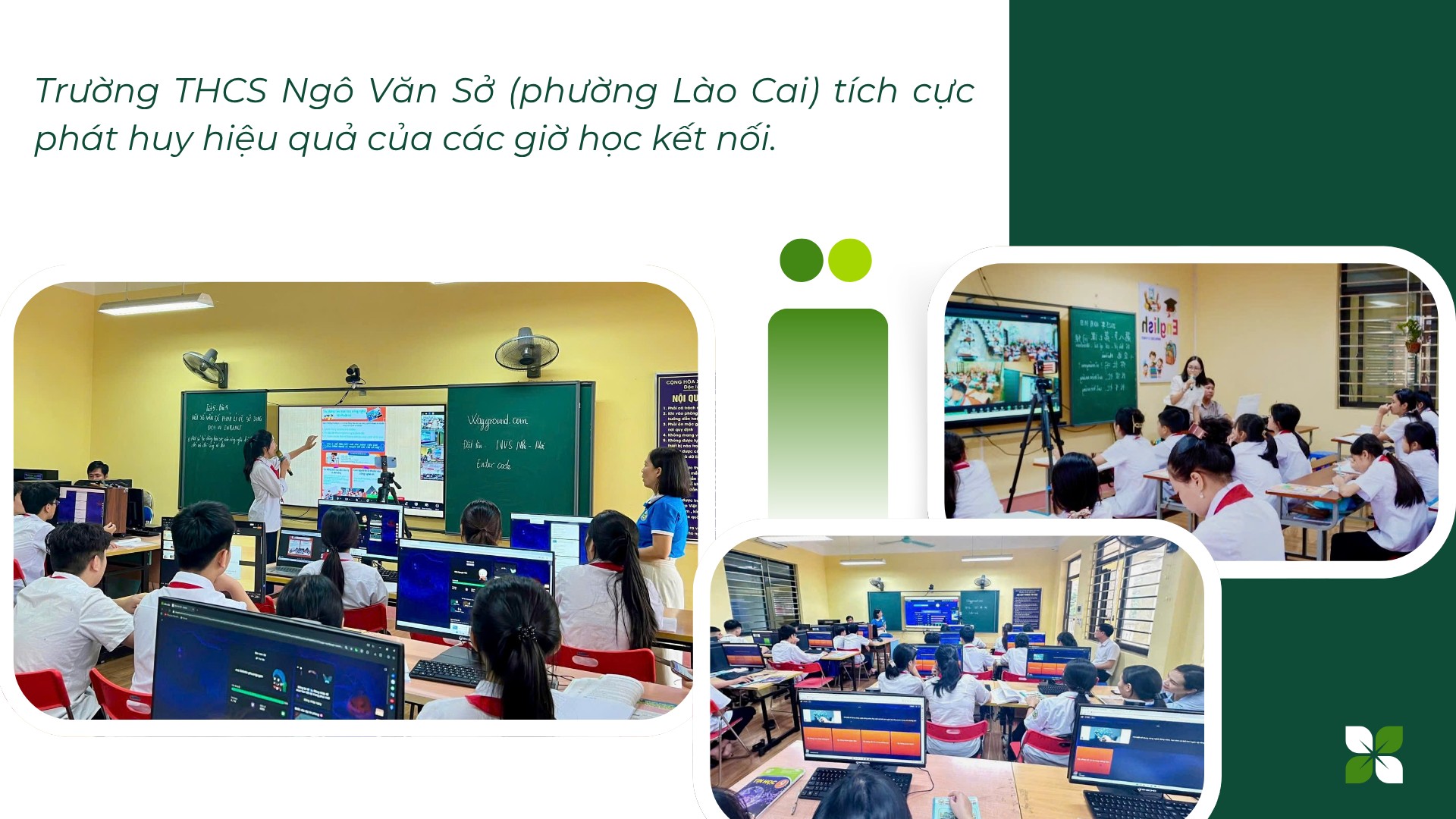
The "connected classroom" model is also regularly implemented at Ngo Van So Secondary School ( Lao Cai Ward). According to Ms. Phung Thi Dung, Principal of Ngo Van So Secondary School, secondary school students already possess good communication skills and proficient technology skills, making the connected lessons very lively. We not only connect with schools domestically but also expand cooperation with foreign schools to discuss common topics, helping students broaden their international perspectives.
“The connected classroom model helps shorten the distance in space and time, while simultaneously enhancing the digital skills of teachers and students. It also provides an opportunity for students to interact, learn, and contribute to a strong innovation in teaching and learning methods,” added Ms. Phung Thi Dung, Principal of Ngo Van So Secondary School.
The "connected classroom" model is a significant step in the digital transformation of the education sector. Leveraging information technology platforms, schools in the province have proactively organized many online and in-person classes, serving daily teaching as well as nurturing gifted students.
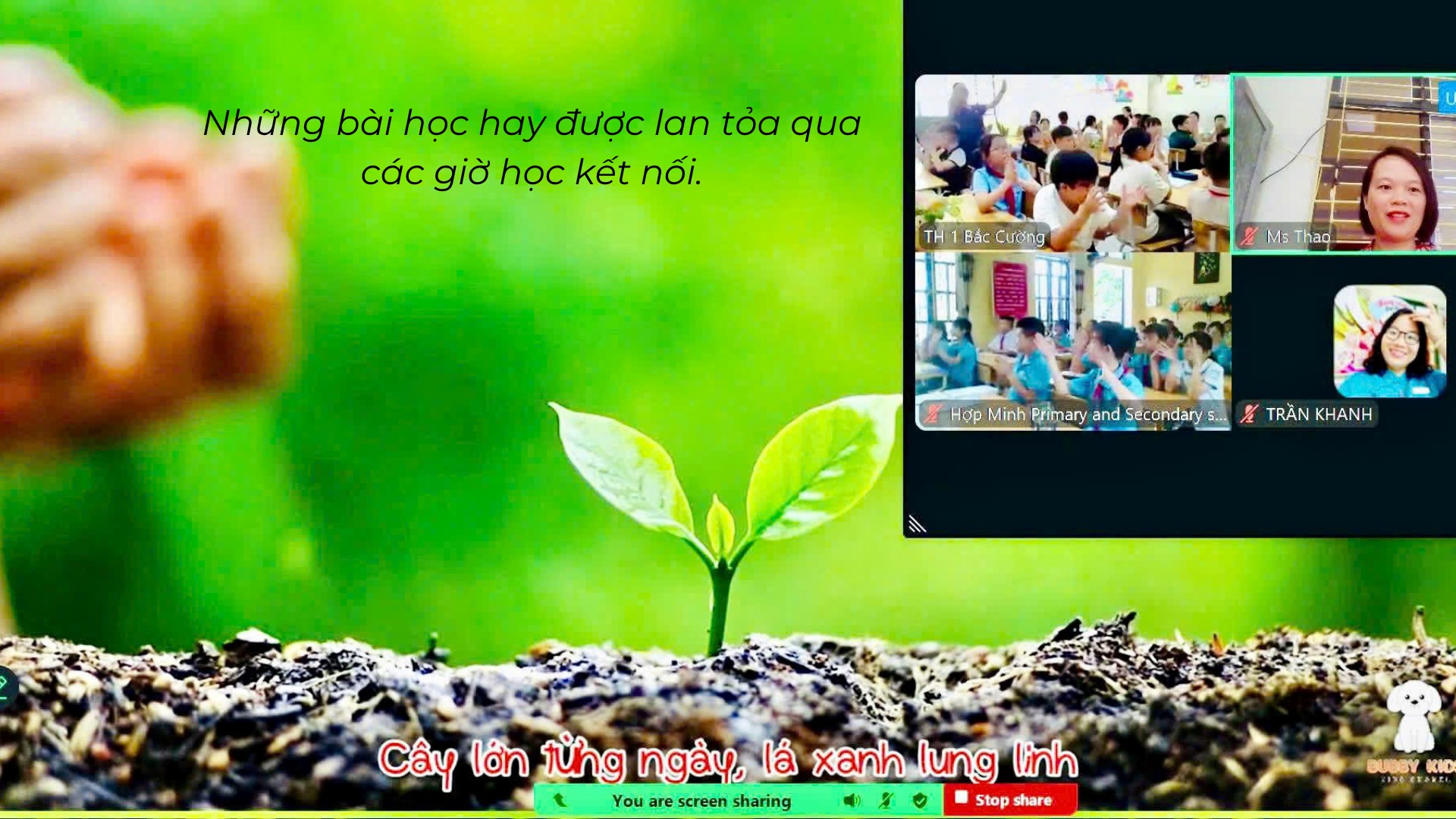
Thanks to technology, lessons that were once confined within four walls have now transcended this narrow space. Teachers and students from different regions can meet, share, and learn from each other. Each connected lesson is not only a lesson in knowledge, but also a lesson in cooperation, sharing, and a spirit of lifelong learning. In reality, "connected classrooms" not only improve the quality of teaching and learning, but also contribute to the holistic development of students' qualities and abilities; enhancing foreign language and computer skills for both teachers and students.
With the results achieved so far, the Lao Cai Department of Education and Training will continue to expand this model in the future, aiming for the goal of "Comprehensive digital transformation, widespread adoption and strong application of digital technology and artificial intelligence in education and training," as envisioned in Resolution 71-NQ/TW of the Politburo on breakthroughs in education and training development.
Source: https://baolaocai.vn/mo-rong-khong-gian-tri-thuc-post887179.html


![[Photo] National Assembly Chairman Tran Thanh Man working with the Standing Committee of the Economic and Financial Committee](https://vphoto.vietnam.vn/thumb/1200x675/vietnam/resource/IMAGE/2026/05/20/1779249584387_ndo_br_1-jpg.webp)
![[Photo] General Secretary and President To Lam presides over a meeting on assessing national development resources.](https://vphoto.vietnam.vn/thumb/1200x675/vietnam/resource/IMAGE/2026/05/20/1779253785852_a1-bnd-2943-8519-jpg.webp)


















































Comment (0)