

Kinhtedothi - Contributing to the draft Law on Investment under the Public-Private Partnership (PPP) method, National Assembly deputies believe that expanding all investment sectors of PPP projects could increase opportunities for the private sector to participate more, reducing the burden on the State budget.
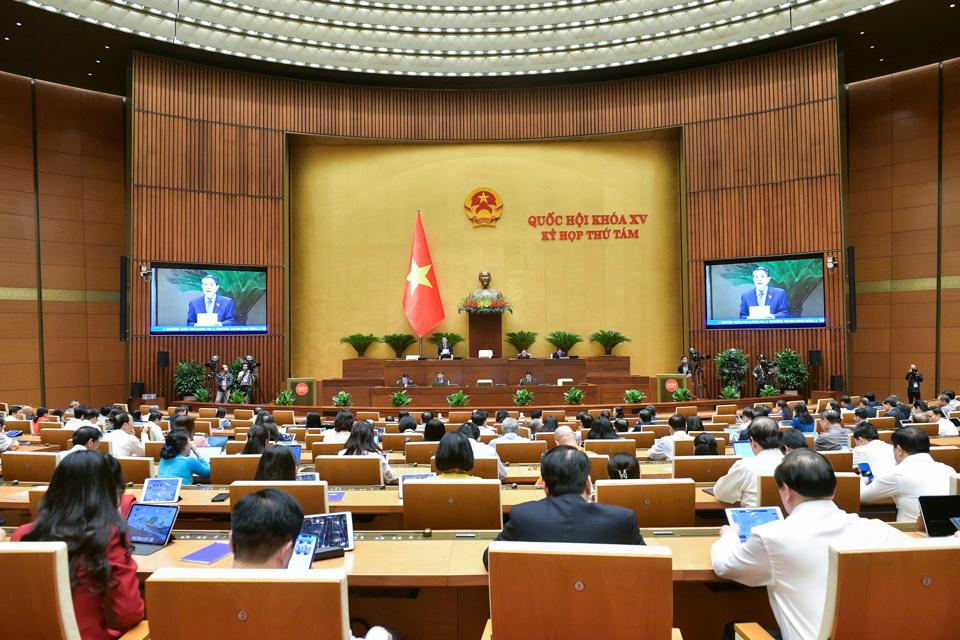
On the afternoon of November 6th, the National Assembly held a plenary session to discuss the draft Law amending and supplementing a number of articles of the Planning Law, the Investment Law, the Law on Investment under the Public-Private Partnership Method, and the Bidding Law.
The majority of delegates expressed agreement with the necessity of amending the four laws and believed that this demonstrates the strong commitment of the Government and the National Assembly in making breakthroughs in mechanisms and policies, unlocking resources, and removing difficulties and obstacles in the process of investment and planning.
Reduce the scale of investment projects to attract resources.
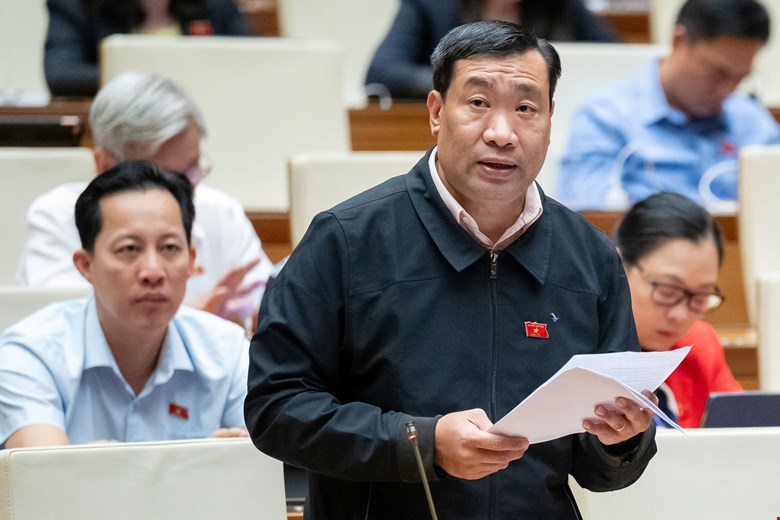
Commenting on the Law on Investment under the Public-Private Partnership (PPP) method, National Assembly representative Thach Phuoc Binh (Tra Vinh Provincial National Assembly Delegation) stated that expanding PPP projects to all investment sectors could increase opportunities for the private sector to participate more, reducing the burden on the State budget. However, this needs to be based on practical assessments from pilot localities such as Hanoi, Ho Chi Minh City, and Da Nang to ensure a solid foundation for effectiveness – especially given the challenges that have not been fully summarized from the implementation of PPP in these sectors.
At the same time, delegates argued that reducing investment approval steps could shorten implementation time but risked reducing effective control and the State's ability to avoid risks. Therefore, delegates suggested a thorough review of the basis for eliminating these procedures and an assessment of the impact of this elimination to avoid potential risks. The BT contract model in some localities has not been fully summarized; the benefits and limitations of BT contracts need to be more clearly defined before being legalized.
Regarding the increase in the maximum state capital ratio to 70% in special cases, delegates believe this regulation is reasonable. However, clearer criteria and grounds for application are needed to prevent abuse of such a high ratio.
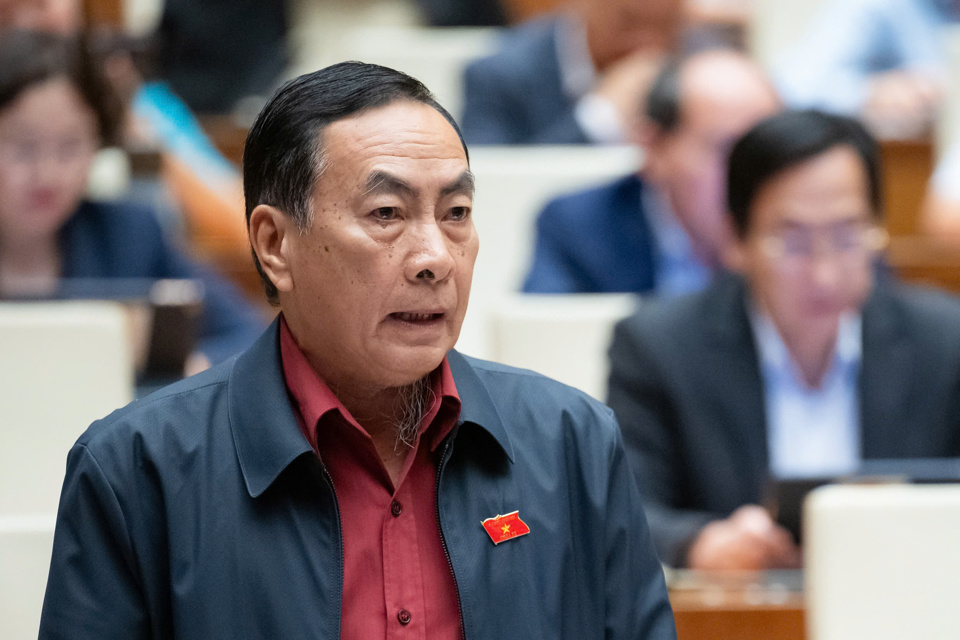
Participating in the discussion, National Assembly representative Pham Van Hoa (Dong Thap province delegation) noted that in recent years, the mobilization of non-budgetary resources through the PPP method has been very limited. Furthermore, the outstanding BOT cases in localities regarding toll collection and fees, which create difficulties for investors, have not been definitively resolved. Therefore, he proposed that the State issue specific and clear regulations to definitively resolve these projects.
The delegates also agreed with the regulation to increase the state capital ratio to a maximum of 70% and requested the Government to carefully consider each project to ensure efficiency and a balance of interests for investors.
National Assembly representative Trinh Lam Sinh (An Giang Provincial National Assembly Delegation) emphasized that the Law on Investment under the Public-Private Partnership method is a field of great interest and high demand from businesses. Therefore, the scale of investment projects under the public-private partnership method should be reduced to attract more investment resources into the transportation sector.
Stay grounded in reality, unleash resources, and remove bottlenecks.
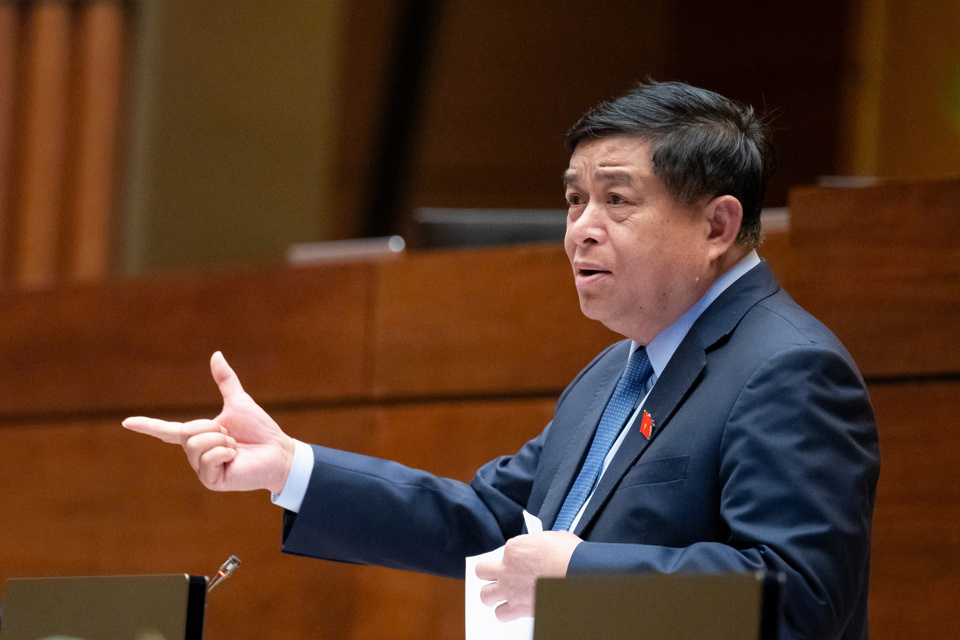
Speaking at the session, Minister of Planning and Investment Nguyen Chi Dung stated that the amendments to the laws closely adhere to the views and directives of General Secretary To Lam and National Assembly Chairman Tran Thanh Man on reforming the thinking behind lawmaking, specifically ensuring effective state management; encouraging creativity, unleashing resources, removing bottlenecks, staying close to reality, avoiding perfectionism and haste, and placing the people and businesses at the center.
According to the Minister, regarding the Law on Bidding under the PPP model, we are returning to BT (build-transfer) contracts using land and BT contracts using money - which we had done before, but then stopped and allowed three provinces to implement.
"Following requests from many localities, we are requesting permission to reinstate the system, but with a new, stricter management method to ensure that the interests of the State and investors are protected and that there is no loss of funds, and that the process is transparent," Minister Nguyen Chi Dung stated.
Regarding the transitional BT (Build-Transfer) projects, according to the Minister of Planning and Investment, this is a very complex issue. Preliminary statistics show that there are 160 projects worth approximately 59,000 billion VND, but the actual number is much higher in many localities.
The government has established a Steering Committee to address this issue, chaired by the Deputy Prime Minister, and including representatives from the police, courts, prosecution, and all internal affairs agencies. This issue will be addressed and reviewed nationwide, classifying violations into different groups and outlining appropriate solutions for each group.
"If we can solve this problem, we will unlock huge resources for investment and development, immediately contributing to budget revenue and economic growth; helping many businesses overcome obstacles and creating many jobs," Minister Nguyen Chi Dung said.
According to the Minister of Planning and Investment, this is a very significant issue. The Ministry has reported to and requested permission from the National Assembly for a separate resolution to address the policy and each specific case, and to not include it in this draft law.
Source: https://kinhtedothi.vn/mo-rong-linh-vuc-dau-tu-du-an-ppp-tang-co-hoi-cho-khoi-tu-nhan.html


![[Photo] Prime Minister Pham Minh Chinh presides over a meeting on private sector economic development.](/_next/image?url=https%3A%2F%2Fvphoto.vietnam.vn%2Fthumb%2F1200x675%2Fvietnam%2Fresource%2FIMAGE%2F2025%2F12%2F20%2F1766237501876_thiet-ke-chua-co-ten-40-png.webp&w=3840&q=75)

![[Photo] Prime Minister Pham Minh Chinh presides over the conference announcing the establishment of the International Finance Centre in Vietnam.](/_next/image?url=https%3A%2F%2Fvphoto.vietnam.vn%2Fthumb%2F1200x675%2Fvietnam%2Fresource%2FIMAGE%2F2025%2F12%2F21%2F1766309817714_ndo_br_dsc-3400-jpg.webp&w=3840&q=75)

















































































Comment (0)