


Following the reorganization, Cao Bang province has 56 commune-level administrative units, including 21 communes with land borders. At the provincial level, the number of organizations within Party agencies, the Fatherland Front, and other socio -political organizations decreased from 54 to 40, a reduction of 25.93%. The government sector was also streamlined, with only 16 departments and agencies under the Provincial People's Committee.
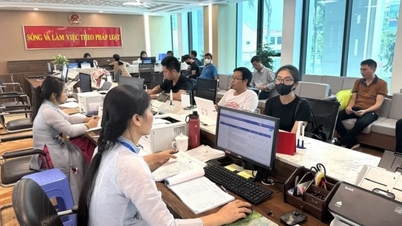
The reorganized staff of officials and civil servants basically meets the operational requirements of local Party committees, governments, and public service units, ensuring the performance of state management tasks as well as the provision of essential public services at the local level.
All personnel at the district and commune levels were allocated to the new commune-level administrative units; at the same time, 167 non-professional personnel were assigned to support the activities of the political system of the commune-level administrative units.
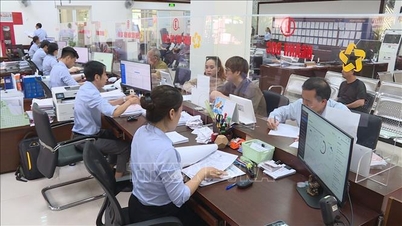
By April 15, 2026, the entire province had 2,214 state management tasks, of which 527 were handled at the commune level. The total number of administrative reform procedures under the jurisdiction of the two levels of government was 2,154, of which 428 were handled at the commune level. The entire province had received a total of 173,353 administrative reform dossiers...
However, after the administrative reorganization, the offices of some communes and wards are still scattered; the physical facilities and technical infrastructure do not yet meet the requirements for working and operating the digital platform, affecting connectivity and the handling of administrative procedures. In addition, the level of education in some areas is still limited, the illiteracy rate remains high; and the physical facilities and information technology infrastructure are still lacking in uniformity.

The province still faces many socio -economic challenges; the scale of industries directly contributing to the gross domestic product remains small, growth quality is not sustainable, and it is heavily dependent on public investment and resource exploitation. The competitiveness of businesses is low; attracting large-scale investment projects is limited due to difficult geographical conditions and high logistics costs. Furthermore, some leaders and managers still have limited capabilities, leading to biased evaluations…
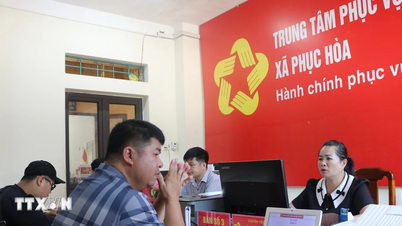
According to Nguyen Anh Tuan, Secretary of the Phuc Hoa Commune Party Committee, the most significant challenge in implementing the two-tiered local government model is the sharp increase in workload while commune-level resources remain limited. Many specialized tasks have been directly transferred to the commune level, especially in areas such as land management, public investment, public assets, land clearance, digital transformation, citizen reception, and administrative procedures, putting immense pressure on local officials who have to handle multiple responsibilities.
The Party Secretary of Dam Thuy commune, To Vu Ninh, requested the Provincial People's Committee and relevant departments to quickly unify the management focal point; remove barriers related to accommodation for international tourists; support the development of the night-time economy and the preservation of architecture...
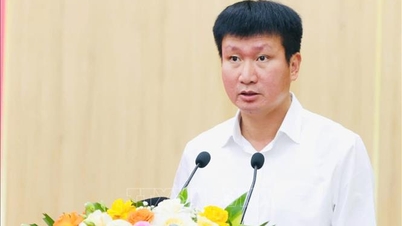
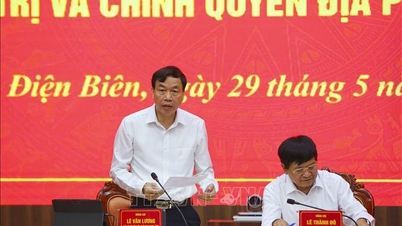
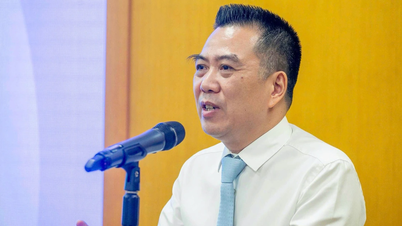
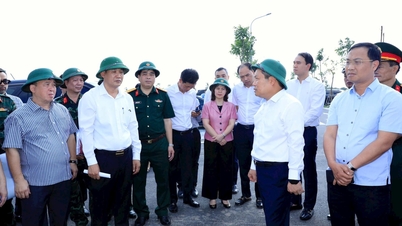
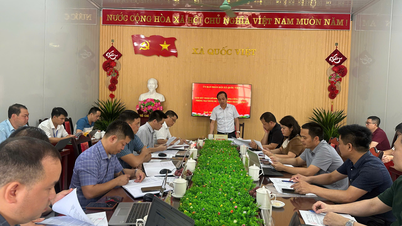
Speaking at the conference, the Secretary of the Cao Bang Provincial Party Committee, Phan Thang An, requested that the Provincial People's Committee, departments, and localities continue to improve the institutional framework and enhance the operational efficiency of the two-tiered local government model; build a team of officials who meet the development requirements of the new era, possess innovative thinking, a spirit of serving the people, digital capabilities, and a desire for local development…

Provincial departments and agencies must genuinely accompany, guide, and support local units; proactively provide professional support on digital transformation, legal matters, model building, investment attraction, and training of local officials. For communes in remote, mountainous, and border areas with particularly difficult conditions, departments and agencies must increase the number of professional staff to provide guidance and resolve difficulties from the outset, preventing prolonged delays that hinder work progress…
Each commune and ward must shift strongly from a management mindset to a development-oriented mindset; identify competitive advantages, key products, development spaces, suitable livelihood models, and distinctive development directions…
The province needs to create substantive changes in digital transformation and administrative reform; build a culture of genuine action throughout the entire political system; focus on the comprehensive development of human resources; and maintain national defense, security, and border sovereignty…
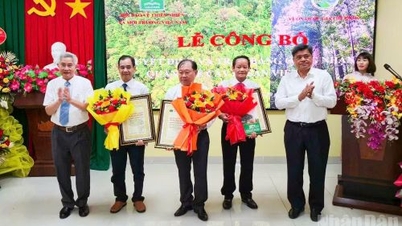
On this occasion, the People's Committee of Cao Bang province awarded Certificates of Commendation to 68 collectives and individuals for their outstanding achievements in implementing the overall organizational model of the political system and the two-tiered local government model.
Source: https://baotintuc.vn/thoi-su/moi-xa-phuong-phai-co-tu-duy-kien-tao-phat-trien-20260527133058520.htm

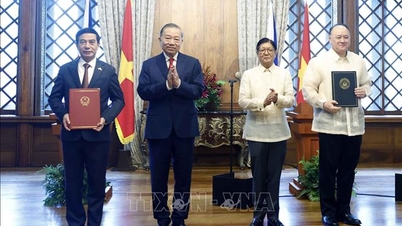
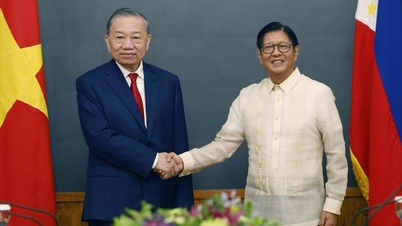
![[Photo] Reception to welcome General Secretary and President To Lam and his wife on their State visit to the Philippines](https://vphoto.vietnam.vn/thumb/1200x675/vietnam/resource/IMAGE/2026/06/01/1780295488620_vna-potal-chieu-dai-chao-mung-tong-bi-thu-chu-tich-nuoc-to-lam-va-phu-nhan-tham-cap-nha-nuoc-toi-philippines-8798060-7855-jpg.webp)


![[Photo] General Secretary and President To Lam and the President of the Philippines hold talks.](https://vphoto.vietnam.vn/thumb/1200x675/vietnam/resource/IMAGE/2026/06/01/1780286997787_anh-man-hinh-2026-06-01-luc-11-09-43.png)






















































Comment (0)