

However, practical experience also presents many new demands regarding staff capacity, implementation resources, operating mechanisms, and governance methods for this model to truly be effective in the long term.

At the National People's Council Conference on implementing directions and tasks for the 2026-2031 term, recently held in Hanoi , a message was repeatedly emphasized from many different perspectives: the two-level local government is not just about reorganizing the administrative apparatus, but about innovating the way it governs, operates, and serves the people.
This requirement was also emphasized by the Party Central Committee Secretary and Deputy Prime Minister Pham Thi Thanh Tra, who stated that the core element of this model is to restructure the operating methods of the national administration towards being closer to the people, more flexible, more efficient, and creating faster national development.
From nearly a year of practical operation, many positive results have been recorded. The activities of People's Councils at all levels continue to be reformed in a more substantive direction. Many localities have proactively built mechanisms for decentralization and delegation of power, increasing autonomy for the grassroots level, while simultaneously enhancing accountability.
In Can Tho, from July 1, 2025 to the present, the City People's Council has held 11 sessions, issuing more than 150 resolutions, including many important resolutions on institutions, decentralization, socio-economic development, budget, and organizational structure and personnel. Beyond just resolutions, oversight activities have also been reformed to focus on the effectiveness of implementation, using citizen satisfaction as a measure of success.
In Ha Tinh, the lesson learned is that we must shift from a mindset of "reviewing documents" to "monitoring power through documents," promptly identifying overlapping or impractical regulations in order to propose amendments and improvements.
Many presentations at the conference revealed a growing trend: People's Councils should not only perform the tasks of decision-making and supervision, but should also become institutions that foster development, working alongside the government to remove bottlenecks, unlock resources, and improve the quality of local governance.
To meet that requirement, digital transformation is becoming one of the most important driving forces. Hanoi has developed a comprehensive digital transformation plan for the operations of the city's elected bodies for the period 2026-2031, with a vision to 2045, while also establishing a shared database for the National Assembly delegation and People's Councils at all levels, aiming for data-driven governance and the application of AI in the activities of delegates in the parliamentary chamber.
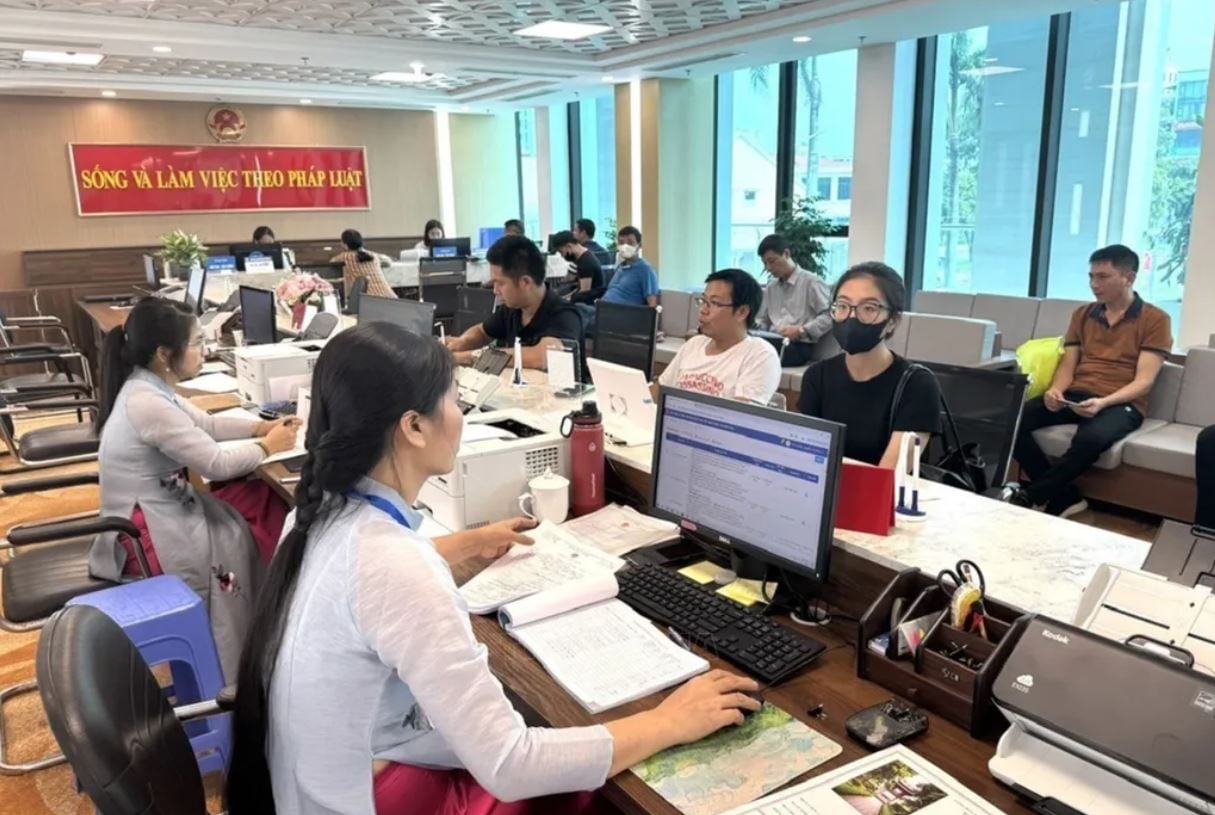
According to the Chairwoman of the Hanoi City People's Council, Phung Thi Hong Ha, digital transformation is not simply about applying technology, but about comprehensively reforming management thinking, operating methods, and ways of serving the people, shifting from experience-based to data-driven management, transparency, and a people-centered approach.
In Ho Chi Minh City, the operation of the two-tiered local government system has also seen many innovative approaches. The interconnected electronic document management system, paperless meetings, digital governance, cleaning up party member data, and task forces addressing difficulties at the grassroots level have significantly reduced organizational structures and improved the effectiveness and efficiency of the administrative apparatus.
These initial results are all the more significant as the country enters a new phase of development requiring double-digit growth.
Through inspections and monitoring in Hanoi and Ho Chi Minh City, Party and State leaders have consistently emphasized one key requirement: achieving new development goals cannot be achieved using the old model and outdated methods.
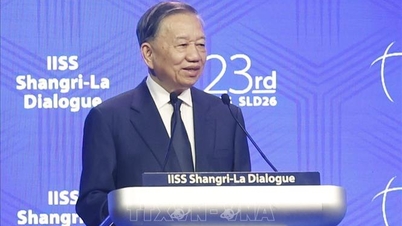
General Secretary and President To Lam has requested Hanoi to take the lead in building a modern urban governance model, digitizing and managing the city digitally; minimizing the "request-and-grant" mechanism, reducing administrative intermediaries, and reducing formal meetings.
National Assembly Chairman Tran Thanh Man also suggested that Ho Chi Minh City continue to improve the two-tiered local government model towards a streamlined, effective, efficient, and substantive approach; and promote decentralization and delegation of power while ensuring power control and accountability.
One issue that Party and State leaders have particularly emphasized is the quality of the cadre. We cannot set very high development standards while being complacent with a cadre lacking ambition, innovation, and responsibility, and working half-heartedly. Cadre evaluation must be based on results, products, work efficiency, and the level of satisfaction of the people and businesses.
That is also an issue that has emerged from local practice.

In Khanh Hoa, after a year of operating the new model, the basic administrative structure is stable, but many communes and wards still lack personnel in the fields of information technology, finance and accounting, land management, and construction. A portion of grassroots officials are still struggling with the new requirements, especially in handling work in the digital environment.
Many localities have reported that while decentralization and delegation of power have been accelerated, they have not been accompanied by sufficient resources, human resources, and corresponding professional guidance. In some places, additional tasks have been assigned, but the necessary conditions for effective implementation have not been met.
Besides human resources, digital infrastructure also reveals shortcomings. In Khanh Hoa, the centralized administrative procedure processing system of some ministries and agencies is still operating unreliably, and reporting data is incomplete, causing difficulties in management and evaluation.
In Can Tho, Prime Minister Le Minh Hung also pointed out that digital infrastructure, the quality of human resources, and the team of commune-level officials are still areas that need further improvement.
This reality shows that streamlining the administrative apparatus is not the ultimate goal. More importantly, it is crucial to improve the operational quality of the apparatus after it has been reorganized and streamlined. To achieve this, along with continuing to improve the institutional framework, it is necessary to promote more substantive decentralization and delegation of power in accordance with the spirit of "local authorities decide, local authorities act, local authorities are responsible." However, delegation of power must go hand in hand with the allocation of resources, and the assignment of tasks must be accompanied by the assurance of the necessary conditions for implementation.
Many recommendations from the grassroots level have focused on these issues: improving the budget allocation mechanism for communes; supplementing human resources in specialized fields where there is a shortage; building a shared data system; issuing unified guidelines on digital transformation; effectively handling surplus public assets after restructuring; and improving the salary mechanism based on job positions.
Along with that, we must continue to innovate inspection and supervision work in a way that is supportive, provides early warning, and resolves difficulties, instead of just detecting errors. Inspection must become a driving force for development, not an obstacle to innovation.
Nearly a year of implementation shows that the two-tiered local government model is on the right track. The apparatus is more streamlined, responsibilities are clearer, many issues are resolved faster, and the gap between the government and the people has narrowed. But this is only the beginning. The most important thing now is to continue to confront existing limitations in order to make timely adjustments and improvements. And all policy decisions must be closer to real life!
Source: https://baotintuc.vn/thoi-su/tinh-gon-bo-may-de-moi-quyet-sach-gan-cuoc-song-hon-20260531084955090.htm
























![[Video] Sunset at Lap An Lagoon – Where the sun sets over the fishing nets](https://vphoto.vietnam.vn/thumb/340x192/vietnam/resource/IMAGE/2026/05/31/1780192137701_beach-landscape-sea-water-nature-grass-745871-pxhere-com.jpeg)




































































Comment (0)